An exclusive interaction with Markus Nikolaus, CEO, and Christine Bauer, Chief Commercial Officer
In a global textile industry navigating volatility, sustainability mandates, and shifting trade equations, strategic clarity is emerging as the ultimate competitive advantage. For AMANN Group, the Germany-headquartered premium sewing and embroidery thread manufacturer, that clarity is increasingly anchored in India.
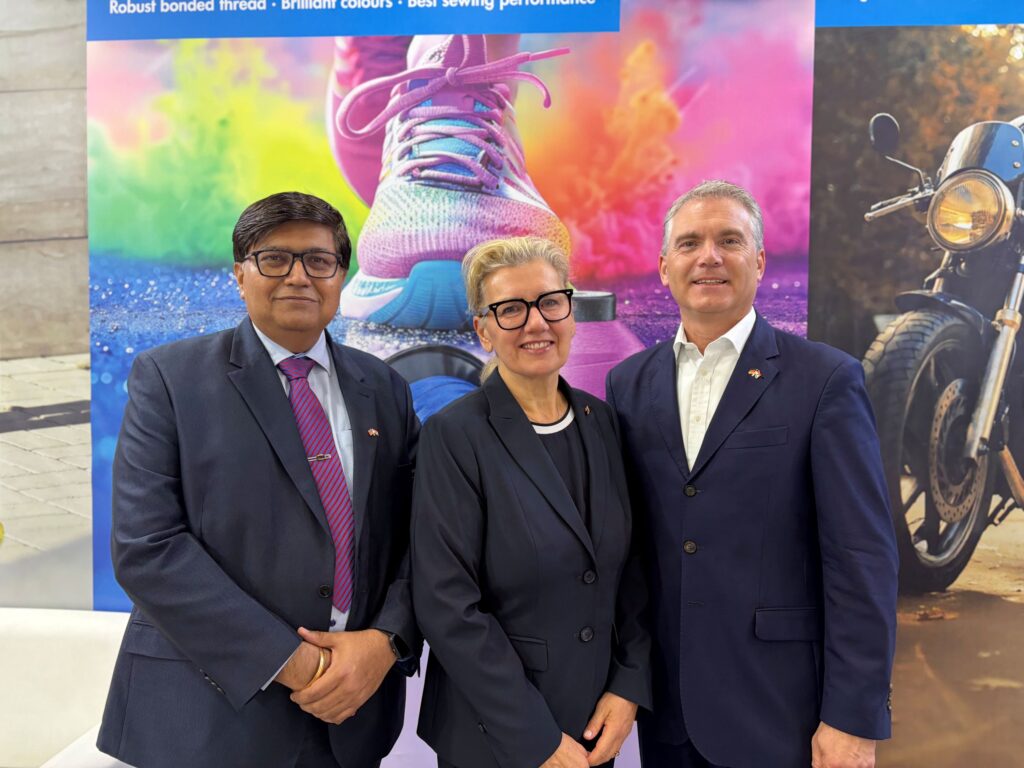
In an exclusive interaction with The Textile Magazine, Markus Nikolaus, CEO of AMANN Group, and Christine Bauer, Chief Commercial Officer, outlined how India is transitioning from a production base to a strategic growth engine within the company’s global architecture.
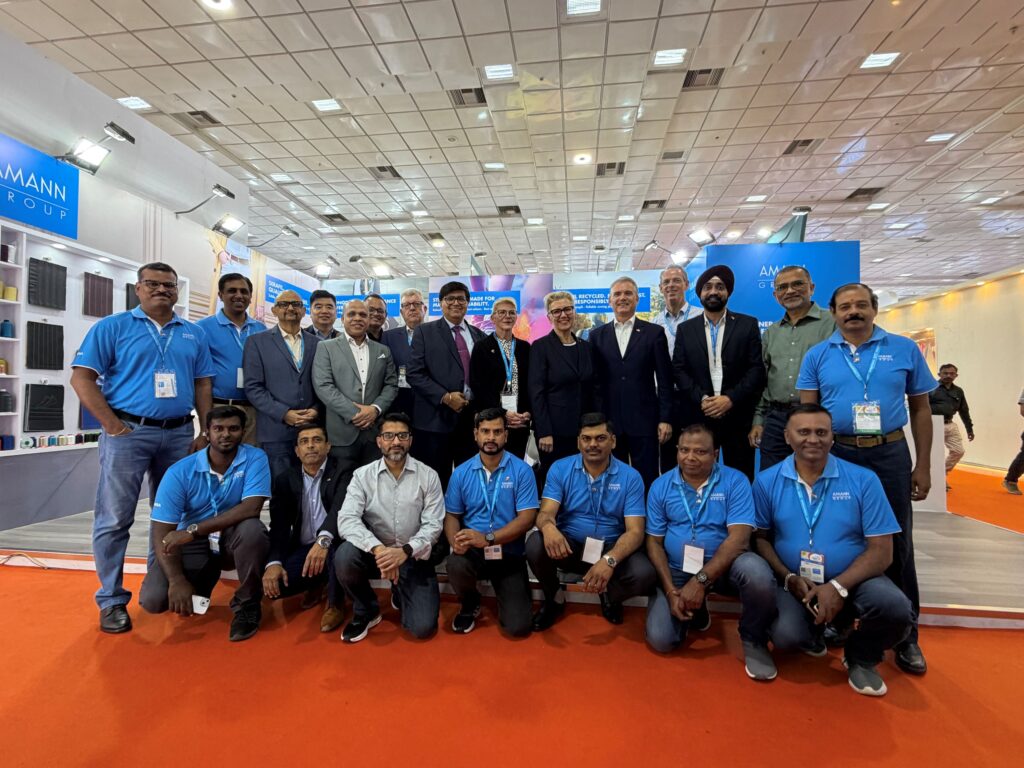
India as a Structural Growth Driver
AMANN operates across Europe, Asia, and the Americas, serving apparel, automotive, leather, technical, and medical textile segments. Yet, within this diversified footprint, India has assumed heightened strategic importance. “India is a strategically important pillar of AMANN Group’s global operations and growth strategy,” says Markus Nikolaus. “It strengthens our global manufacturing and sourcing network through reliable, competitive production capabilities and resilient regional supply chains. At the same time, it is gaining importance as a market, driven by a dynamic textile and apparel industry and rising requirements for quality, sustainability, and traceability.”
He is clear that India’s role extends beyond cost competitiveness. “India is not just a cost-driven production base for AMANN. It is an integral component of our long-term global value creation, innovation, and sustainability strategy.” The inauguration of AMANN’s state-of-the-art manufacturing facility in Tamil Nadu in 2024 underscores this commitment. Designed as both a growth engine and technological benchmark, the plant integrates advanced automation, energy-efficient processes, and digital quality monitoring systems.
Operationally, the plant is scaling steadily, with a strong focus on high-quality sewing thread solutions for apparel and footwear—segments that remain core to India’s export strength.
“Conceptually, the facility is engineered to operate at a theoretical net-zero level,” Nikolaus notes. “It has a unique role within the group as a reference site and blueprint for future developments across our global manufacturing footprint.”
Engineering Performance for Demanding Applications
AMANN’s reputation has long been built on high-performance and specialty threads engineered for precision applications. Whether in automotive interiors, airbags, seat belts, or technical textiles, seam reliability is mission-critical. “Our growth in apparel, leather, automotive, and sustainable solutions is driven by targeted product and technology innovations,” Nikolaus explains. “We focus on high-performance threads with clearly defined functional properties—tensile and abrasion strength, resistance to heat and chemicals, and maximum seam reliability.”
Recent innovations reflect the convergence of performance and sustainability. The company recently introduced “Isacord Recycled UV,” a UV-resistant embroidery and sewing thread made from 100 percent recycled polyester for outdoor applications. “For us, sustainability is not an add-on,” he emphasizes. “It is a central innovation driver, alongside advanced dyeing and finishing methods, higher process efficiency, and data-driven quality monitoring.”
The Tamil Nadu facility exemplifies this philosophy. Constructed under the leadership of Sanjeev Grewal, AMANN’s Regional Business Director Asia Middle East & Pacific, the plant integrates renewable energy usage and advanced water management systems. It was recognized with the CITI Textile Sustainability Award 2024, presented by India’s Minister of Textiles, Commerce & Industry, Piyush Goyal, at the Bharat-Tex exhibition in New Delhi. For Indian exporters supplying European and global brands, such measurable sustainability credentials are becoming indispensable.
Apparel Leads, Automotive and Technical Follow
From a commercial standpoint, Christine Bauer highlights that apparel and footwear are currently the strongest demand drivers in India. “The strongest demand driver in India today is clearly the Apparel & Footwear market,” she says. “Export-oriented manufacturers and rising requirements from global brands are increasing demand for high-performance, process-stable threads with high abrasion resistance and seam reliability.” However, the growth strategy is becoming increasingly segment-focused.
“Apparel remains volume-driven, especially through export-oriented garment manufacturing,” Christine explains. “Automotive is growing based on rising local demand and performance requirements, while technical textiles are gaining importance through specialized applications. Medical textiles, though smaller in scale, are strategically attractive due to high quality standards and strong entry barriers.” Local manufacturing strengthens AMANN’s ability to capture these opportunities.
“Our state-of-the-art production facility in India is a key lever for expanding market share,” she notes. “It enables shorter lead times, faster speed-to-market, and greater customization. At the same time, it strengthens customer proximity—technical support and joint development projects can be handled much more efficiently.”