By Nien-Chen Wu, Ph.D. Candidate, Institute of Artificial Intelligence Innovation, National Yang Ming Chiao Tung University, Taiwan und Ferdinand Kunz, Product Manager at Fu Hsun Fiber Industries

Jensen Huang, the CEO of Nvidia, envisions a future where nearly every business will seek to scale artificial intelligence (AI) systems through what he calls “AI factories.” He compares AI development to an industrial process: raw data enters, is refined through computation, and yields valuable products through insights and intelligent models.
The fabric industry is no exception. Applying AI to fabric production offers potential to improve both efficiency and quality. In simple terms, instead of spinning yarn into fabric, the goal is to turn data into intelligence at scale. However, bringing neural networks and deep learning technologies into a production-ready solution is easier said than done, but there is progress.
Since 2021, National Yang Ming Chiao Tung University (NYCU), in collaboration with Fu Hsun Fiber Industries, has been developing an AI-based defect detection system called FabGoalie AI: A turnkey-ready solution designed for seamless deployment in modern fabric production facilities.
Key Components and Workflow of AI-Based Fabric Quality Inspection
In October 2025, the partners launched the latest prototype of FabGoalie AI. At its core is an AI algorithm capable of detecting irregularities in fabric and classifying them into various defect categories. The integrated solution combines specialized hardware with a user-friendly graphical interface (GUI).
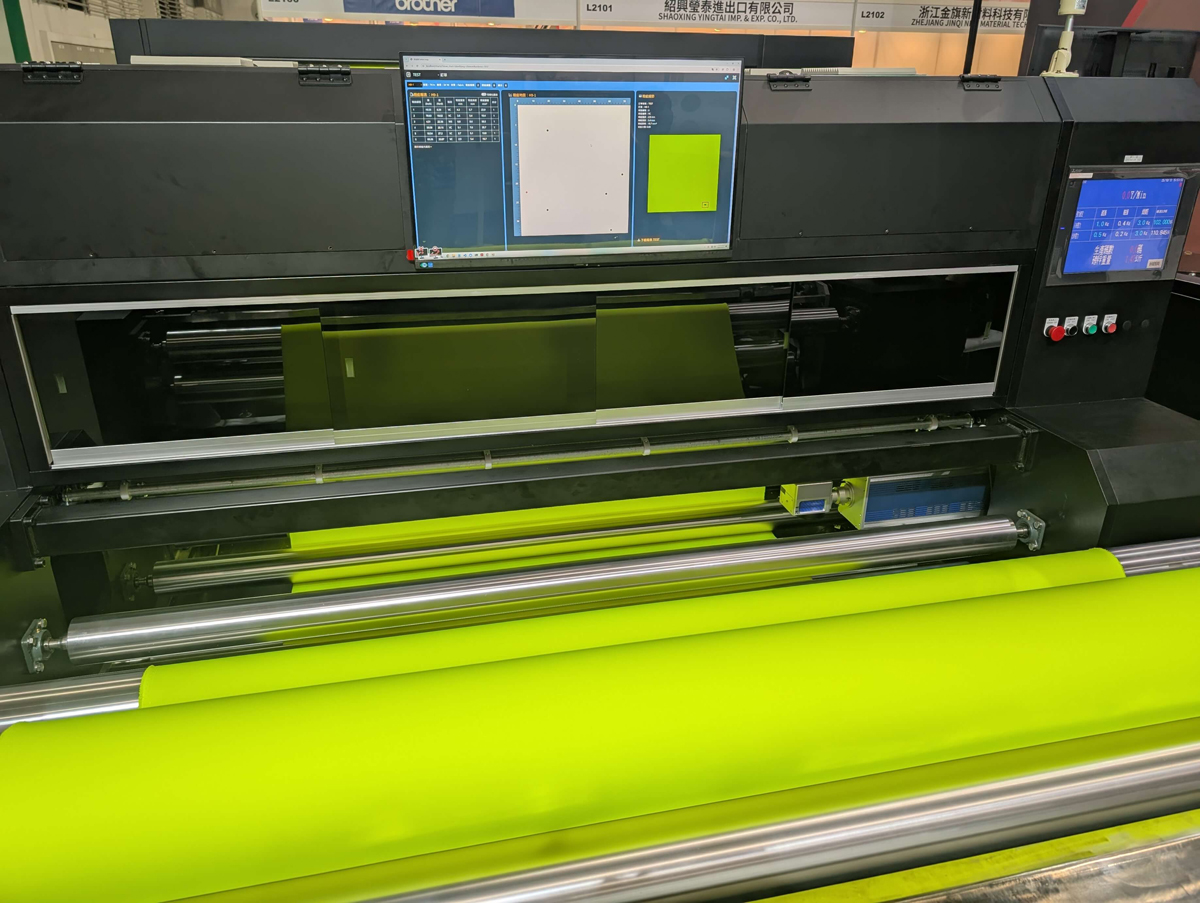
FabGoalie AI is deployed during the final quality control stage of production, after fabric finishing, and is designed for seamless integration into existing processes. The hardware setup includes a servo control system, tension control, and a workstation. All components are ruggedized to withstand the conditions of production environments.
The centerpiece of the solution is an AI software algorithm built to detect and classify defects in real time. To achieve this, the engineers implemented a one-stage detection approach powered by a fully convolutional neural network to process fabric images efficiently.
Currently, FabGoalie AI can detect more than ten types of defects, including oil stains, dye stains, holes, broken yarn, snagging, and creases. Additionally, the software features a color consistency comparison module that evaluates perceptual color differences across the left, center, and right sections of the fabric.
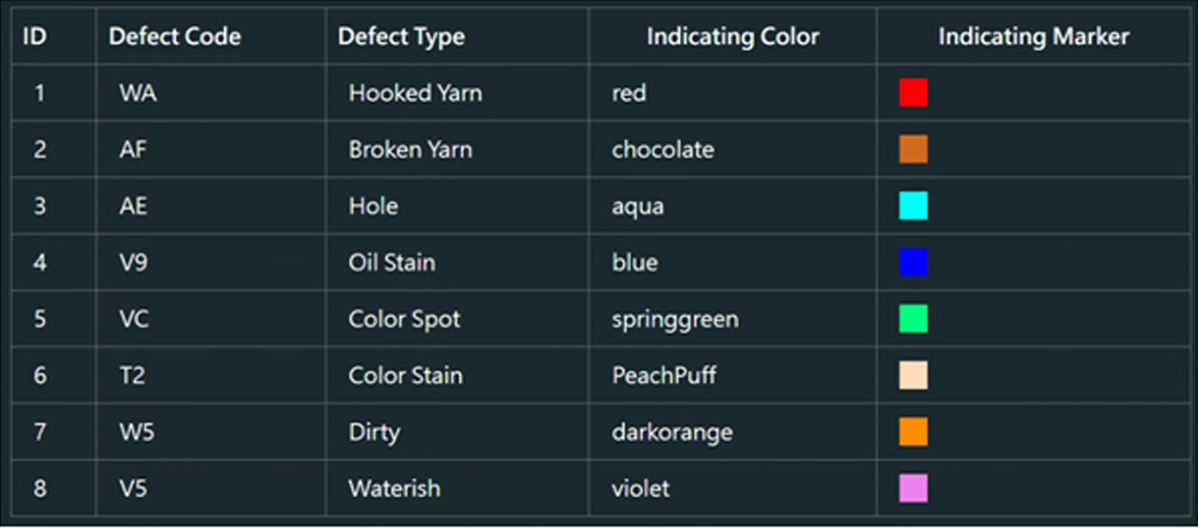
The Data Collection Workflow
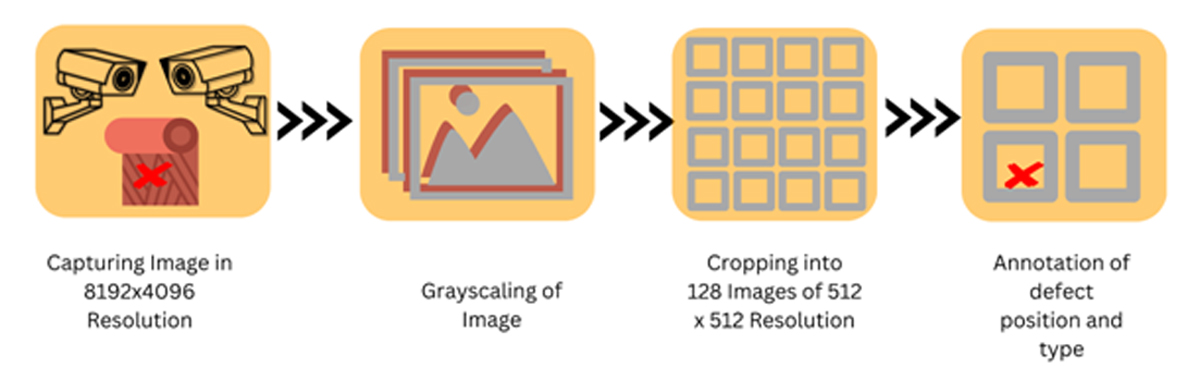
In the early stages of AI training, engineers manually marked defect locations and labeled their types to build a foundation for the system. Today, however, FabGoalie AI can autonomously detect defect types and pinpoint their exact locations with high accuracy.
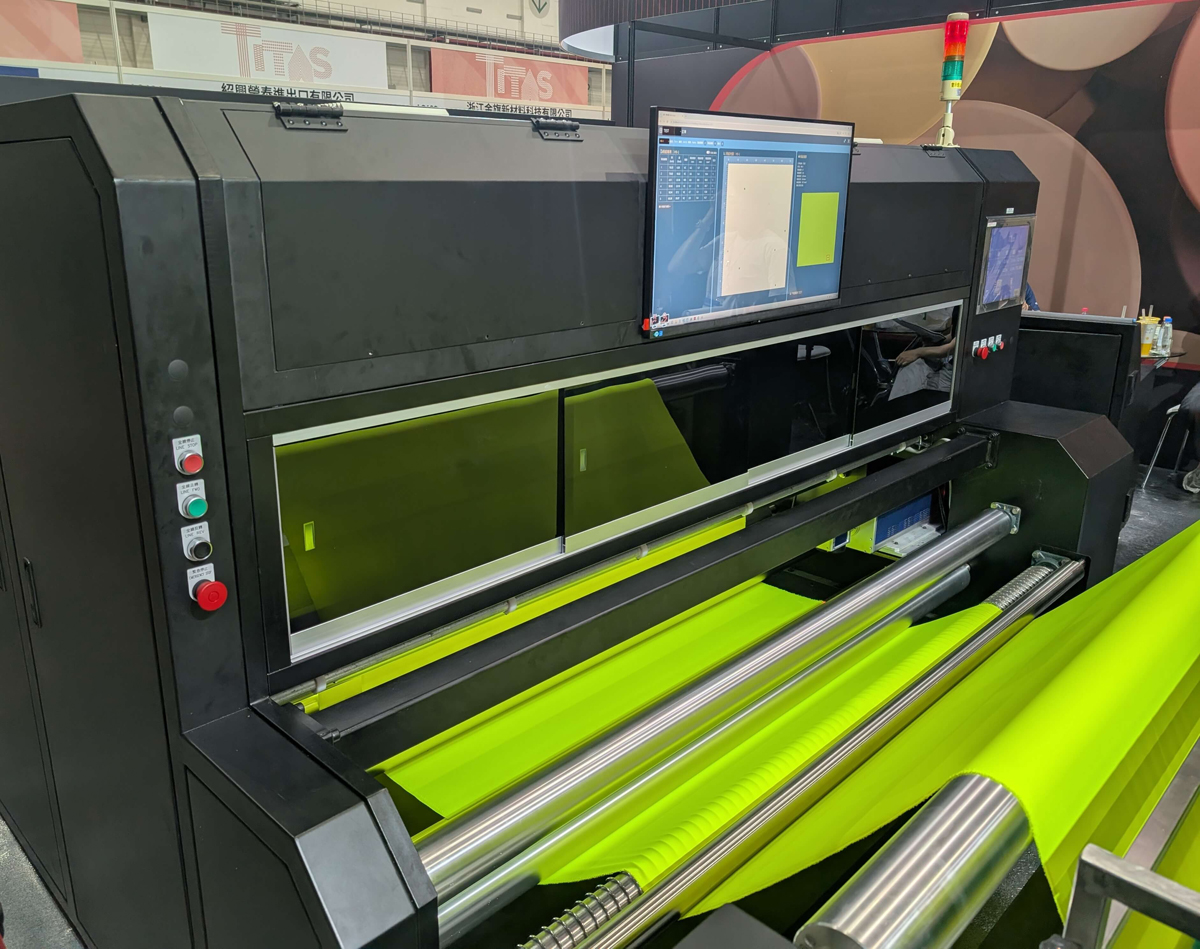
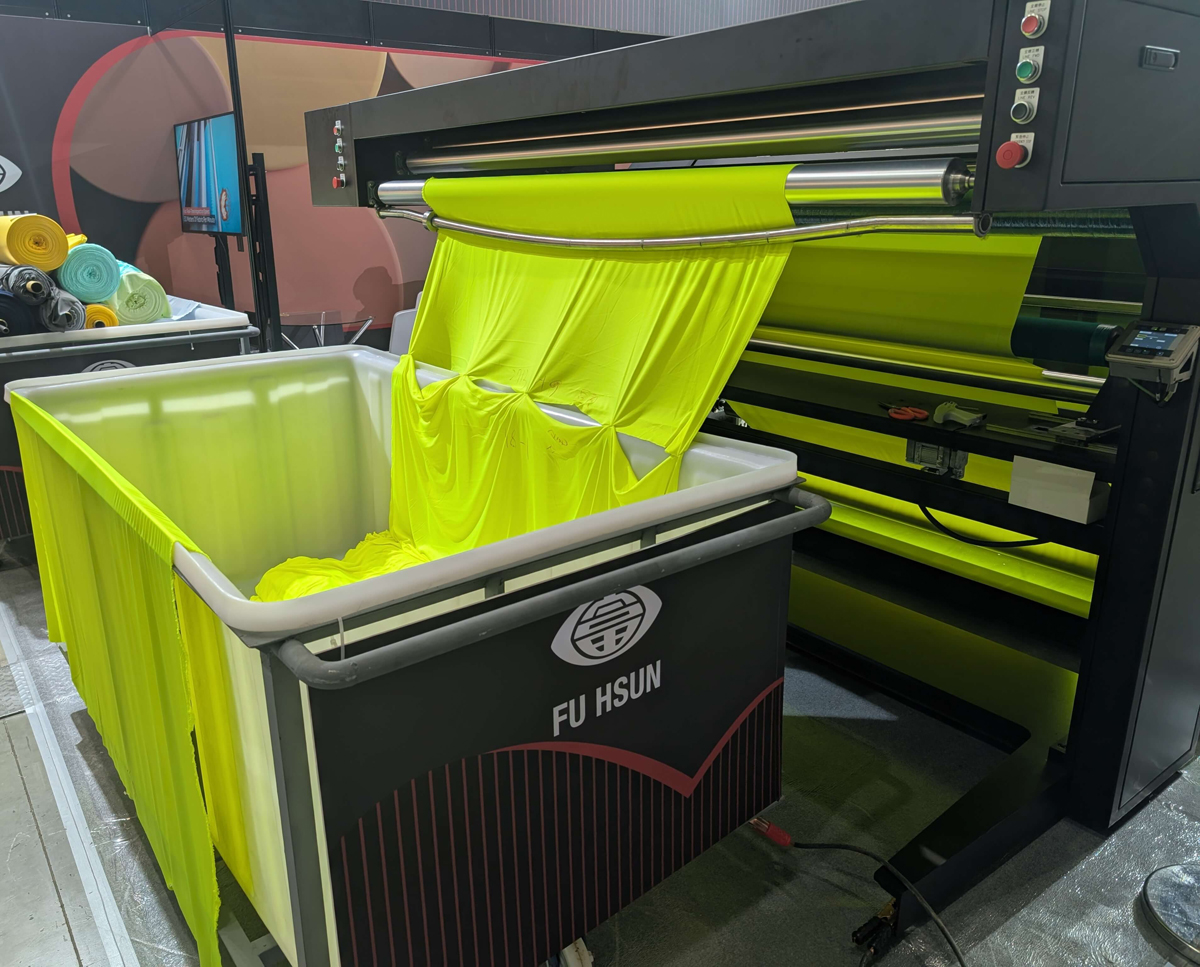
The latest prototype also supports roll-to-roll inspection, where fabric moves directly from a cart to the winding station. By default, the system uses seven cameras and an optical marking system to inspect fabrics at speeds of 25–30 meters per minute.
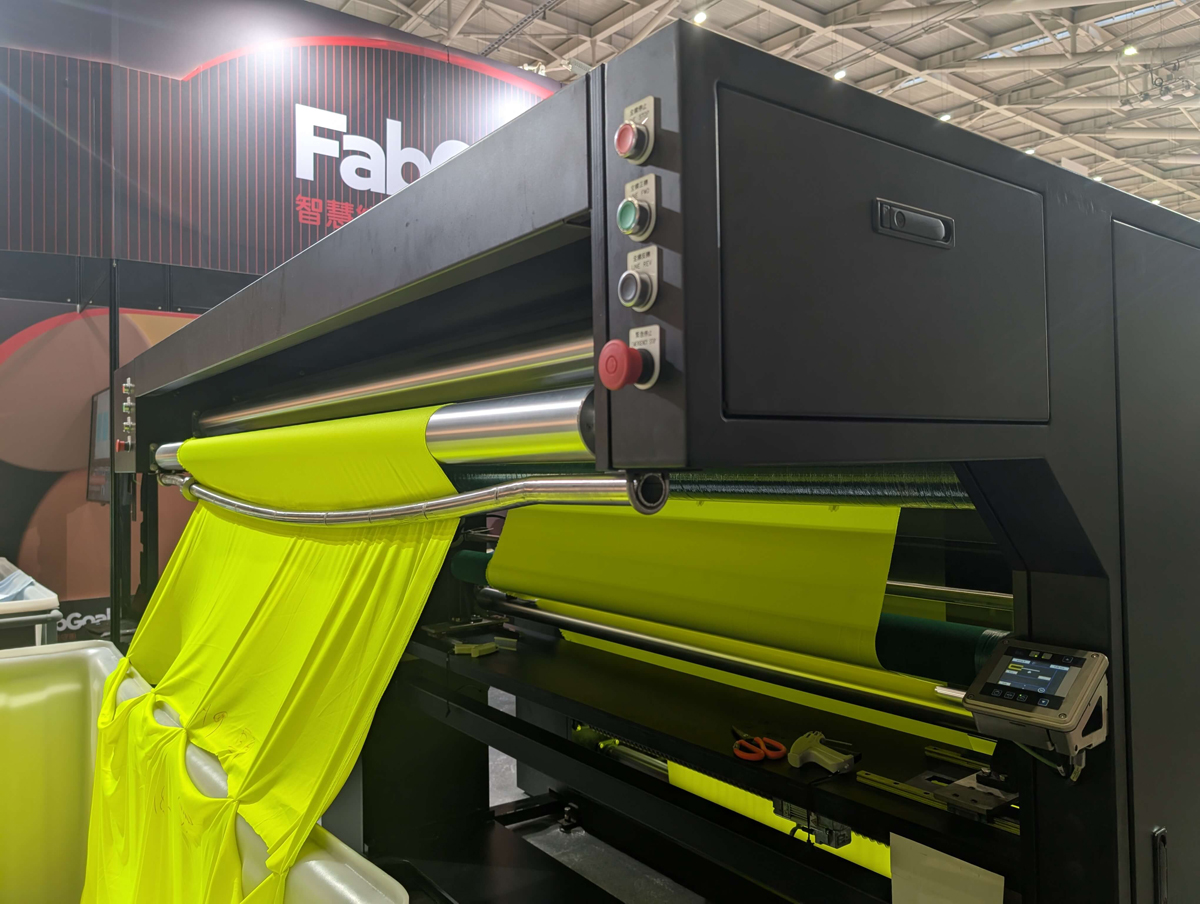
The hardware is designed for space efficiency, making it suitable for inline deployment in production environments. Moreover, the system is flexible: both the number of cameras and other components can be adjusted. For instance, adding more cameras increases accuracy when required.
AI Learning Status Quo and Practical Application
Automated object detection in fabric production is not new. Earlier attempts relied on pattern-matching techniques long before the current AI boom. So, what has changed? Today’s deep learning models and advanced image recognition techniques have significantly improved the accuracy and efficiency of defect detection systems. Still, despite these advances, engineers face a challenge: providing the AI with a sufficient number of defect samples.
This difficulty arises from the vast diversity of defect types and the rarity of certain flaws, some of which may appear only once a year in actual production. Engineers generally estimate that at least 100 real-world defect samples are required to effectively train an AI model.
For the system to be cost-effective and practically valuable, it must also handle a wide range of fabric colors and types. Every change in structure, yarn, or material presents new challenges during the learning phase, making data diversity a key factor in system performance.
Understanding AI Learning Models
The engineering team at NYCU addressed this challenge by augmenting existing samples to accelerate the learning process, thereby shortening the deep learning phase. For some defects, such as hooked yarns, fabric color has little influence on detection accuracy. However, for other flaws, such as color stains, the algorithm’s detection rate varied significantly depending on the fabric’s color. Over time, the engineers gained experience to improve the usage of cross-color samples.
As a result of the augmented samples, FabGoalie AI achieves better detection rates than traditional manual inspections and provides a more precise solution for identifying flaws. These results are due to superior AI models and a deeper understanding of how these models work, enabling the system to overcome the limitations of relatively small data samples.
Focus on Practical Application
Another key aspect that sets FabGoalie AI apart is that it was never conceived as a purely research-oriented project. Instead, it was designed for practical application, including rigorous field tests. NYCU collaborates with several leading fabric vendors to ensure the system meets the expectations of staff working in production environments.
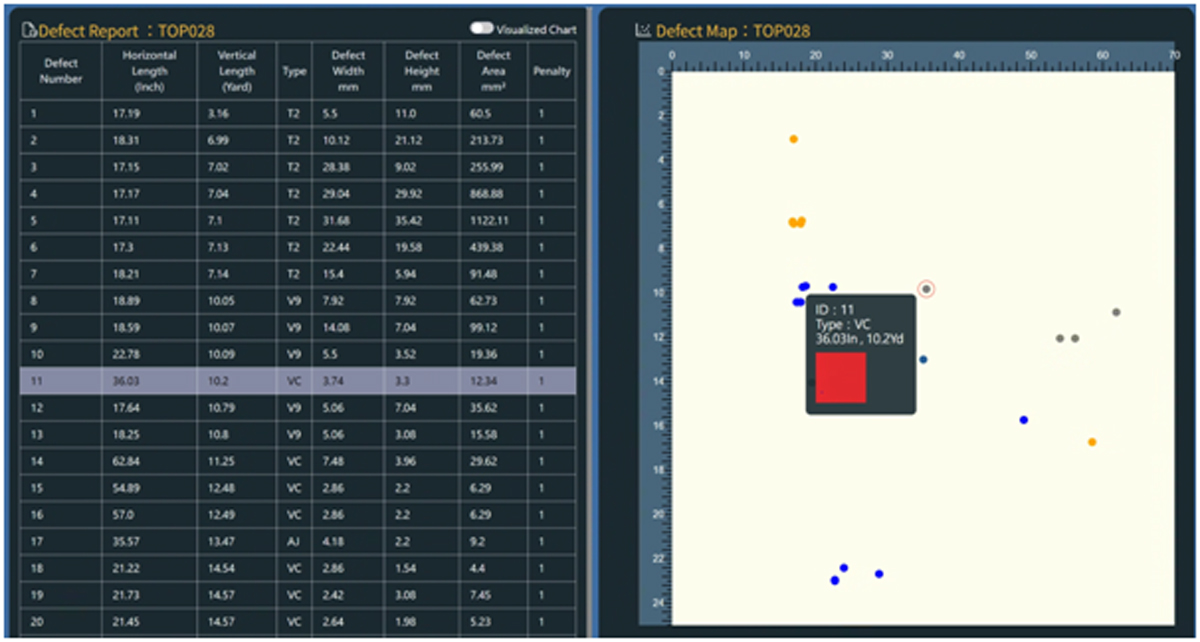
The system’s graphical user interface (GUI) comes with preconfigured tables and various charts, and it is device-agnostic. The application is mobile-optimized and offers multiple reporting features. For instance, the GUI provides a smooth user experience tailored for decision-makers in production environments. QR codes enable quick access to dashboards, while the multilingual web app ensures accessibility from different locations and supports long-term analytics.
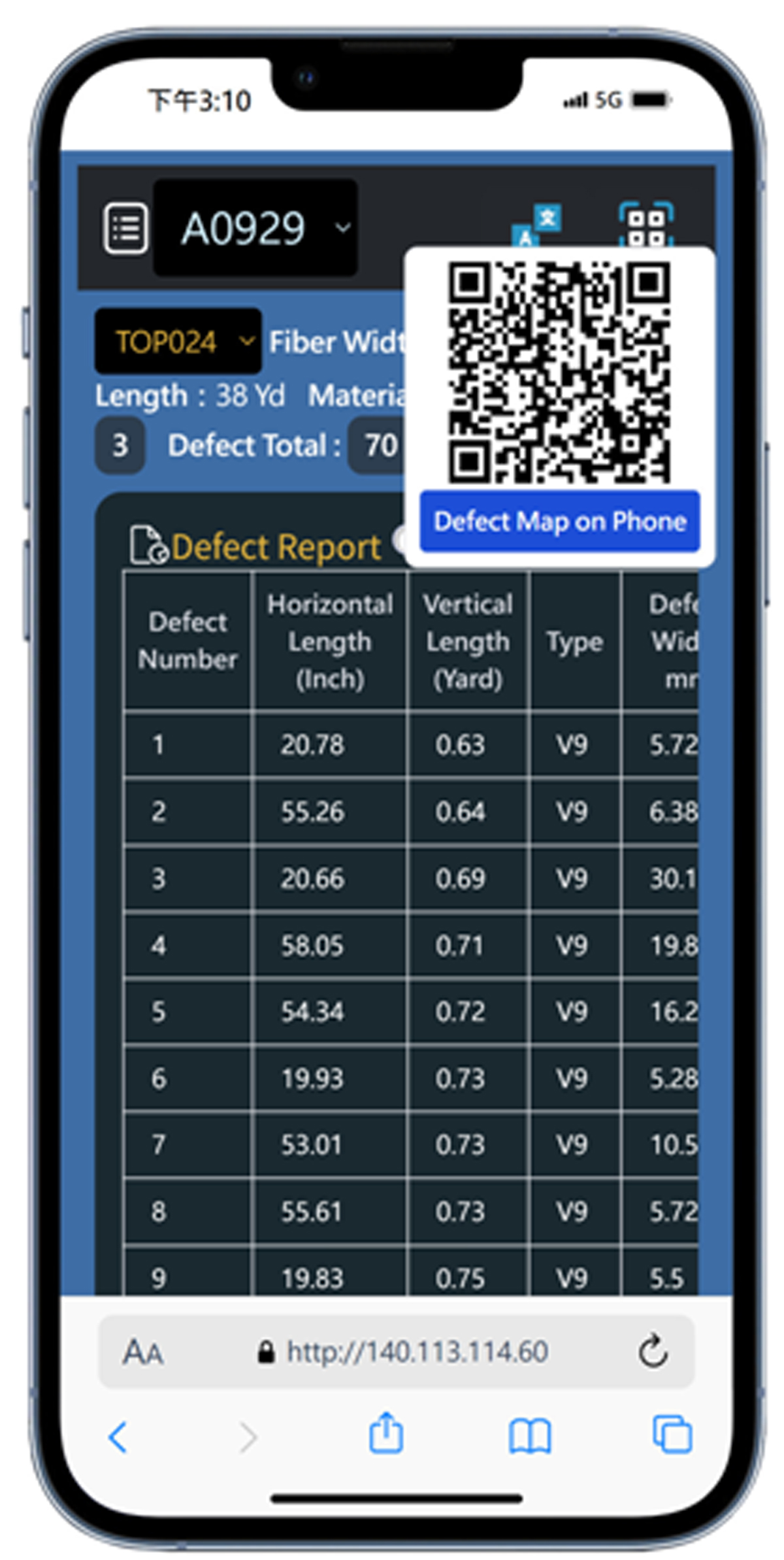
The system also assigns a penalty score to quantify the severity of each flaw. These scores provide actionable guidance for fabric producers, enabling corrective measures such as removing defective sections. The penalty criteria are adjustable to ensure alignment with established quality standards. Minor flaws that have minimal impact on production may be considered acceptable, whereas major defects are automatically flagged for further inspection or intervention.
Future Challenges
At the moment, the engineers are working to improve detection accuracy by leveraging larger and more diverse datasets. Trials in real production settings have provided valuable insights, with the potential to expand the range of detectable defect types. These trials also confirm that FabGoalie AI can be seamlessly deployed in existing production lines without disrupting workflows.
FabGoalie AI will soon be able to detect color inconsistencies across the fabric width, including flaws such as pattern discoloration. The team behind FabGoalie AI is now looking for fabric producers interested in extending deployment across multiple manufacturing sites.
New partners will help expose the model to a broader spectrum of materials, structures, and defect types, enabling it to address rare and complex flaws. A multi-site expansion will also ensure adaptability to diverse production environments.