In an industry often driven by trends and timelines, Shahi Exports stands out for its grounded, long-term commitment to sustainability. In this exclusive interview, Mr. Anant Ahuja, Director of ESG and Sustainability, shares how India’s largest apparel manufacturer is translating circularity from concept to commercial reality. From piloting next-gen materials to building brand partnerships rooted in trust and transparency, Shahi’s journey reflects both the promise and the complexity of scaling sustainable innovation in fashion manufacturing.

Question : Circularity is often discussed as a shared aspiration within the fashion industry. From your perspective as a manufacturer, how is Shahi Exports translating this vision into tangible action on the ground? What progress have you seen, and where do the biggest gaps still lie?
At Shahi, we turn circularity from concept into practice. Our factories act as innovation labs where we pilot new ideas, measure outcomes, and scale what works. We have made the most progress in production innovation by reducing water, energy, and chemical use through dry processing, upgraded machinery, and stronger process controls.

Product innovation poses a bigger challenge. Scaling recycled or next-gen materials and designing for end-of-life requires early alignment with brands. Without clear specifications and long-term support, these ideas struggle to reach commercial production.
We have partnered with textile-to-textile recycling innovators like Circ and Circulose. These pilots have shown technical success and commercial potential, and we aim to scale further. Beyond fibres, we recycle water, reuse cutting waste, and eliminate hazardous chemicals. Yet industry dialogue often centres only on fibre recycling, which still faces logistical and technological hurdles.
Question : Integrating innovations like fiber regeneration, mechanical recycling, and dry processing into large-scale production remains a challenge. What has your experience been in piloting such solutions at Shahi? Which technologies show the most promise, and what are the practical limitations you’ve encountered?
We have piloted several circular solutions directly on the production floor to test performance under real manufacturing environments. We advanced trials with agri-waste-based fibers and scaled bio-based processing technologies that reduce water and chemical use.
Drop-in solutions with no heavy capex offer the most immediate potential. They integrate into existing infrastructure and avoid the complexity of fiber regeneration.
Constraints exist beyond the factory. Reverse logistics for post-consumer waste remains underdeveloped. Most technologies require upfront investment, new processes, and longer lead times. Without sustained brand commitment, pilots do not progress to scale.
Technology has proven viable, but commercial integration is missing. To move forward, the industry needs to share risk, align on specifications early, and commit to long-term partnerships. That’s the only way to bring these innovations into mainstream production.
Question : Many circular practices come with a higher upfront cost or require rethinking existing infrastructure. How do you balance financial sustainability with environmental goals while making investment decisions around circularity?
Circular innovations often come with higher upfront costs, infrastructure changes, and uncertain returns in the beginning. To manage this, we take a phased approach. We start with small pilots, see how the solution fits into our operations, and scale only when it works well and makes commercial sense.

We look beyond environmental benefits. We ask if the solution improves efficiency, saves resources like water or energy, or supports better product stories. These practical gains help us stay committed over time.
For larger or more complex innovations, we rely on close collaboration with brand partners. Shared planning, steady orders, and some level of co-investment make it easier to move beyond the pilot phase.
We want our investments in circularity to last. That means choosing ideas that can grow with time and drawing support from across the supply chain. It is not always easy, but it becomes possible when we stay focused on both impact and practicality.

Question : Collaboration with brands is often cited as a crucial enabler of sustainable innovation. Can you share examples of successful long-term partnerships that have helped advance circular practices at Shahi? What kind of commitment and alignment from buyers is truly needed to make circularity viable?
Long-term brand partnerships have been crucial in moving circular innovations at Shahi from pilot to production. We are now fulfilling a commercial order for garments made with recycled fiber derived from textile waste. This is a rare example of a textile-to-textile recycled material reaching mainstream volumes. For next-gen materials, we are scaling up agri-waste-based fibers following successful early-stage validation. This progress is possible because brand partners support bulk trials and sign value chain agreements with innovators to help them scale.
What makes these collaborations work is the early involvement of suppliers, clear volume commitments, and shared ownership of both cost and risk. When design, sourcing, and sustainability teams align on goals, progress accelerates.
The main barrier is not the technology. It is the mindset. Circularity needs trust, transparency, and longer-term thinking. Too often, sustainability is still treated as an add-on to commercial decisions. By including suppliers in the innovation journey from the beginning, we can build the systems needed to support circular production at scale.

Question : What structural or systemic challenges, such as policy, waste management infrastructure, or regulatory gaps—are hindering the scaling of circular solutions in India’s manufacturing landscape?
Circularity in India’s manufacturing sector faces both operational and systemic challenges. Post-consumer waste collection and reverse logistics remain largely unorganized, making large-scale textile-to-textile recycling a challenge. Although policies are evolving, regulatory clarity, incentives, and funding support for circular infrastructure and next-generation material innovation remain limited.
Waste segregation and traceability are fragmented across formal and informal sectors, affecting the quality and consistency of recovered materials. The absence of standardized definitions, certifications, and metrics for circularity adds uncertainty across the value chain.
On the commercial side, suppliers often shoulder the financial and operational risks of innovation, while brands retain control over pricing and product decisions. Short-term contracts and price-first procurement approaches discourage the long-term investments required for systemic change.
Fragmentation within brand teams between design, sourcing, and sustainability can further slow progress beyond the pilot stage. Ultimately, scaling circularity demands more than new technology. It calls for aligned priorities, long-term partnerships, and trust across the supply chain.
Question : Circularity often starts at the design stage. How can manufacturers like Shahi work more closely with designers and brands to ensure garments are created with end-of-life in mind? Are there any ongoing projects or collaborations that showcase this integration?
Circularity begins at the design table, but manufacturers need to be involved early to ensure that creative concepts become products that are both recyclable and scalable. At Shahi, we have worked with brands to prototype garments using mono-materials, recycled yarns, recyclable trims, and natural dyes.
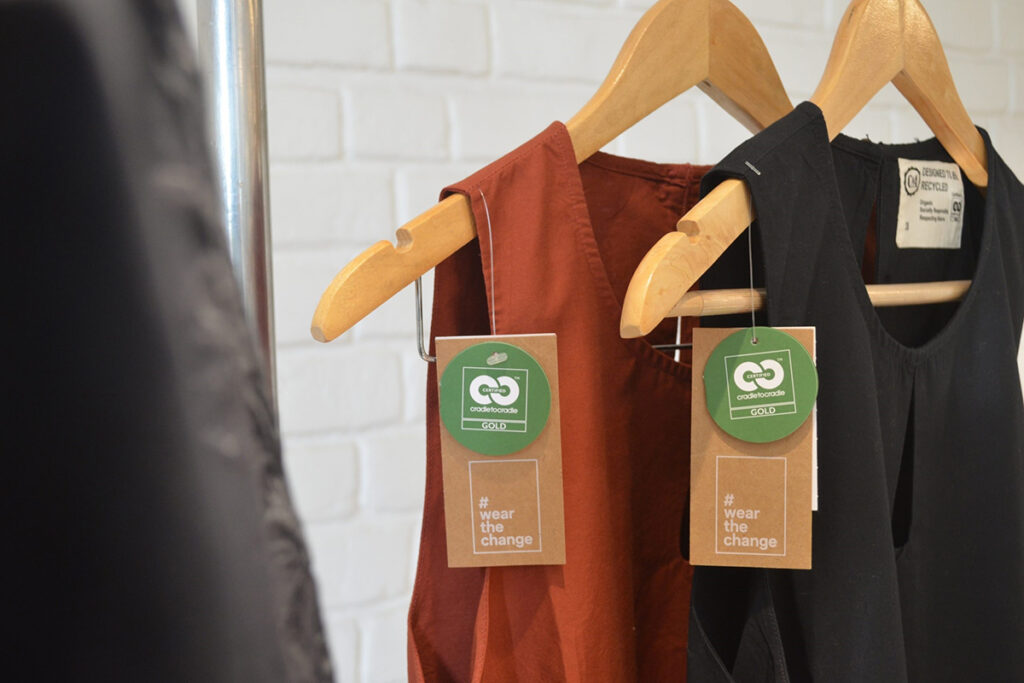
One example is the Cradle-to-Cradle certified Arth dress, developed over 18 months with organic cotton, recyclable trims, ZLD processing, solar energy, and inert chemicals. 50,000 units confirmed that a fully circular garment can be scaled in production. However, the absence of a repeat order shows that technical success alone does not guarantee commercial adoption.
Our key takeaway is that circular products must align design, sourcing, marketing, and sustainability from the outset. Manufacturers bring expertise in material compatibility, recyclability, and production feasibility. But we also recognize the need for compelling storytelling to connect consumers with the product’s value.
To bridge the gap, there is potential in joint product development sessions, embedding circularity into initial briefs, and aligning demand forecasting with sustainability goals. Without this integration, circularity risks staying at the pilot stage.
Question : Measuring circularity is complex. What frameworks or metrics does Shahi Exports use to track progress in circular manufacturing, and how do you ensure transparency and traceability across the value chain?
Measuring circularity is not just about tracking environmental metrics; it involves creating a system that works for both materials and people. At Shahi, we monitor progress at two levels.
On the production side, we track waste minimization and reuse, water recycling and zero liquid discharge, and improvements in energy and chemical efficiency, including compliance with ZDHC guidelines. We are also increasing our use of next-generation materials and recycled inputs. At the product level, we assess material composition, recyclability, integration of certified inputs like GRS, OEKO-TEX, FSC, and Cradle to Cradle, as well as design-for-disassembly and mono-material approaches in pilot programs.
We are developing a digital traceability platform to centralize all cotton traceability records. This will enable fiber-to-factory mapping, product passports, and greater transparency.
Equally important is the social dimension. A truly sustainable system must support people, so we focus on worker upskilling to enable circular practices like segregation. We also invest in well-being programs, grievance mechanisms, and gender equity. By combining technical rigor with social responsibility, we aim for progress that’s measurable, transparent, and meaningful.
Question : Looking ahead, what are the key enablers that could accelerate the transition to circular fashion manufacturing at scale? What role do you envision Shahi Exports playing in shaping this future?
Scaling circular fashion manufacturing requires a fundamental shift in buyer–supplier relationships. We must move beyond transactional deals and build collaborative partnerships based on co-investment, shared risk, and aligned planning to take innovation beyond pilot stages. Stronger demand signals from brands and consumers are equally important. This includes clearer procurement policies that prioritize circular materials, incentives for recycled or low-impact fibers, and support for longer lead times and flexible specifications during circular pilots.
Infrastructure development is critical, especially investment in reverse logistics and recycling systems to manage post-consumer waste, particularly in the Global South. Government policy also plays a vital role through Extended Producer Responsibility mandates, incentives for recycled content, and the creation of clear standards and frameworks for circularity.
At Shahi, we are taking concrete steps toward circularity through targeted investments that align with the realities of large-scale manufacturing. Our investments span fiber-to-fiber recycling, next-generation materials, and low-impact processing, all grounded in the realities of large-scale manufacturing. Just as importantly, we prioritize worker well-being as integral to a truly sustainable supply chain. By connecting efforts across suppliers, brands, innovators, and policymakers, we’re working to reshape the infrastructure and relationships needed to make circular fashion commercially viable at scale.
Conclusion
Mr. Ahuja’s insights reveal that circularity is not just a technological challenge—it’s a systemic shift that demands collaboration, patience, and shared ownership across the value chain. Shahi Exports is proving that with strategic pilots, brand alignment, and a focus on both environmental and social impact, circular fashion can move beyond aspiration to become a scalable, profitable reality. As the industry grapples with fragmented infrastructure and short-term thinking, Shahi’s model offers a blueprint for how manufacturers can lead the transition—one partnership, one pilot, and one product at a time.