In a significant step toward sustainable engineering processes in the textile industry, Spray Engineering Devices Limited (SED) has successfully engineered and commissioned an advanced wastewater treatment system for Jyoti Textile, a leading textile manufacturer from Rajasthan committed to cleaner, future-ready operations. The project demonstrates how focused innovation and engineering excellence can help the textile industry transition to environmentally responsible, resource-efficient manufacturing.
Engineering a Future Built on Responsibility
Textile processing remains one of the world’s most water-intensive industrial activities, with effluent streams that are complex, variable, and challenging to treat. Across the industry, manufacturers face rising regulatory compliances, increasing water scarcity, and a growing need to reduce energy dependence and operational expenditure.
Jyoti Textile chose to address these challenges by partnering with SED for their flagship wastewater treatment solution without any pre-treatment requirment that not only ensures complete water recovery but also delivers long-term operational and economic stability. What emerged is a state-of-the-art installation that sets a strong benchmark for modern textile effluent management.
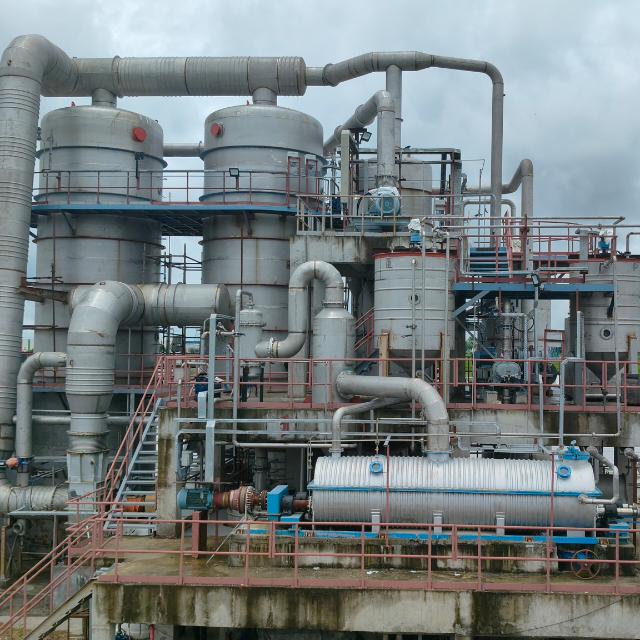
SED’s MVR-Based LTE® Wastewater Treatment Solution: Engineering That Delivers
At the heart of the system is SED’s Mechanical Vapour Recompression (MVR)–based Low Temperature Evaporation (LTE®) technology. This advanced, electrically driven solution operates without a boiler, enabling a zero-carbon emission evaporation process and dramatically reducing dependency on utilities.
The performance parameters highlight why MVR-based LTE® is becoming the preferred wastewater treatment pathway for textile manufacturers:
- From a 12.5 m³/hr capacity, the system recovers up to 98% clean water which can be completely reused (TDS below 25 PPM), from textile effluent containing nearly 10,000 PPM inlet TDS and COD up to 10,000 PPM.
- It achieves this while requiring only 1250 kg/day of steam, resulting in almost 75% lower OPEX than other conventional systems.
- Its low-temperature operation, inherent to the MVR-based LTE® process, reduces scaling, lowers CIP frequency, and ensures higher uptime, maximising productivity with minimal operating cost.
- With negligible steam consumption, optimised heat recycling, and electrically driven vapour recompression, the system maintains exceptional efficiency.
The recovered condensate is reused within the plant, substantially reducing freshwater dependency and ensuring consistent compliance with environmental norms.

Driving Sustainable Transformation Across the Textile Industry
This installation reinforces SED’s mission to lead energy-efficient, future-ready advancements in textile wastewater treatment. By using MVR-based LTE®, SED enables manufacturers to adopt advanced wastewater treatment without the cost and complexity historically associated with thermal technologies.
Today, sustainability and advanced wastewater treatment stand as necessities, not trends. SED empowers industries to adopt these essential practices seamlessly, without the pressure of high operating costs or complex utilities. With innovation and commitment, we can ensure that the industries of today lead the way to a greener, more resilient tomorrow.