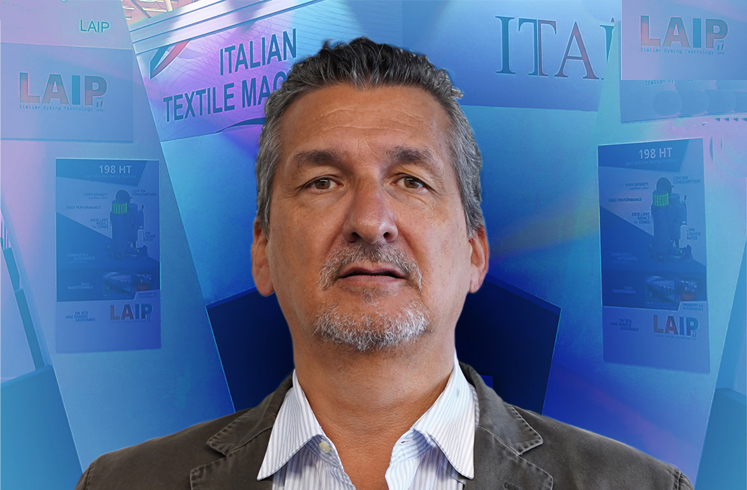
In an industry navigating global uncertainties, tariff challenges, and shifting consumer demands, LAIP has emerged as a resilient and forward-looking technology partner for textile producers worldwide. Under the leadership of Mr. Massimo Becheri, CEO of LAIP, the company continues to strengthen its focus on innovation, automation, and sustainability while maintaining steady growth in key markets. As the textile sector prepares for ITMA ASIA 2025 in Singapore, LAIP is set to unveil groundbreaking solutions that reinforce its reputation as a global leader in dyeing technologies.
Despite multiple wars, economic headwinds, and tariff-related hurdles, 2025 has been a year of resilience and adaptability for LAIP. According to Mr. Becheri, “While geopolitical uncertainties and tariff concerns have impacted supply chains and cost structures, our focus on operational efficiency, innovation, and customer-centricity has enabled us to maintain stability.” The company remains cautiously optimistic, backed by consistent demand in core textile markets.
Innovation at the Core of LAIP’s Strategy
Innovation continues to define LAIP’s growth trajectory. The JET 250 stands out as a benchmark solution for dyeing synthetic fabrics with high elastic fiber content, ensuring efficiency and reliability. Simultaneously, the company is expanding into fiber recycling and cotton fiber recovery systems, reinforcing its commitment to a circular textile economy.
“These developments highlight our dual focus: delivering cutting-edge performance to our customers while contributing to a more sustainable future for the industry,” emphasizes Mr. Becheri.

Spotlight on ITMA ASIA 2025 – The MINI JET Revolution
At ITMA ASIA 2025, LAIP will introduce the MINI JET, a compact yet powerful innovation designed for synthetic fabric sampling. “The MINI JET enables in-house dyeing of up to 20 meters per color, allowing the development of real garment prototypes while ensuring 100% dye reproducibility,” explains Mr. Becheri. With up to 50% time savings in dyeing cycles, the MINI JET promises to accelerate product development and customization, making it one of the must-see highlights of the show.
Global Market Dynamics and India’s Strategic Role
LAIP’s growth in 2025 has been driven by Asia, the Middle East, and Latin America, even as tariff barriers remain a challenge. The company’s focus on the high-end customer segment has ensured stability.
India, in particular, holds strong promise. “Despite the short-term challenges related to tariffs, our positioning in India remains strong,” says Mr. Becheri. He highlights India’s growing demand for synthetic fabrics such as polyamide blends with 30–40% Lycra, where LAIP’s technologies deliver clear competitive advantages.
MMF Growth and Expanding Dyeing Capacities in India
India’s textile industry is witnessing a structural shift from cotton to man-made fibers (MMF), coupled with new investments in dyeing and processing. Mr. Becheri notes, “The transition towards MMF-based textiles is aligned with LAIP’s core expertise. We are already engaged in several promising development projects with customers in nylon and polyester, for both knitted and woven fabrics.”
At the same time, LAIP continues to support the cotton sector with innovative dyeing solutions, ensuring its technologies cater to a broad spectrum of the industry.
Competitive Edge Through Technology and Partnerships
In a highly competitive machinery market, LAIP differentiates itself through innovation, customer-centricity, and sustainability. “Our machinery is designed with decades of expertise, integrating advanced technology with user-friendly operation and robust reliability,” stresses Mr. Becheri. The company’s dedicated after-sales support and localized approach further enhance its global appeal.
Automation, Digitization, and Robotization
Automation and digital transformation are reshaping textile manufacturing, and LAIP is at the forefront. The company has delivered fully robotized production plants equipped with smart sensors, predictive maintenance, and real-time analytics. “These systems optimize energy, water, and chemical consumption while ensuring full process traceability,” says Mr. Becheri. This leap confirms LAIP’s positioning as a technological partner for the future of textile production.
Sustainability as a Business Imperative
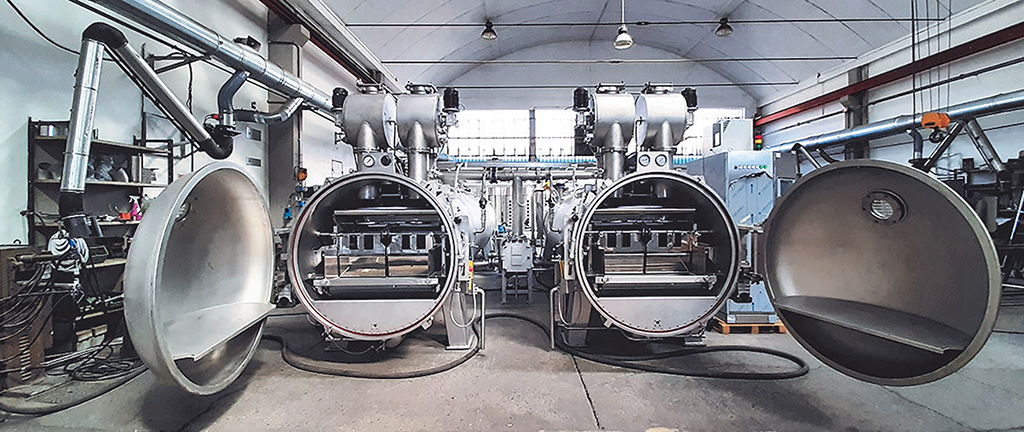
Sustainability drives both customer demand and LAIP’s innovation pipeline. The company’s technologies enable mills to reduce water, energy, and chemical usage significantly. A notable achievement is LAIP’s role in supplying the largest plant worldwide for recovering cotton fibers from polyester/cotton post-consumer waste, a fully robotized milestone in circular textile production. “This achievement underscores our dual commitment: delivering cutting-edge technologies while actively supporting the industry’s transition toward a cleaner, safer, and more sustainable future,” affirms Mr. Becheri.
Outlook for 2025 and Beyond
Looking ahead, LAIP sees balanced opportunities and challenges. “We expect the global textile industry to remain dynamic, with challenges balanced by significant opportunities in sustainability, digital transformation, and emerging market growth,” notes Mr. Becheri. In India, continued modernization and MMF-driven expansion are expected to strengthen the country’s global position.
For LAIP, the strategy is clear: expand sustainable and automated solutions, deepen partnerships, and reinforce its presence in growth markets—all while ensuring strong after-sales service to maximize customer success.
Through resilience, technological innovation, and sustainability-driven solutions, LAIP is charting a steady course in a turbulent global landscape. As the company prepares to showcase the MINI JET at ITMA ASIA 2025, its vision remains steadfast: to be a trusted partner for textile producers worldwide, enabling them to embrace efficiency, sustainability, and future readiness.