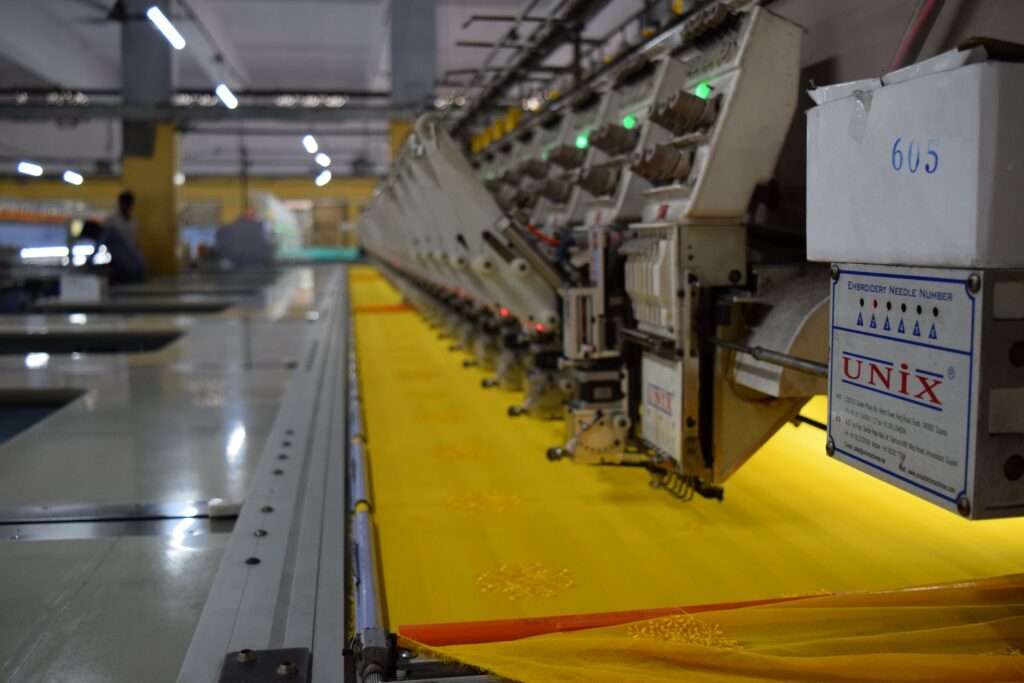
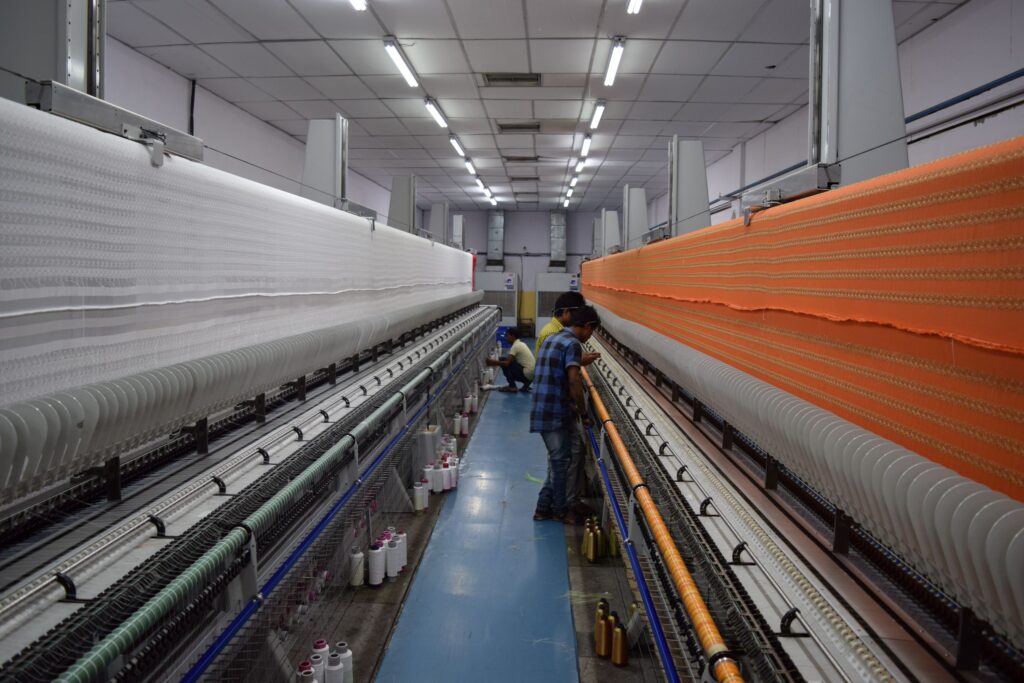
In the ever-evolving landscape of India’s textile industry, few names have withstood the test of time with the same resilience and reverence as Laxmipati Sarees. What began as a modest trading venture in a rented shop in Surat in 1983, founded by the visionary Mr. Govind Prasad Sarawagi, has today blossomed into one of the leading textile manufacturing powerhouses in Surat. From humble beginnings to commanding a significant presence with over 500+ looms, 2 lakhs meters of processing per day, 200+ value addition machines, 600+ stitching machines, and a state-of-the-art integrated factory, the journey of Laxmipati is one that exemplifies grit, growth, and adaptability.
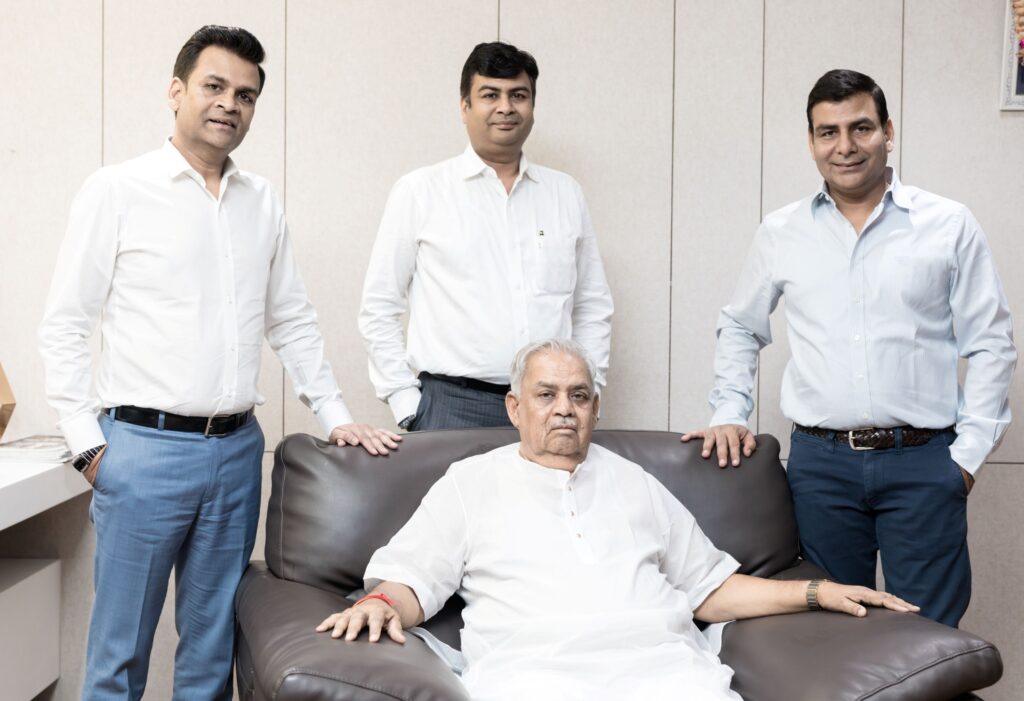
Built on the bedrock of traditional values and entrepreneurial ambition, Laxmipati Sarees has grown steadily despite the challenges of an intensely competitive market. The founder’s bold move to shift operations to Surat—a hub of textile innovation—laid the foundation for the company’s large-scale manufacturing and design capabilities. Over the decades, the brand has successfully combined the essence of Indian craftsmanship with the pace of modern fashion, offering sarees that are not only aesthetically appealing but also tailored to changing consumer tastes.
From a one-man team in the initial days, Laxmipati has grown into a robust enterprise under the able leadership of the second generation— Mr. Sanjay Sarawagi , Mr. Manoj Sarawagi and ,Mr. Rakesh Sarawagi, , who have played a pivotal role in scaling up the business and driving its transformation into a leading name in the saree industry. Today, the company employs over 3,500+ human resources in its textile composite unit, operating from a sprawling 2,25,000 square yard integrated facility in Surat. Strengthening this legacy further, the third generation—Mr. Harddik Sarawagi and Mr. Parth Sarawagi—has now stepped into the business, bringing with them fresh ideas, a strong digital orientation, and a forward-looking approach that aligns with the brand’s vision of innovation, consumer-centricity, and sustainable growth. As they take the baton forward, both brothers are steering the company into new avenues — from retail and digital transformation to sustainable manufacturing, fair labor practices, and global expansion. In an in-depth conversation, they share their journey, ethos, and the strategic roadmap for scaling Laxmipati into a future-ready textile brand rooted in values.


Laxmipati Sarees : Carrying a Legacy, Creating a New Path
For both Harddik and Parth, Laxmipati is more than just a business—it is a family legacy that dates back to their grandfather’s vision. Yet, both of them stepped into the business without formal textile education, relying instead on real-world experience and a deep-rooted commitment to evolve the business responsibly.
Harddik recalls, “I started out quite organically, observing my father manage the business. When the need came to professionalize and bring in systems, I stepped in full-time. But I realized quickly that we needed more than tradition—we needed structure, branding, and a vision for the next 20 years.”
Parth adds, “While I did my Business Administration, I had no formal training in textiles. But I was always fascinated with the scale and potential of the industry. I began visiting the factory during college breaks and eventually joined when the opportunity came with a new venture. What really attracted me was the challenge of creating something new while contributing to a well-established brand.”
Harddik’s entry into the business brought a pivotal change. Traditionally a wholesale and B2B brand, Laxmipati Sarees is now transforming into a modern retail and consumer-facing brand.
“One of the biggest shifts we’ve made is getting closer to the end customer. With our primary focus on Wholesale and retail channels, we are now building a strong e-commerce presence. We’re also experimenting with contemporary formats like pop-up stores and influencer collaborations,” says Harddik.
The company is investing in revamping its product presentation, retail ambience, and branding to appeal to a younger, more discerning audience, without losing its deep cultural roots. “The idea is to keep the tradition alive but presented in a language today’s customer understands,” he adds.
Understanding that the future of retail lies in omnichannel experiences, the Sarawagi brothers are making digital investments a priority. Laxmipati Sarees now actively engages with customers across different digital platforms including their own Website-Laxmipati.com .
“Our social media is not just for promotions, it’s a channel for storytelling,” Harddik shares. “We use it to educate our audience on the heritage of our sarees, our processes, and even on how to style them. Our aim is to make sarees aspirational yet accessible to the younger generation.”
Foray into Technical Textiles
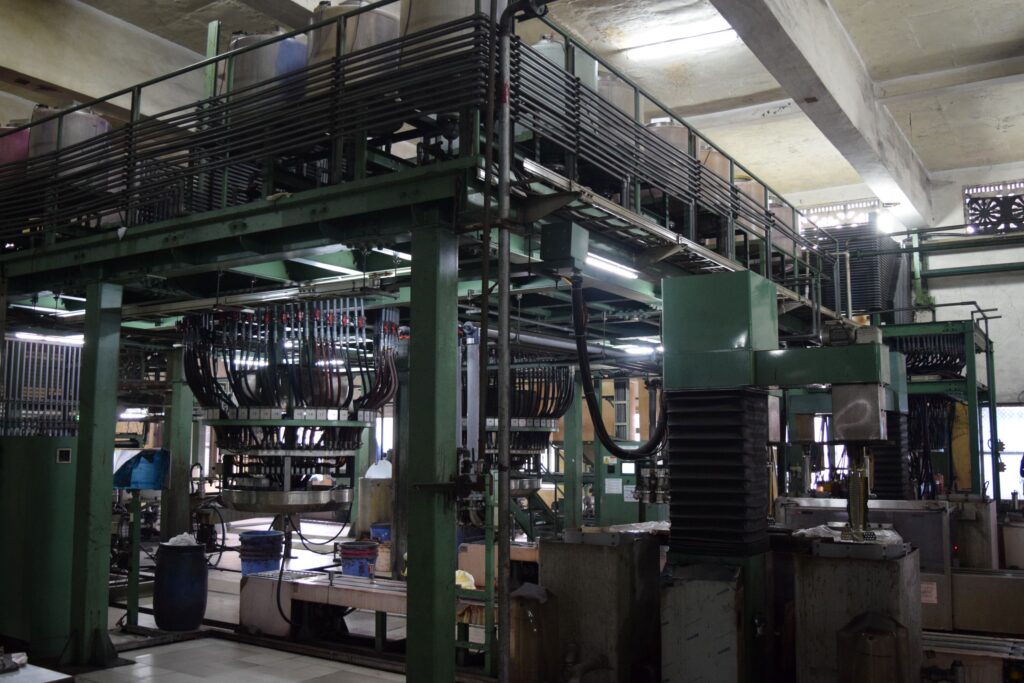
Laxmipati Group has steadily expanded its expertise into the technical textiles space, focusing on high-performance fabrics made from polyester and nylon ranging from 40 to 600 GSM. With robust in-house capabilities, the Group now supplies durable and specialized fabrics for demanding segments such as defence, luggage, and activewear. These textiles are engineered for strength and reliability, making them suitable for a wide range of industrial and commercial applications, including industrial belts and load-bearing components.
What sets Laxmipati’s technical textiles apart is the integration of advanced functional finishes that meet both performance and comfort requirements. The fabrics are treated with technologies that impart water repellence, durable water repellence (DWR), moisture management, wicking, and anti-microbial properties. This combination of technical performance and material versatility positions Laxmipati Group as a key player in India’s growing technical textiles industry, with the capability to cater to global markets demanding quality, innovation, and functionality.
Laxmipati Apparels – The Evolution of a Legacy Brand
Laxmipati Apparels (LPA) is a powerful symbol of the Laxmipati Group’s next chapter in India’s vibrant textile and apparel story. Spearheaded by Mr. Parth Sarawagi, Director and a dynamic next-generation leader of the Laxmipati Group, the company brings together decades of textile expertise with the energy and ambition of modern fashion entrepreneurship. Under his leadership, LPA has emerged as a cutting-edge player in the ready-made garments (RMG) space, poised for strong growth in global and domestic markets.
“Apparel is a natural extension of our capabilities. We already had world-class infrastructure, vertical integration, and technical expertise in place. We wanted to put all of that to work in a way that redefines how modern apparel is made in India — with quality, speed, and sustainability,” says Mr. Parth Sarawagi.
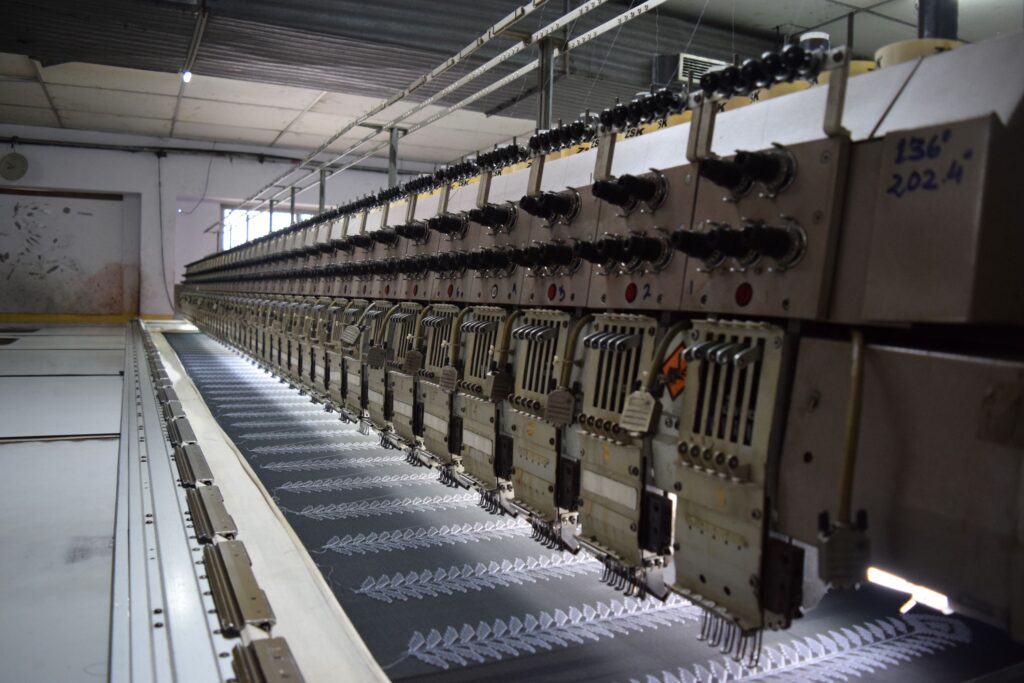
The Laxmipati Group’s deep knowledge of raw materials, printing, finishing, and value addition has enabled the apparel vertical to ramp up quickly while maintaining stringent quality benchmarks. “Our core strength lies in the ecosystem we’ve built. Everything from spinning to dyeing, embroidery to finishing — we have it in-house. That gives us total control over cost, quality, and turnaround time,” Parth highlights.
Situated on an expansive 11-acre campus in Surat, Gujarat, the Laxmipati Apparels facility is designed to deliver global-standard manufacturing at scale. Currently operating seven streamlined production lines and 1,000 stitching machines, the unit boasts a monthly capacity of 350,000–400,000 pieces. By 2026, LPA aims to triple this output to over 1 million pieces per month.
“We’ve invested heavily in lean manufacturing, digitization, and quality assurance. Everything is designed to be agile and scalable,” Parth explains. The unit includes CAD systems for pattern making, automated cutting and spreading, in-house labs approved by leading retailers, and specialized R&D and sampling units.
Importantly, the workforce is predominantly women, supported by structured training, dignified employment, and health and safety measures — aligning with the company’s inclusive growth philosophy.
Global-Ready Product Portfolio and Trusted Partnerships
LPA’s products span a broad spectrum of casual and performance wear, manufacturing men’s polo and round-neck t-shirts, casual shirts, joggers, and athleisure garments, alongside women’s fashion tops, leggings, and activewear. “We’re focusing on versatile, high-quality apparel that fits global market needs — whether it’s premium casualwear for the West or athleisure for the Indian youth,” says Parth.
The company’s deep investment in fabric R&D allows it to meet performance benchmarks across different categories. Despite being a relatively young apparel division, LPA has quickly gained the trust of globally respected brands. It has also supplied performance fabrics to initiatives like Khelo India and actively collaborates with fibre innovation leaders like DuPont, particularly on their Sorona® range.
“When we speak to global buyers, what resonates most is our ability to deliver complete solutions — from design to fabric development, from compliance to packaging — all under one roof,” notes Parth.
Laxmipati Now Processes Knitted Fabrics as well
Under the leadership of Shri Sanjay Sarawagi , Harddik Sarawagi is playing a key role in marketing and processing of Knitted Fabrics .
Having a capacity of processing 100+ tonnes knitted fabrics monthly, Laxmipati plays a pivotal role in the Global Knitting Industry. It has an entire value chain from Deoiling to Drying and Finishing Knitted Fabrics.
It processes wide varieties of qualities like Poly Spandex ( 5 – 22% ) Poly Cationic ; 100% Nylon ; 100% Polyester Fabric ; Nylon Spandex and all kind knitted fabrics and warp – knit .
For enhancing properties of the fabric, Laxmipati also does additional treatments like Moisture Management;Wicking Finish;Silicone Finish
Sustainability & Transparency: Beyond Buzzwords
Laxmipati Sarees is putting real effort into sustainability—not just in material sourcing but also in people policies and production processes. As Harddik explains, “Today’s consumer isn’t just buying a product—they’re buying into a brand’s values. We’re ensuring that we follow best practices in labor welfare, waste management, and traceability. We’re working toward certifications like GOTS and GRS, and educating our team internally on what that means.”
In alignement, to the Group’s values, Laxmipati is compliant of Environmental and Social Governance(ESG)..
The Laxmipati Textiles facility runs on 10.6 MW of renewable energy, it further employs ZLD Water Treatment Plant enabling 100% recycling of Discharged Water .The group has also undergone an audit process to verify its adherence to ethical and responsible practices under SEDEX;WRAP;OEKO-TEX Standard 100;Higg Index;TUV NORD – ISO 9001 : 2015 & 45001 : 2018.
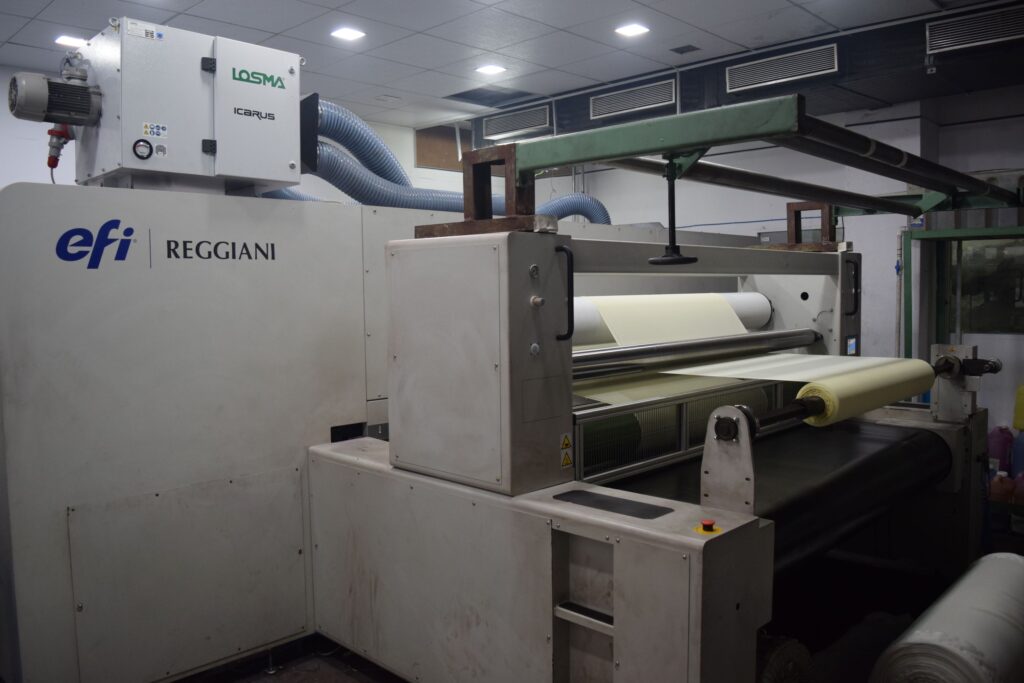
Group also adopts Eco- friendly and Low – Carbon emitting machines like Then Airflow Jet Machines;Bruckner Stenters;ICHINOSE -32 Color with Gum Automated Ktichen;Rotary having 12 and 16 Heads;28 color Flatbed Prinitng,Reggiani Digital Printing Machine ; LASSER Schiffly Machine e.t.c
Group is further compliant to ethical practices through adoption of SAP S/4 HANA for its smooth operations and transparency across its value chain . It is also compliant to 5S Methodology under Project Umang.
“Sustainability is not an optional add-on for us — it’s a long-term commitment,” says Parth. “From fibre innovation to eco-conscious packaging, we’re building a future-ready Textile Business that respects the planet.”
One of the company’s most impactful initiatives is its innovative HR approach to motivate and retain its workforce. Parth explains their incentive system: “If a worker attends the entire month without taking unauthorized leave, they receive an extra day’s wage. If they complete 90 days, they earn three extra days’ pay.”
Moreover, under the “Saathi” program, workers are encouraged to bring in friends or acquaintances to join the company. “If their referrals stay with us for more than three months, they receive additional bonuses. We’ve created a system where our own employees become brand ambassadors and talent scouts,” Parth adds. These schemes not only boost productivity and retention but also foster a sense of ownership and community among the workforce.
Beyond policies and incentives, both Harddik and Parth are deeply invested in creating a culture of empathy. “There’s a very clear distinction between running a factory and building a people-first organization,” Harddik notes. “You have to remember your team members are humans, not machines. Compliance shouldn’t be a checkbox—it should be ingrained in the company culture.”
Parth reflects, “I recently saw a QR code on a garment which told me the exact farm where the cotton came from and who harvested it. That level of traceability is becoming the norm, and with that, consumers will increasingly ask: ‘Was this product made fairly?’ We want to be on the right side of that question every time.”
Expansion Plans and Future Readiness
With a young and adaptive team at the helm, Laxmipati Group is already executing its next phase of growth. New production lines are being added to the existing infrastructure, with dedicated capacity for knitwear and performance wear. A ground floor is being developed specifically for in-house knitting machines, a move that will further improve control over production cycles and fabric customization. “Backward integration is a key part of our roadmap,” Parth adds. “Having our own knitting unit will bring a lot of flexibility and precision to the business, especially for our activewear and innerwear segments.”
While LPA already exports to markets in Europe, North America, and the Middle East, it sees tremendous untapped opportunity in the Indian domestic market. “India’s fashion appetite is exploding, and our retail landscape is maturing fast. Platforms like Myntra, Ajio, and Zudio have created new demand cycles. Our goal is to eventually have our own presence in this dynamic space,” Parth shares.
The company also believes Surat has the potential to emerge as a new garmenting hub — particularly for synthetic and blended apparel — complementing Tirupur’s cotton focus. “We’re betting big on MMF-based apparel. India needs to lead in synthetics, and Surat has all the right ingredients,” he adds.
LPA’s leadership is closely watching global trade developments, including India’s recent Free Trade Agreement (FTA) with the UK and potential future deals with the EU and the US. “In the short term, the UK FTA won’t impact us significantly as we don’t export much there right now. But over time, lower tariffs will give us an edge over competitors from Turkey, Pakistan, and Bangladesh — especially for sustainable products where we’re already ahead of the curve,” Parth explains. On the US front, he sees even greater potential. “A strong India-US trade agreement could open the door to premium buyers and larger institutional volumes. It would also help us compete better on landed cost against traditional Asian exporters. But we’ll have to wait and see how these agreements shape up,” he adds.
Looking Ahead: The Roadmap to 2030
As they look to the future, the Sarawagi brothers envision Laxmipati as:
- Working in diversified branches of textiles.
- A leading example in ethical and sustainable manufacturing
- A magnet for young talent and next-gen innovators
- A trusted name not just in India but across global markets
“We want to be seen as a brand that not only offers beautiful sarees but also builds beautiful experiences—be it for our customers, our employees, or our partners,” says Harddik.
Parth echoes this sentiment: “For us, it’s not just about running a successful company, it’s about doing it the right way. We’re still young in the business, but we want to build something that can stand strong for another 60 years.”
Crafting the Future with Heart and Heritage
Harddik and Parth Sarawagi are ushering in a bold new era at Laxmipati Sarees and Laxmipati Apparels—one where time-honored traditions meet modern sensibilities, and where growth is measured not just in revenue but in responsibility. With an unwavering commitment to innovation, transparency, and people-centric practices, they are crafting a narrative that is not only refreshing but necessary for the Indian textile industry’s next leap forward. And in doing so, they remind us that the true fabric of success lies in weaving together purpose, passion, and progress.