At the recently concluded ITMA ASIA + CITME 2025 in Singapore, Picanol, the world’s leading manufacturer of weaving machinery, once again set the benchmark for technological excellence, sustainability, and digital innovation. Over four dynamic days, the company’s booth became a hub of activity and inspiration — attracting weavers, technologists, and industry leaders eager to experience the next generation of weaving solutions first-hand. One truth stood out clearly: Picanol is not just participating in the future of textile technology—it is building it.
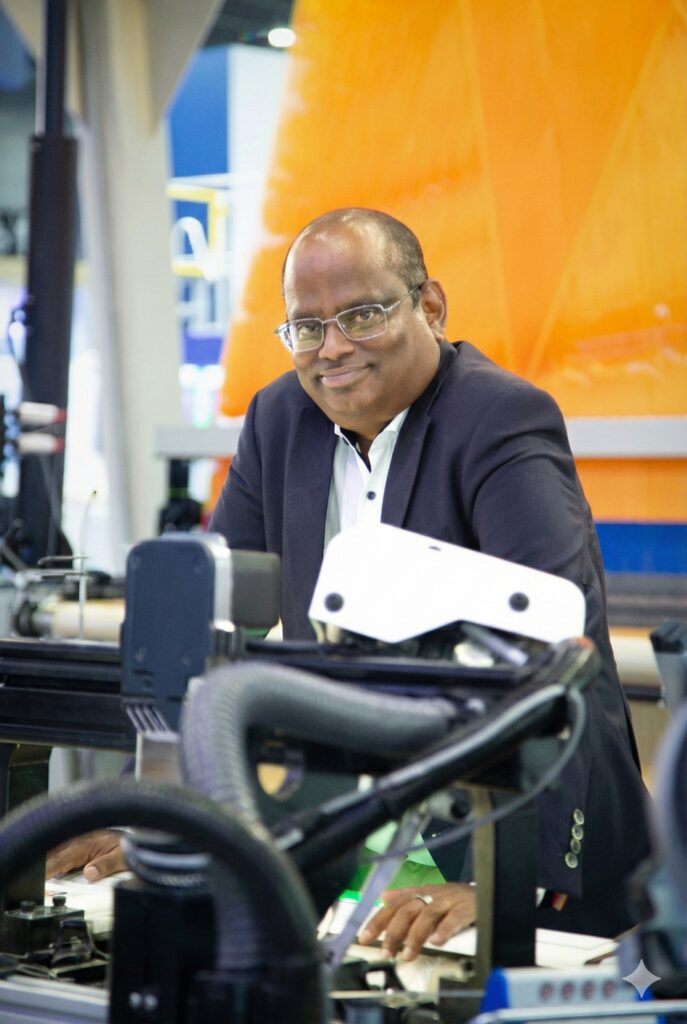
The Textile Magazine had an exclusive interaction with Mr. Kasiviswanathan Palanisamy, the Executive Director & CEO of Picanol India at ITMA Asia, who elaborated on the latest technologies on display and shared more insights. Here are the excerpts.
With nearly four decades of experience, Mr. Kasiviswanathan has been central to Picanol’s expanding footprint in the Indian textile machinery market. As ED & CEO of Picanol India, his strong understanding of global trade, customer needs and market shifts has guided the company’s growth, strengthened partnerships and accelerated technology adoption across the country.
ITMA Asia 2025 once again showcased Picanol’s technological leadership. What were the key highlights and innovations at your booth this year, and how do they represent the next phase in your product evolution?
At ITMA ASIA + CITME in Singapore, we have presented a strong lineup of weaving machines that reflect our commitment to performance, sustainability, digitalization and user-friendliness.
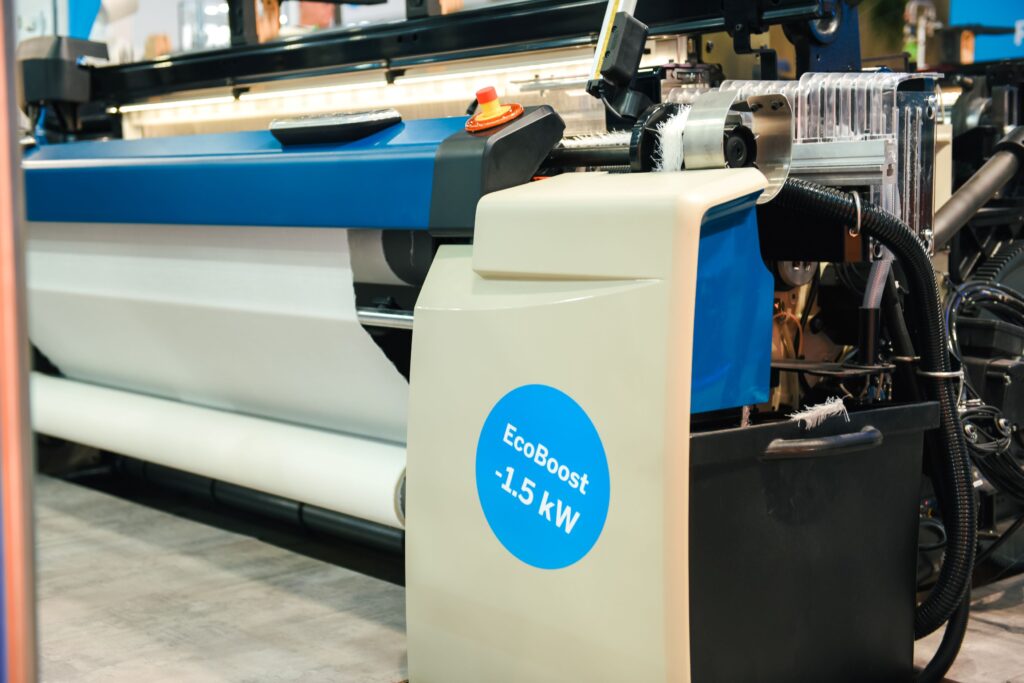
The eye-catcher of the booth was the next-generation OmniPlus-i Connect airjet weaving machine, a major leap forward in weaving technology. One of the main breakthroughs of this next-generation of airjet weaving machines is EcoBoost, ensuring energy savings up to 1.5 kW per machine. This has been made possible without compromising reliability, speed, or efficiency. This is a true game-changer for mills that are aiming to reduce operational costs and environmental impact.
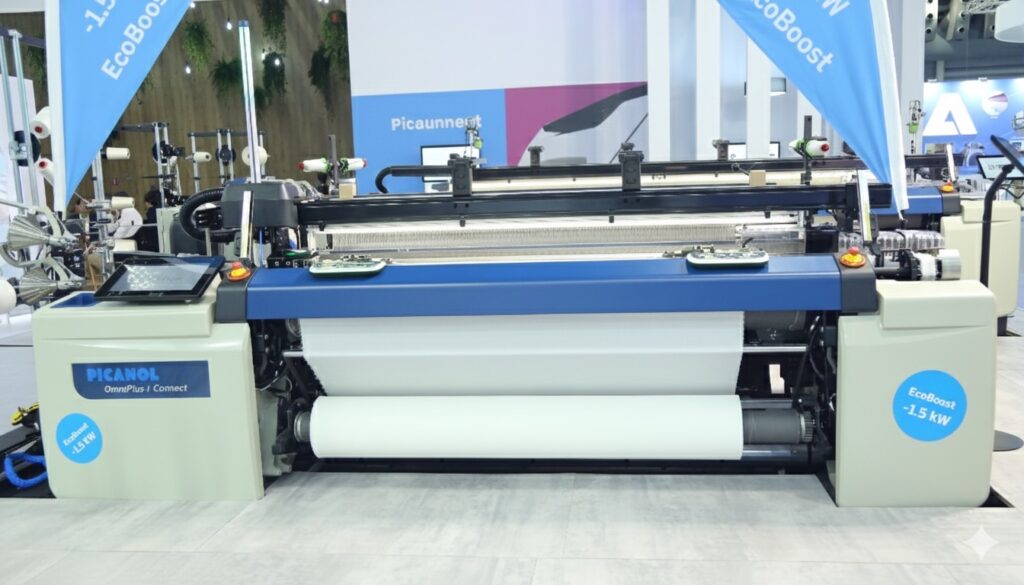
Some other new features are AirStream – our redesigned air insertion system that improves speed by up to 100 rpm and reduces energy consumption by lowering nozzle pressure. And we’ve also redesigned our fully digital shedding motion SmartShed Pro, offering maximum flexibility, user friendliness and reduced energy use. But there is many more, to name just two: EcoWeft allows our customers to minimize weft yarn consumption and thanks to WeavePilot, operating the machine has never been easier.
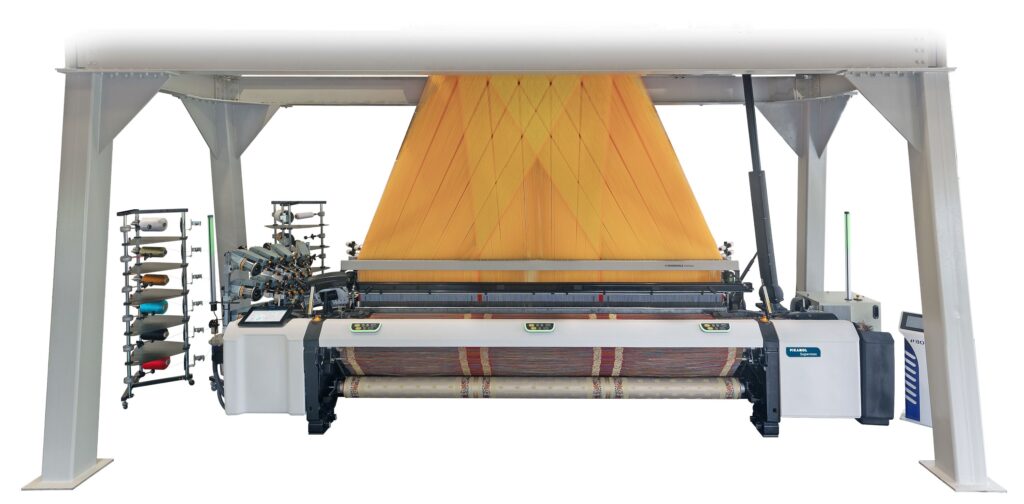
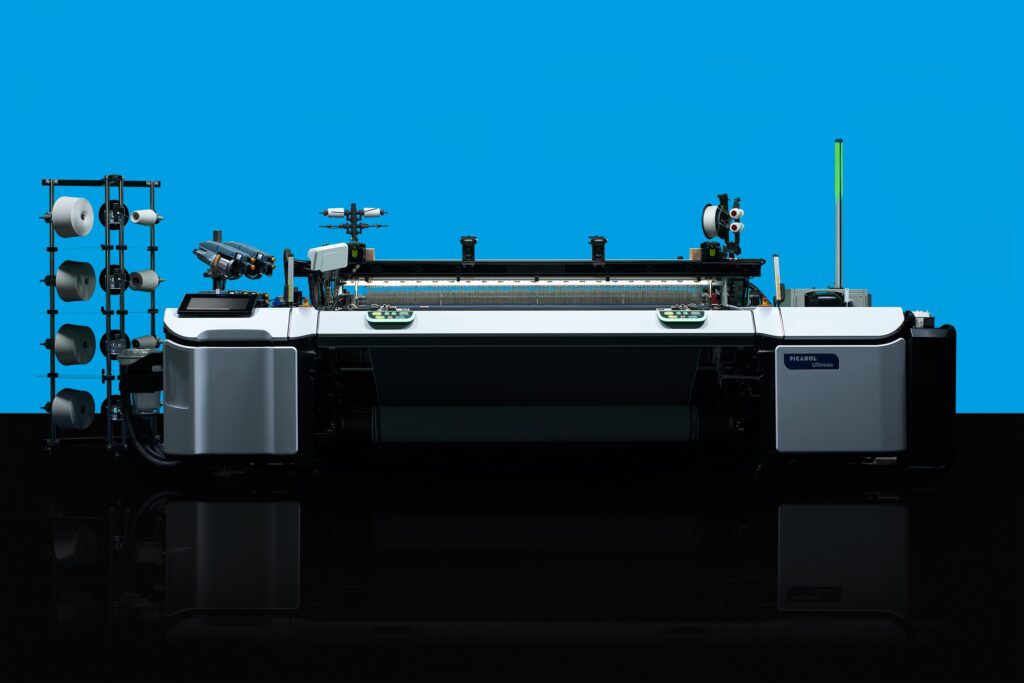
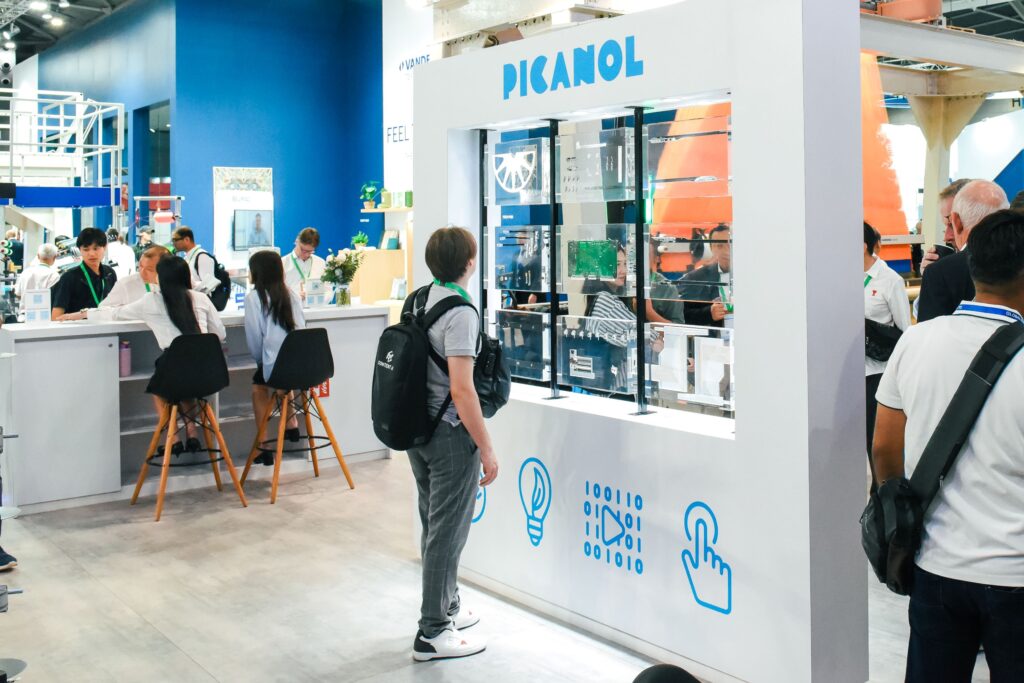
Alongside the two OmniPlus-i Connect airjet weaving machines of the new generation, we showcased the Supermax rapier weaving machine, tailored for producing top-quality jacquard fabrics such as Saree. The high-tech Ultimax rapier weaving machine, was demonstrated in a version for coating fabrics that delivers exceptional speed and fabric quality. And at the PicConnect corner, visitors learned more about the many functionalities of our digital platform.
Innovation has always been Picanol’s hallmark. Could you elaborate on how your latest weaving technologies are setting new benchmarks in efficiency, performance, and user experience?
Continuous improvement is part of our DNA and this is always with a focus on at least one of our four design principles, Smart Performance – Sustainability Inside – Intuitive Control and Driven by Data, on top of these we also have our digital platform, PicConnect, with which we now even ensure full digital connectivity for smarter operations. User experience is indeed an important dimension, and it is getting more and more important, Intuitive controls shorten operator training time, and advanced automation boosts productivity even under demanding conditions – with WeavePilot as an exponent combining ease of use and still assuring maximum performance and efficient use of resources. These improvements set new standards for efficiency, sustainability, and ease of use.
Artificial Intelligence and advanced automation are reshaping manufacturing globally. How is Picanol integrating AI and smart data solutions into its weaving systems to enhance productivity and predictive maintenance?
Well, a first and crucial step to start using the machine information in smart data solutions is to have a centralized digital platform, this is exactly the reason why we introduced PicConnect a couple of years ago. Besides the various useful applications, the platform has to offer to the user in the field of performance follow-up, maintenance management, access control, etc., we have now taken the step to introduce AI, in an air leakage detection feature.
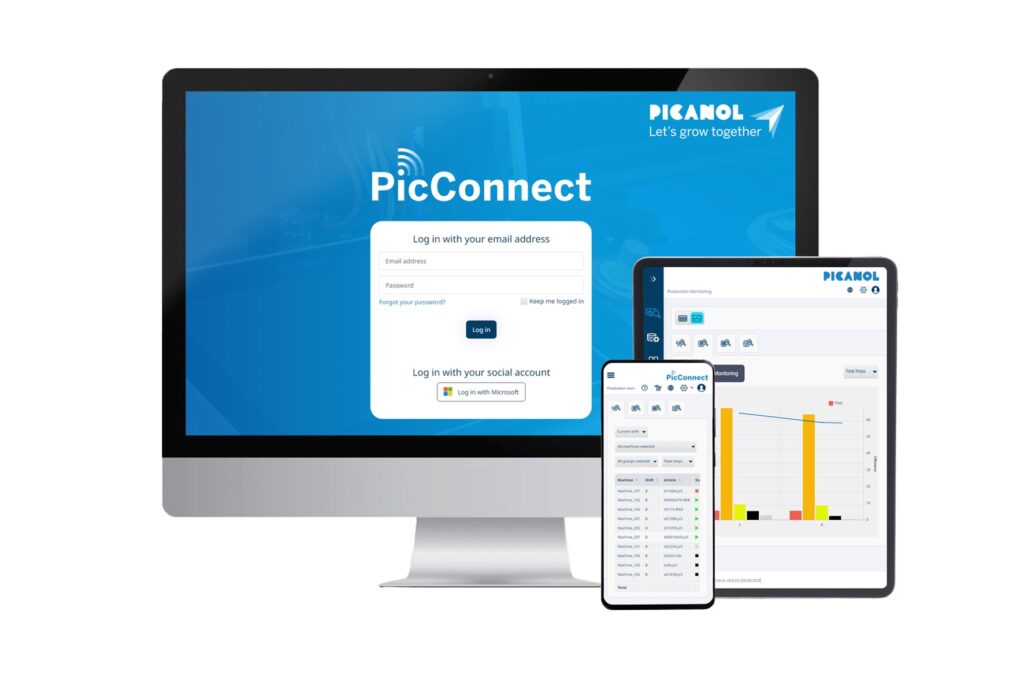
Since two thirds of the energy consumption of an airjet machine is caused by compressed air, an air leakage can quickly generate extra costs without the customer noticing it. The new AI algorithm in PicConnect automatically detects an air leakage on the weaving machine and alerts the customer. With the AI algorithm, the customers are no longer dependent on periodic checks on all machines, which consume a lot of time. But rather, AI algorithm highlights exactly where the problem is, allowing them to take much quicker action, and saving significant energy costs.
In the future, we see significant opportunities to further leverage AI in weaving mills using PicConnect, to achieve higher productivity, reduce operational costs, enhance sustainability, and deliver an improved user experience – factors that are all critical in today’s highly competitive market.
India remains one of the fastest-growing textile markets. How do you assess Picanol’s progress and positioning in India, and what are your key priorities for the coming years in this region?
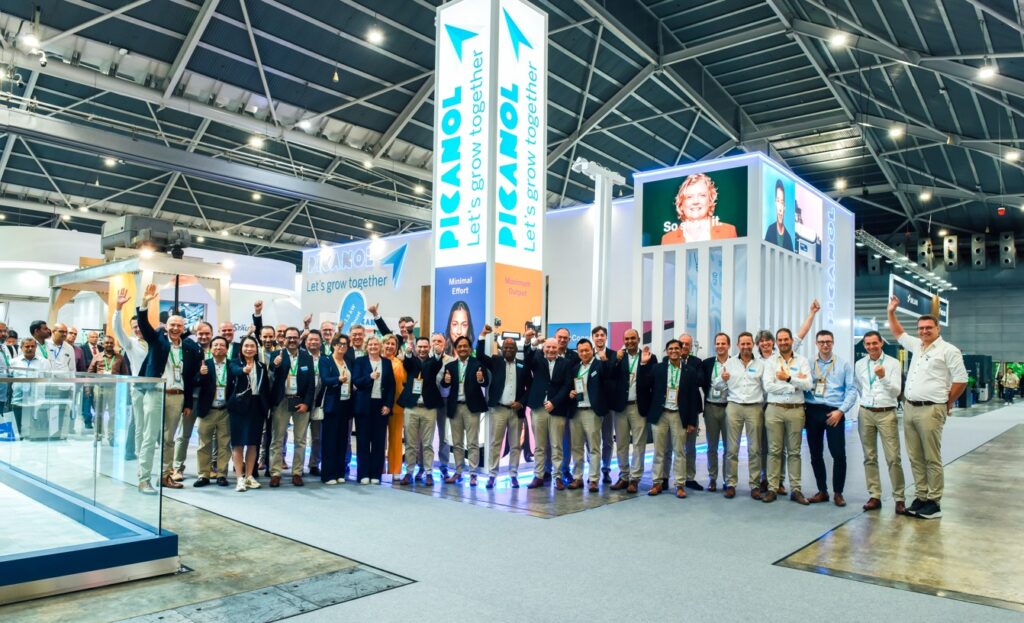
Picanol is committed to supporting the transformation of the Indian textile market. Since the establishment of Picanol in India in 2008, we have been able to grow our presence. Not only in the number of machines and number of customers, but we are also active in more regions in India than ever before. In order to continue our high service level also our local team has grown and Picanol India has been expanded to more than 40 people, with a Head office in New Delhi combined with Branch offices in Mumbai & Coimbatore & also satellite offices in Ludhiana, Bhilwara, Ahmedabad, Surat & Ichalkaranji with local technicians in those region. Our focus is on delivering state-of-the-art weaving machines, complemented by digital tools and high-quality services, to help Indian manufacturers improve efficiency and sustainability while tapping into the huge potential of the export market.
Sustainability and digitalization are driving the future of textile manufacturing. How is Picanol addressing these twin imperatives in its R&D and customer engagement strategies?
Sustainability and digitalization are embedded in our R&D strategy. Every new development starts from our four principles and Driven by Data and Sustainability Inside are two of them, clear examples of the last design principle are features such as EcoFill – that eliminates the left-hand waste completely – and ERGO – that minimizes the right-hand weft waste, are helping our customers to avoid waste. The SUMO drive on the other hand is still the most energy-efficient main drive available on the market. To give you another concrete example of energy reduction: the recently launched new generation of the OmniPlus-i Connect airjet weaving machine enables energy savings of up to 1.5 kW per weaving machine thanks to EcoBoost. This is a true game-changer for mills that are aiming to reduce operational costs and environmental impact.
Global market dynamics and economic shifts have presented both challenges and opportunities. How is Picanol adapting its global strategy to stay resilient and continue delivering value to customers worldwide?
Global economic fluctuations pose challenges to the textile sector. We address these challenges by focusing on innovation, sustainability, and digitalization, ensuring that our machines and solutions remain relevant and valuable to customers despite external uncertainties. We also keep on developing new platforms and technologies. Last year we launched the Supermax rapier weaving machine and this year we introduced the next generation of the OmniPlus-i Connect airjet weaving machine, both responding to the evolving needs of our customers. We also keep on releasing new features on PicConnect, our digital platform, helping our customers to gain even more efficiency.

Looking ahead, what can the industry expect from Picanol in terms of new technologies, service models, and long-term vision as you continue shaping the future of weaving?
We believe the textile market will continue to evolve into a highly intelligent, adaptive system where predictive maintenance, real-time optimization, and resource efficiency are a standard. At Picanol, we are preparing for this future by continuously investing in innovations to ensure our customers stay ahead of these changes.