The Pinter Group has always been at the forefront when it comes to product innovation in spinning technology. Its pioneering solutions — ranging from spindle monitoring systems and roving stops to automatic piecing robots (APR), compact systems, core yarn systems, and slub & color effect systems — have enabled the company to make deep inroads into key global markets. With two manufacturing units located in Coimbatore, Tamil Nadu, the group has developed a special affinity with India, which today stands as one of its most important operational and growth hubs.

We caught up with Adrian Serra, CEO, Pinter Group, and R. Soundararajan, Managing Director, Pinter FA.NI Asia Private Limited, at their Coimbatore plant. In a freewheeling conversation, the duo spoke about the group’s recent performance, its evolving product portfolio, the role of its Indian operations, and its plans for the upcoming ITMA Asia 2025 trade show in Singapore.
Geopolitics and the textile landscape
The discussion began on a topical note — the challenges of 2025. With trade wars, shifting tariffs, and political uncertainties, global textile players have been navigating turbulent waters. “While much of the global conversation today is dominated by geopolitics — from tariffs to trade disputes — I would say that the forces reshaping our industry go much deeper,” remarked Serra. “The bigger transformation is being driven by profound shifts in consumer behavior and sustainability concerns.”
He paused before adding: “Even before the tariff issues began, we were already seeing deep structural changes in textiles. These changes are far more fundamental than short-term geopolitical events.”
The consumer shift: Minimalism and Sustainability
According to Serra, the textile industry is experiencing a generational shift. “At the heart of this transformation is consumer behavior — particularly among Gen Z,” he explained. “Younger buyers are questioning the excesses of fast fashion. Minimalism is emerging as a powerful trend. Instead of filling wardrobes with garments that often go unused, they are asking: why should we pollute the planet by consuming more than we need?” he stated.
This change in mindset, he pointed out, is directly impacting textile demand. If consumers buy less, spinning mills naturally face reduced output requirements. The second major shift lies in the demand for recycled and sustainable products. “The growing call for circular fashion means technology must evolve to process textiles differently — enabling production from recycled fibers,” said Serra. “This adds a layer of complexity to the industry, requiring new types of machines and processes.”
He also noted a strong comeback of man-made fibers. “Polyester, once viewed skeptically by consumers, is today gaining widespread acceptance thanks to significant improvements in performance, moisture management, and comfort. When I was young, polyester was considered inferior. But now, with advanced technology and proven functionality, polyester filaments are becoming the fabric of choice in many garments.” For machinery makers like Pinter, this means rethinking product portfolios to align with new
material demands.
Navigating a smaller, smarter market
The global spinning industry, Serra predicted, is entering a phase of recalibration. “Growth is slowing. The market used to add around 10 million new spindles annually, but current projections suggest this will fall to about 6–7 million per year over the next 5–7 years,” he observed.
However, Pinter had anticipated this shift. “We resized, restructured, and focused our strategy on areas with higher demand. The results are visible — in 2025, we are already achieving over 30% global growth,” he said. His conclusion was clear: “The industry may be getting smaller in volume, but it is becoming smarter, more sustainable, and more technology-driven. That is where the real future lies.”
The product range in India
Shifting focus to the Indian market, Serra elaborated on the company’s offering:
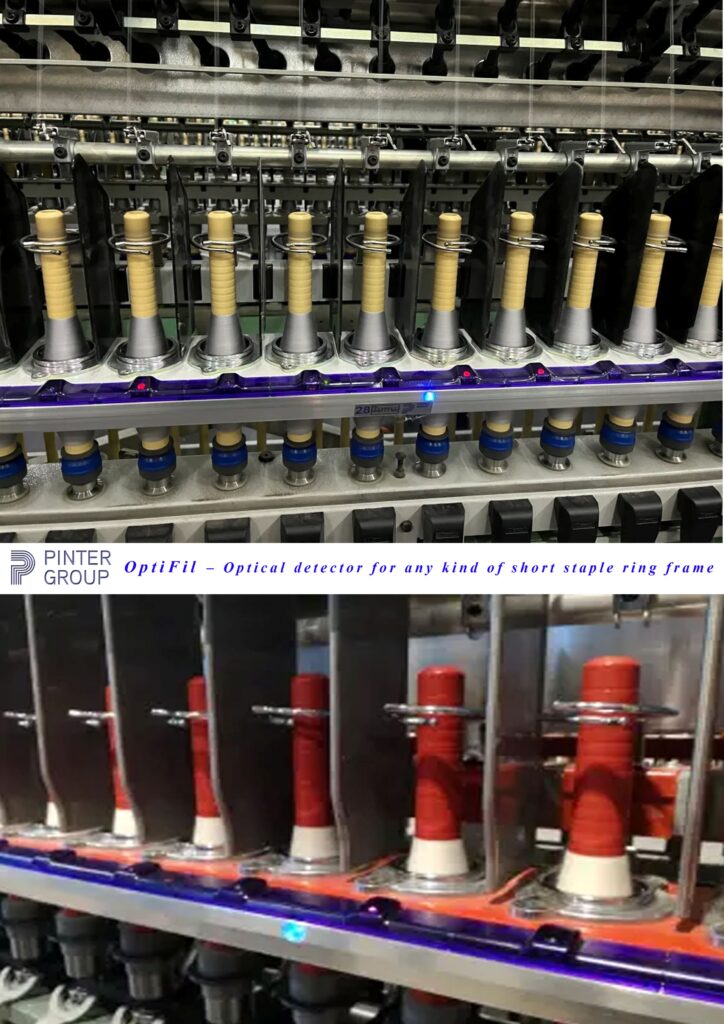
– Spindle monitoring systems and roving stops, supported by advanced software.
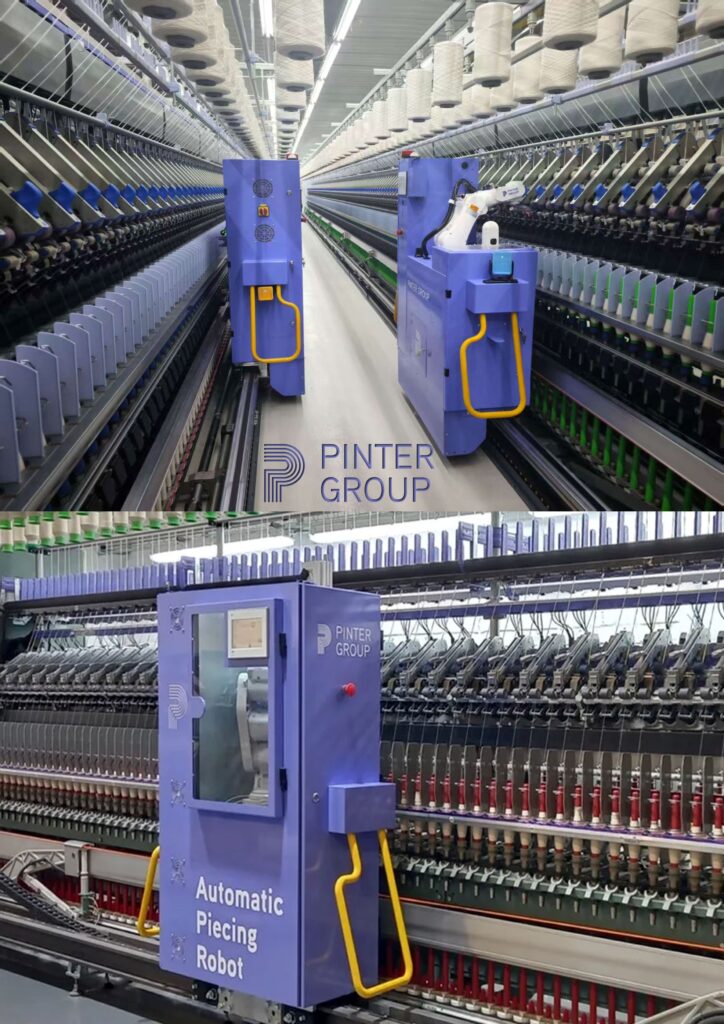
– Automatic Piecing Robot (APR) — capable of running without human intervention for more than 8 hours.
– Slub attachments, for which Pinter is globally renowned, including dual-core, three-core, rapid yarn, and fancy effects for both fashion and technical products.
– ‘Aerofil’ Compact System, launched during Texfair 2024, which has been well received in India.
– Recycling-focused systems, which are under development and expected to be introduced soon.
“We are constantly refining our range to suit Indian mill requirements. India is a big, diverse market, and we want our products to be relevant and future-ready here,” Serra said.
A long journey in India
Tracing Pinter’s journey in India, Serra recalled: “We landed here in the early 1990s, initially only into trading. But our instincts told us we had to be present in the country and not just sell products. In 2010 we launched Pinter Service India to take care of after-sales technical support and spares. Two years later, in 2012, we set up Pinter FA.NI Asia Private Limited.”
The philosophy has always been clear: ‘Made in India, for India.’ Serra added, “About 100% of our products here are made for the Indian market and neighboring countries. We follow a similar strategy in China as well. We say: ‘The head is in Europe, but the hands are in Asia.’ And it has worked well.” The results speak for themselves. Pinter holds nearly 60% market share in India for spindle monitoring systems and is the global leader in the category. “In 2025, we will produce over 5 million sensors for spindles — representing around 80% of new market additions worldwide,” Serra said proudly.
Manufacturing in India: A strategic advantage
India offers more than just a low-cost manufacturing base, according to Serra. “For us, the main priority has always been quality. We set the same high standards globally. By producing here, we can offer world-class products at competitive costs and stay close to our customers. Proximity helps us understand market trends and respond faster,” he explained. Soundararajan added: “After Covid, mill owners realized the importance of monitoring systems and data-driven decision-making. That’s when demand picked up. We’ve been clocking around 15% year-on-year growth since then.”
Data, AI and the future of spinning
Technology is no longer just about machines; it’s about data. Serra emphasized this shift: “Data is crucial because it is knowledge. It helps predict scenarios. Unfortunately, younger generations are showing less interest in textile careers. Some traditional know-how risks being lost. But data can bridge that gap. With historical machine data, we can propose optimal adjustments in drafting, blending, or speeds, ensuring consistent quality.” Soundararajan agreed: “Data enables quick decision-making. Mill owners can switch between products depending on market demand. Middle managers can analyze product performance, identify cost-saving opportunities, and reduce wastage. At the operational level, it helps in optimizing manpower and energy use.”
All set for ITMA Asia 2025
Looking ahead, Pinter is gearing up for its participation at ITMA Asia 2025 in Singapore. “Our participation will focus on a catalogue-based presentation of our technologies, highlighting the full breadth of our offerings”, said Serra. “We look forward to interacting with visitors about how our technologies can support them. You can find us at Hall H4, Stall A201.” The excitement is palpable. For Pinter, ITMA Asia is not just a trade show but a platform to reaffirm its role as a global technology partner to the textile industry.