Organic Cotton Pioneers: Leading the Sustainability Movement
Back in 2007, when consumer awareness on sustainable textiles and clothing was negligible, Limbdi and Gujarat based Milan Group had ventured in to organic cotton by educating cotton farmers on the importance of cultivating organic cotton. Now the group sources organic cotton from almost 17,000 farmers from the main cotton growing region of Saurashtra and is a pioneer in organic cotton ginning in India.
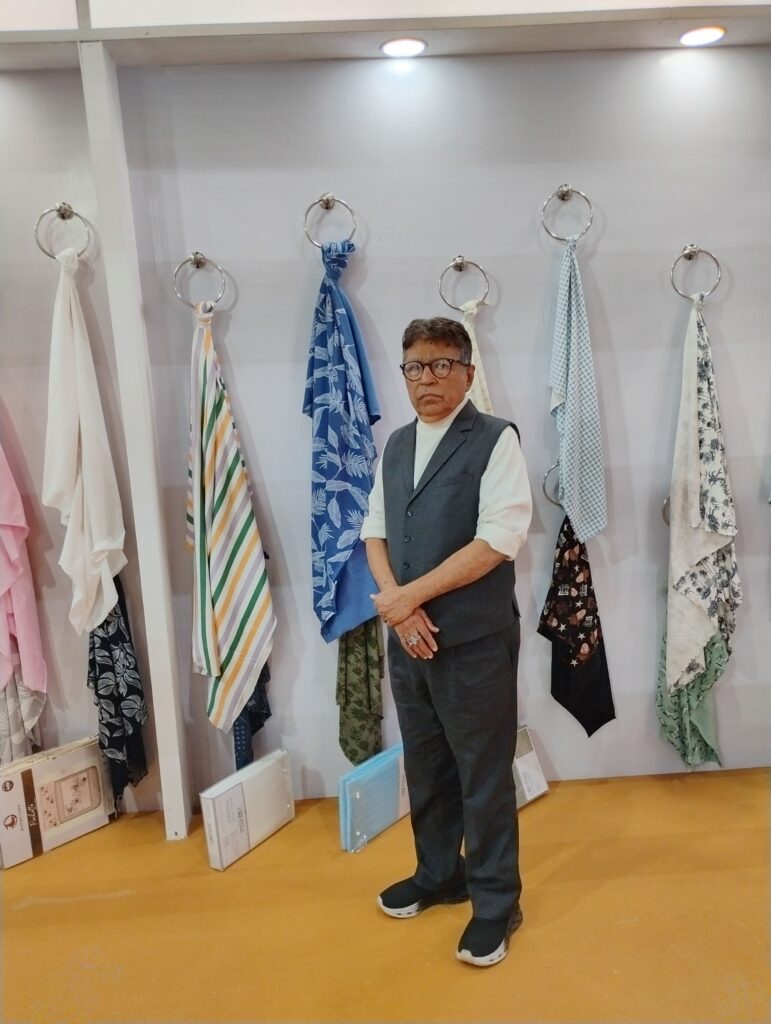
First Steps in Manufacturing: Small Ginning Factory Established
The Milan group has its origins in the wholesale business of consumer products. But since they were based in a major cotton growing region, the shift in 1975 to trading in cotton was natural. In 1978, they set up a small cotton ginning factory and later on also added a cotton seed oil mill.
Gradual Expansion: From 4,000 Spindles to Strategic Land Acquisition
“In 1982, we started a small spinning mill of 4,000 spindles with second hand machinery. In the years till 1995, we kept purchasing land with the intention to start a new cotton ginning plant and spinning mill,” Mr. Babubhai Narsinh, Director of Milan Group said while speaking with The Textile Magazine.
Scaling Up Operations: 48-Roller Gin and 50,000 Bales Annually
“In 1995, we closed down our old ginning unit and started a new cotton gin with 48 rollers under the name of Milan Ginning and gin around 50,000 cotton bales per annum. We also set up other projects related to oil, oil cakes and solvent process of cotton seeds. In 2007 we started teaching and educating cotton farmers on the benefits of growing organic cotton. Now we have 17,000 such cotton farmers associated with us,” he added.
Gujarat Textile Policy Boost
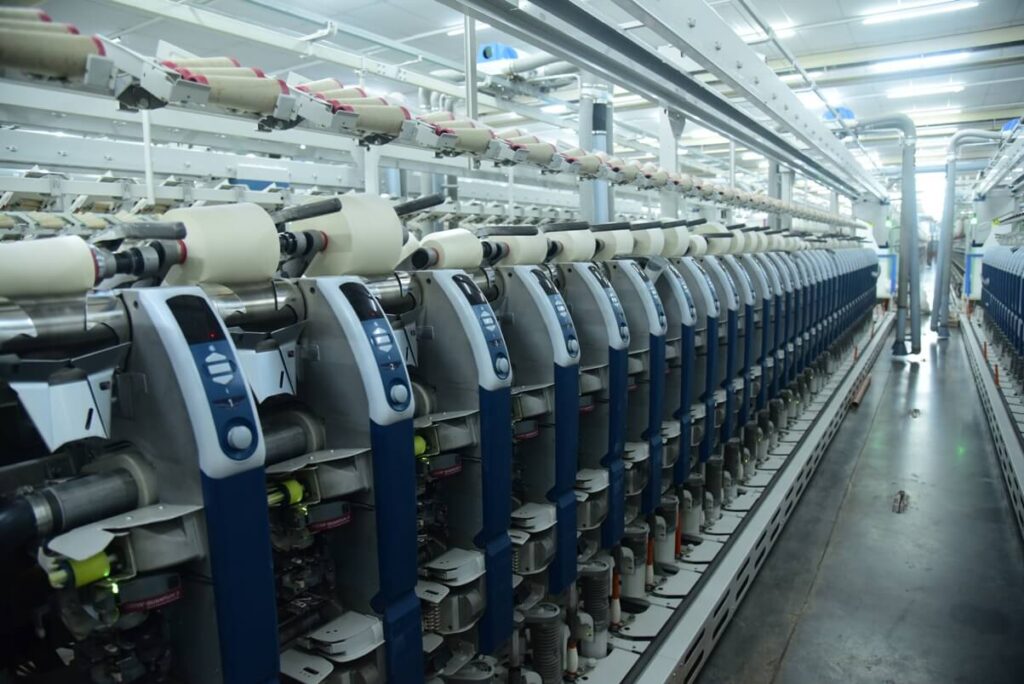
In 2012, Gujarat announced the Textile Policy and they set up a 20,000 spindles project in 2014 which produced cotton yarn from 24’s to 40’s count in both carded and combed. In 2017, the group added 20,000 more spindles. In 2018, in order to utilise the cotton waste generated by the spinning mill, they set up an open end spinning unit of 2,000 rotors which produces yarn from 7’s to 20’s counts. They also installed 20 TFO’s in 2019.
Premium Equipment: LMW, Murata, and Rieter Technology
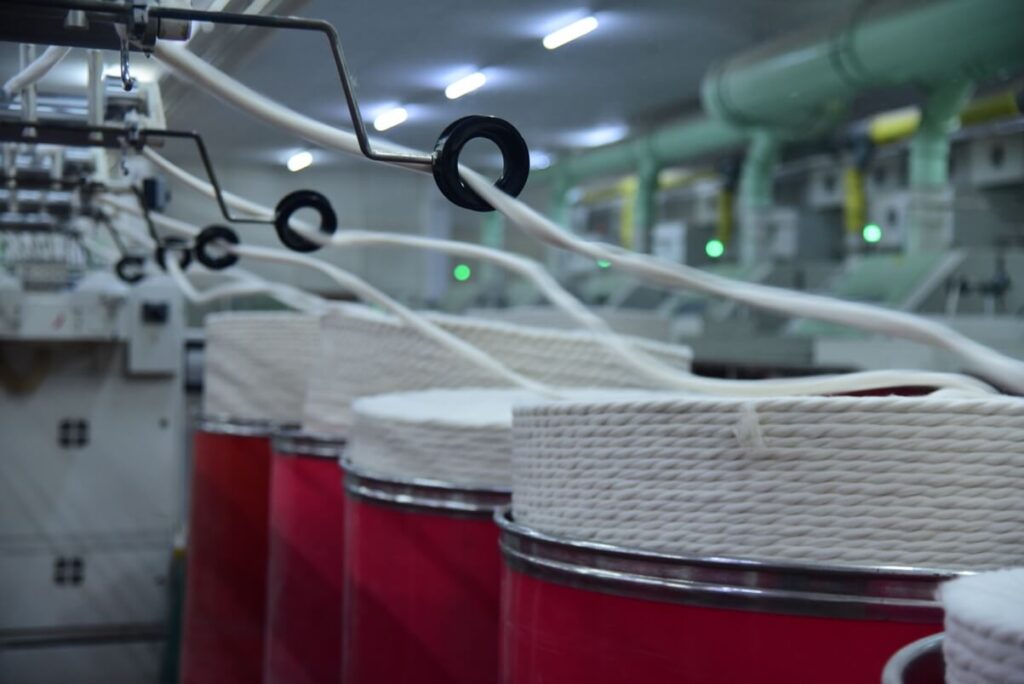
The group has chosen to install LMW brand machinery from blowroom to ring spinning while the cone winders have been supplied by Murata and the open end rotors have been sourced from Rieter. The average count production of yarns is around 60-70 tons per day
Forward Integration: Knitting, Fabric Processing & Garmenting
“We have now set up another cotton ginning unit as our existing ginning capacity was not enough to feed our spinning mills. We have also installed 10 knitting machines in 2022 and since the last one year we are getting the fabrics dyed or printed and also exporting those fabrics. Since 2024, we are also getting knitted garments stitched on job work basis. 95% of the yarn that we manufacture is produced from Oeko-Tex, Primark, BCI, Regenagri, etc, while our yarns and fabrics are also Oeko-Tex 100 certified. In renewable energy, we have a roof top solar plant and also wind energy which meets 70% of our electricity needs,” Mr Narsinh informed.
Direct Farmer Partnerships: Bypassing APMC Middlemen
Milan Group is associated in farmers in such a way that farmers do not need to go to APMC’s but come and directly deliver the cotton to our ginning factory. The cotton is then separated based on its quality before the ginning stage and only the highest quality cotton goes in to its spinning mills while the low quality cotton is sent for open end spinning.
CSR Activities
In earlier years, a cotton gin was run for only 4-5 months after the cotton crop was harvested and remained closed 7-8 months. During those 7-8 months, the Narsi family would get involved in social activities like blood donation camps, providing mobility equipment to handicapped people, building schools and hospitals and also opened food centres in hospitals.
“Now too, we have canteen facilities in the mill where the workers and staff are provided food at much subsidised rates. We also support the children of our workers by paying their school fees and also providing them school books. We regularly organise body check up camps in all our units. We also continue to be financially and physically associated with several NGO’s,” he observed.
Farm to Fashion (5F): Realizing the Prime Minister’s Dream
In future plans, the group has plans to expand knitting machine capacity and also add weaving machines and also dyeing and printing fabric capabilities. Within the next three years, there are also plans to set up their own garment stitching unit. “Our intention is to add value to all the yarns that we produce by either knitting or weaving the fabrics and then printing or dyeing fabrics and then converting them into garments. With this, we wish to fulfill the dream of our prime minister of farm to fashion (5F),” Mr Narsinh concluded by saying.