By Arun Rao
Surat based Wampum Syntex Pvt Ltd; a manufacturer of dyed polyester, nylon and bi-component Sorona yarns has witnessed amazing growth. Within a period of seven years, which includes two years of the Covid-19 pandemic, the company grew its yarn dyeing production capacity from just 2,400 metric tons per annum to over 7,200 metric tons per annum, thereby tripling its yarn dyeing production.
In addition, in 2022, they started started one more company in the name of Wampum Industries Pvt. Ltd. with a capacity of 5,400 metric tons per year to produce texturised and twisted yarns. The current combined capacity of both companies is now 12,600 metric tons per annum of both dyed and gray yarn.
Uncompromised Focus on Raw Material & Supplier Consistency
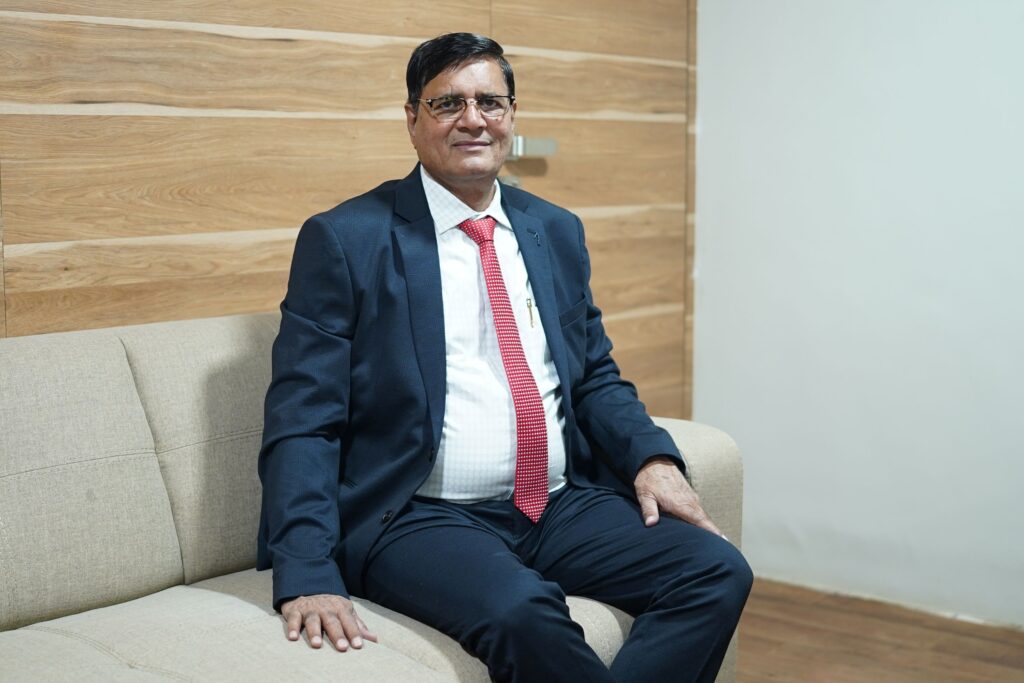
Mr Bhagalram Bijaniya, Chairman of Wampum Syntex attributes this massive growth in such a short period to manufacturing yarns of the highest quality and maintaining consistency in colour shades. “In order to do this, we buy base yarns only from Reliance Industries. So, although Reliance has many manufacturing sites, we prefer to buy POY from one plant for one particular base yarn. We buy textile dyes from only reputed manufacturers like Archroma, DyStar,Colourtex and Colourband. We also buy raw material for nylon from Century Enka. Each POY manufacturing plant has different bases and parameters, so to keep quality and shade consistency of dyed yarn, we source from only one supplier,” Mr Bijaniya explained while speaking with The Textile Magazine.
Stringent Quality Control at Every Stage
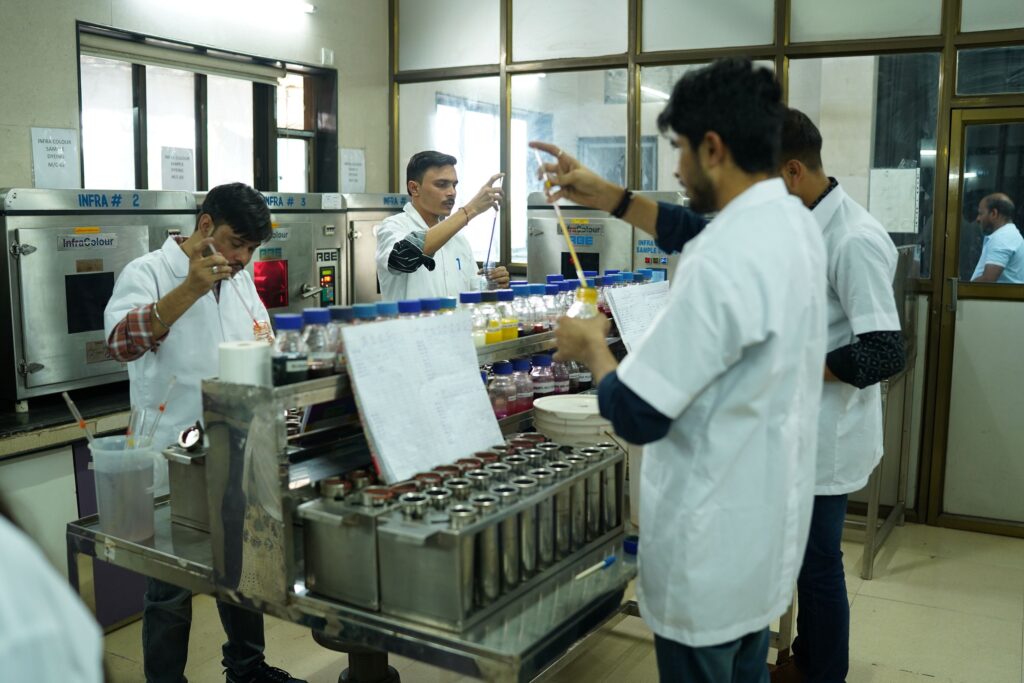
In order to supply the very best quality of yarns, Wampum Syntex also maintains strict quality control beginning from the raw material stage and at every stage of the production process. In the pre-dyeing stage, it does both visual as well as testing with instruments in their state of the art quality control laboratory, where yarns are checked for deniers, tenacity, elongation, oil percentage, etc. After the yarn is dyed, the yarns are again checked for colour shades, washing fastness, sublimation, etc and are additionally tested for other parameters as per any specific requirement from the customer.
Modern Infrastructure and Machinery
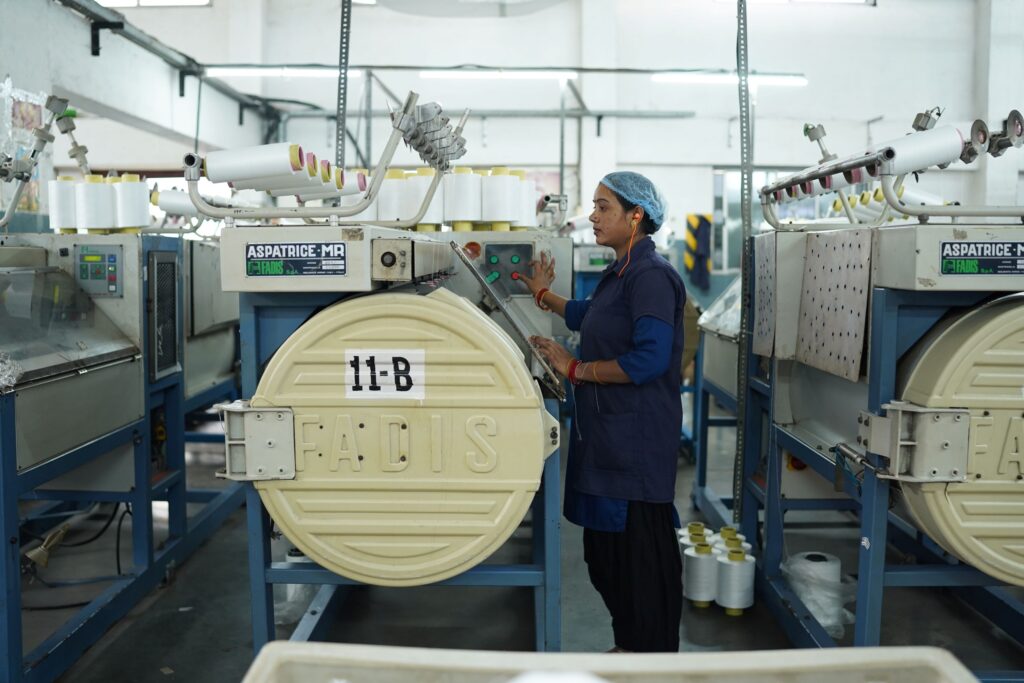
Wampum Syntex began its journey in February 2018 and was started by three colleagues who worked together and have experience of more than 30 years each. Including Mr Bhagalram Bijaniya, the other two partners are Mr Sandeep Ostwal and Mr Lokesh Kumar Babal. They began by installing two texturising machines, six TFO machines, high bulking twisting machines, six yarn dyeing units, hank to cone winding machines and precision winding machines with a capacity of 200 metric tons per month.
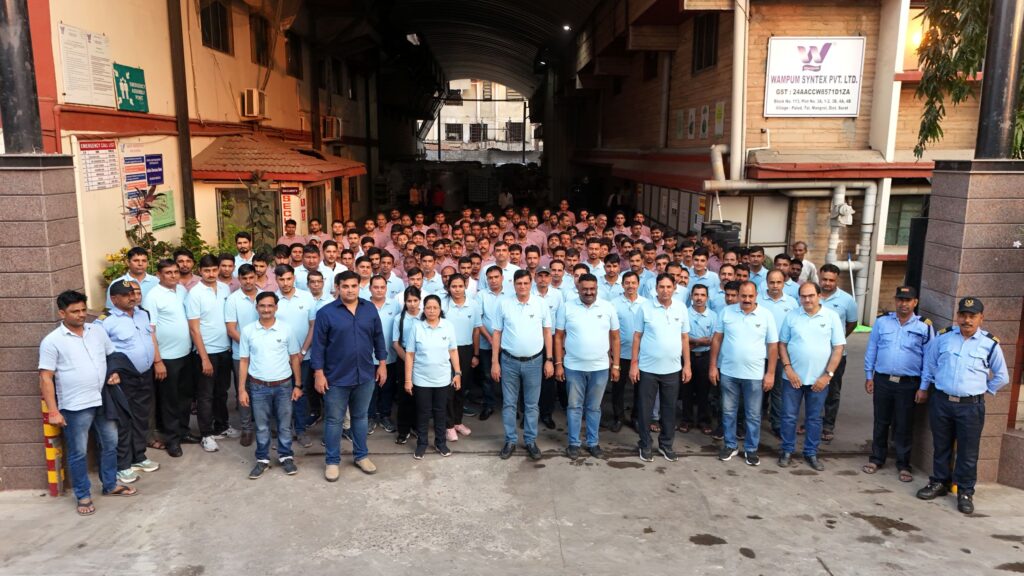
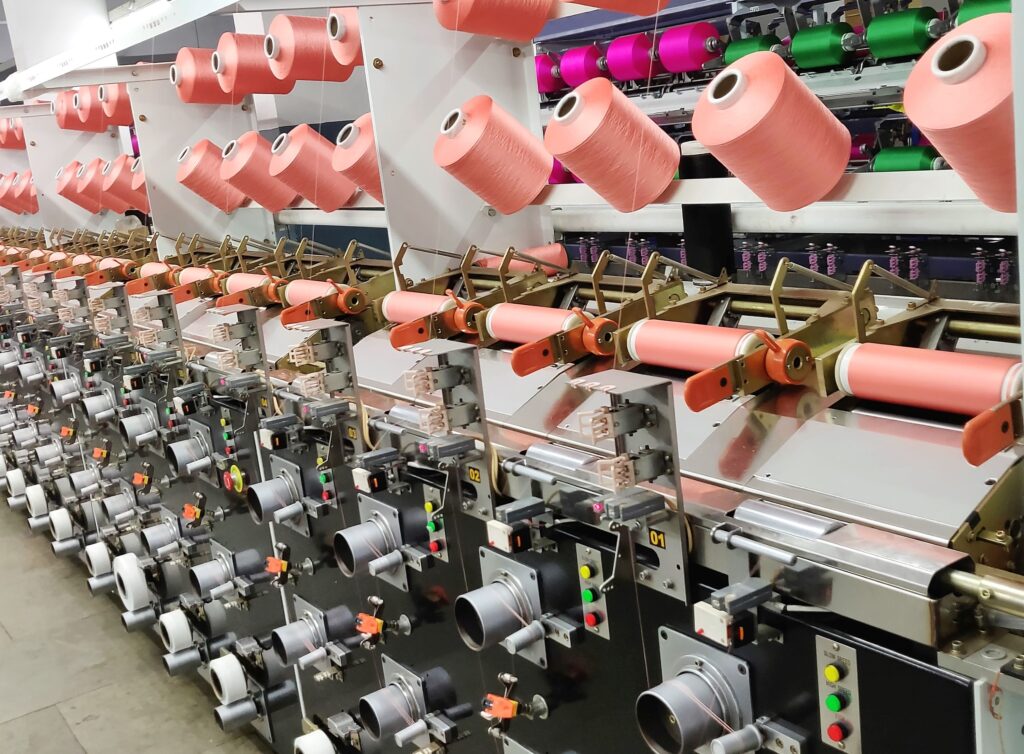
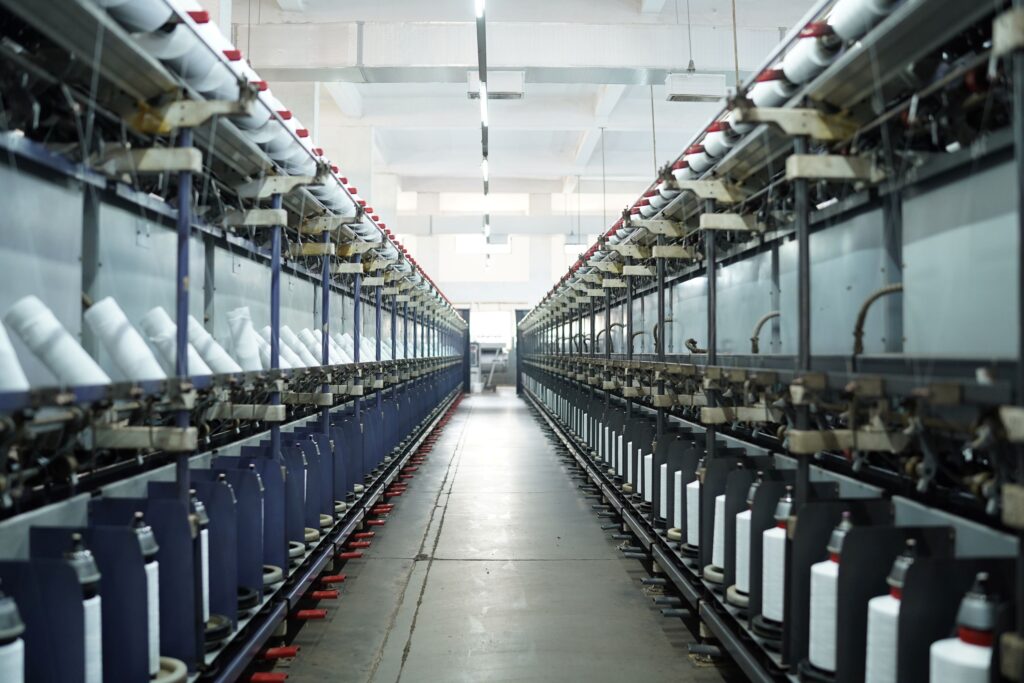
“Currently we now have eight texturising machines, 12 TFO’s machines, 16 high bulking twisting machine, 16 yarn dyeing units, precision winding machines and hank to cone winding machines. We also have a sample dyeing machine. The texturising, twisting and winding machines have been purchased from Aalidhra Textile Engineering. We are always giving priority to Indian suppliers and become part of the ‘Make in India’ mission. Our employee strength is more than 500 and the plant is spread across three acres of land, while built up area is around 400,000 sq. feet,” Mr Bijaniya said.
Diverse Product Portfolio with Value-Added Offerings
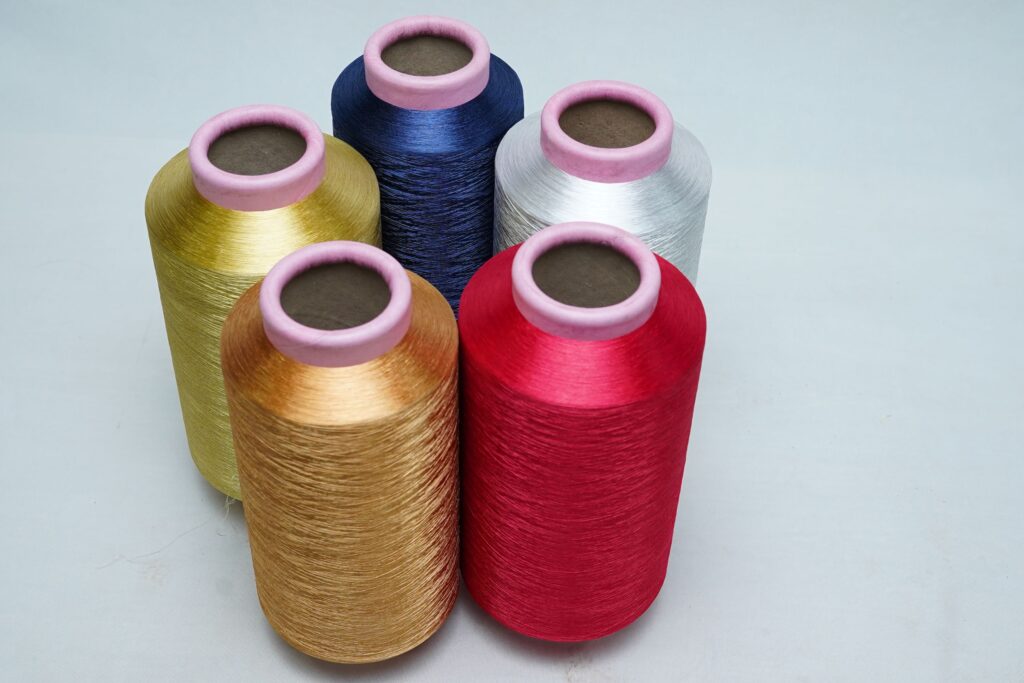
Within both, nylon and polyester yarns, Wampum supplies Texturised (DTY), Twisted, Spun, Air Textured, Cationic, Melange and Space dyed, produced from both virgin and recycled raw materials. In nylon yarns, they supply from 40 deniers and above in single, double and multi ply with regular as well as micro filament, while polyester yarns are supplied in 50 deniers and above. In addition, the company also manufactures Bi-component Sorona dyed yarns. The dyed yarns are supplied in batches beginning from just 1 kg to 1,000 kgs in over 15,000 colour shades developed by the company.
Wampum Syntex sells yarns pan-India. But its major markets are in textile and garment hubs of Maharashtra, South Gujarat region, Karnataka, Tamil Nadu, Kerala, Punjab, Haryana and Delhi NCR region. The company directly and indirectly exports to Egypt, Vietnam,Turkey, Morocco, Peru, USA, Srilanka, Bangladesh, etc. “We feel that the domestic market has got very good potential, so we are not dependent on exports,” Mr Bijaniya informed.
A majority of its revenues are generated from supplying the dyed yarns to manufacturers of elastic tapes, followed by woven labels, socks, knitters, sarees, shoe uppers and soft medical products like knee caps, waist belts, etc. The yarns used in elastic tapes are supplied to leading international and national brands. The company does not maintain any stocks and all production is make to order.
Active R&D Team
“We have a very active product development team and the team has a major achievement to its credit. Dupont sells a Bi-component yarn named Sorona, which is a plant based yarn, blended with polyester, has self-elasticity, is partially bio degradable and is an alternative to spandex. But the yarn experiences 18 to 20% shrinkage while dyeing, due to which dye penetration becomes difficult and so yarn dyeing is very challenging. Earlier Sorona yarn was supplied only in gray form. Our R&D team managed to dye the Sorona yarn and we are the only Indian company to do so. The biggest challenge was the shrinkage and its nature of elasticity. Our R&D team is always working on new product development whether for woven or knitted products,” he added.
Sustainability at the Core
In sustainability initiatives, the company has Oeko-Tex Standard 100 as well as Global Recycled Standard (GRS), ISO 9001:2015, ISO 14001:2015 certifications and has also bagged the ZED Gold certificate awarded by the Govt of India under the MSME Sustainable ZED Certification Scheme. The company has also installed ground mounted and roof top solar plant, which accounts for 40% of its electricity consumption. In addition, the company has a zero liquid discharge (ZLD) plant, which ensures zero pollution and are also able to recycle and reuse a majority of effluents.
Future-Ready with Expansion
While sharing their expansion plans, Mr Bijaniya stated, “We are now planning to expand but are waiting for the right signs from the market. We have already purchased a parcel of land for the project. Our main focus will be on supplying new and specialised yarn products with both forward and backward integration, when compared to our existing set up.”
“We have been able to survive and expand mainly because of our commitment to best quality, professional work ethics, continuous new product development, and dedication of our team. There is immense potential and strength within our country. What we need is a change in mindset to compete with the rest of the world,” Mr. Bijaniya shared.
Bright Future for Indian Textile Industry
Mr Bijaniya foresees a bright future for the Indian textile industry. “The potential is very high in India. But there should be a move to manufacture more textile machinery technologies in India. We do not have capabilities to manufacture advanced POY spinning, knitting, weaving and embroidery machines. We even had to import our hank to cone winding machine from China. The government should provide a boost to machinery manufacturers to develop more textile technologies in India,” he concluded by saying.