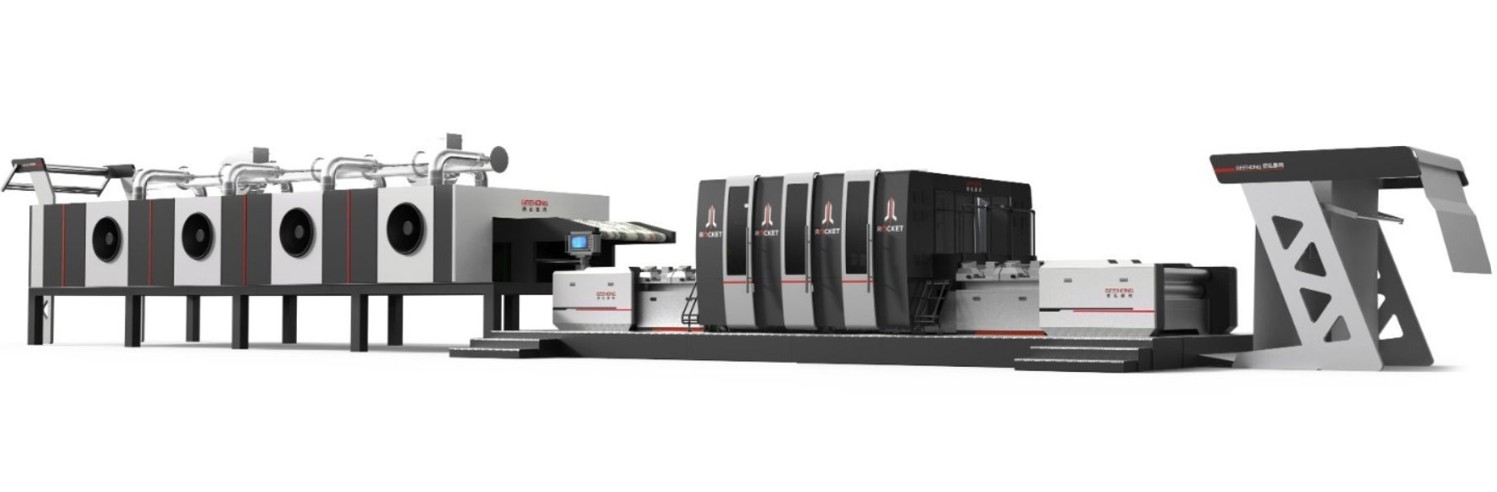
Surat based and Mr Aayush Rathi led Orange O Tec has recently launched the Rocket high speed digital printer which has the potential to transform textile printing forever. Rocket is a very high speed digital fabric printer with production capacities of up to 60,000 metres per day and so the fabric printing capacity of the Rocket is very similar to a conventional Rotary printer.
“Since the inception of digital textile printing, big textile mills have showed hesitancy in adopting these technologies because they are used to printing 200,000-300,000 metres of fabrics per day. So a digital printer with around 2,000-5,000 metres per day never interested the textile mills or fabric process houses. Digital printer sales have been mainly driven by fabric traders, first generation entrepreneurs and job workers. This segment accounted for 80% of sales, with big textile mills accounting for the rest. We now foresee the large textile mills increasingly adopting the Rocket digital printer. This is the transformation we are expecting in the fabric printing segment,” Mr Aayush Rathi told The Textile Magazine.
Rocket Printer: Bridging the Gap between Digital and Conventional Printing
The advantage the Rocket offers is that it is a hybrid printer combining rotary printing capabilities with fabric coating capabilities. The Rocket also has the capability for binding applications of foils or blotch related work. Earlier the binding, blotch or coating was done on separate systems when digitally printing fabrics. The cost per metre will be just 15-20% over the conventional Rotary printers but gives the benefit of lower capital investment, smaller factory space and also very less workers.
“The biggest benefit of the Rocket is that a Rotary printer needs a minimum fabric length of 3,000 metres and there is also a possibility of 7-8% of fabric wastage or dead stock. In digital, one can print as per requirement, so waste is absolute zero. Pollution will also be reduced as water does not get contaminated as much as in the Rotary printer and so can be recycled and reused at a lower cost. We see a lot of potential for the Rocket among those conventional fabric printers who have installed European or Japanese hi-tech printing technologies as the capital cost gap between these hi-tech printing systems and the Rocket is very less,” he added.
Printing Cost Competitiveness of Rocket
Historically the cost of digitally printed fabrics used to be Rs 140 per metre and above, but now fabrics are being printed at a cost of Rs 40-50 per metre on digital printers. As against this conventional printing costs Rs 30-35 per metre. While in sublimation printing the cost is just Rs 20 per metre as against Rs 15-17 per metre in conventional printing. The Rocket is expected to further reduce the fabric printing cost gap.
Green Edge Series: Water-Free Pigment Printing
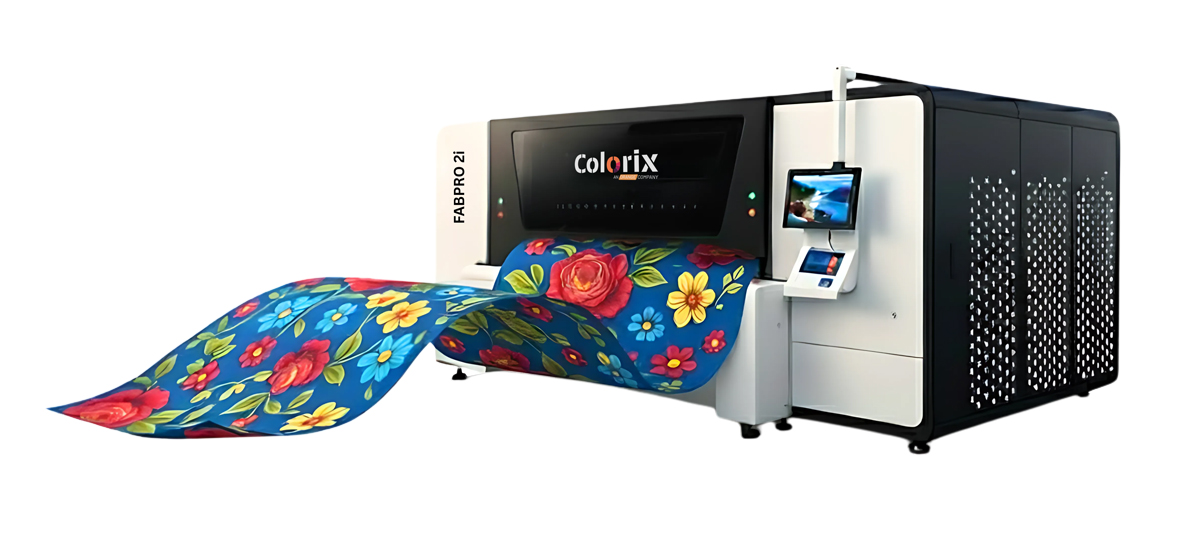
Orange O Tec has also introduced the Green Edge Series printers, which includes the Homer brand with a Kyocera print head and which is imported from China and the Colorix brand, which is manufactured in its plant in India and has a Ricoh print head. The unique selling proposition (USP) of the Green Edge series is that they run on pigment inks which are very eco-friendly inks. Pigments need zero water which makes printing extremely eco-friendly.
Mr Rathi further said, “We introduced pigment digital printers last year and the response has been good. Currently the sales of pigment digital printers are 5% of our overall sales of digital printers. But we see it rising exponentially in the near future mainly due to water scarcity in regions like South India. Water pollution is also minimal when using pigments. There are also technical benefits as prints retain sharpness as the fabric is not washed after printing. We expect the Northern markets of Ludhiana, Delhi NCR and Panipat and also South India to drive sales of pigment digital printers.”
Democratizing Textile Printing for Small Entrepreneurs
“Digital printing gave the power to entrepreneurs who did not have sufficient capital but had the creativity. In earlier times, these entrepreneurs could never think of getting into conventional printing due to the very high capital cost involved. “But now these entrepreneurs can purchase a digital printer for just Rs 20 lakhs and install it in 2,000-3,000 sq. feet of built up area. This is the reason for the success of digital printing, as entry barriers were removed,” Mr Rathi noted.
Made in India: Local Manufacturing and Quality Components
Orange O Tec prides itself in offering a wide range of printers beginning from slow to high speed in a combination of various print head technologies. Orange O Tec continually tries to increase the speed of its existing printers through R&D and is now manufacturing 24 print head printers at its plant in India and by end of this year will have a 32 print head printer. Along with printers, the company has also recently started manufacturing printing inks.
“The components that we use in our Colorix brand printers are all sourced from renowned brands like blankets from Forbo, electronics from Siemens, beam systems from THK in Taiwan, etc. Despite sourcing such high quality components for our printers, we are still able to price our printers very competitively. The biggest benefit of starting a manufacturing plant is that we have complete control and also can quickly modify or improvise. Due to the local manufacturing we are also able to supply at a very competitive price and so can compete with Chinese made printers on both quality and price,” Mr Rathi observed.
The company has sold and installed ‘Made in India’ Colorix brand of printers in various textile hubs of India like Delhi NCR, Surat and Mumbai and has the capacity to manufacture around 22 printers annually, while the current printing inks production capacity is 35-40 tons per month, which will be hiked to 200 tons per month by March next year.
Highest Quality of Digital Inks at Competitive Prices
According to Mr Rathi, the inks manufactured by them are also of the highest quality and equivalent to the best available in the market and are also able to customise and deliver tones very quickly and in terms of cost are continuously trying to make them competitive against those available in the market. These inks are sold to their customers as well as for other printer brands and are compatible with all print head technologies.
Customer-Centric Approach and After-Sales Service
“A customer comes first is our motto so we place high emphasis on after sales service and so it is an asset for our customers. We also maintain a very large inventory of spares for all our models. We are also very flexible in interactions with our customers without being rigid. We are launching an app by the end of 2025, which has a CRM system integrated into it for after sales service. Customers will be able to see at what time the service engineer will reach their location as well as keep track of the spares they may have ordered. We are also integrating AI in the app due to which a customer can type various generic questions and he will be provided with an analytical answer,” he stated.
Market Penetration and Growth Trends in India
The acceptance of both digital and sublimation fabric printers in Surat is very high and may account for around 50% of the installations pan-India, with the rest of India accounting for the rest, which includes Mumbai, Delhi NCR, Punjab and South India. Of overall fabric printing in India, digital printing currently accounts for 8-10% and sublimation printing is around 18-20%. “While overall printing capacity may have grown 5-6% in the last few years, the growth in digital or sublimation printing has come at a cost to conventional printing whether rotary or flatbed,” Mr Rathi added.
Export Ambitions and Future Expansion Plans
“We began as an importer but now manufacture digital fabric printers and also digital inks. We now have the wherewithal to export our printers to other countries as well as control the cost. We plan to start exports beginning from next year beginning with Uzbekistan and Egypt and gradually expand to other countries and are now targeting to double our revenues in three years,” he shared while discussing future plans.
ITMA Asia Launch: Introducing Position Printer Technology
At ITMA Asia, the company will be showcasing and launching its new position printer which will be sold under its Colorix brand and will be made in India. The position printer has 16 Kyocera print heads and has a camera installed on the printer, which will help in exact position printing. The production capacity will be around 100-120 linear metres per hour or around 1,800 metres per day.