- Geared Up for ITMA Asia 2025, WTT Prepares to Showcase Its Next-Gen Water Solutions to a Global Audience
In an era where sustainability has moved from being an optional ideal to a pressing global imperative, WTT International, based in Tirupur, Tamil Nadu, is revolutionizing one of the most overlooked yet critical aspects of textile manufacturing — wastewater treatment and resource recovery and reuse.
Since its inception, WTT (short for Water Treatment Technology) has dedicated itself to delivering advanced, eco-conscious solutions that not only support regulatory compliance but go far beyond, enabling textile manufacturers to dramatically shrink their environmental footprint while boosting operational efficiency.
From 100% Biological based pre-treatment to proprietary high-efficiency Reverse Osmosis (RO) systems and innovations that reduce the load on evaporators which in turn reduces the Overall Operating cost, WTT is setting new benchmarks in wastewater management — a sector that’s finally receiving the attention it deserves within the textile value chain.
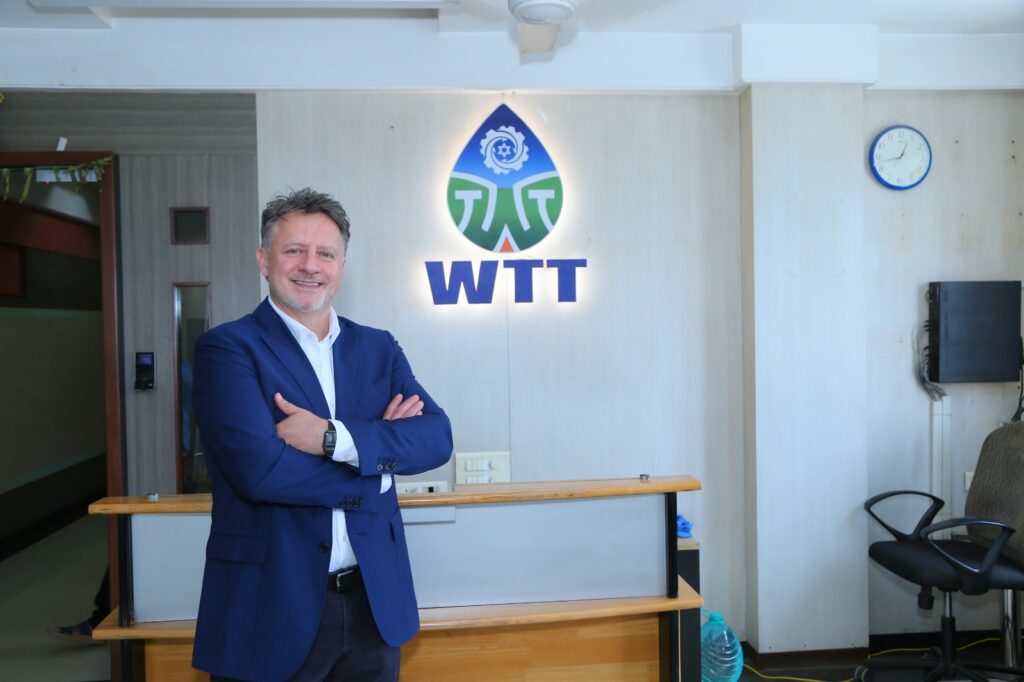
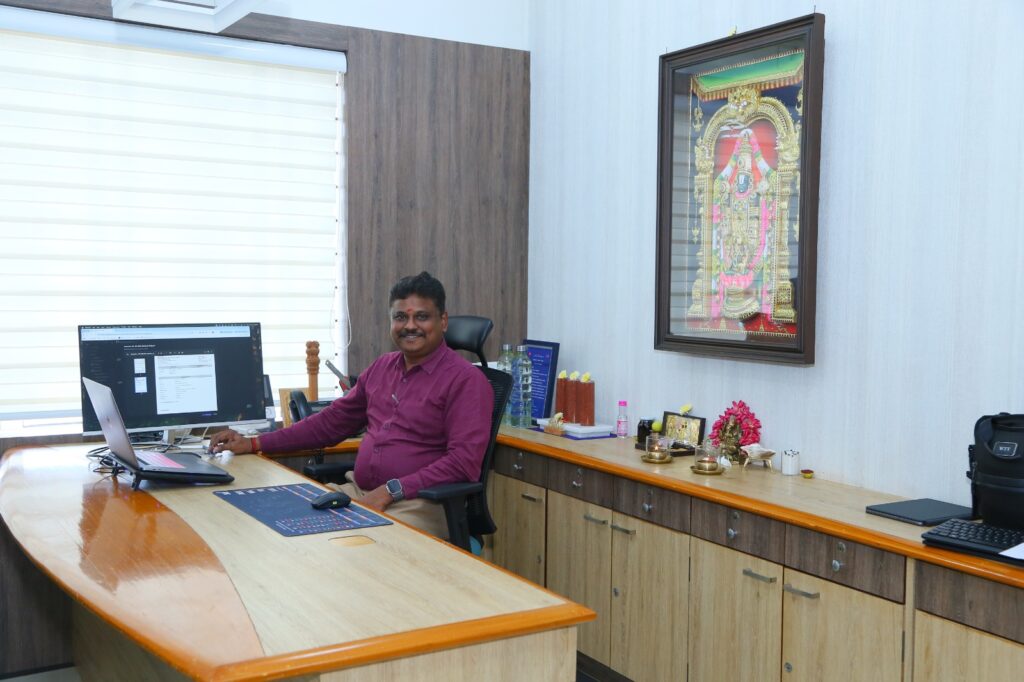
We caught up with D. Venkatesh, Managing Director, and Andrea Pelissero, Head of Global Sales, to learn more about the company’s journey, unique offerings, and future outlook, including their much-anticipated participation at ITMA Asia 2025 in Singapore.
A Journey Rooted in Sustainability
“Our systems are not just about regulatory compliance. They are a commitment to the planet, to operational quality, and to long-term savings,” explains Venkatesh. “We want our clients to see sustainability as a smart investment rather than a burden.”
WTT’s journey began during a period of crisis in Tirupur in the early 2000s, when the region grappled with severe water pollution issues that threatened its very survival as a textile hub. “We entered the industry in 2003, when Tirupur was under immense pressure to clean up its act. That’s when we partnered with 10 CETPs (Common Effluent Treatment Plants) and executed what was then a first-of-its-kind complete recycling project” he recalls.
Their pioneering spirit didn’t stop there. In 2004, WTT designed and installed its first Zero Liquid Discharge (ZLD) plant for Century Denim, a Birla Group company in Indore. “They didn’t want to pollute the river and asked if we could design a solution. We achieved 92% water recycling, with the remaining 8% evaporated using solar energy that time. That project gave us confidence that we could create real change,” says Venkatesh.
Learning by Doing
At the time, ZLD was a nascent technology. “What we were offering was new — not only for our clients, but even for us,” admits Venkatesh. To better understand the ground realities, WTT took the bold step of running its clients’ plants themselves for extended periods.
“Effluent characteristics vary with seasons — in summer, higher temperatures affect bacterial activity; in winter, low temperatures affect osmotic pressure. These micro-level insights allowed us to fine-tune our systems in ways others couldn’t,” he adds.
Their deep understanding of customer challenges has translated into technology that is not only robust but also highly adaptable. One such example is a PET recycling plant installation that’s been operating for seven years with an impressive 93% water recovery rate — up from nearly impossible before WTT’s intervention.
Proprietary Innovation: CaRe™
Among WTT’s flagship solutions is CaRe™ — short for Caustic Recovery. This proprietary membrane-based system is designed to reclaim caustic soda used in the mercerization process.
“CaRe is about turning waste into a valuable resource,” says Venkatesh. The system effectively removes:
- Suspended solids
- Textile fibers
- Color and micro-particles
The result is a turbid-free caustic solution that retains its original chemical integrity and can be safely reused in processing after concentrating. CaRe® is fully automated, energy-efficient, and capable of operating across a wide pH range (1–14) and at high temperatures. Its low fouling tendency and reduced acid consumption in the ETP make it economical, eco-friendly, and easy to integrate into existing plant infrastructure.
Reducing the Evaporator Burden: Rewolutte
Evaporation is typically the costliest stage in any ZLD system. Enter Rewolutte® — another WTT innovation aimed at significantly reducing feed to the evaporator, thereby slashing operating costs.
“In most textile units, about 8% of water is routed to the evaporator after the ZLD process. With our solution, we bring that number down to just 2–3%, achieving 97% water recovery, which dramatically lowers energy usage and costs,” explains Venkatesh.
Single Skid RO: A Compact Powerhouse
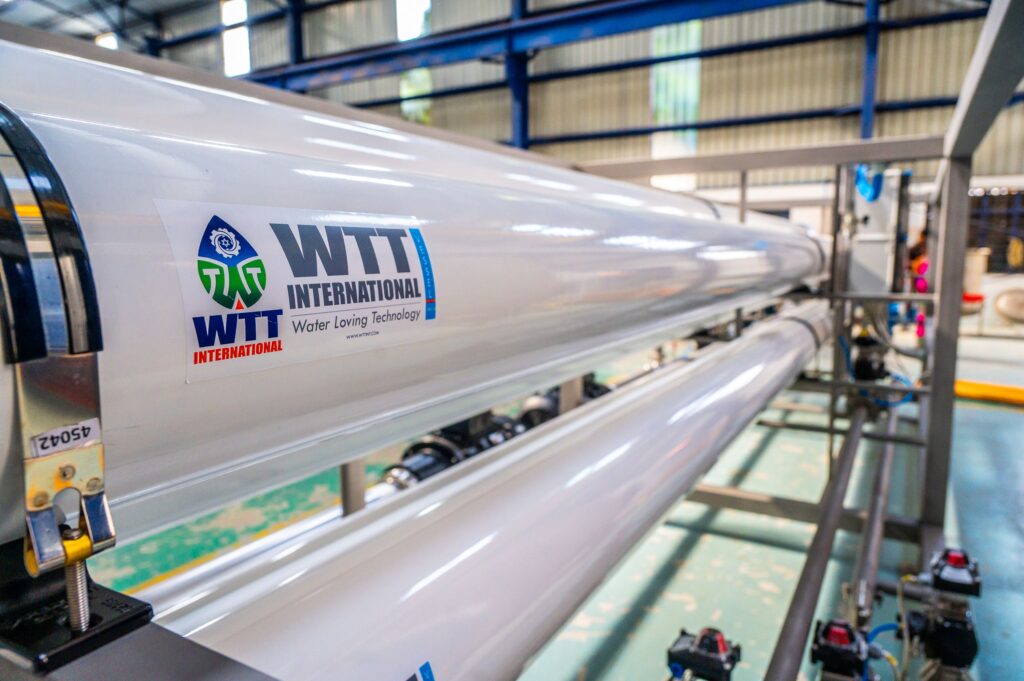
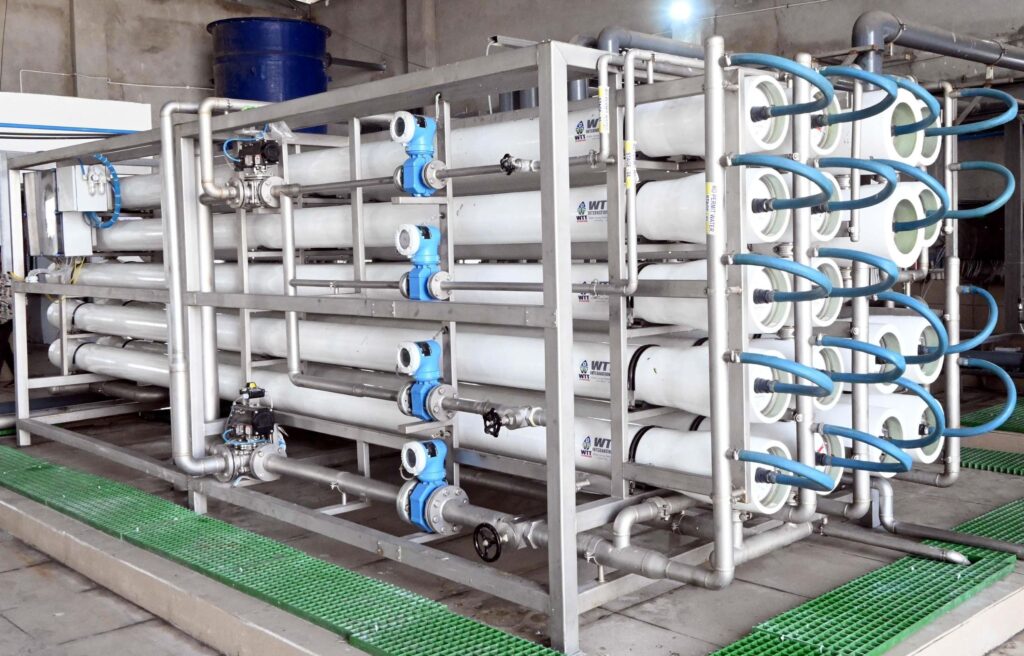
WTT’s Single Skid Reverse Osmosis (RO) system is a marvel of engineering — compact, modular, and exceptionally efficient. Offering up to 97% permeate recovery, this system boasts:
- Lower reject rates (<3%)
- Reduced power consumption
- 15–20% lower capital costs
- A small footprint
“This system is ideal for textile factories where space is limited and loads are high,” says Venkatesh. “It’s visually appealing, and extremely easy to maintain.”
What Sets WTT Apart
So, what makes WTT stand out in a market increasingly crowded with water treatment solutions? Venkatesh lists the company’s five key differentiators:
- Customer-Centric Design: Space-saving designs that use only 0.45 sq.m per cubic meter, compared to industry standards of 2 sq.m.
- Lowest Operational Cost: By focusing on automation and energy optimization.
- Highest Water Recovery Rates: Up to 97%, well above industry average.
- True Sustainability: Use of ceramic membranes instead of polymeric ones. “Ceramic is recyclable and earth-friendly; polymeric membranes are oil-based and non-biodegradable,” he explains.
- Simplified Operations: Reduced complexity means less downtime and faster ROI for customers.
Partnering for Progress
WTT’s credibility has earned it invitations from state pollution control boards and universities across India. “We’re regularly invited by the Rajasthan Pollution Control Board to conduct awareness programs for their officers. We help them understand real-time challenges and how to overcome them,” says Venkatesh.
Looking ahead, the company’s ambitious mission is to make ZLD systems operate at zero net operational cost. “Capex is acceptable, but recurring expenses hurt businesses. That’s the pain point we’re trying to solve,” he notes.
A Global Vision
While 98% of WTT’s revenue currently comes from the textile industry, the company has global aspirations. Leading the charge is Andrea Pelissero, who has joined as Head of Global Sales.
“Our goal is to take this advanced, proven technology to markets in Europe, Africa, and the Americas,” says Andrea. “We’ve got a talented team — a good mix of seasoned professionals and young innovators. That’s our strength.”
WTT also plans to diversify into other industries, including food & beverage, breweries, pharmaceuticals, and automobile manufacturing. Additionally, it is developing technologies to produce ultra-pure water for pharmaceutical injectable and the semiconductor sector.
By 2030, Venkatesh envisions WTT as a Rs. 500 crore company, and a global leader in water treatment and reuse technologies.
Showcasing at ITMA Asia 2025
As part of its global push, WTT will be exhibiting at ITMA Asia 2025 in Singapore — one of the most prestigious platforms for textile technology innovators.
“Our entire team is looking forward to engaging with global visitors. We’ll be showcasing our cutting-edge technologies, and we welcome everyone to drop by,” says Venkatesh. “You can find us at Hall No: 8, Stall C306.”