By K.Gopalakrishnan
Interview with Sammir Dattani, Executive Director, Sanathan Textiles Limited
As global textile supply chains undergo structural realignment, India’s expanding Free Trade Agreement network—particularly the landmark India–EU FTA—marks a pivotal moment for the industry. In this exclusive interaction with The Textile Magazine, Sammir Dattani, Executive Director at Sanathan Textiles Limited, explains how the agreement is expected to enhance export competitiveness, accelerate value-added growth, and reinforce India’s position in European markets. With a diversified yarn portfolio, integrated manufacturing operations, and a strong ESG framework, Sanathan Textiles is preparing for the next phase of expansion driven by sustainability, innovation, and scale.

India–EU FTA: A Structural Reset for Competitiveness
The India–EU Free Trade Agreement represents a significant inflection point for Indian textile exporters. Historically, tariff barriers of 10–12% in the European Union restricted pricing flexibility for Indian manufacturers when compared with competing sourcing destinations. The FTA addresses these structural disadvantages and helps create a more equitable competitive environment.
For Sanathan Textiles, this development strengthens the strategic case for deeper engagement with export-linked customers and European buyers, particularly as the company undertakes substantial capacity expansion. Polyester filament yarns, which form the core of Sanathan’s portfolio, are expected to benefit the most due to strong demand across European apparel, home textiles, and industrial applications. Cotton yarns and specialised technical yarns are also positioned for growth as sustainability, traceability, and regulatory compliance increasingly influence purchasing decisions in the EU. According to Dattani, the agreement is not merely about tariff relief; it represents an opportunity to move up the value chain while building durable, long-term partnerships in Europe.
Diversified Yarn Solutions for Global and EU Markets
Sanathan Textiles offers a comprehensive and diversified portfolio tailored to global textile value chains, with particular relevance to European market requirements. Polyester filament yarns form the cornerstone of its offerings, including partially oriented yarn (POY), fully drawn yarn (FDY), twisted yarns, and speciality variants. The company has further strengthened its value proposition through dope-dyed or born-dyed yarns, cationic dyeable variants, and performance-oriented yarns that deliver enhanced colourfastness, reduced downstream processing costs, and improved sustainability attributes—factors highly valued by European buyers.
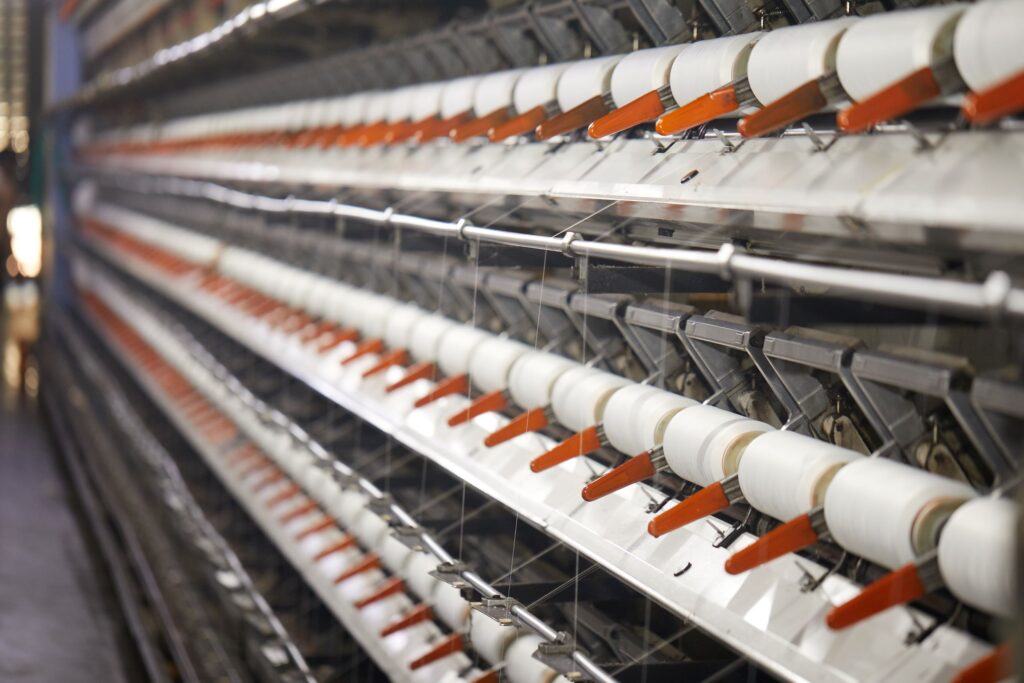
In cotton, Sanathan manufactures fine-count and compact yarns suited for premium apparel and home textile applications. These products align well with Europe’s demand for high-quality, traceable natural fibre solutions. The company’s technical textile yarns address the growing need for high-performance and functional materials across automotive, healthcare, sportswear, and industrial textile segments within the EU. Across all product categories, Sanathan prioritises consistency, customisation, and strict adherence to European sustainability and traceability standards, enabling customers to compete effectively in both domestic and export-oriented markets.
Innovation and Operational Excellence as Competitive Levers
Sanathan’s competitive positioning is underpinned by a strong emphasis on product innovation and operational excellence. The expansion of value-added polyester filament yarns, including dope-dyed and performance-driven variants, enhances sustainability credentials while reducing the need for resource-intensive downstream processes.
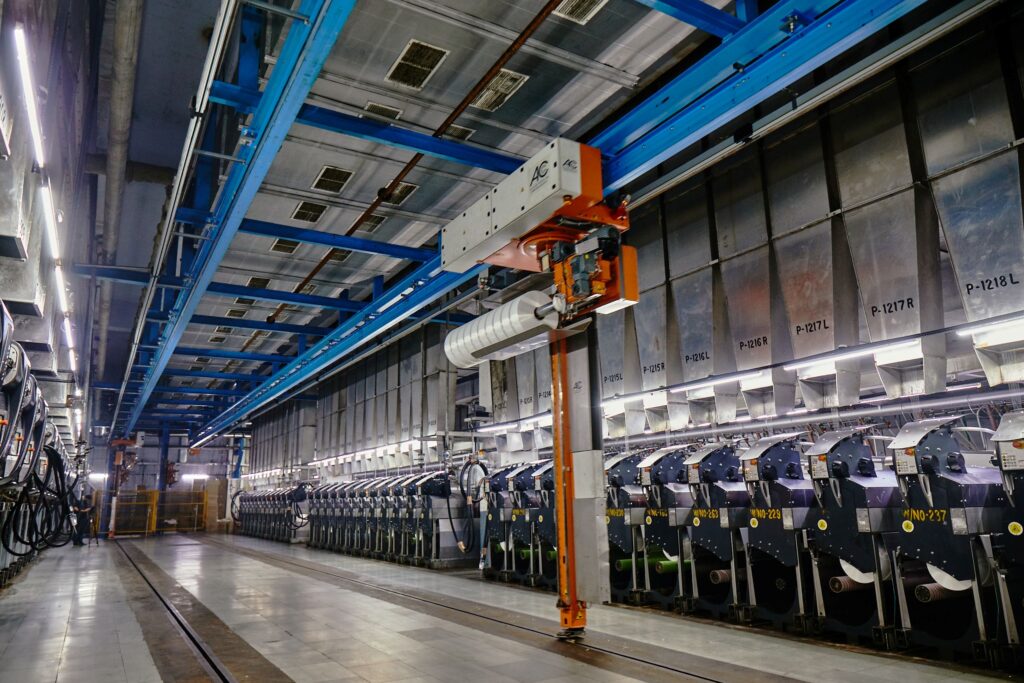
Operational efficiency remains a defining strength. While many textile plants operate at approximately 70% capacity utilisation, Sanathan consistently achieves nearly 96%, reflecting deliberate factory design, high levels of automation, preventive maintenance systems, and production flexibility. Its manufacturing facilities are equipped with advanced machinery from globally recognised technology leaders such as Lakshmi Machine Works Limited, Rieter, Trützschler, Saurer, Aalidhra, and Oerlikon Barmag. This technological ecosystem supports high-speed production, energy efficiency, process safety, and consistent quality across polyester, cotton, and technical yarn segments.
ESG and Sustainability Embedded into Operations
With ESG considerations central to European sourcing strategies, Sanathan has embedded sustainability into its operational framework. The adoption of dope-dyed technology eliminates the need for conventional post-spinning dyeing, resulting in substantial water savings and reduced chemical consumption. At its Silvassa facility, the company operates a Zero Liquid Discharge system that ensures complete treatment and reuse of wastewater, with similar infrastructure being implemented at the Punjab plant.
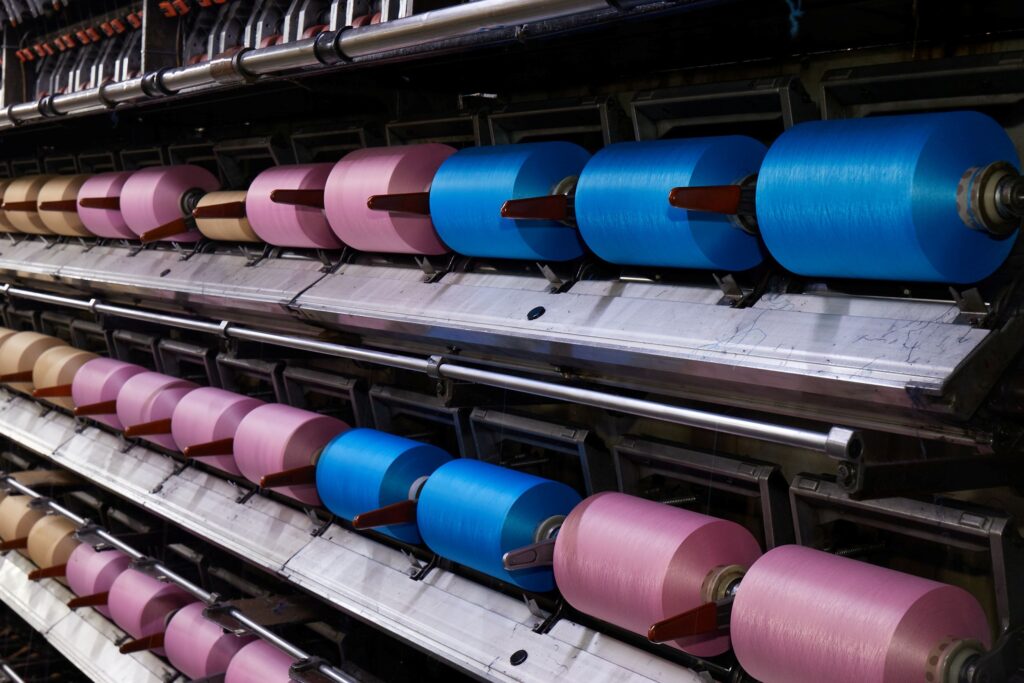
In terms of energy transition, Sanathan has installed 2.35 MW of rooftop solar capacity at Silvassa and is expanding renewable energy integration at the upcoming Punjab facility, including biomass-based heating using rice husk. These initiatives contribute to lowering carbon intensity and enhancing energy self-sufficiency. The company also integrates circular economy principles by incorporating GRS-certified recycled materials into production and replacing single-use packaging with reusable pallet systems to minimise solid waste.
Its recycled polyester yarn offering, marketed under Sanathan Reviro, is manufactured using post-consumer PET waste, aligning with the EU’s circular textile agenda. Traceability forms a central pillar of the company’s sustainability roadmap. GRS certification ensures transparent tracking of recycled inputs, enabling global buyers to verify material provenance and compliance with international standards.
Expanding Capacity to Meet Future Demand
Sanathan operates at a large integrated scale with consistently high utilisation levels across domestic and export markets. To address anticipated demand arising from FTAs and shifting global sourcing strategies, the company is executing a major expansion programme that will increase polyester filament yarn capacity from 2.00 lakh MTPA to approximately 5.47 lakh MTPA.
At its Silvassa facility, total installed capacity stands at 2,23,750 MTPA, including 2,00,750 MTPA of polyester yarn and 14,000 MTPA of cotton yarn capacity. The Punjab expansion project, with a planned capacity of 3,46,750 MTPA, is scheduled to commence operations in a phased manner. These investments are complemented by continuous debottlenecking, automation, energy-efficiency improvements, and technology upgrades, ensuring that growth remains aligned with long-term customer demand rather than speculative volume expansion.
Financial Performance and Growth Trajectory
Sanathan Textiles Limited has built steady scale over the years, reporting revenue from operations of approximately ₹3,000 crore in FY25. While top-line growth in recent years has been moderate due to peak utilisation levels, the company has focused on strengthening profitability and preparing its platform for the next expansion phase.
Installed capacity has expanded significantly from 4,500 MTPA in 2006 to over 230,000 MTPA by 2025, reflecting disciplined capital allocation and calibrated investment aligned with market demand. Polyester filament yarn remains the primary growth driver, contributing approximately 77% of revenues, supported by robust domestic demand and downstream export-linked consumption. Cotton yarn, though representing a smaller share at present, is viewed as a promising growth area as customers increasingly shift towards specialised and premium applications.
Vision 2030: From Capacity Expansion to Value Creation
India’s expanding network of FTAs, including expectations surrounding a potential US agreement, is creating a structurally more competitive environment for the domestic textile industry. For Sanathan Textiles, these agreements represent long-term strategic opportunities rather than short-term triggers.
As new capacities become operational, particularly at the Punjab facility, the company will be well positioned to support customers serving both domestic and export-oriented markets. While the business currently remains largely India-focused, FTAs are expected to indirectly benefit Sanathan through increased downstream export demand.
Looking ahead to 2030, the company’s vision is to transition from a capacity-led expansion phase to one defined by sustained growth and cash generation. The focus will be on scale, operational efficiency, innovation, and strengthening margins and return ratios.
Sanathan Textiles Limited thus stands at a decisive juncture, combining integrated manufacturing, strong ESG credentials, advanced technology, and significant capacity expansion to capitalise on evolving global sourcing dynamics. As Europe intensifies its emphasis on sustainability, traceability, and supply chain diversification, the company is positioning itself not merely as a supplier, but as a reliable and long-term strategic partner in the global textile ecosystem.