
In the heart of Coimbatore—India’s textile hub—stands Simta, a name synonymous with trust, innovation, and industry leadership. Today, Simta offers a vast range of products, from spindle tapes and clearer rollers to bobbin transport systems, OHTCs, automatic cone packing systems, and industrial fabrics. But behind this success lies a story of grit, ambition, and the entrepreneurial fire of four young engineers who dared to dream big in the early 1990s.
We sat down with Senthil Kumar, Managing Director of Simta, at the company’s Coimbatore office. Calm yet passionate, he retraced the company’s remarkable journey, one that mirrors the resilience and evolution of India’s textile industry itself.
The Spark of an Idea
The early 1990s were a time of change in India. Economic liberalization had opened up opportunities, and industries were beginning to evolve. It was in this climate, in 1992, that four mechanical engineers—then colleagues at a leading textile machinery manufacturer—decided to strike out on their own.
“We wanted to create something of our own,” recalls Senthil Kumar. “We were young, driven, and confident that we could contribute meaningfully to the textile ecosystem.”
With little more than a nominal bank loan and a big dream, the four partners established Simta. Their first product was humble but vital—spindle tapes.
Early Struggles and the First Breakthrough
Like any start-up, Simta’s early days were filled with challenges. Competing against established players was no small task. Resources were limited, customers were cautious, and the team had to rely on sheer determination. But things changed in 1996 when Simta ventured into export markets. Bangladesh became their first overseas customer base. By the year 2000, demand for Simta’s spindle tapes had skyrocketed.
“Spindle tapes became our breakthrough product,” Senthil explains with pride. “Over time, we emerged as the world’s largest producer and seller of spindle tapes. For more than a decade, we’ve retained this leadership position.”
Innovation as the Cornerstone
Simta’s growth has been marked by a string of innovations. The team never believed in standing still; instead, they constantly sought better solutions for the industry.
One such landmark was the introduction of paper tube-based flocked clearer rollers, replacing the traditional wooden ones. Years of collaboration with textile machinery manufacturers went into perfecting this design. The results spoke for themselves—lighter, more efficient, and more durable.
“This innovation helped us become the largest global manufacturer of clearer rollers, supplying to OEMs across the world,” Senthil shares.
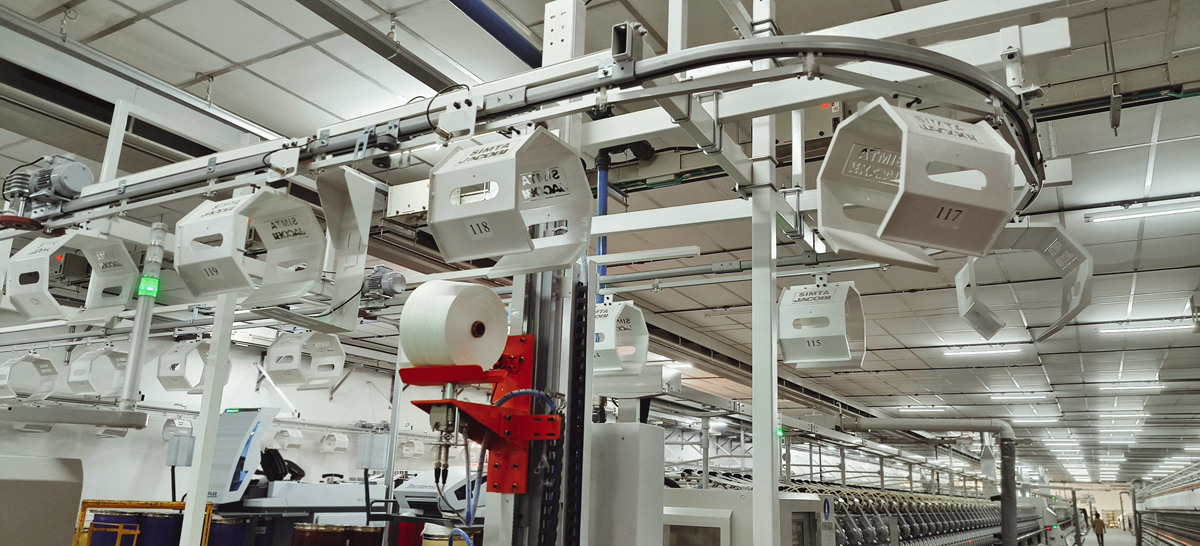
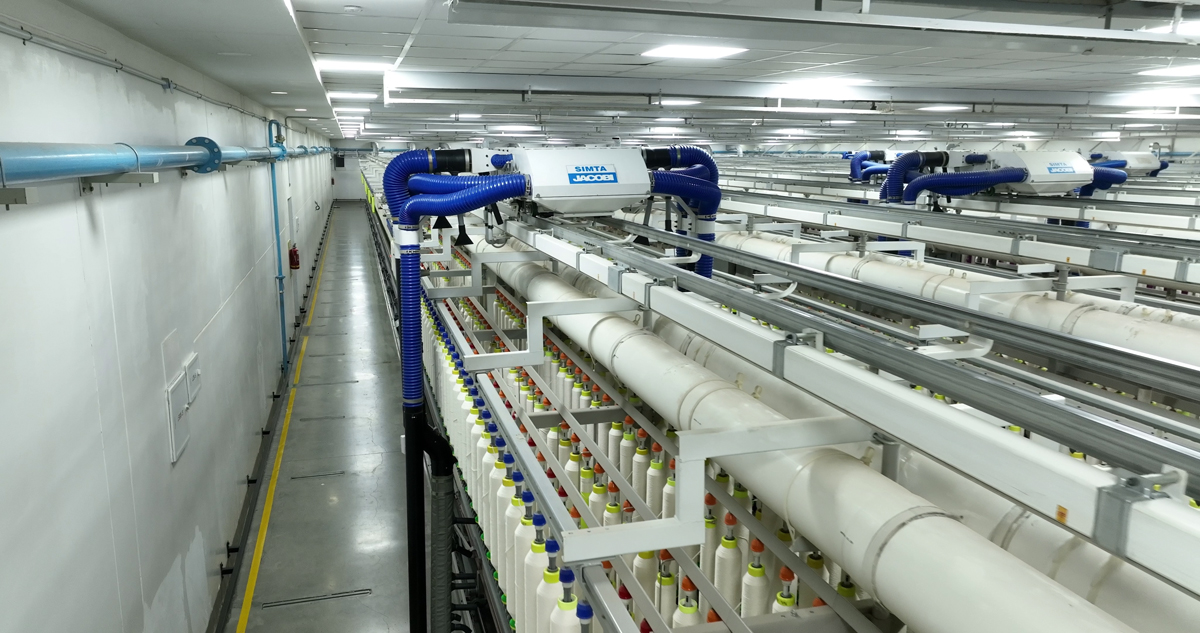
Another milestone arrived in 2004 with the launch of Overhead Travelling Cleaners (OHTCs). A strategic partnership with Germany’s Jacobi boosted capabilities further. When Jacobi ceased its German operations, their machines and expertise transitioned seamlessly to Simta Jacobi. “This allowed us to manufacture OHTCs under both the Simta Jacobi and Jacobi brands,” Senthil explains.
Expanding the Portfolio
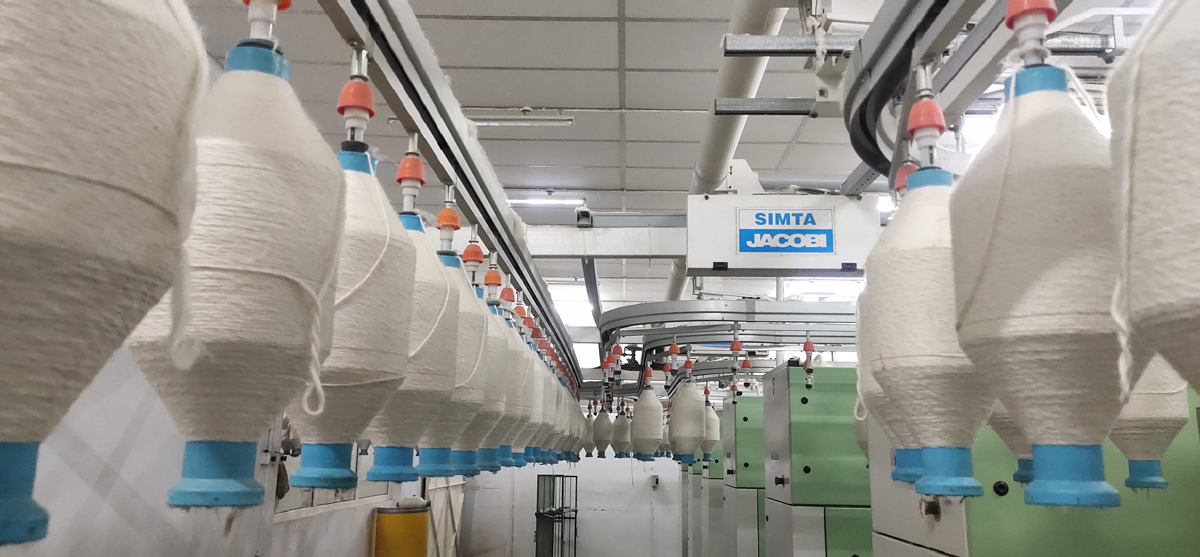
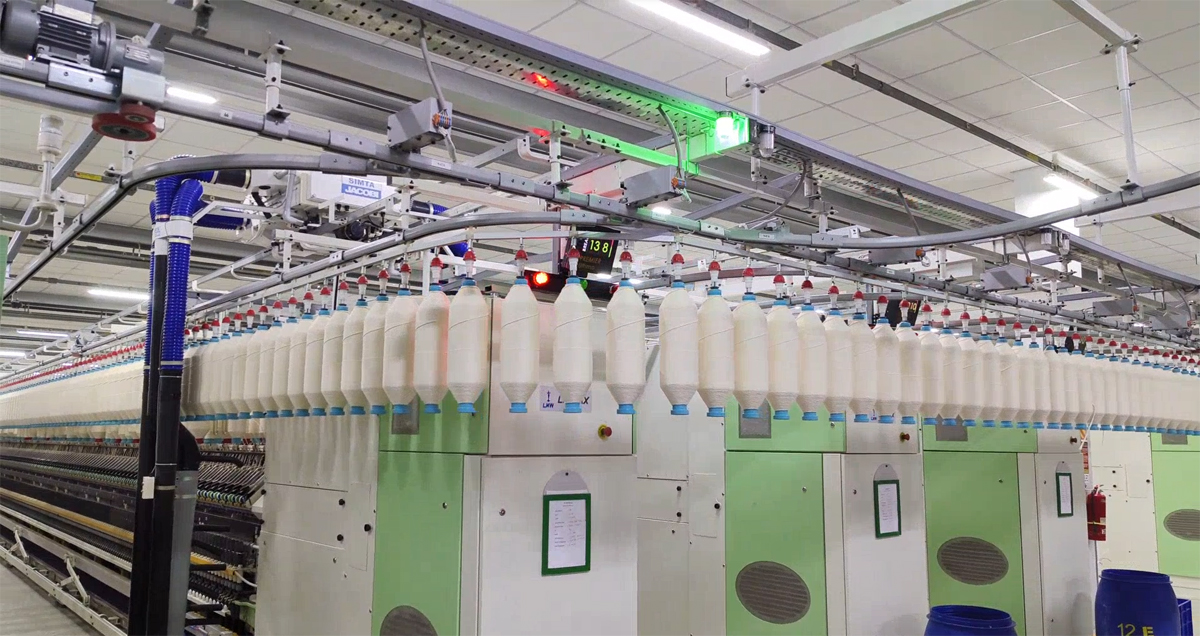
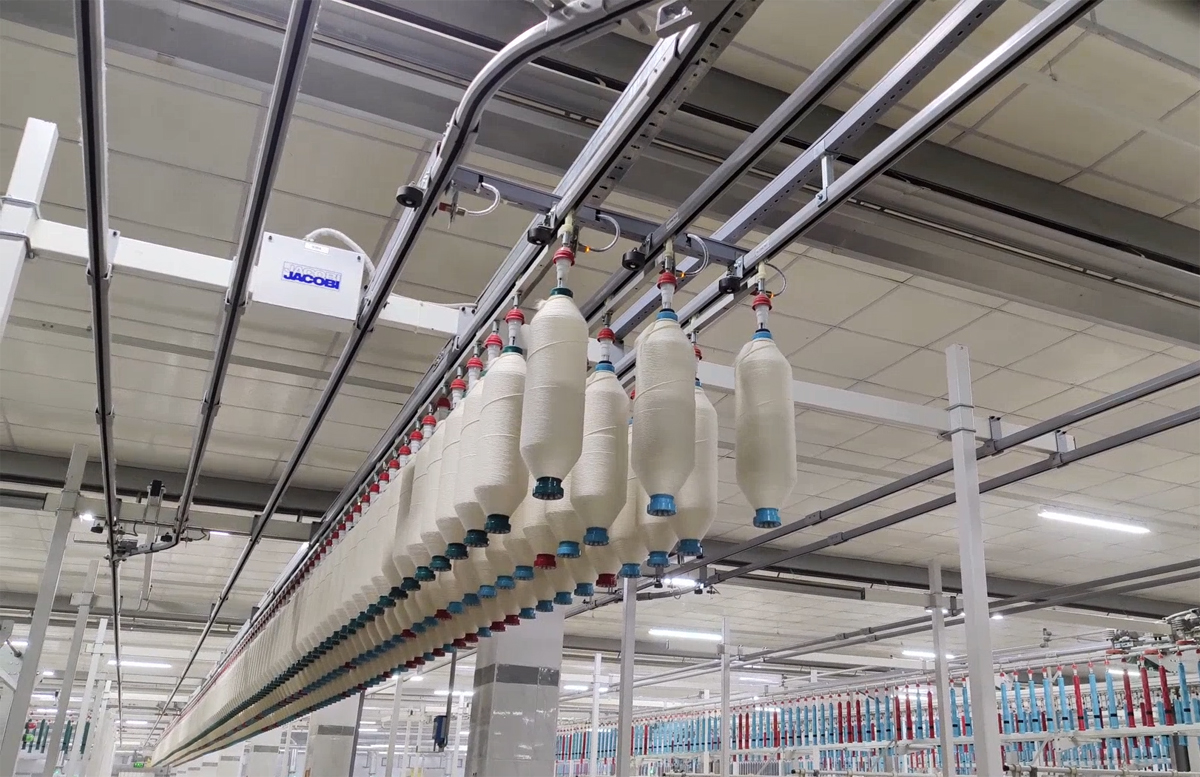
Simta’s story is not just one of survival and growth but of bold diversification. In 2010, the company introduced the Bobbin Transport System (BTS), quickly becoming a market leader. By 2016, it launched its automatic cone transport system. Come 2025, it has launched its automatic cone packing system.
“Our automation solutions are widely accepted not just in India but also across Asia, Africa, and South America,” says Senthil. “We have always designed products that improve efficiency, reduce manpower dependency, and add value to our customers.”
Even as the group diversified into UPVC windows, ABS doors, sheet metal fabrication, modular electrical panels, and technical textiles, its roots in the textile sector remain deep. “Textiles are our foundation,” Senthil emphasizes. “Even if other divisions generate higher revenues, the satisfaction we derive from serving the textile community keeps us strongly anchored here.”
Changing Perceptions of Indian Products
For long, Indian manufacturing carried the stereotype of being low-cost but low-quality. But Senthil believes Simta and companies like it have helped change that narrative.
“Today, markets like Bangladesh and Vietnam recognize that Indian products often surpass global standards. India is no longer just the cost-effective option—it’s now about quality, performance, and reliability,” he says.
The Simta Advantage
When asked about Simta’s edge, Senthil doesn’t hesitate: consistency. “For 35 years, our customers have relied on us for seamless products, services, and spares. Our automation solutions are also modular, allowing customers to scale investments gradually. Add to this a strong after-sales service network and customer-first philosophy, and you see why trust has been our biggest asset,” he points out.
Simta’s after-sales team works tirelessly, often extending support through remote troubleshooting, night-shift assistance, and quick spare replacements. This dedication has translated into long-term loyalty.
Beyond Textiles: Strategic Diversification
The Simta Group has steadily diversified into multiple verticals. Cyber Textiles focuses on home and technical textiles. Simta Clear Coats, under the brand ‘Simta Astrisk’, manufactures UPVC windows and doors, with a strong network of 600 channel partners across India. Its ABS doors replicate the look and feel of wood while being fire-retardant. Meanwhile, the engineering division specializes in sheet metal components and modular electrical panels.
“This diversification spreads our risks and opens up new avenues,” Senthil remarks. “But at the heart of it all is the same commitment to quality and innovation.”
The Secret to Success
What has powered Simta’s rise from a small loan-backed venture to a diversified group? Senthil credits two factors: commitment and teamwork. “The first key is our unwavering commitment. The second is our team. We’ve always believed in fostering ownership—literally—by offering employees stakes in the company. This creates a shared vision. Our success is collective, and we grow together.”
A Strong Outlook for Indian Spinning
With 38 years in the textile sector, Senthil remains bullish about India’s spinning industry, even as man-made fibers gain traction. “There’s no denying the shift towards MMF. However, India—and especially Tamil Nadu—still possesses unmatched artisanal skills in cotton spinning. Consolidation may happen, but I strongly believe cotton will continue to play a vital role in India’s textile future,” he says confidently.
On the challenges posed by tariffs and shifting trade dynamics, Senthil is equally optimistic. “The textile industry has always been resilient. Exporters will find new markets or benefit from changing geopolitics. I’m certain these hurdles will be overcome sooner than we expect.”
Vision 2030: Automation and Beyond
Looking ahead, Simta has its eyes firmly set on automation and technical textiles. The group is exploring opportunities in medical fabrics, while also working on AI- and machine learning-powered automation solutions. “By 2030, we want to deliver affordable, cutting-edge solutions globally. Growth must also be sustainable and responsible,” Senthil emphasizes.
Collaboration with A.T.E.
As part of its vision for expansion, Simta has recently tied up with A.T.E. Enterprises Private Limited, which will represent the company in the Indian market. This partnership is expected to strengthen Simta’s reach, provide localized support to customers, and accelerate the adoption of its automation solutions across India’s textile industry.
ITMA Asia 2025: Showcasing the Future
A major milestone for Simta this year will be its participation in ITMA Asia 2025 in Singapore. At the event, Simta will launch its automatic cone packing system, marking yet another leap in its automation journey. “We expect strong footfalls from Bangladesh, Vietnam, Indonesia, China, and India,” Senthil shares. “Our team looks forward to engaging with customers and discussing how our solutions can transform their operations.”
Visitors can experience Simta’s innovations firsthand at Hall – H3, Stall No – C101.