Sustainability at the Core
Surat-based General Group has established sustainability as a fundamental pillar of its textile manufacturing operations. The company produces 70% of its fabric portfolio using recycled and sustainable fibers, including polyester, nylon, and viscose.
Demonstrating its commitment to environmental stewardship, General Group has invested in a Zero Liquid Discharge (ZLD) plant despite not operating dyeing or printing facilities. Furthermore, the company operates entirely on renewable energy, meeting 95% of its electricity requirements through sustainable sources.
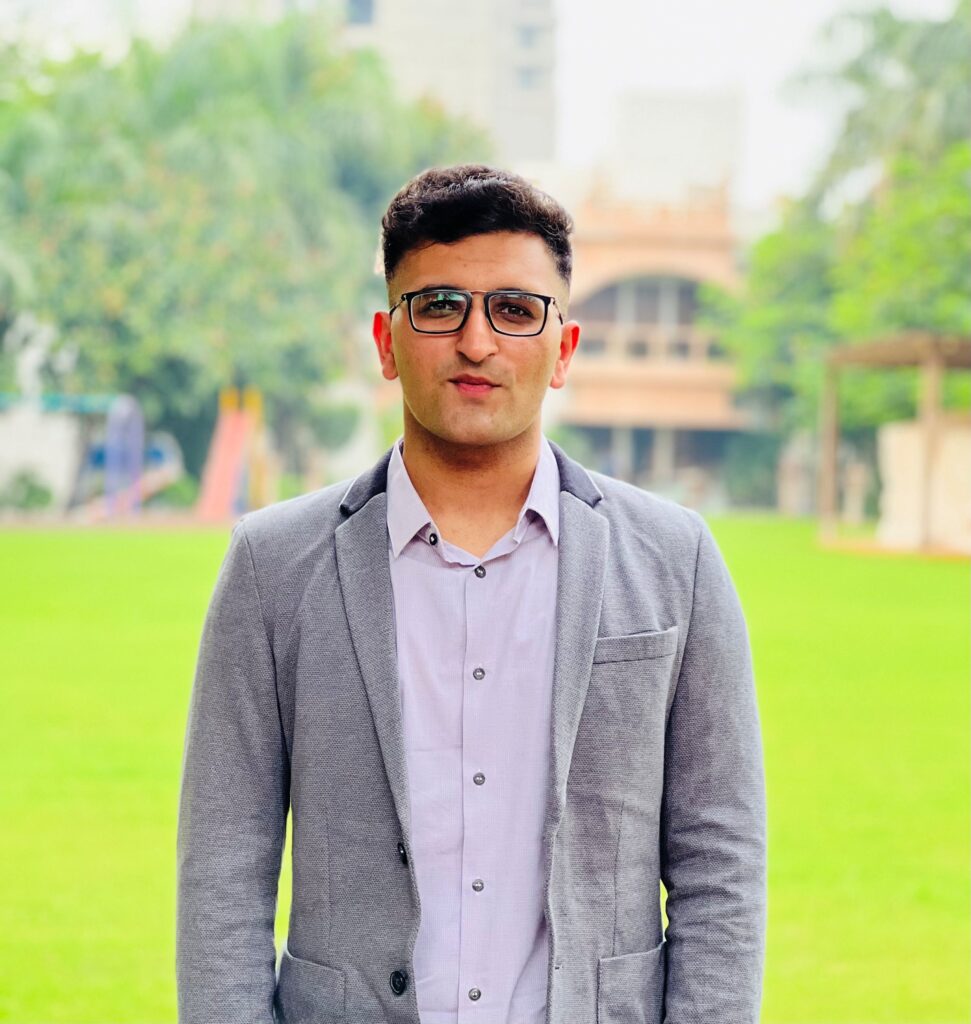
“In addition to the above, we are also almost carbon neutral and were the one of the first adopters of renewable energy in 2018 by commissioning a 10 MW wind and solar energy plants. In the last few years, we have also bagged several compliance certifications like GOTS, GRS, ISO, BCI, Higgs Index, OEKO-TEX, etc,” Mr Tameem General, Director at General Group informed The Textile Magazine.
A Three-Generation Legacy
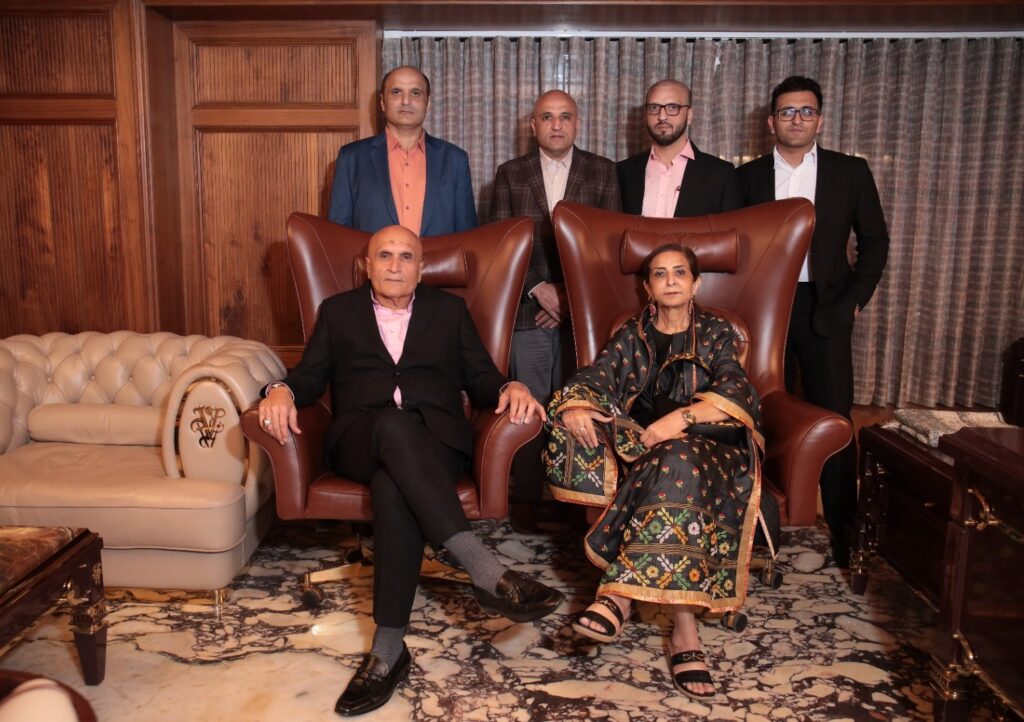
The roots of General Group trace back to the early 1970s, when Mr. General’s grandfather laid the foundation of Arabian Weaving with just 12 conventional powerlooms. Over the decades, the business expanded steadily, with the second-generation accelerating scale and modernization.
Strategic Expansion and Consolidation
The journey of upstream integration began in 2002 with the acquisition of a Haryana-based FDY and PTY manufacturing facility, marking General Group’s entry into polyester yarn manufacturing. This was followed in 2005 by the acquisition of the JK Synthetics unit in Kota, which enabled the group to expand into nylon and acrylic yarns. By 2010, the group took a strategic decision to consolidate operations in Surat, closing its plants in Haryana and Kota.
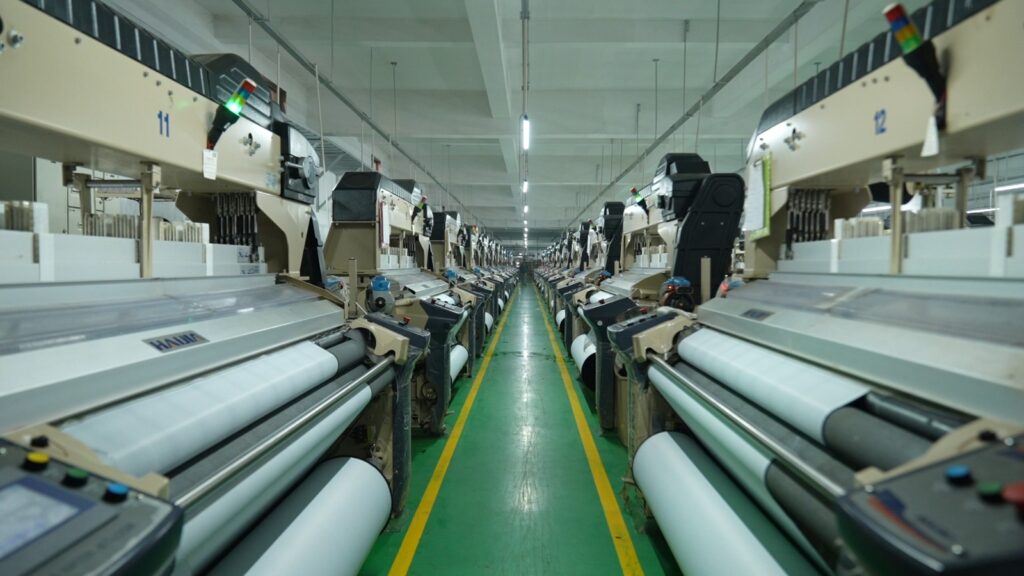
The next phase of growth began in 2011 with the installation of 100 waterjet weaving machines under General Petrochemicals Pvt Ltd. This momentum culminated in the establishment of General Polytex in 2015, which emerged as the nucleus of the group’s fabric manufacturing operations and marked its transition into a technology-driven and integrated textile platform.
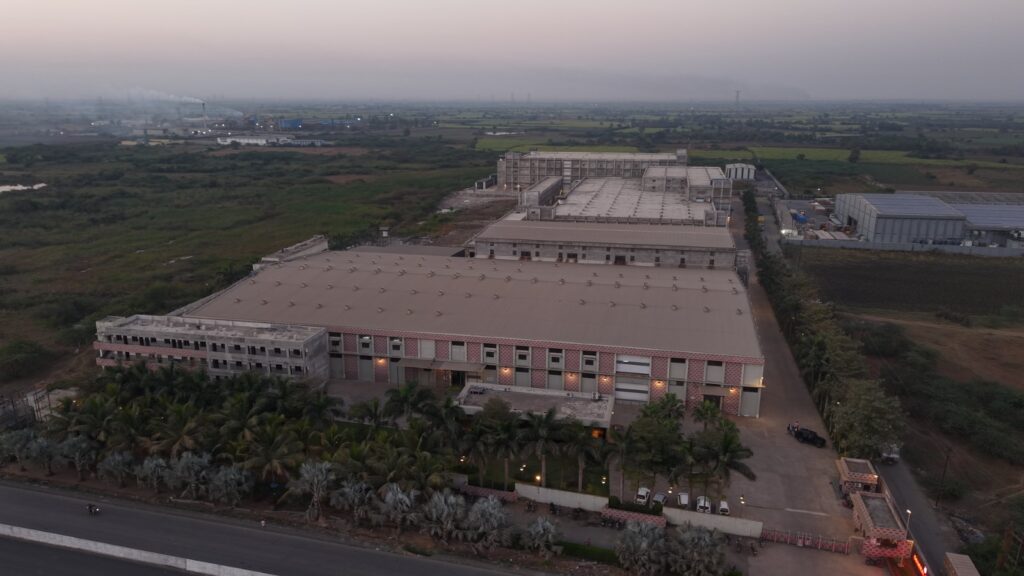
Over the following years, General Group scaled rapidly, expanding its infrastructure from 100 waterjet looms to over 800 waterjet looms, supported by nearly 200 airjet looms and around 300 TFO machines. Today, the group operates from a state-of-the-art manufacturing facility spread across approximately 1.5 million square feet of built-up area. With a production capacity of close to one crore metres of gray fabrics per month and a workforce of nearly 2,200 people, General Group has built one of the most robust and scalable weaving platforms in the region.
State-of-the-Art Manufacturing Infrastructure
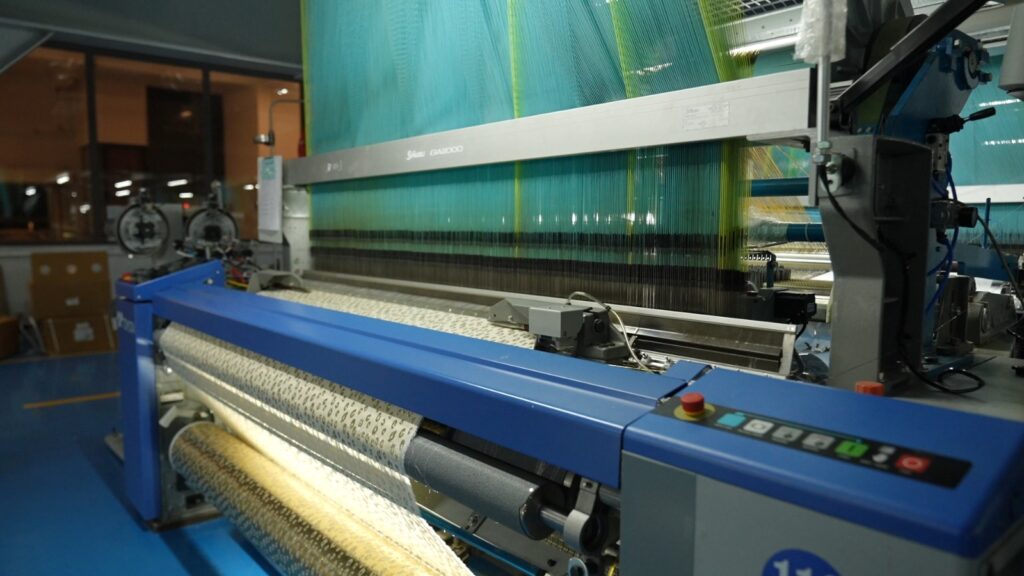
The company has purchased Haijia and Yiin-Chun brand of waterjet looms, while airjet looms have been purchased from Toyota, jacquards from Staubli and TFO’s from Aalidhra. Due to the large installation base of weaving looms, the group has also installed auto-drawing machines.
Product Portfolio and Global Clientele
“Mainly polyester and their blends are produced on the waterjet looms like suiting’s, shirting’s, abaya fabrics and furnishing fabrics like bedsheets and curtains. On airjet looms, we primarily produce viscose and viscose blended fabrics. The group has received nominations from several global fashion brands like Inditex brands Zara and Pull&Bear, H&M, Marks and Spencer, Walmart, Target, Vero Moda, Tommy Hilfiger, Calvin Klien, etc,” Mr General added.
R&D Capabilities and Customization
General Group operates an active R&D division supported by a fully equipped laboratory and sample jet dyeing facilities. The team works closely with global brands to analyse incoming fabric samples and develop customised solutions. “Brands often ask us to replicate cotton-like hand-feel in polyester fabrics or engineer specific performance characteristics. Our R&D capability allows us to translate such requirements into scalable commercial production,” Mr General explained.
Integrated Manufacturing Platform
“Beyond supplying fabrics of the highest quality, General Group’s core strategic advantage lies in its integrated manufacturing platform and ability to combine scale, speed, and complexity. By controlling critical stages of the textile value chain and investing in technology-driven production systems, the group has built a rare capability to deliver high-value fabrics at industrial scale with shorter lead times,” Mr Tameem observed.
Vision 2030: India’s Largest Closed-Loop Manufacturer
Looking ahead, General Group is pursuing backward integration into viscose yarn manufacturing and forward integration into dyeing. The company is also actively exploring circular textile manufacturing.
While recycled polyester fibres derived from PET bottles currently form a significant part of its portfolio, the group is piloting circular textile projects where post-consumer textile waste is regenerated into fibres. “Our long-term vision is to become India’s largest closed-loop textile fabric manufacturer by 2030,” Mr General stated.
IPO on the Horizon
Expressing confidence in the long-term prospects of India’s textile industry, General Group continues to invest aggressively in capacity and capability expansion. Recently, the group acquired the Praful Overseas plant in Panoli, Gujarat, which manufactures nylon filament yarn. “We are bullish on the Indian textile sector and have structured our expansion with a long-term perspective. We are also preparing to launch an IPO within the next 15 months,” Mr General concluded.