The global textile and apparel industry is undergoing a period of transformation, marked by shifting trade dynamics, technological advancements and an intensifying focus on sustainability. While the imposition of tariffs on Bangladesh’s garment exports has created opportunities for Indian exporters, the possibility of higher tariffs on India’s own exports to the USA poses fresh challenges. Against this backdrop, the Government of India’s Free Trade Agreement (FTA) with the UK and ongoing negotiations with the EU promise greater competitiveness for Indian players.
In this evolving landscape, Vardhman Textiles has emerged as a beacon of resilience and foresight. Anchored in strategic investments, capacity expansion, innovation in synthetics and an unwavering commitment to sustainability, Vardhman is not only navigating market turbulence but also charting a powerful roadmap to cement its position as a global textile leader.
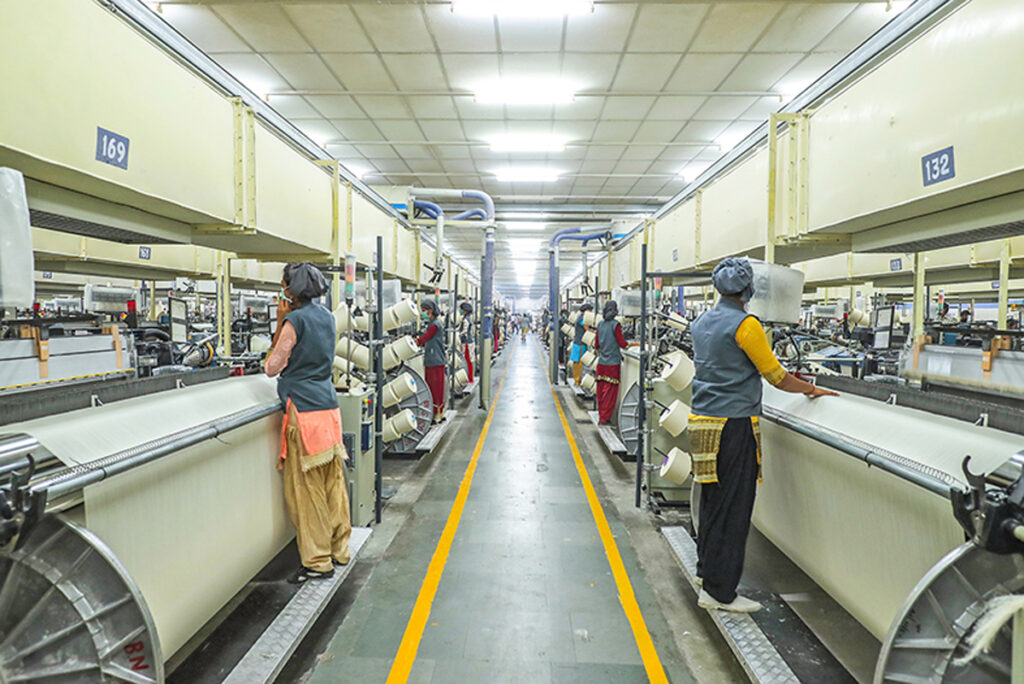
The company’s robust manufacturing capacity underscores its leadership in the textile industry. With 15 world-class manufacturing facilities and a strong workforce of over 23,000 professionals, the company operates at an impressive scale. Its operations are powered by 1.23 million spindles, enabling high-volume yarn production, while its fabric processing capacity of 180 million meters per annum and a dedicated printing line capacity of 30 million meters per annum highlight its integrated and end-to-end production strength. This extensive capacity not only ensures consistency, quality, and speed in delivery but also positions the company to meet the growing demands of both domestic and international markets.
Strategic Response to Market Volatility
Global supply chains and raw material markets have been riddled with volatility, but Vardhman has responded with agility and clarity of purpose. The company fast-tracked modernisation across spinning and fabric facilities, enhanced product sophistication and pivoted toward high-value dyed and processed textiles. By reinforcing technical textile capabilities and rebalancing its portfolio, Vardhman sustained continuity of service and reinforced its partnerships with global customers even as the market faced turbulence.
Financial prudence has remained central to its operations, with growth funded primarily through internal accruals and a conservative debt profile. Investments in automation and process enhancements are strengthening its operational backbone, preparing the company to capture margin expansion as market conditions improve.
Investments Driving the Future
At the heart of Vardhman’s growth strategy lies a multi-pronged investment programme designed to future-proof operations, expand product capabilities and embed sustainability.
- Rs. 1,200 crore modernization drive across spinning and fabric units will replace legacy machinery, boost automation, reduce utility consumption and improve manufacturing flexibility.
- Rs. 850 crore green energy investments, including biomass boilers, solar and wind power, will raise green energy consumption to 25–30% in two years and potentially 40% within three.
- Rs. 400 crore expansion in fabric processing capacity at Budhni, Madhya Pradesh, will elevate output from 180 million meters to 210 million meters annually. This will significantly increase the share of dyed and processed fabrics, shifting focus away from grey fabric and toward higher-value segments.
- Rs. 350 crore investment in synthetic filament fabrics will create 18 million meters of annual capacity for outerwear, jackets and sportswear. This marks a strategic leap into one of the fastest-growing segments of the global fabric industry.
Together, these initiatives reflect Vardhman’s ability to align capital expenditure with long-term competitiveness, scalability and sustainability.
Foray into Synthetic Filament Fabrics
A defining pivot in Vardhman’s journey is its strategic diversification into 100% synthetic filament-based fabrics. The initial focus will be on outerwear and sportswear—categories witnessing exponential growth worldwide. This move not only broadens Vardhman’s portfolio but also positions it as a forward-looking player attuned to global consumer preferences for performance, durability and technical attributes in fabrics.
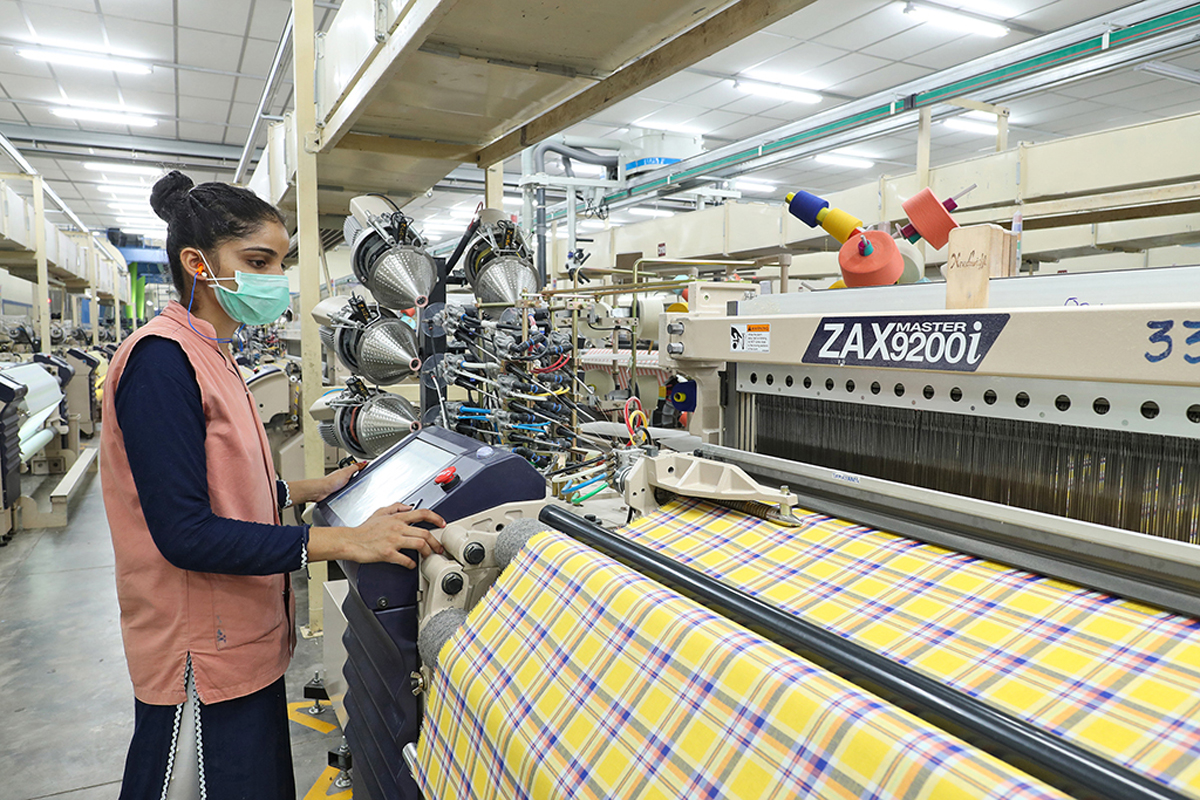
The synthetic initiative is complemented by Vardhman’s design-led approach, with in-house teams developing innovative blends and styles that resonate with global fashion cycles. This bold diversification underscores the company’s conviction to evolve beyond cotton and become a holistic solutions provider for the global apparel value chain.
Reinforcing Leadership in Yarn and Fabric
Vardhman continues to stand tall as a market leader in premium yarns and fabrics, celebrated for its technological excellence and global reach. Its yarn portfolio spans melange, MVS, slub, fancy, corespun, superfine, recycled, sustainable and functional yarns, catering to over 55 nations including the EU, Japan and the USA.
The spinning industry faced challenges in FY25 due to elevated cotton prices and restrictions on synthetic fibre imports in India. Despite pressures on profitability, Vardhman demonstrated resilience by modernising units, debottlenecking capacities and expanding into differentiated products. The blueprint for tomorrow includes scaling recycling capabilities through a second recycling line, strengthening man–machine productivity and forging deeper collaborations with global brands entering India.
On the fabric side, the company leveraged strong demand from the US, UK and EU to operate at near-full capacity in FY25. Margin growth in fabrics buffered the pressures faced in yarns. Expansion into synthetic fabrics by 2025 will further enhance Vardhman’s standing as a vertically integrated player delivering end-to-end solutions.
Expansion in Garmenting: Moving Closer to Consumers
Vardhman’s garment division, though relatively smaller, reflects the company’s ambition to move closer to global consumers and capture value at the apparel stage. Equipped with world-class technology from Japan, Germany and the USA, the unit specializes in formal and casual shirts for leading brands such as Zara, Land’s End and Ben Sherman.
With plans to expand from 6,000 shirts per day to 10,000 shirts per day, the garment division is poised for scale. Product diversification into performance shirts, sustainable fabrics and new blends is expected to reinforce Vardhman’s reputation as a trusted partner for premium apparel solutions.
Embedding Sustainability and ESG Leadership
Sustainability has long been a way of life at Vardhman rather than a compliance obligation. The company’s GreenWeave Project has set a decarbonisation roadmap aligned with global ESG standards, pushing its DJSI score from 20 to 72 within a year.
Complementing renewable energy investments, the ReNova recycling plantepitomises Vardhman’s commitment to the circular economy. With a current capacity of six tonnes per day, ReNova transforms pre- and post-consumer textile waste into reusable fibres. Plans are underway to expand this to 11 tonnes per day, reinforcing leadership in circular innovation.
Such initiatives position Vardhman not just as a textile manufacturer but as a sustainability-driven enterprise aligned with the demands of global brands and eco-conscious consumers.
Strengthening Global Partnerships
India’s textile future will increasingly be defined by its ability to cater to international brands demanding innovation, quality and reliability. Vardhman has already forged strong partnerships with global retailers and fashion leaders, and its expansion into synthetics, value-added fabrics and garments strengthens its positioning as a preferred supplier of choice.
The ongoing FTAs with the UK and EU are expected to double India’s woven apparel exports to these markets by 2030, and Vardhman is strategically poised to capture this upside.
Blueprint for Tomorrow
The textile industry stands at an inflection point, shaped by trade realignments, consumer preferences for sustainability and rapid technological shifts. While uncertainties around cotton pricing and trade policies persist, Vardhman Textiles is responding with conviction—backing its strategy with massive investments, bold diversification into synthetics, sustainability-led innovation and deeper integration across the value chain.
By 2025, Vardhman will have modernised its spinning and fabric units, expanded recycling, entered the synthetic segment at scale, ramped up garmenting and significantly raised its green energy footprint. These strategic initiatives not only enhance resilience but also set the stage for accelerated growth, stronger global partnerships and reinforced leadership.
In a world where global brands are increasingly seeking trusted, innovative and sustainable partners, Vardhman Textiles is emerging as India’s global textile powerhouse—future-ready, diversified and resolute in its vision for leadership on the world stage.