By Arun Rao
Early Days: A Humble Beginning with Big Dreams
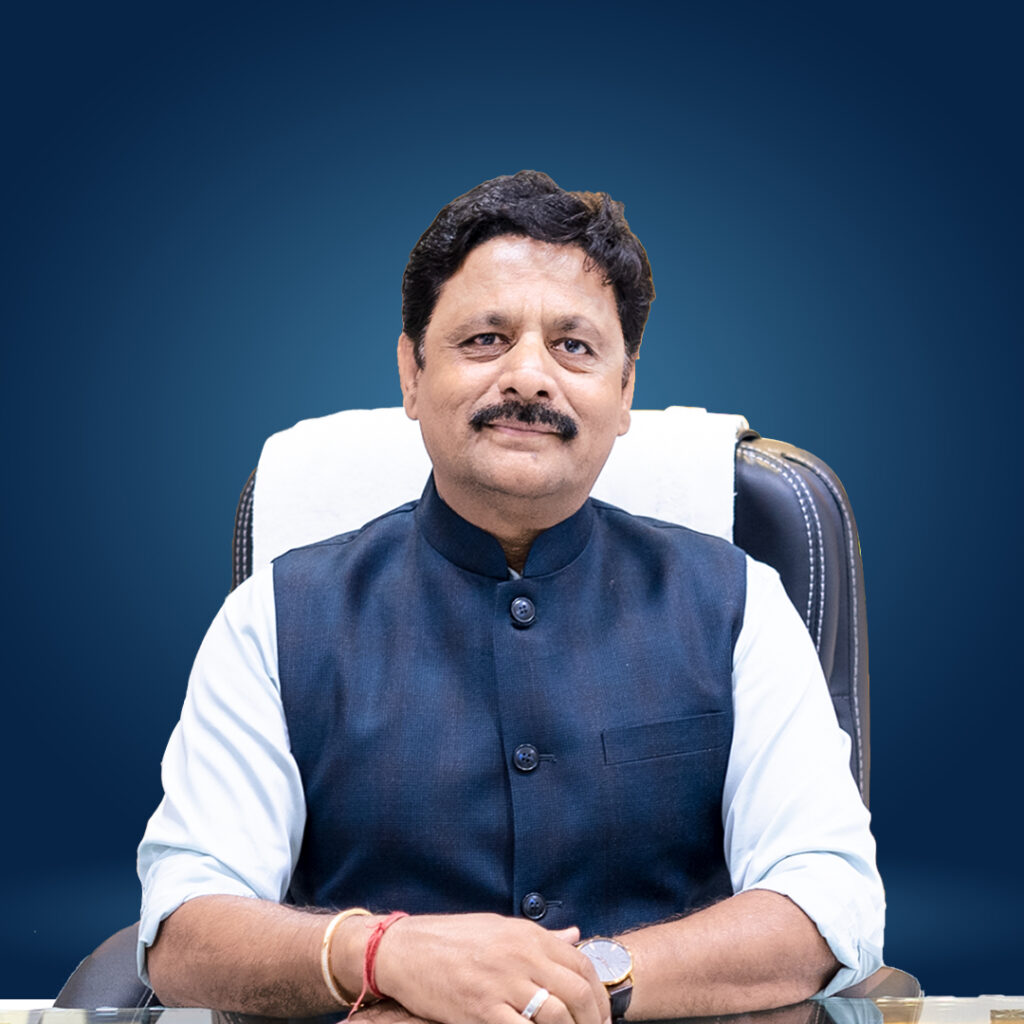
Mr Kailash Hakim (Agarwal) after doing his graduation in his hometown in Rajasthan came to Surat in 1995 and took up a clerical job which paid just Rs 1,500 per month. Within a period of 30 years, Mr Hakim’s Himanee Group currently is a partner in two fabric printing mills, while also running his own 100 airjet looms weaving unit and has a saree and dress material brand named Himanee Fashions. He is also the President of the Federation of Surat Textile Traders Association (FOSTTA) since the last two years.
Turning Point: Entering the World of Yarn Brokerage
“I came to Surat in 1995 after completing my education from Rajasthan and had planned to join Indian Civil Services. I took a job with a yarn trading company as a clerk and studied for UPSC exams at night. Seeing my work, the company doubled my salary in six months. I also started doing brokerage of yarns and gray fabrics while working due to which I met a lot of traders and buyers in the Surat textile industry. But my inner conscious did not allow me to work for a yarn company as well as do brokerage of yarns. So, I left the job and did full time brokerage. Since brokers receive commission only once a year, it was a big struggle for me. I also have slept a few nights at the Surat railway station. However the struggle made me strong,” Mr Kailash Hakim, Founder at Himanee Fashions Pvt Ltd said while speaking to The Textile Magazine.
Building Himanee Fashions: A Brand Born from Vision
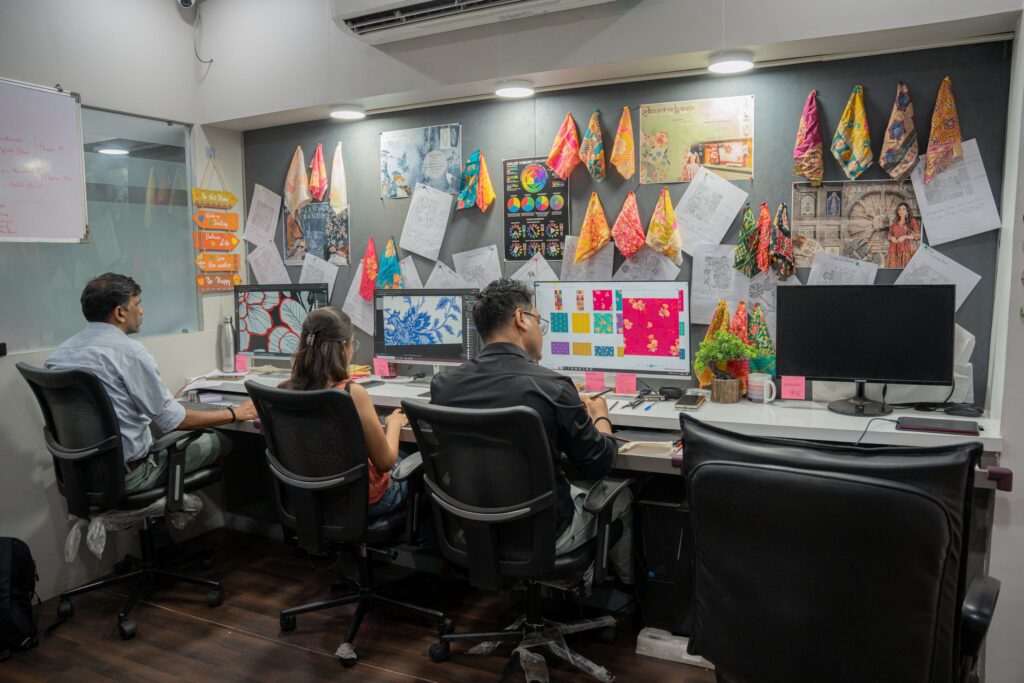
He was of the opinion that sky is the limit in the Surat textile industry and so in 1997, along with the brokerage business, he ventured into the wholesale business of trading sarees in the name of Lajari Sarees and in 2000 he started Himanee Fashions Pvt Ltd. Himanee always strived to offer unique fabrics and designs and so was able to get a firm stronghold in the markets of North India and to do so, also employed an in-house designer. In 2002, the trend for embroidered fabrics took off, so Mr Hakim set up an embroidery fabrics unit.
Scaling New Heights: Ventures into Fabric Processing and Weaving
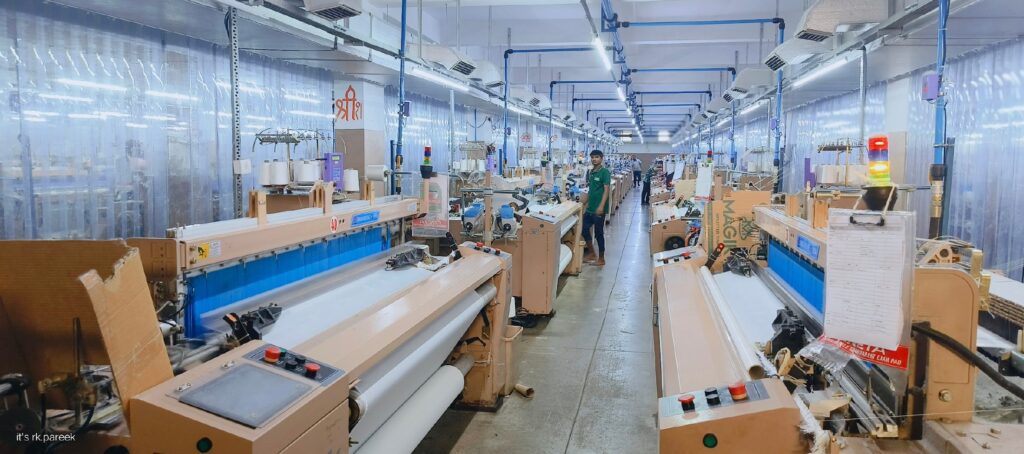
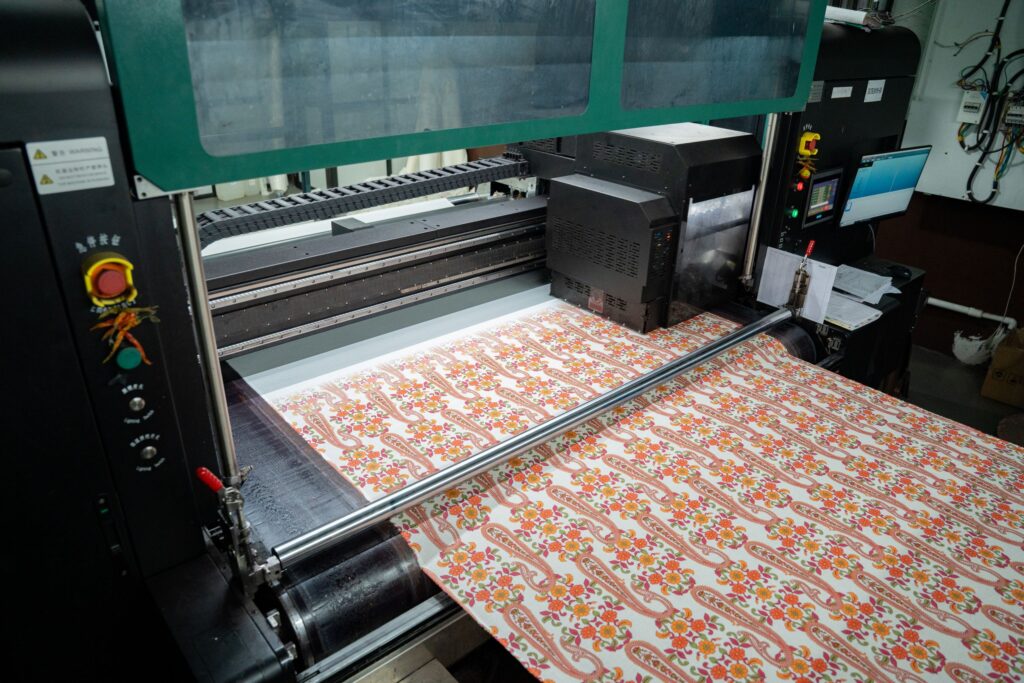
In 2010, he started a fabric printing mill in a partnership named Vishuprem Dyeing & Printing Mill. Meanwhile, they sold off the embroidery factory and started another fabric printing mill in 2018 in the name of Sankalp Dyeing & Printing Mill. They have also backward integrated and set up a weaving fabrics factory in the name of Devout Industries in end-2024 by installing 100 airjet looms.
Manufacturing Capacity and Product Focus
Vishuprem has a capacity of 30 lakhs metres of printed fabrics per month and the second plant too has a similar production capacity, while the airjet weaving production capacity is 15 lakhs meters per month. The two printing mills mainly print chanderi variety of dress materials and sarees where warp yarn is mainly 20 mono and the two mills continuously experiment with the weft yarns by experimenting and adding various fancy yarns to add value to the fabric and offering different patterns. The weaving plant manufactures polyester viscose blended fabric for end use in sarees, which is sold in the open market.
Industry Insights: The Future of Surat’s MMF Sector
“The Surat textile industry is mainly in the unorganised sector. However, I foresee that there will be a trend of composite textile mills in Surat. Despite being the biggest manmade fibre textile hub in India, exports are minimal and so there is a lot of potential for exports of fabrics or garments from Surat as globally manmade fibre garments have a higher market share compared to those made from cotton. The new central as well as state textile policies are also providing boost to the manmade fibre industry as the centre and state have realised that there is a lot of export potential in the MMF industry,” he informed
Giving Back: CSR Initiatives During Pandemic and Beyond
Mr Hakim and his companies are actively involved in CSR activities. During Covid-19 pandemic they supplied around 80,000 oxygen cylinders in and around Surat and also in their native district in Rajasthan. They also opened 17 quarantine centres which were equipped with all necessary facilities in their native district. A quarantine centre was also opened in Surat where even Remdesvir injections were supplied to patients free of cost. They are also undertaking water harvesting activities in their native district as ground water level has reduced drastically.
Looking Ahead: Expansion and Entry into Newer Segments
Future plans include putting up a dyeing machine at Sankalp Dyeing and Printing with a capacity of 50,000 metres per day which will begin commercial production in end June. Mr Hakim is also planning to foray into technical textile fabrics, particularly for the defense industry, while also exporting those fabrics. They also have plans to add 265 more airjet looms which will take total loom numbers to 365. Plans are also afoot to set up a 100% export oriented dyeing fabric plant and venture into garmenting with 500 stitching machines.