


By K. Gopalakrishnan
Arvind Limited is entering a new phase of growth, leveraging its deep textile and apparel manufacturing capabilities to build a more diversified portfolio of high-value businesses. While textiles and garmenting remain core strengths, Advanced Materials is emerging as a strategic growth engine, with the company expanding into Human Protection, Industrials and Composites and building a stronger global footprint. The creation of Arvind Advanced Materials Limited and its entry into the US market through the acquisition of Dalco-GFT mark important steps in this transformation.

Arvind Limited delivered one of its strongest performances in FY26 despite a challenging global operating environment marked by trade disruptions, tariff pressures, geopolitical uncertainty, input-cost volatility and changing sourcing patterns. The company achieved record consolidated revenue of ₹9,303 crore and EBITDA of ₹1,061 crore, while profit after tax before exceptional items increased 21% to ₹444 crore. Net debt declined by ₹112 crore, supported by stronger free cash generation and tighter working-capital management.
The performance is particularly significant because it was achieved while Arvind continued to invest in manufacturing capacity, technology, sustainability and new growth platforms. The company’s textile business remained the backbone of the organisation, while garmenting continued its rapid scale-up and Advanced Materials emerged as an increasingly important higher-value business.
The FY26 performance, therefore, reflects more than financial growth. It demonstrates the evolution of Arvind from a traditional fabric-led textile company into an integrated textile, apparel and Advanced Materials enterprise, with a growing global orientation.
Record Performance Across Businesses
Consolidated revenue grew 12% during FY26 to ₹9,303 crore, while EBITDA crossed the ₹1,000-crore mark for the first time, reaching ₹1,061 crore. EBITDA margin improved to 11.4%, while PAT before exceptional items increased 21% to ₹444 crore.
The Textile business generated ₹6,897 crore in revenue, up 12%, while Advanced Materials delivered ₹1,839 crore and maintained a full-year EBITDA margin of 15.1%.
Manufacturing volumes also reached important milestones. Denim volumes rose 15% to 60 million metres, woven fabric volumes reached an all-time high of 136 million metres, and garmenting delivered 42 million pieces, up 12%, crossing ₹2,000 crore in revenue.
Garmenting crossed the 10-million-piece quarterly threshold for three consecutive quarters, demonstrating that the business is becoming an increasingly important part of Arvind’s vertical integration strategy.
Strengthening the Integrated Manufacturing Platform
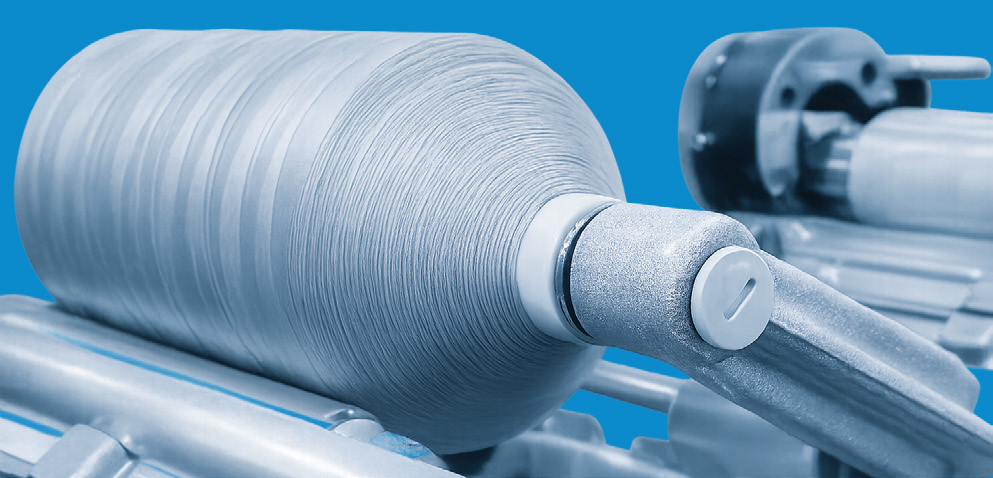
Manufacturing remains at the heart of Arvind’s strategy. The company operates across denim, woven fabrics, knits, garmenting and Advanced Materials, giving it the ability to support customers across a wide range of products and applications.
The integrated model is becoming increasingly relevant as global brands seek suppliers capable of offering not merely manufacturing capacity but design, product development, speed, quality, compliance, traceability and sustainability.
Arvind’s management believes that changing global sourcing patterns present a significant opportunity for India. Brands are diversifying supply chains, reducing concentration risks and looking for reliable partners capable of managing increasing complexity. Arvind’s manufacturing depth and long-standing customer relationships position it well to participate in this transition.
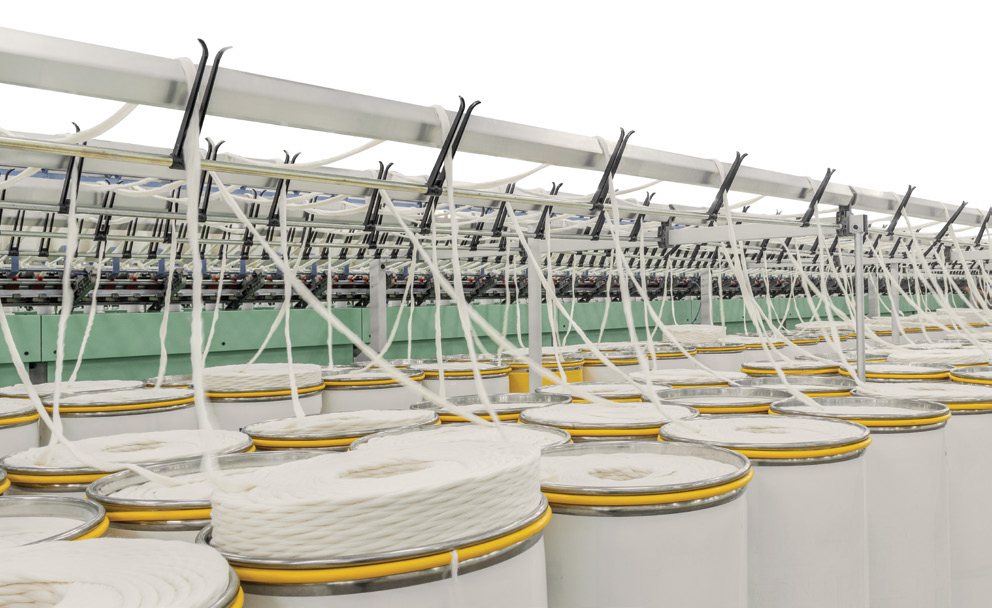
The company is consequently focusing on greater vertical integration, productivity improvement, modernisation and customer responsiveness.
Advanced Materials: Creating a Global Growth Platform
One of the most important strategic developments is Arvind’s transformation of Advanced Materials into a focused growth platform.
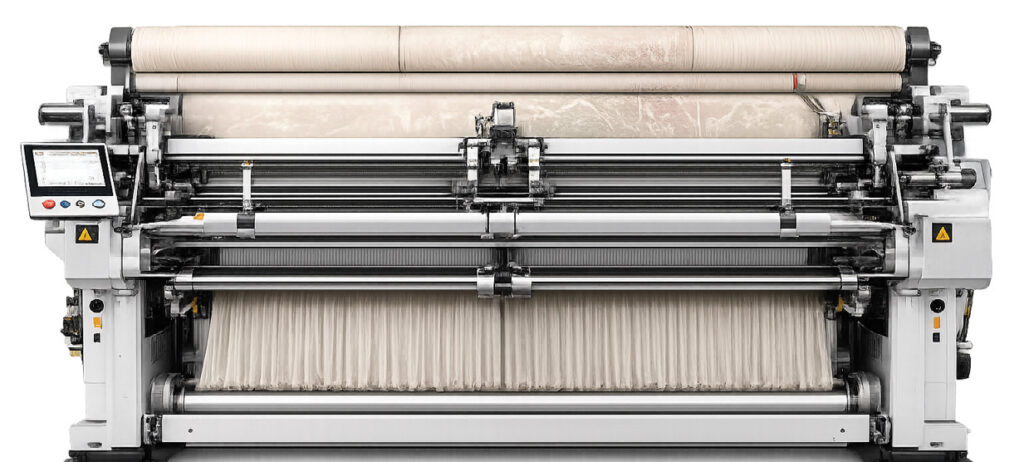
The business extends the company’s expertise in fibres, fabrics, coatings, composites and process technologies into high-performance applications across Human Protection, Industrials and Composites.
The business achieved its targeted 18–20% growth trajectory during FY26, supported by improved product mix and operating leverage.
The demerger of Advanced Materials into Arvind Advanced Materials Limited is intended to provide the business with sharper strategic focus and greater freedom to pursue its own growth trajectory. Importantly, Arvind is looking beyond organic growth and has identified inorganic expansion as a key component of its five-year strategy.
A major step in this direction was the acquisition of a 61% stake in US-based Dalco-GFT, at an enterprise value of approximately US$136 million. The acquisition gives Arvind entry into the world’s largest technical-textiles market and strengthens its position in specialised non-woven materials.
The acquisition illustrates a broader ambition: to develop Advanced Materials businesses that are rooted in India but increasingly relevant to global markets.
Investing in Next-Generation Manufacturing
Arvind’s growth strategy is being supported by continued investment in manufacturing technology and digitalisation.
The company is deploying advanced analytics and dashboards, IoT-enabled monitoring, Human-Machine Interface-based process automation and SAP-based ERP systems to improve production control, traceability and decision-making.
Advanced analytical equipment, including FTIR spectrometers and HPLC systems, is being used to strengthen chemical compliance with MRSL and RSL requirements, while traceability systems are being deployed to improve transparency across the value chain.
The company’s approach to technology is not simply about automation. It is about creating manufacturing systems that can respond faster to customers, reduce waste, improve precision and increase productivity.
As Arvind’s management puts it, technology should strengthen rather than replace the fundamentals of manufacturing—enabling employees to focus on higher-value activities while making operations more agile, scalable and predictive.
Sustainability Driving Innovation
Sustainability has become a core component of Arvind’s manufacturing and investment strategy.
During FY26, the company commissioned India’s first supercritical CO₂ dyeing facility at Santej, in partnership with H&M Group and Deven Supercriticals. The ₹25-crore investment uses a technology with the potential to reduce water consumption by up to 76%, energy consumption by 67% and chemicals by 90% during dyeing.
The company has also strengthened its circularity initiatives through its collaboration with Circ, aimed at integrating next-generation recycled fibres into its operations.
Arvind’s near-term, long-term and net-zero targets have been validated by the Science Based Targets initiative, aligning its climate ambitions with a 1.5°C pathway towards net zero by 2050.
Its sustainability performance was also reflected in an improved S&P Global ESG score of 74, ranking Arvind sixth globally and second in India according to its FY26 investor update.
Future-Ready Factories
Arvind is also looking beyond individual technologies to redesign the broader manufacturing model.
Through its Future Forward Factories initiative, developed with Fashion for Good, the company is creating an open-source, modular blueprint for sustainable Tier-2 textile manufacturing and developing a physical demonstration facility in Gujarat.
The initiative is intended to demonstrate that near-net-zero manufacturing can be commercially viable and scalable under Indian conditions. It focuses on resource efficiency, lower emissions, water stewardship and worker well-being.
This reflects an important shift in Arvind’s thinking: sustainability is increasingly being treated as a source of competitiveness, rather than simply an environmental obligation.
Disciplined Capital Allocation
Despite continuing to invest in growth, Arvind reduced net debt during FY26. The ₹112-crore reduction was supported by improved free cash generation and working-capital discipline.
The company has emphasised prudent capital allocation as a central component of its growth strategy. A stronger balance sheet provides Arvind with the ability to withstand external shocks while continuing to invest through market cycles and pursue strategic opportunities.
This financial discipline could become particularly important as the company pursues further inorganic opportunities in Advanced Materials while simultaneously investing in textile, apparel and manufacturing capabilities.
The Road Ahead
Looking forward, Arvind expects the external environment to remain uncertain, with tariffs, trade policies, currencies, input costs and geopolitical developments continuing to influence global textile and apparel markets. At the same time, the company sees substantial structural opportunities arising from global supply-chain diversification.
Its medium-term strategy is clear: scale the integrated textile and apparel platform, strengthen customer-centricity and design capabilities, expand Advanced Materials globally, increase automation and digitalisation, deepen R&D and innovation, pursue partnership- and acquisition-led growth, and embed sustainability across operations.
For Arvind, the opportunity is not simply to become larger. It is to become more integrated, technologically advanced, sustainable and globally relevant.
FY26 therefore represents an important milestone in that transformation. Record revenues and profitability provide the financial foundation, while investments in Advanced Materials, garmenting, digital manufacturing and sustainable technologies are creating new avenues for growth.
After more than nine decades, Arvind’s strategy is once again centred on adaptation—using its established manufacturing strengths while investing in technologies, businesses and capabilities that can shape its next phase of growth. As the company itself puts it, the future belongs to organisations with the strength to adapt, the imagination to evolve and the discipline to build for the long term.