


By K. Gopalakrishnan
Compressed air is an essential but often overlooked component of modern industrial production, with its efficiency, reliability and quality having a direct bearing on productivity and operating costs. As manufacturers face growing pressure to reduce energy consumption, improve sustainability and adopt smarter production systems, compressed-air technology is increasingly moving from a utility function to a strategic element of plant efficiency.
Against this backdrop, BOGE has evolved from a traditional compressor manufacturer into a provider of integrated compressed-air and gas solutions, combining compressor technologies with air treatment, intelligent controls, heat recovery, digital monitoring and gas-generation systems. With a global presence spanning more than 120 countries, the company is increasingly focused on application-specific solutions that optimise the complete compressed-air system rather than individual equipment alone.
Technology, energy efficiency and digitalisation are at the heart of this evolution. BOGE is advancing oil-free compression, high-efficiency systems, intelligent controls and connected solutions that enable manufacturers to monitor performance, optimise energy consumption and move towards more predictive maintenance. In the textile industry, where compressed air is integral to processes ranging from spinning and weaving to pneumatic controls and material handling, these capabilities can have a direct impact on productivity, quality and manufacturing costs.
Asia Pacific is a particularly important growth region for BOGE, with the company seeing opportunities across rapidly expanding manufacturing sectors, including textiles. Its strategy combines global technology with local engineering, service and application expertise, while its roadmap increasingly encompasses oil-free technologies, intelligent systems, gas generation, connectivity and complete lifecycle solutions.
In this exclusive interaction with The Textile Magazine, Mr. Nalin Amunugama, General Manager, BOGE Asia Pacific, discusses the company’s global evolution, technology portfolio, competitive strengths, energy-efficiency initiatives, digitalisation and the growing importance of Asia Pacific. He also outlines how BOGE sees the next generation of compressed-air systems supporting more efficient, connected and sustainable textile manufacturing.
Textile Magazine(TM) : BOGE has evolved from a German compressed-air equipment manufacturer into a global provider of complete compressed air and gas solutions, serving customers across more than 120 countries. How would you assess BOGE’s global performance today, and what have been the key factors behind the company’s sustained growth and international competitiveness?
Nalin Amunugama (NA) : BOGE’s global performance today reflects that of a mature and internationally established specialist that has evolved beyond its traditional role as a compressor manufacturer into a broader provider of integrated compressed-air and gas solutions. Over its 119-year history, the company has expanded not only its geographic presence, but also its ability to address diverse industrial requirements through continuous technological innovation, comprehensive service capabilities and strong local-market support.
BOGE’s sustained growth and international competitiveness are driven by five key strengths:
- Strong engineering and technology: Decades of expertise support reliable, energy-efficient and application-specific compressed-air solutions.
- Complete system solutions: BOGE has expanded beyond individual compressors to provide integrated solutions covering air treatment, controls, storage, heat recovery and services.
- Global reach with local support: Its presence in more than 120 countries, supported by distribution, service and application expertise tailored to local markets with more than 100,000 customers across a wide range of industries
- Focus on efficiency and sustainability: Energy-efficient technologies help customers reduce both operating costs and environmental impact.
- Ability to evolve: BOGE combines its long-standing engineering reputation with innovation in digitalisation, energy efficiency and integrated production systems.
Several factors have underpinned this sustained growth and international competitiveness:
– BOGE has maintained a strong technology and engineering foundation. The company’s long-standing expertise in compressed-air technology has provided a platform for developing energy-efficient, reliable, and application-specific solutions. This is particularly important because compressed air is a significant operating cost for many industrial users, making efficiency, system optimisation, and lifecycle costs increasingly important purchasing considerations.
– BOGE has broadened its offering from individual products to complete solutions. Rather than competing solely on compressor hardware, the company increasingly addresses the entire compressed-air system – including air treatment, control, storage, heat recovery, and related services. This allows BOGE to engage with customers at the level of overall system performance rather than simply equipment procurement.
– International competitiveness has been supported by a combination of global reach and local customer proximity. Operating across more than 120 countries requires more than exporting products; it requires distribution networks, service capabilities, application expertise, and an understanding of local industrial requirements. BOGE’s international organisation has therefore been an important element in translating its German engineering heritage into sustainable global market presence.
– Energy efficiency and sustainability have become important growth drivers. Industrial customers are under increasing pressure to reduce energy consumption and emissions. Because electricity represents a substantial part of the lifecycle cost of compressed-air generation, technologies that reduce energy consumption can provide customers with both economic and environmental benefits. This creates a structural opportunity for suppliers such as BOGE that can combine efficient equipment with system-level optimisation.
– BOGE has retained the credibility associated with a long-established engineering company while adapting its portfolio to changing customer expectations, digitalisation, energy efficiency, and increasingly integrated production systems.
TM: BOGE offers a comprehensive portfolio spanning screw, piston, scroll and turbo compressors, as well as compressed-air treatment, controls and gas-generation solutions. How is the company continuing to expand and integrate this portfolio to address increasingly diverse and demanding applications across industries?
NA: Our approach is increasingly application driven than product-driven. Different industries – and even different processes within the same factory – can have very different requirements regarding pressure, air quality, volume flow, redundancy and energy efficiency. This means there is no single compressor technology that is ideal for every application.
BOGE therefore offers a broad technology portfolio including screw, piston, scroll and turbo compressors. We combine these technologies with air treatment, drying and filtration, intelligent controls, heat recovery and digital monitoring. With the integration of INMATEC, we have also significantly expanded our expertise in on-site nitrogen and oxygen generation.
The important point is not simply to offer a wide range of products, but to integrate them into an efficient overall system. We look at the customer’s actual demand profile and processes and then determine the right combination of technologies.
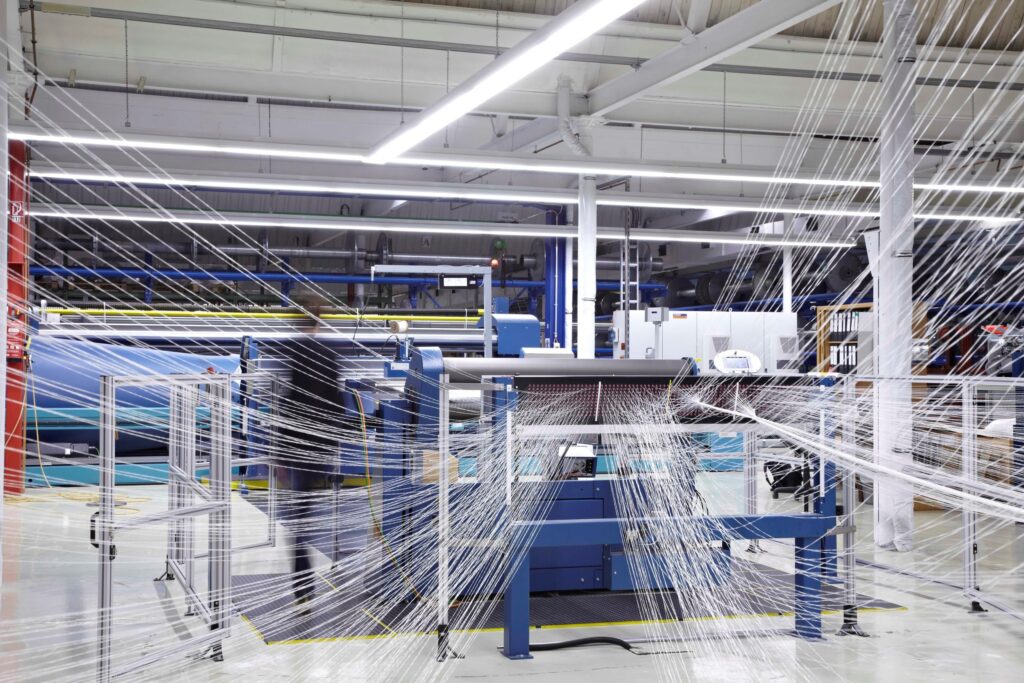
This is particularly relevant for the textile industry. Compressed air is used for many processes, from spinning and weaving to pneumatic controls, cleaning and material handling. Air-jet weaving is an especially demanding application because compressed air is directly involved in the production process. Reliability, stable pressure, air quality and energy efficiency therefore have a direct impact on productivity and product quality.
TM: Technology and innovation have been central to BOGE’s positioning as a premium compressed-air solutions provider. What are some of the most significant recent innovations in your compressor and system technologies, and how are developments such as oil-free compression, high-efficiency systems and advanced controls changing the way customers approach compressed-air generation?
NA: We see three major directions of innovation: efficiency, air quality and intelligence.
Oil-free compressed air is becoming increasingly important wherever air comes into direct or indirect contact with products or sensitive production processes. BOGE offers different oil-free technologies for different demand profiles, including scroll, piston and turbo solutions. Our T Series turbo compressors, for example, combine high volume flows with oil-free Class 0 compressed air and high efficiency.
A good example comes directly from the textile industry. German technical textile manufacturer DELCOTEX uses BOGE T 220 turbo compressors to supply air-jet looms, where compressed air propels the thread across the loom at speeds of up to 300 km/h. Compared with the previous compressor solution, the new installation has achieved energy savings of up to 35 percent while providing oil-free Class 0 air.
The second development is intelligent system management. Efficiency can no longer be assessed by looking at an individual compressor alone. The complete station has to respond dynamically to changing demand. Advanced controls allow multiple compressors and peripheral equipment to work together efficiently while maintaining the required pressure and air quality.
The third direction is connectivity. Digital monitoring provides greater transparency regarding operating conditions, consumption and maintenance requirements. This enables customers to move from reactive maintenance towards more predictive and data-driven operation.
TM: BOGE operates in a highly competitive global market. From a customer’s perspective, what are the key advantages that differentiate BOGE from other international compressor manufacturers—whether in terms of engineering, energy efficiency, reliability, system integration, customisation, lifecycle costs or after-sales service?
NA: From a customer’s perspective, BOGE’s strength is not based on a single technology or product feature, but on the combination of engineering expertise, efficiency, reliability and long-term support.
Energy efficiency is an important consideration. Compressed air can be a significant operating cost, so customers increasingly look beyond the initial equipment price and focus on total cost of ownership. BOGE’s approach is to optimise the complete compressed-air system, using technologies such as variable-speed control, efficient compressor design and intelligent system management to match air production more closely to actual demand.
System integration is another key differentiator. We look at compressed air as a complete system rather than simply a compressor. This can include compressors, air treatment, storage, controls and heat recovery, with the objective of ensuring that the system operates efficiently and reliably as a whole. For customers, this means one engineering approach across the installation rather than having to optimise individual components in isolation. At the same time, industrial applications are rarely identical. Pressure requirements, air quality, duty cycles, environmental conditions and available space can all vary considerably. BOGE’s ability to configure and customise solutions around these requirements is therefore an important advantage. The objective is to provide the right technical solution for the application rather than simply offering a standard product.
Reliability is equally important. A compressor is a critical part of many production processes, and unplanned downtime can have consequences far beyond the compressor itself. Robust engineering, serviceability and preventive maintenance therefore play an important role in maintaining availability and controlling lifecycle costs. Finally, we see after-sales support as an integral part of the product. Commissioning, maintenance, spare parts, technical expertise and ongoing service all contribute to the long-term performance of the equipment. Customers are ultimately looking for a compressed-air partner that can support them throughout the lifecycle of the installation. BOGE’s extensive international service network ensures fast technical assistance, genuine spare parts availability, and expert support throughout the equipment’s lifecycle.
In a competitive global market, we believe this combination of product technology, application engineering, system expertise and lifecycle support is what creates lasting customer value. It is about delivering compressed air efficiently and reliably – not just selling a compressor.
TM: Asia Pacific has become an increasingly important manufacturing and industrial hub, with strong demand for efficient and reliable compressed-air systems. How important is the Asia Pacific region to BOGE’s global growth strategy, which markets and industries are presenting the greatest opportunities, and how is BOGE adapting its products and solutions to meet the specific requirements of customers in this region?
NA: Asia Pacific is a strategically important region for BOGE’s global growth, supported by strong manufacturing activity and continued investment in automation, energy efficiency and advanced production technologies. Key opportunities are emerging across China, India and Southeast Asia, particularly in automotive and automotive components, electronics and semiconductor manufacturing, food and beverage, pharmaceuticals, and general manufacturing. Textiles are an important part of this picture. Asia remains one of the world’s major textile and apparel manufacturing regions, and compressed air is critical to many production processes – particularly in modern spinning and weaving operations, efficiency and reliability, compressed air generation can have a significant impact on production costs.
BOGE is responding to growing demand for energy-efficient and reliable compressed-air solutions by offering complete systems that combine efficient compressor technology with intelligent controls, air treatment, heat recovery, system optimisation and digital monitoring.
Our approach is to combine BOGE’s global technology platform with local expertise. Our Singapore organisation has been serving the region for 30 years, while our Shanghai operation develops and manufactures compressors specifically for Asian market requirements. Just as important – we work closely with local partners and service organisations because proximity and fast support are essential in this region.
TM: Energy efficiency and sustainability are increasingly influencing capital investment decisions in industrial plants. How is BOGE helping customers reduce energy consumption, operating costs and carbon emissions through technologies such as intelligent controls, variable-speed systems, heat recovery, leak detection and system optimisation? BOGE states that optimised compressed-air systems can deliver substantial energy savings and that its heat-recovery solutions can recover up to 94% of compression heat.
NA: Compressed air is often one of the areas in an industrial plant where systematic optimisation can deliver a significant impact. The starting point is always a clear understanding of actual air demand. Oversized compressors, unnecessarily high pressure levels, leaks and inefficient load profiles can all lead to excessive energy consumption without adding any value to production.
That is why we take a holistic view of the entire compressed-air system. Variable-speed compressors can adjust their output to match fluctuating demand, while intelligent master controls coordinate multiple compressors to ensure that the most efficient combination is operating at any given time. A comprehensive system analysis can also reveal pressure losses, leaks and other sources of inefficiency.
Heat recovery represents another major opportunity for improving overall energy efficiency. Almost all of the electrical energy used to generate compressed air is ultimately converted into heat. With BOGE’s Duotherm heat-recovery technology, up to 94% of the compressor’s primary energy input can be recovered as usable heat – for example, for process water or space heating. This can substantially improve the overall energy balance of an industrial plant.
The key message for customers is clear: sustainability and economic efficiency are not opposing objectives. Reducing energy consumption lowers operating costs while also reducing emissions. The DELCOTEX textile application provides a practical example. By redesigning the compressed-air concept, energy savings of up to 35% were achieved while simultaneously meeting the required oil-free air quality.
Ultimately, optimising compressed air is not simply about using less energy. It is about designing a system that delivers the right amount of air, at the right pressure and quality, as efficiently as possible – while maximising both operational and environmental benefits.
TM: Automation, connectivity and data-driven optimisation are transforming compressed-air management. How is BOGE leveraging digital technologies, remote monitoring, intelligent controls and solutions such as BOGE connect to move from simply supplying compressors to providing predictive, connected and continuously optimised compressed-air systems?
NA: The value of connectivity extends beyond monitoring. Historical operating data can provide insights into trends such as load profiles, running hours, pressure behaviour and energy consumption. This creates opportunities for condition-based maintenance, earlier intervention and more informed decisions about system optimisation. Digitalisation is also fundamentally changing the way compressed-air systems are managed. Intelligent controls are an important part of this approach. Modern compressed-air installations often comprise multiple compressors, dryers and other components, and coordinating these assets effectively can have a significant impact on energy consumption and system performance. By using intelligent control strategies and real-time operating data, the system can respond more dynamically to changes in demand, helping to ensure that available compressor capacity is matched more closely to actual production requirements.
For BOGE, the focus is not simply on connecting a compressor, but on using data to make the entire compressed-air system more transparent, predictable and efficient. Solutions such as BOGE connect, an Industry 4.0 digital platform, stream real-time operating data to a cloud portal, enabling proactive maintenance, performance tracking and efficiency analysis. Operators can access relevant operating data and system information remotely, making it easier to monitor performance and identify potential issues at an early stage. Rather than relying solely on periodic inspections or reacting to faults after they occur, operators gain a clearer view of how their compressed-air equipment is performing and how operating conditions are changing over time.
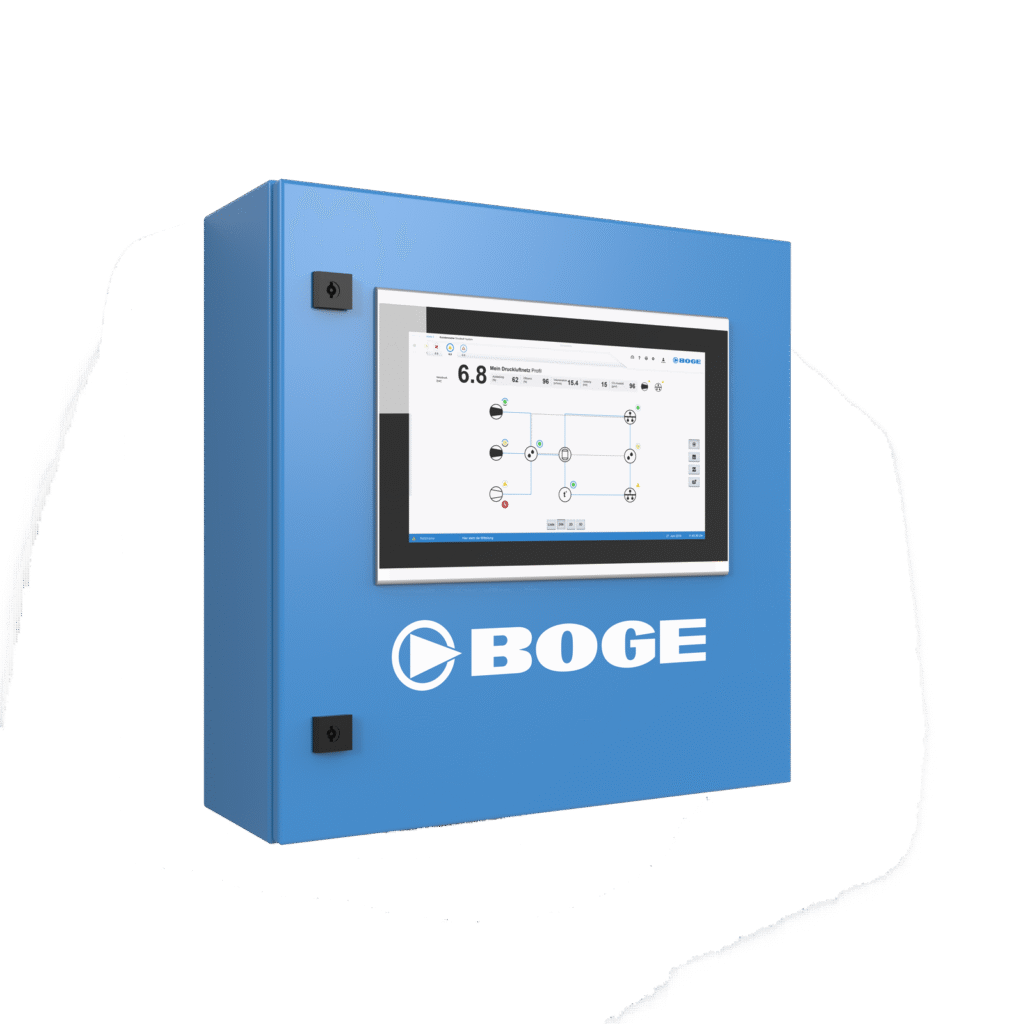
This approach is complemented by BOGE’s intelligent control solutions. The airtelligence provis 3 is a higher-level central management system that controls an unlimited number of compressors, networks and accessories based on real-time consumption. It features a large 15.6-inch touch display and web-based visualisation for remote monitoring. The airtelligence plus combined control unit is designed to coordinate load/no-load and speed-controlled compressors efficiently while maintaining stable network pressure. With Focus Control 2.0, operators can centrally monitor and control their compressed-air station using clear measurement and status data, intuitive operation via a high-resolution LCD, and modern features such as USB updates and optional RFID access.
Ultimately, the objective is to move from a traditional product-centric approach towards lifecycle management of the compressed-air system. BOGE sees digital technologies such as BOGE connect, intelligent controls and data-driven analysis as tools that enable customers to operate their compressed-air systems with greater visibility, reliability and efficiency throughout their working life.
In this sense, connectivity is not an end in itself. The real benefit comes from turning operational data into actionable information, helping customers anticipate maintenance needs, optimise system performance and continuously improve the way compressed air is produced and used.
TM: Looking ahead, what is BOGE’s growth roadmap for the next five years, particularly across Asia Pacific? What role will new product technologies, sustainable and oil-free solutions, gas-generation systems, digitalisation, automation and expansion into new applications and markets play in shaping BOGE’s next phase of growth?
NA: Our roadmap is focused on evolving BOGE from a strong compressor brand into a more comprehensive provider of compressed air and gas solutions. Asia Pacific will play a key role in this development. We aim to strengthen our position in established markets while expanding our presence in fast-growing industrial regions and applications. Achieving this will require not only the right technology portfolio, but also strong local sales, engineering and service capabilities.
Technology will be a major driver of future growth. We expect demand for highly efficient systems, oil-free compressed air and intelligent control solutions to continue rising as manufacturers place greater emphasis on energy efficiency, sustainability and production quality. At the same time, digitalisation is reshaping the relationship between suppliers and customers. Connected equipment, remote monitoring and data-driven optimisation will become increasingly important in helping customers improve efficiency and reliability.
Gas generation represents another important strategic growth area. By combining our expertise in compressed air with on-site nitrogen and oxygen generation, we can support a wider range of industrial processes and provide customers with integrated solutions from a single source.
Within Asia Pacific, we see particularly strong potential where industrial growth is accompanied by rising demands for efficiency, automation and quality. The textile industry is a good example. Modern textile production is becoming faster, more automated and increasingly energy-conscious, with compressed air often playing a direct role in the manufacturing process. This creates opportunities not only to supply compressors, but to optimise the entire compressed-air infrastructure and deliver greater value to customers.
Following 119 years of compressor manufacturing, our ambition goes beyond developing the next generation of machines. We want to shape the next generation of compressed air and gas solutions – solutions that are more efficient, more connected, more sustainable and more closely integrated into our customers’ production processes.