


By K. Gopalakrishnan
The global apparel industry is undergoing a fundamental transformation. Shorter product cycles, increasingly demanding consumers, the growing importance of performance and functionality, tighter sustainability expectations and rapidly changing sourcing patterns are compelling manufacturers to move beyond the traditional role of production partners. In this evolving landscape, MAS Holdings is positioning itself as a global apparel technology and concept-to-delivery partner, combining product innovation, advanced manufacturing, materials expertise, digital capabilities and responsible production across its international network.

With a business of roughly USD 2 billion spanning 13 countries, MAS has progressively evolved from an apparel manufacturer into an integrated partner for leading global brands, with capabilities extending from product development and material selection to manufacturing, supply-chain solutions and innovation. Its expertise in technically demanding categories, supported by a vertically connected ecosystem of fabrics, components, product engineering and digital product development, is enabling the Group to address a much broader part of the customer value chain.
India is emerging as an increasingly important component of this global strategy. After around 25 years of operations in the country, MAS is entering a new phase of expansion, driven by the twin opportunities presented by India’s growing domestic apparel market and its potential as a global sourcing and manufacturing hub. The development of the MAS Apparel Park at Bhuinpur, Odisha, together with strategic partnerships such as the Toray MAS Apparel India joint venture, reflects the Group’s ambition to build a more integrated ecosystem combining manufacturing, materials, suppliers and specialised partners.
At the same time, MAS is placing sustainability and circularity increasingly at the heart of product and manufacturing decisions, rather than treating them as standalone ESG initiatives. Its focus on next-generation materials, textile-to-textile circularity, resource productivity and responsible manufacturing is being pursued alongside commercial priorities such as quality, performance, cost and speed.

In this exclusive interaction with The Textile Magazine, Ms. Kam Raghavan, Director – Business Strategy, MAS India, discusses the Group’s global evolution, the changing dynamics of apparel manufacturing, technology and advanced manufacturing, India’s strategic importance, the vision for the Odisha ecosystem, the Toray partnership, sustainability and circularity, and the opportunities that will shape MAS’s next phase of growth. Her responses offer an insight into how the apparel industry could evolve from a capacity-driven model towards a more integrated, technology-enabled, sustainable and consumer-responsive manufacturing ecosystem.
MAS has evolved from its Sri Lankan origins into a global apparel and textile group with operations across 13 countries. How would you describe the Group’s current global business, manufacturing footprint and competitive positioning, and what are the key capabilities that have enabled MAS to build such a strong reputation with leading global brands?
MAS has evolved from an apparel manufacturer into a global apparel technology and concept-to-delivery partner, with a roughly USD 2 Bn business and operations across 13 countries. MAS’ global footprint enables us to combine capabilities across markets, stay closer to key customers and supply ecosystems, diversify risk, and respond more flexibly to shifting demand and sourcing needs.
Our advantage is not in a single isolated capability; rather it lies in the combination of deep product knowledge, manufacturing excellence, material capability, innovation, and responsible production.
To expand on this; MAS has expertise in complex, high-value clothing categories – including intimate wear, sports and performance wear, athleisure and swimwear, and also niche areas such as FemTech, adaptive apparel and wearable technology. When it comes to technically demanding products, we have knowledge in fit, construction, performance, material behaviour and quality that is difficult to replicate simply by installing manufacturing capacity.
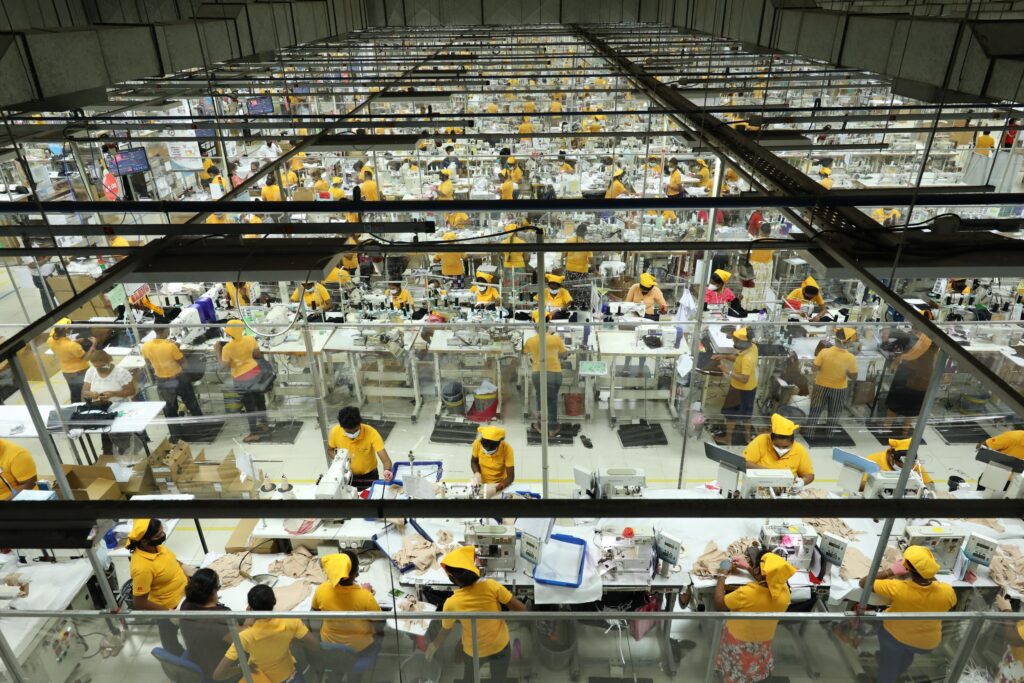
Another major differentiator is the vertical ecosystem behind the finished garment: fabrics, elastics, lace, printing, trims and components, product engineering, digital product development and strategic partnerships. That means we can solve a much larger part of a brand’s problem (offering speed, supply chain integration, etc.) than simply producing a garment.
Our model has also progressively moved from being a manufacturing vendor to being a strategic partner involved much earlier in the product lifecycle; including in product and tech innovation, design, material selection, development, production and increasingly inventory and supply-chain solutions.
MAS has also consistently differentiated itself through responsible manufacturing (including people-centric business practices and sustainability). Today, those are not separate reputational attributes; global customers expect them to be embedded in how products are developed and produced.
Fashion and apparel manufacturing are undergoing rapid changes, driven by shorter product cycles, greater demand for personalisation, performance and functionality, and increasingly demanding consumers. How is MAS responding to these evolving fashion and market trends, and how are product development, innovation, materials and manufacturing capabilities being reshaped accordingly?
The biggest change is that the traditional linear model – design, develop, sample, manufacture, ship, is becoming too slow. Brands need manufacturers who can make decisions earlier and compress the product-development cycle.
MAS is responding by bringing product development, innovation, materials and manufacturing closer together, with a stronger focus on speed, flexibility, and consumer insight.
Digital product creation, including 3D development and digital material capabilities, help teams and customers review and refine products faster, virtually, while reducing unnecessary physical sampling. At the same time, MAS’ innovation approach starts with the consumer, combining capabilities across performance, comfort, wellness, adaptive products and wearable technologies to develop solutions that address specific consumer needs.
Beyond balancing product functionality and commercial viability, MAS is responding to consumer and regulatory demand for better, sustainable products by actively reshaping its material portfolio so impact is measured further up the value stream.
On the manufacturing side, greater flexibility and more responsive production models are helping support shorter product cycles. MAS has explored models, especially in the USA, where production and inventory decisions are informed by downstream demand data, so brands can replenish closer to actual consumer demand instead of committing inventory months in advance. That becomes increasingly relevant when trends move quickly.
MAS has developed an extensive manufacturing and innovation ecosystem spanning apparel, materials and product development. How are technology, automation, advanced manufacturing and data-driven processes transforming your factories, and what role will these capabilities play in maintaining competitiveness as labour, quality and sustainability pressures increase globally?
Technology is increasingly being used across the entire product lifecycle- from digital product development and engineering to production planning and manufacturing. Automation and advanced manufacturing help improve productivity, quality and speed, as operating and labour costs increase. Data enables better visibility into consumer demand and production, allowing faster decisions and reducing unnecessary inventory and inefficiency. MAS has already applied data diagnostics and demand-based production concepts in its US supply-chain model, combining manufacturing decisions with downstream demand information and on-demand production.

Technology will also become essential for traceability and regulatory compliance. Product-level environmental and material data will increasingly be required by customers and regulators, and these measures will influence brand decisions to engage with manufacturers as sustainability pressures increase and regulations tighten.
With all the changes and transformations implemented over the years, it is clear that technical capability must grow with technology adoption. Factories require stronger engineering, digital, maintenance, data and problem-solving capabilities alongside traditional manufacturing skills. We at MAS have been investing in our people, parallel to our tech and digital investments, upskilling labour to keep up with technology adoption.
India has been part of MAS’s operations for around 25 years, but the Group is now entering a significant new phase with the development of MAS Apparel Park–Bhuinpur in Odisha. What makes India strategically important to MAS today, and what were the key considerations behind choosing Odisha for this major investment?
What has changed for MAS since first entering India 25 years ago, is the scale of opportunity. India offers MAS two growth engines; a large and rapidly developing domestic apparel market, and the sourcing and manufacturing base for international brands.
Odisha was considered as a key strategic location due to many factors including availability of workforce, access to land capable of supporting a large apparel park/ ecosystem rather than a single plant, and primarily, the state government’s focus on attracting manufacturing and textile investment to the region, which offers MAS the opportunity for stable, long-term expansion.
The MAS Apparel Park- Bhuinpur, holds the opportunity for MAS to build an ecosystem that serves both growth engines, the growing Indian market and established international customers.
The Odisha development is envisaged as a larger textile and apparel ecosystem, with phased investment of around $141 million over 10 years and the potential to create up to 10,000 direct and indirect opportunities by 2035. What is the long-term vision for this project, and how do you see it fitting into MAS’s broader global manufacturing and supply-chain strategy?
The model draws on the experience MAS has gained from apparel parks and integrated ecosystems elsewhere, particularly Sri Lanka.
In Odisha, MAS aims to create a manufacturing ecosystem where MAS businesses, joint ventures, suppliers, and strategic partners can operate in proximity. Locating materials, manufacturing, and supporting capabilities closer together can reduce transportation and inbound lead times, simplify coordination and create greater speed and cost competitiveness. It also creates a platform through which specialised international or Indian partners can enter the ecosystem and build combined capability serving both domestic and export demand.
The Odisha expansion therefore complements MAS’ established global manufacturing network, supporting MAS’ dual strategy of regional diversification and vertical integration.
The partnership with Toray brings together Toray’s materials expertise and MAS’s apparel manufacturing capabilities. What was the strategic rationale behind this joint venture, what capabilities will it create in India, and how could the partnership open opportunities in both the Indian and international markets?
The Toray MAS Apparel India JV partnership is important because it demonstrates the operating model envisioned for the MAS Apparel Park-Bhuinpur, whic is to combine MAS capability with specialist strategic partners rather than attempting to build every capability independently.
Toray brings expertise in material science and advanced textiles while MAS offers product development and manufacturing know-how, shortening the link between the two capabilities. Instead of material innovation and apparel manufacturing operating independently, the two organisations can work together on how those materials are engineered into commercial products.
Over time, partnerships of this nature can also contribute to stronger domestic capability in areas where India still needs greater depth, particularly advanced synthetic and performance-material ecosystems.
What are the key advantages India offers MAS beyond its large domestic market—including its textile ecosystem, raw-material base, skilled workforce and growing role in the global apparel supply chain? How do you see Indian operations evolving from their current role within the Group to a more significant strategic manufacturing and sourcing hub?
India has a rare combination of advantages, including manufacturing know-how and scale, a large workforce, raw-material availability, cost competitiveness, and a growing domestic market to capitalise on. India also has strong capabilities across knits, woven garments as well as higher value activewear and sportswear categories.
The opportunity is to build higher-value, technology-enabled, vertically connected manufacturing, capable of supporting both Indian brands and international brands. This strategic value will be most realised when investment, infrastructure and logistics improvements drive a more integrated and agile manufacturing ecosystem, where these independent strengths are aligned effectively.
MAS is widely recognised as a pioneer in sustainable apparel manufacturing. With your Plan for Change 2030 targeting 75% of Group revenue from sustainable products, how are sustainability, circularity, responsible materials, water stewardship and decarbonisation being embedded into actual product development and manufacturing decisions rather than treated as separate ESG initiatives?
At the product development stage, this means deciding to use alternative, better materials that can perform at the required level, considering durability and recyclability of the end-product, as well as considering the environmental footprint of the manufacturing process.
It also means working much more closely with customers because the manufacturer cannot change material elements at scale independently of brand design, performance, quality, and commercial requirements.
Within factories, sustainability translates directly into energy, emissions, water, chemistry, and waste decisions.
Refer to MAS’ Plan for Change 2030: PFC2030_
Your Plan for Change 2030 places equal emphasis on Product, Lives and Planet, including textile-to-textile circularity, materials of the future, regenerative natural fibres, employee wellbeing and community resilience. How do you see these priorities influencing the way MAS designs products, operates factories and engages with its global customers over the next five years?
The influence of these strategic commitments will be felt across many areas. In practice, this means that customer conversations would increasingly be about product, innovation, cost, and sustainability; instead of treating sustainability as a separate subject independent of business decisions. Tied to this, opportunities that compromise labor standards or environmental accountability will not be pursued despite any business or finance case it presents. Factories and processes too will be judged not only on output, quality, and efficiency but also on resource productivity, transparency, and environmental performance. And ultimately, product value will be measured by their sustainability score/ performance, which will heavily drive the direction of design and innovation.
More details on how the Product, Lives, and Planet priorities will be embedded into the way MAS operates and does business and be referred to here: PFC2030_
MAS has already invested in circularity through initiatives involving technologies and materials such as HeiQ AeoniQ™ and Ambercycle. How important will access to new materials, recycling technologies and circular business models be to the future competitiveness of the apparel industry, and what further opportunities is MAS exploring?
New materials, recycling technologies, and circular business models will become increasingly important as the industry seeks to reduce its dependence on virgin resources.
MAS is advancing a more responsible materials strategy focused on transforming how textiles are sourced, designed, and reused across the value chain. By scaling textile-to-textile circularity, adopting next-generation materials, and increasing the use of regenerative natural fibres, MAS aims to reduce reliance on virgin resources while improving environmental performance. These efforts support lower-impact supply chains, stronger traceability, and the development of future-ready materials that balance sustainability with quality and performance expectations.
Many breakthrough technologies fail not for lack of technical merit, but because they cannot bridge the gap between laboratory success and industrial adoption. MAS’ work with technologies such as HeiQ AeoniQ™, Ambercycle, and more recently Syntetica, reflects the importance of supporting promising material innovations and helping move them towards commercial scale. MAS will continue to explore such opportunities.
With the global apparel industry facing geopolitical uncertainty, changing sourcing patterns, climate risks and increasing regulatory requirements, how is MAS building greater resilience across its manufacturing network and supply chain? What role will regionalisation and markets such as India play in that strategy?
The events of the last several years have demonstrated that resilience cannot be built around one country or one operating model. It requires a diversified and flexible manufacturing and sourcing network.
MAS is building such resilience through geographic diversification, stronger supplier partnerships, better supply-chain visibility, and regional capabilities positioned closer to customers, markets and material ecosystems.
India can play an important role in this strategy because it combines manufacturing scale, workforce capability, textile infrastructure and a significant domestic market within one geography.
Looking ahead to 2030 and beyond, what are the principal growth opportunities for MAS globally and in India? How do you see the Group balancing expansion of manufacturing capacity with investments in innovation, advanced materials, sustainability and new partnerships, and what will ultimately determine the next phase of MAS’s growth?
MAS’ next phase of growth will come from strengthening its core manufacturing capabilities while expanding further into product innovation (where MAS has carved out expertise), accelerating sustainable, next-gen materials, while exploring smarter manufacturing and more responsive supply-chain solutions.
In India, this means driving vertical integration, serving the domestic market better and building stronger export and sourcing capabilities. Specifically, MAS is committed to scaling the Odisha ecosystem in a phased manner while strengthening our established capabilities in Chennai.
In India and globally, MAS is keen to engage in strategic partnerships (JVs, specialist suppliers, innovators, tech companies etc.) where they provide stronger and better combined capability than building alone. Investment choices should and will utlimately be capability-led, and based on relevance to the customer/consumer.