Before ESG became a buzzword, Sri Kannapiran Mills was already walking the talk. Part of the legacy-rich KG Group, this Coimbatore-based powerhouse isn’t just spinning yarn—it’s setting new benchmarks in circular manufacturing, energy efficiency, and climate-conscious investing.
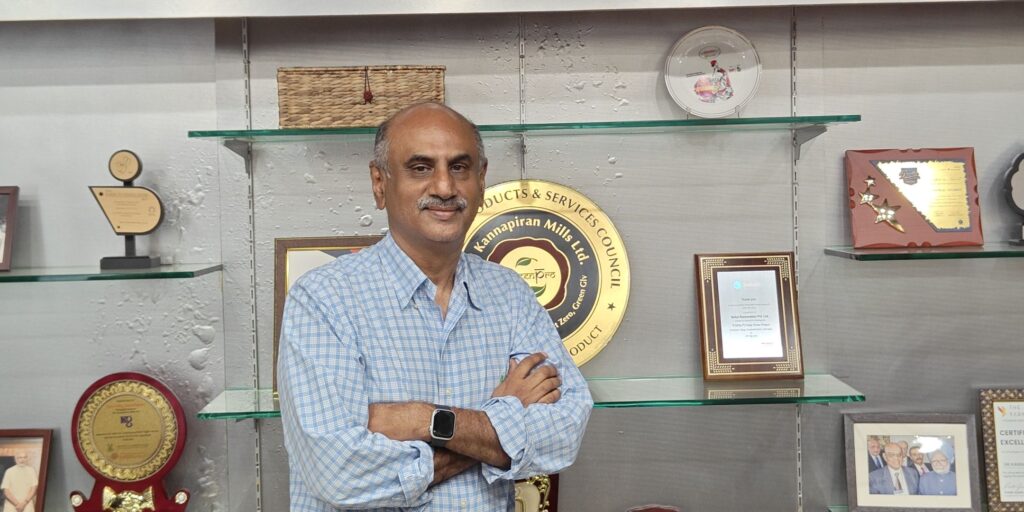
With sustainability stitched into its operations long before it was trendy, Sri Kannapiran Mills has built a model that many now scramble to emulate. “We don’t retrofit sustainability—we design for it,” says Managing Director Srihari Balakrishnan, whose forward-thinking leadership has transformed the company into a national model for clean and smart textile production.
A High-Performance Yarn Specialist
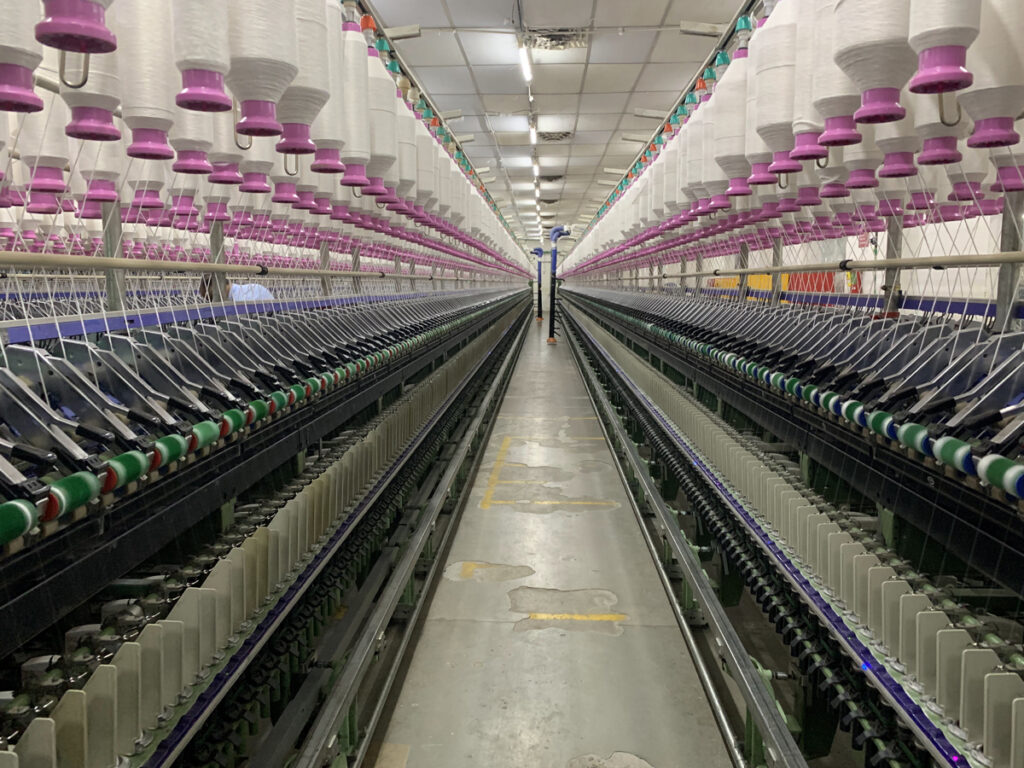
Operating 55,200 spindles and 8,600 rotors, the mill doesn’t just manufacture cotton yarn—it engineers it. “We are known for precision counts,” says Srihari. From 4s to 80s, both OE and ring-spun yarns flow through the plant, catering to applications as varied as denim, innerwear, home textiles and specialty fabrics.
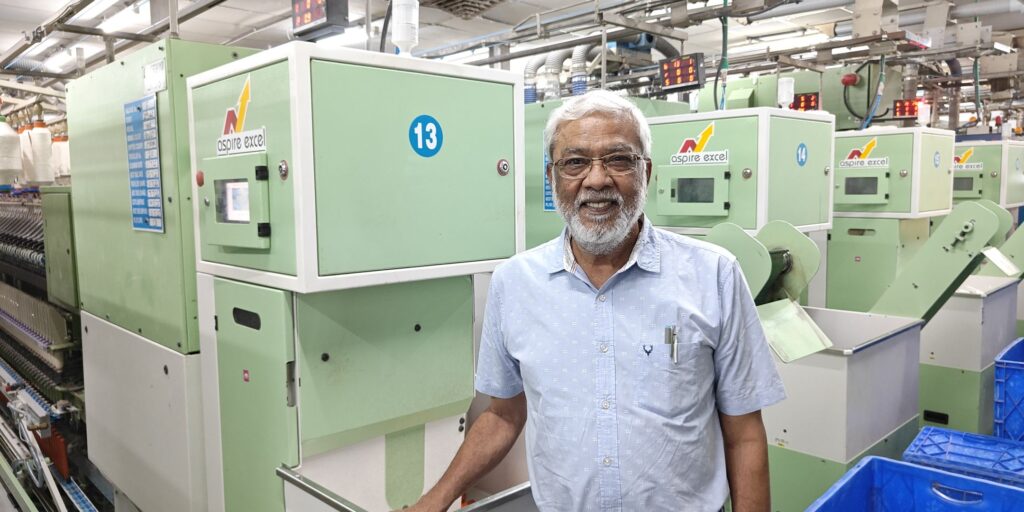
But that’s not all. The portfolio includes gassed mercerized, compact, slub, multicount, corespun, and indigo-dyed yarns. On the product side, it offers thermal blankets, gloves, and bleached bath linens. With a footprint spanning six facilities—four in Coimbatore for spinning, and one each in weaving and value-addition—the company’s integrated capabilities are deep and wide.
Green Before It Was Cool
Long before carbon audits became the norm, Sri Kannapiran Mills was rethinking waste. “We operate on a zero-waste philosophy,” Srihari says. “From every 100 kg of cotton, 94 kg becomes yarn—among the best conversion rates in India. The rest? Gloves, lamp wicks, coarse yarns, even cattle feed and manure.” Even cotton bale wrappers are reused—a level of granularity rare in Indian textiles.
Every process is scrutinized for energy impact and waste potential. The Perundurai weaving unit is GreenCo certified by CII, affirming its standards across water conservation, emissions, and resource recovery.
Precision Investment: Powered by Good Fashion Fund
In a standout example of responsible capitalism, Sri Kannapiran Mills secured $2.5 million from the Good Fashion Fund—backed by Laudes Foundation and Fashion for Good—to overhaul its machinery with high-efficiency, low-impact technology. But the approach is anything but scattergun.
“Every rupee is deployed like a surgical strike,” says Srihari. “We test, validate, then scale.” That strategy paid off with a singeing machine installed in the weaving unit. A small tweak—switching from combed to carded yarn—led to a productivity surge. “Payback in two days,” he smiles.
Sustainability ≠ Solar Panels Alone
Yes, the company sources wind and solar power through long-term contracts. But Srihari insists the real magic is in discipline. “You can install the best solar plant, but without operational rigor —especially in maintenance—it falls apart. Sustainability is not plug-and-play. It’s a culture.” To that end, the company’s leadership is fostering a framework where economic returns, environmental outcomes, and operational efficiency are all measured together. “That’s real ESG. Not a PowerPoint slide—an operational reality.”
Diversification: Weaving into the Future
Facing rising input costs and global pricing pressures, Sri Kannapiran Mills is boldly expanding its weaving operations. “Pure spinning is no longer a viable standalone business,” Srihari explains. “Weaving gives us vertical integration and margin protection.” But global macro headwinds—from conflict zones to tariff disruptions—make strategy difficult. “Planning used to be 12 months ahead. Now we’re forced to think in quarters, even weeks. It’s a volatile world.” Still, he’s cautiously optimistic. “The UK-India FTA is a good signal. Similar deals with the US and EU could truly unlock India’s garment potential.”
MMF: Still a Roadblock
Despite the excitement around man-made fibers, Srihari remains a realist. “India’s MMF ecosystem is chaotic. High duties, raw material costs, and supply chain friction make it uncompetitive. Until the policy landscape changes, MMF will struggle to scale.” In classic style, he sums it up: “There’s too much entropy in MMF. We need to turn that into energy—literally and metaphorically.”