


By K. Gopalakrishnan
Having built a strong foundation in spinning, GHCL Textiles is transforming into a fully integrated textile solutions provider through investments in fabrics, renewable energy, modern manufacturing and customer-centric innovation
The global textile industry is witnessing a decisive shift from commodity products to value-added solutions. As customers increasingly seek integrated sourcing partners capable of delivering innovation, sustainability, consistent quality and faster turnaround, textile manufacturers are moving beyond conventional spinning to build capabilities across the value chain.
GHCL Textiles Limited is among the companies leading this transformation.
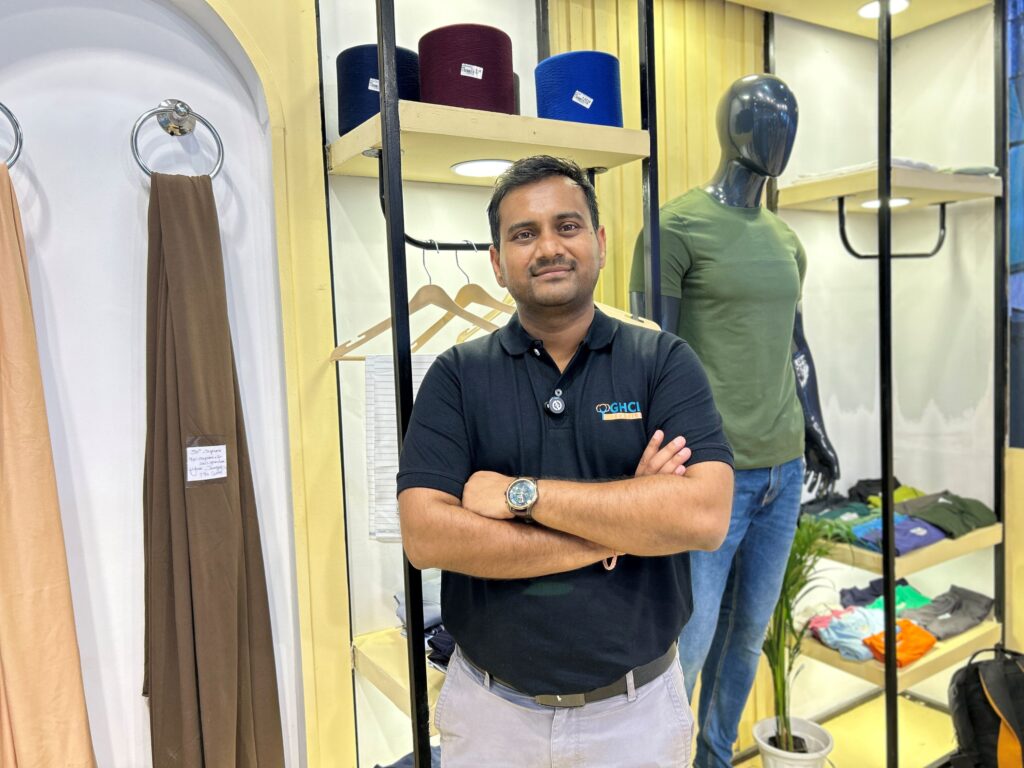
Following its demerger as an independent listed entity in 2023, the company has embarked on an ambitious growth journey centered on forward integration, product diversification and operational excellence. While its legacy has been built on spinning, GHCL is steadily expanding its presence in knitted and woven fabrics, processing and eventually ready-to-cut fabric solutions for global apparel brands.
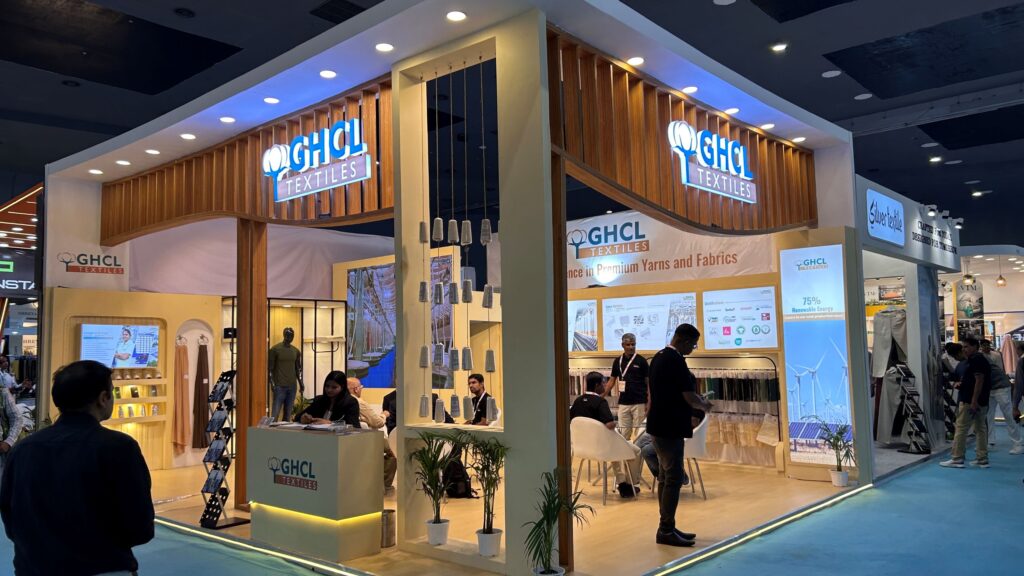
Speaking to The Textile Magazine during Bharat Tex 2026, Mr. Marshal Sonavane, Chief Executive Officer, GHCL Textiles Limited, outlined the company’s strategic roadmap, highlighting how investments in manufacturing, renewable energy, modern technology and value-added products are positioning GHCL for its next phase of growth.
From India’s Leading Spinner to an Integrated Textile Solutions Provider
GHCL Textiles has long been recognised as one of India’s leading yarn manufacturers with a diversified portfolio catering to both domestic and international markets. However, the company’s vision today extends far beyond spinning.
According to Mr. Sonavane, GHCL is consciously repositioning itself from being a yarn supplier to becoming a comprehensive fabric solutions provider for leading global apparel brands.
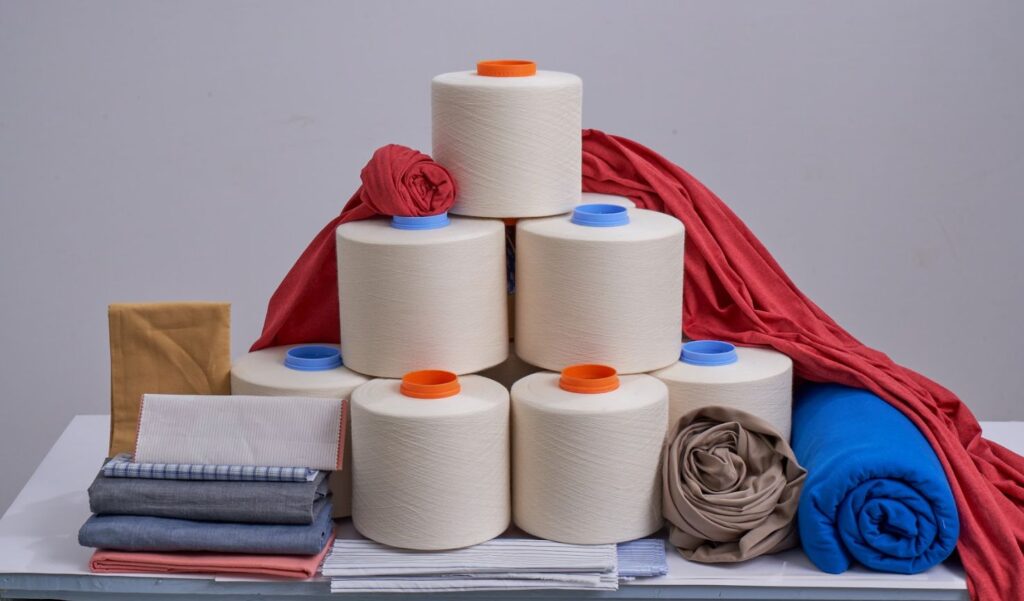
“We have participated in Bharat Tex since its inception. Earlier our focus was largely on yarns, but this year the emphasis has shifted to fabrics because fabrics have become an important part of GHCL’s growth journey. Our objective is to become a preferred ready-to-cut fabric supplier for global brands,” he says.
This strategic shift reflects changing customer expectations, where buyers increasingly prefer sourcing larger portions of the value chain from a single reliable partner capable of ensuring quality, consistency and sustainability.
Building Scale Across the Textile Value Chain
The scale of GHCL’s manufacturing operations provides a strong foundation for this transformation.
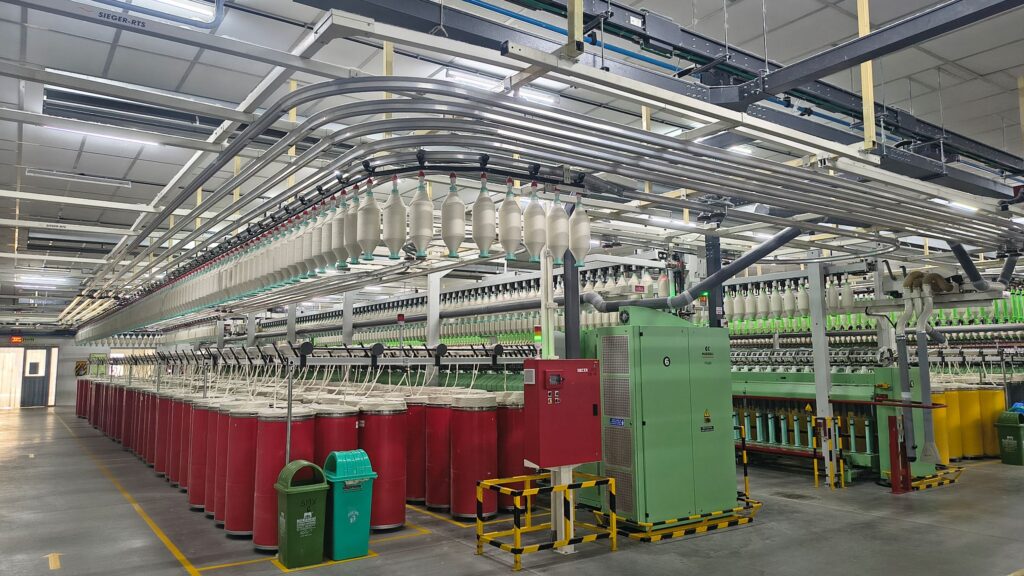
Today, the company operates approximately 2.25 lakh spindles across cotton and synthetic spinning, supported by 3,320 rotors, 5,760 TFO spindles, Airjet spinning technology and an expanding knitting infrastructure. Its spinning portfolio spans cotton counts from 20s to 140s, processing a wide variety of premium fibres including Indian, Australian, Egyptian, Pima, Brazilian and West African cottons, alongside blends incorporating polyester, TENCEL™, modal, viscose and other new-generation fibres.
The company also manufactures ring spun, open-end, TFO and Airjet yarns while steadily expanding its woven and knitted fabric capabilities.
Its woven fabric business currently produces nearly 20 lakh metres per month, while the knitting division has emerged as one of GHCL’s fastest-growing businesses.
Forward Integration Driving the Next Phase of Growth
A defining feature of GHCL’s strategy has been its deliberate move up the value chain.
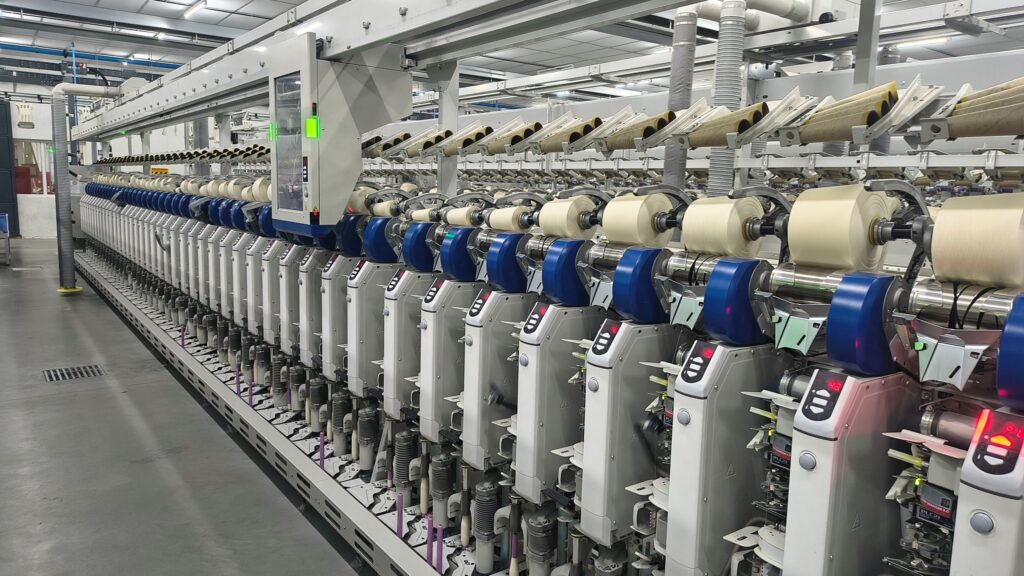
Three years ago, the company entered knitting through a job-work model, enabling it to understand customer requirements and market dynamics before making significant capital investments.
Today, GHCL manufactures nearly 300 tonnes of knitted fabrics every month, while simultaneously establishing its own in-house knitting infrastructure.
“We started our knitting journey about three years ago. We have 40 advanced knitting machines sourced from leading European and Japanese manufacturers. Once fully operational, our in-house capacity will reach approximately 450 to 500 tonnes per month,” explains Mr. Sonavane.
The company reports that customer response has been highly encouraging, with strong acceptance from both global and domestic brands and utilisation levels already approaching optimal levels.
Importantly, this expansion represents only the first stage of GHCL’s broader transformation.
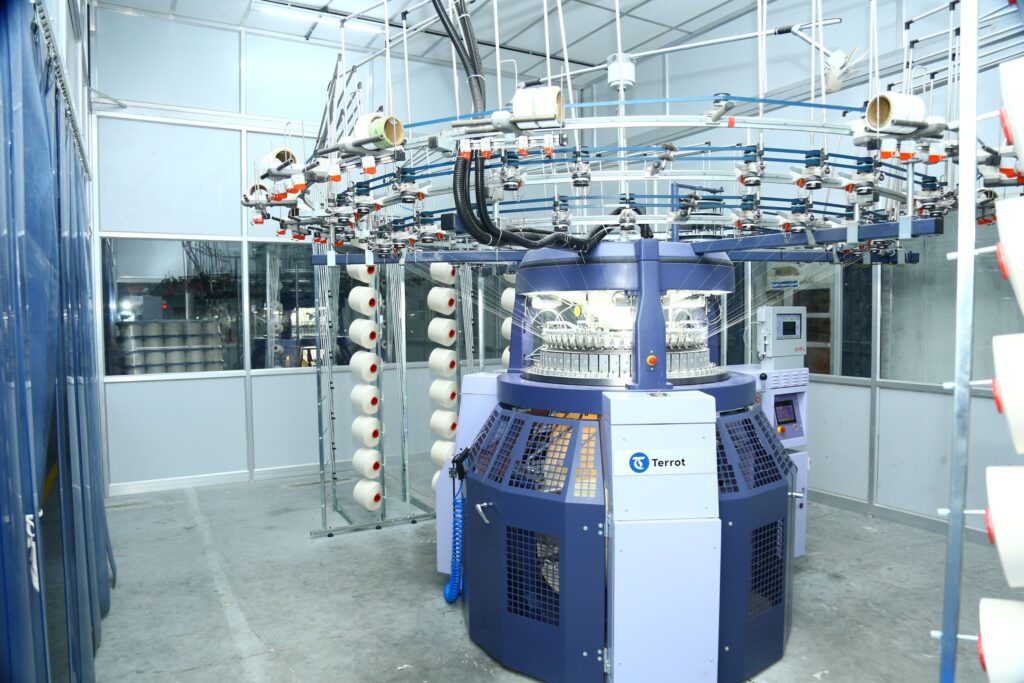
The company’s Phase II investment programme, valued at around ₹350 crore, will further strengthen fabric manufacturing and establish comprehensive processing capabilities, enabling GHCL to offer fully processed, ready-to-cut fabrics.
“Processing will define the next phase of GHCL’s evolution. Over the next couple of years, customers will see us completing the journey towards vertically integrated fabric solutions,” says Mr. Sonavane.
A ₹1,000 Crore Investment Programme for Long-Term Growth
GHCL’s transformation is backed by one of the most significant investment programmes in its recent history.
The company has committed investments exceeding ₹1,000 crore towards expanding capacities, modernising operations and strengthening value-added capabilities, of which nearly ₹600 crore has already been deployed.
Recent investments include commissioning 25,000 additional spindles, installing 15 knitting machines, expanding renewable energy infrastructure and enhancing manufacturing capabilities across business operations. These investments have substantially strengthened GHCL’s ability to serve higher-value market segments while improving operational efficiency.
As a result, fabric revenues have grown from virtually negligible levels a few years ago to becoming an increasingly important contributor to the company’s overall business.
According to the company’s latest annual report, fabrics now account for 11.7 percent of total revenue, demonstrating the success of its forward integration strategy.
Sustainability Embedded into Manufacturing Excellence
Alongside expansion, sustainability remains central to GHCL’s long-term strategy.
The company currently operates around 76 MW of renewable energy, enabling approximately 75 percent of its power requirements to be met through green sources. The longer-term objective is to increase renewable energy utilisation to 75–80 percent of total consumption.
“We have made significant investments in renewable energy because sustainability is integral to how we operate. It is not only environmentally responsible but also strengthens our long-term competitiveness,” Mr. Sonavane notes.
Operational excellence extends beyond energy efficiency.
The company has built robust manufacturing systems focused on productivity, waste reduction, worker safety, hygiene and supply chain reliability. These initiatives have enabled GHCL to consistently deliver dependable quality while strengthening customer confidence.
An equally notable aspect of GHCL’s operations is its emphasis on workforce stability.
“We have a predominantly women-driven workforce. That contributes to lower absenteeism, greater operational discipline and consistent product quality,” says Mr. Sonavane.
Delivering Value Through Quality and Customer Partnerships
Rather than competing primarily on price, GHCL has positioned itself as a long-term solutions partner.
“Our biggest strength is stability and consistency, both in terms of quality and supply. Customers know they can rely on us for dependable deliveries, sustainable manufacturing and continuous support whenever required,” Mr. Sonavane explains.
The company’s product portfolio has steadily diversified into value-added speciality yarns including GIZA, SUPIMA, Australian cotton, TENCEL™, viscose and recycled PET yarns, alongside woven and knitted fabrics tailored to customer-specific requirements.
Its customer-centric approach has enabled GHCL to build long-term strategic relationships across both domestic and export markets, creating a competitive advantage that extends beyond manufacturing capabilities alone.
Leveraging India’s Emerging Growth Opportunity
GHCL remains optimistic about the future of the Indian textile industry.
Mr. Sonavane believes several positive developments are converging to create a favourable business environment, including improving global demand, India’s expanding network of Free Trade Agreements (FTAs), the development of PM MITRA Parks and continued government support for manufacturing.
“There is tremendous positive energy across the industry today. Bharat Tex reflects that optimism. After nearly five years of a challenging business cycle, the industry is emerging stronger. Companies have used this period to modernise, build capabilities and prepare themselves for future growth,” he says.
He credits both policy support and industry resilience for placing Indian textiles in a strong competitive position globally.
“Government initiatives such as FTAs and PM MITRA Parks are creating the right ecosystem. At the same time, textile companies have demonstrated remarkable resilience during the downturn by continuing to invest, innovate and modernise. That puts the industry in an excellent position going forward.”
For GHCL, these macroeconomic tailwinds align perfectly with its own transformation strategy.
“Because of our financial strength, continuous investments, culture of innovation and focus on modernisation, we believe GHCL is well positioned for the opportunities that lie ahead. From here, things can only get better,” Mr. Sonavane concludes.
Positioning for the Future
GHCL Textiles’ journey over the past few years illustrates a clear strategic evolution, from being recognised primarily as a leading spinner to becoming an integrated textile solutions provider with growing capabilities in knitted fabrics, woven fabrics, processing and value-added manufacturing.
Its investments in modern technology, renewable energy, speciality products and forward integration are creating a stronger, more diversified business model capable of delivering higher-value solutions to both domestic and global customers.
With more than ₹1,000 crore committed towards future growth, expanding renewable energy adoption, increasing fabric capacities and a clear focus on quality, sustainability and customer partnerships, GHCL is steadily positioning itself at the forefront of India’s next generation of integrated textile manufacturers.
As the global textile industry increasingly favours suppliers capable of offering complete, sustainable and innovation-led solutions, GHCL’s transformation appears well aligned with evolving market expectations. By combining its strong spinning heritage with strategic investments in value addition and operational excellence, the company is not merely expanding its product portfolio, it is redefining its role across the textile value chain and preparing for sustained long-term growth.