


By Jayshri Ramani
With more than four decades of polyester expertise, Jiwarajka Textile Industries is moving beyond conventional yarn manufacturing into application-driven, high-performance yarn solutions for technical textiles
The global textile industry is undergoing a fundamental shift from commodity products towards materials engineered for specific performance requirements. For Jiwarajka Textile Industries, this is opening a new avenue of growth—one that builds on its more than four decades of experience in polyester yarn manufacturing while taking the company deeper into technical textiles.
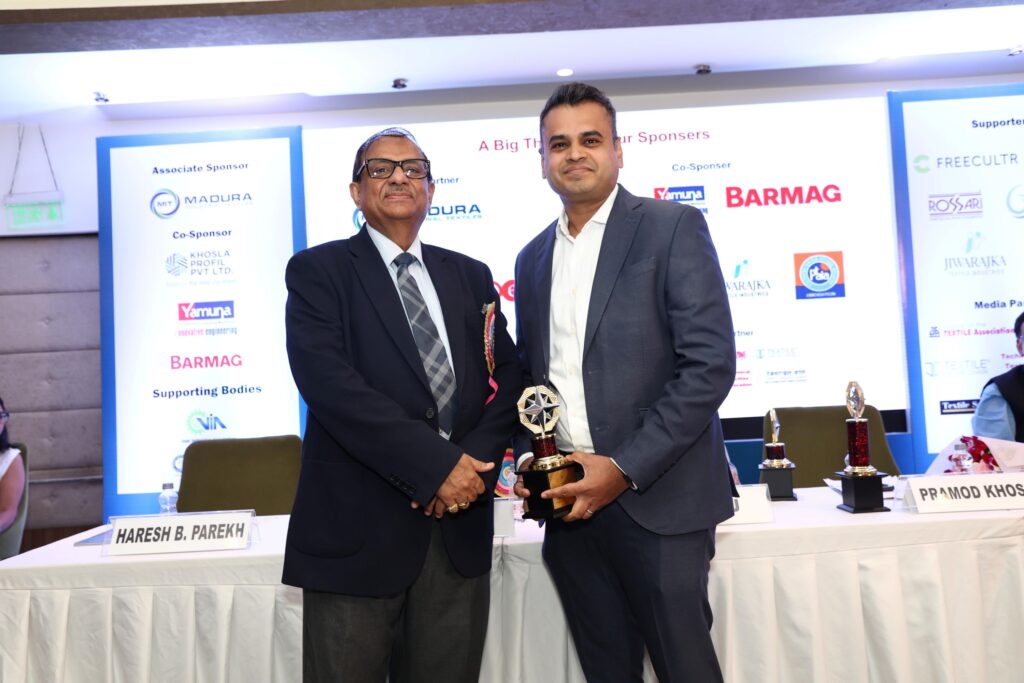
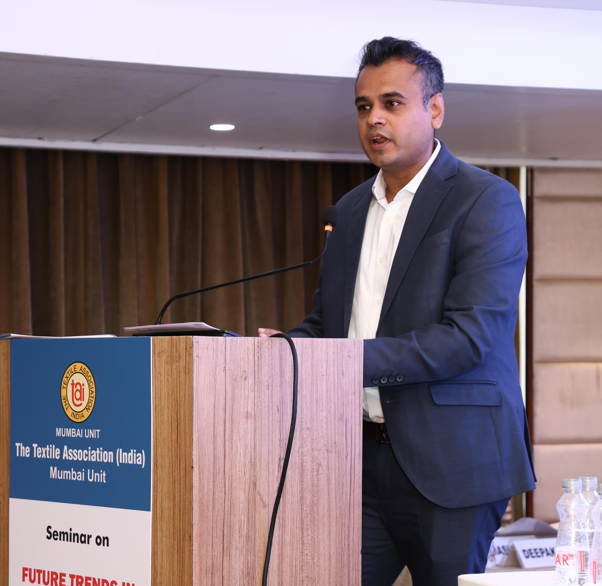
In an exclusive interaction with The Textile Magazine, Anish Jiwarajka, Director, Jiwarajka Textile Industries, explains the company’s evolving strategy, including its expansion into Industrial Drawn Yarn (IDY), Mother Yarn, Monofilament and other specialised yarns. At the heart of the strategy is a simple change in the customer’s question—from “What is the price of this yarn?” to “What can this yarn do?”
From commodity yarn to performance materials
Technical textiles are fundamentally different from conventional textiles because their primary purpose is functionality rather than aesthetics or fashion. Whether it is a seat belt designed for safety, a geotextile used to strengthen infrastructure or a medical textile requiring specific protective properties, performance is the defining criterion.
This is creating opportunities across automotive, infrastructure, agriculture, healthcare, industrial manufacturing, safety and protection, sports and packaging. For Jiwarajka, the opportunity begins much earlier in the value chain—with the fibre and yarn from which the final technical product is made.
The company’s objective is therefore to evolve from being a yarn supplier into a performance-material partner, working with downstream manufacturers to develop yarns around specific end-use requirements.
Leveraging four decades of polyester expertise
Jiwarajka’s technical-textile strategy is built on a strong manufacturing foundation. Established in 1985, the company has evolved from yarn trading into manufacturing, texturising and large-scale polyester yarn production.
Its current portfolio includes POY, FDY, DTY, Mother Yarn, Monofilament and Industrial Drawn Yarn, supported by more than 8,000 yarn products serving customers across 31+ countries. Its manufacturing infrastructure has a stated capacity of approximately 105,000 tonnes per year.
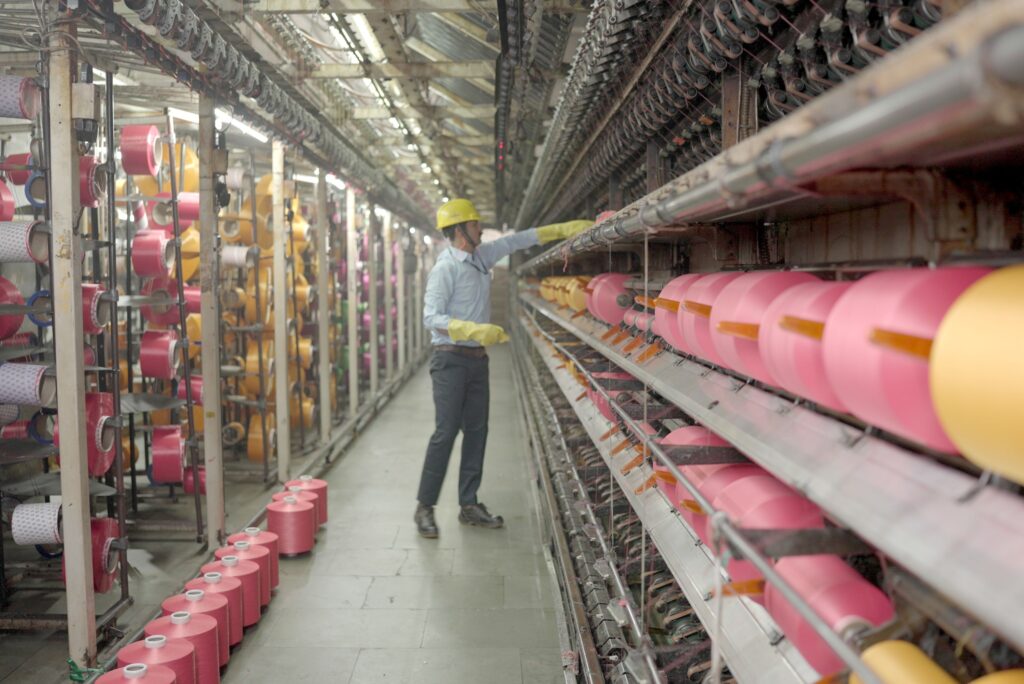
This combination of scale, manufacturing experience and polyester expertise provides the foundation for the company’s transition into more specialised applications.
IDY: A major step into technical textiles
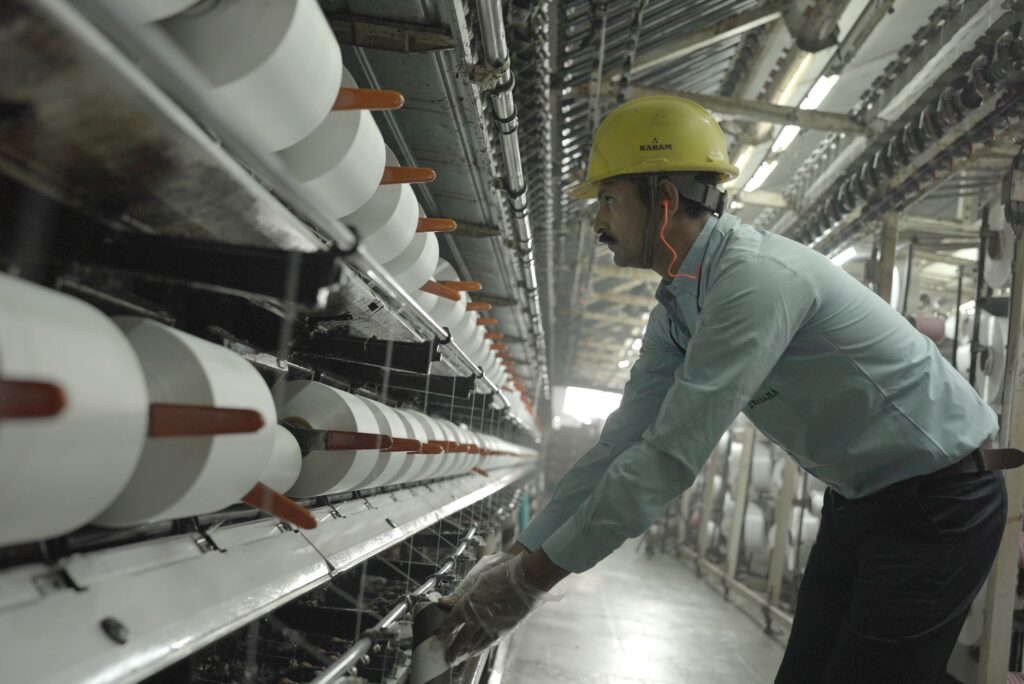
One of the most significant developments is Jiwarajka’s expansion into Industrial Drawn Yarn (IDY). The company sees IDY as more than an additional product—it represents a move towards application-oriented manufacturing.
The IDY portfolio includes High Tenacity Low Elongation (HTLE), General High Tenacity (GHT), General Low Shrinkage (GLS), Super Low Shrinkage (SLS), Adhesive Activated (AA) and Dope Dyed (DD) variants. These yarns address applications including slings, geogrids, safety belts, seat belts, ropes, safety nets, tarpaulins, conveyor belts, V-belts, rubber hoses and automotive components. Current IDY capacity stands at approximately 7,300 MT, supported by dedicated high-precision winders and controlled manufacturing processes.
For Jiwarajka, however, the real differentiator is not simply manufacturing IDY but developing it around the customer’s application.
As Anish Jiwarajka puts it, the approach is: “Tell us what your application needs, and let us work backwards to the yarn.”
Designing yarn around the application
Technical textiles rarely conform to standard specifications. A yarn for a seat belt has fundamentally different requirements from one used in a geogrid, conveyor-belt reinforcement, rope, filtration fabric or automotive component.
Jiwarajka is consequently moving from a product-centric model towards application-based development. Its technical-textile portfolio addresses automotive textiles, geotextiles, medical fabrics, ropes, slings, filter fabrics, tarpaulins, conveyor belts, safety harnesses, seat belts and cargo straps, along with geogrids, marine ropes, fishing nets and other industrial products.
The objective is to understand what the yarn needs to achieve once it becomes part of the finished product—and then engineer the material accordingly.
Mother Yarn expands customisation possibilities
Mother Yarn is another important component of Jiwarajka’s strategy. With manufacturing capacity of more than 4,300 MT annually, Mother Yarn provides a platform for developing specialised yarn constructions and finer downstream yarns.
This capability can enable greater customisation by allowing technical-textile manufacturers to engage with the yarn producer at an earlier stage of product development.
As applications become increasingly specialised, the ability to customise yarn characteristics around specific performance requirements could become an important competitive advantage.
Three pillars: consistency, customisation and collaboration
Jiwarajka identifies consistency, customisation and collaboration as the three pillars of its technical-textile proposition.
Consistency is critical because technical applications cannot tolerate unpredictable material behaviour. Whether yarn is incorporated into a safety product, industrial fabric or automotive component, its properties must remain stable across production lots and cycles. Jiwarajka’s manufacturing scale and controlled processes provide the foundation for this requirement.
Customisation is equally important. Instead of forcing diverse applications into standard yarn specifications, the company aims to adjust yarn characteristics to meet the precise requirements of each application. IDY, Mother Yarn and other specialised products are central to this approach.
The third pillar—collaboration—could ultimately prove the most transformative. Jiwarajka sees an opportunity to work more closely with fabric manufacturers, converters, machinery manufacturers, product developers and end users. Technical-textile innovation, the company believes, can often begin with a problem at the customer’s factory rather than inside the yarn plant.
Sustainability joins performance
Performance is not the only requirement shaping the future of technical textiles. Sustainability is becoming increasingly important across the polyester value chain.
Jiwarajka is expanding its sustainability-oriented portfolio through recycled polyester solutions, dope-dyed and recycled yarns, and collaboration around CiCLO® technology. The challenge is increasingly to combine durability and high performance with more responsible material choices.
This reinforces the company’s broader strategy of developing not simply more yarn, but better-performing, specialised and more sustainable yarns.
Building India’s technical-textile ecosystem
Jiwarajka sees India’s technical-textile opportunity as a natural extension of its existing polyester expertise rather than a departure from its core business.
The National Technical Textiles Mission has increased attention on research, innovation, market development, education, skilling and exports, while demand for high-performance materials, industrial fabrics and specialised yarns continues to develop.
For Indian manufacturers, the opportunity lies in combining the country’s manufacturing scale with stronger capabilities in performance materials. Jiwarajka’s expanding portfolio is designed to participate in this transition.
From yarn manufacturer to performance partner
The company’s journey into IDY, Mother Yarn, Monofilament and other application-oriented products represents a broader strategic shift—from product-centric yarn manufacturing to performance-centric material development.
With more than 8,000 products, a 105,000-tonne annual manufacturing capacity and a growing portfolio of specialised yarns, Jiwarajka has the scale and experience to pursue this transition.
The next phase, however, will be defined less by the number of products and more by the company’s ability to understand applications, customise material properties and collaborate with customers on solutions.
As Anish Jiwarajka succinctly puts it: “We don’t want to just manufacture more yarn. We want to make yarn that performs.”
That philosophy captures Jiwarajka’s emerging position in technical textiles: not simply as a polyester yarn manufacturer, but as a performance-material partner working at the intersection of materials, engineering, application knowledge and sustainability.