


In a market where sustainability is fast becoming a business priority, SED’s Jodhpur conclave placed industrial water management firmly in the spotlight.
As Rajasthan’s manufacturing sector faces tighter environmental norms, sustainable wastewater management has moved from compliance to competitive necessity. Against this backdrop, SED’s ZLD Jodhpur Conclave 2026 brought together industry leaders, technology experts, environmental professionals, and media for a focused discussion on the future of Zero Liquid Discharge solutions.
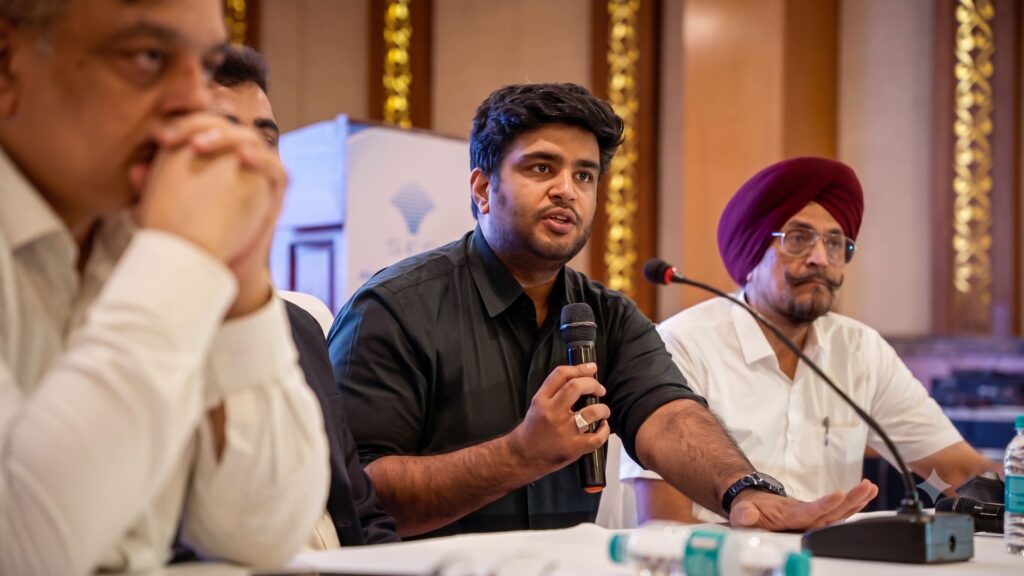
The conclave was more than a technology showcase. It created a sharp forum for dialogue on how innovation can strengthen environmental performance and operational efficiency. Strong participation from the textile, steel, and wider manufacturing sectors underscored the rising demand for practical, scalable, energy-efficient ZLD technologies.
Why Jodhpur Conclave 2026 Matters for Rajasthan’s Textile Industry
The conclave comes at a defining moment for Rajasthan’s textile industry. As water scarcity intensifies and compliance costs rise, efficient Zero Liquid Discharge (ZLD) is no longer optional; it is essential for sustainable and competitive manufacturing. The event brings industry leaders together to explore practical technologies that deliver environmental compliance without compromising commercial viability.
Leadership, Innovation and Industry Dialogue Take Centre Stage
One of the conclave’s strongest features was its direct, highly interactive format, which brought manufacturers, consultants, environmental professionals and media representatives into conversation with SED’s leadership and engineering team. The discussion moved beyond presentations to practical issues such as maintenance cycles, cleaning frequency, retrofit integration, operating costs and the suitability of recovered water for steam generation, reflecting the industry’s growing focus on reliability, efficiency and return on investment.
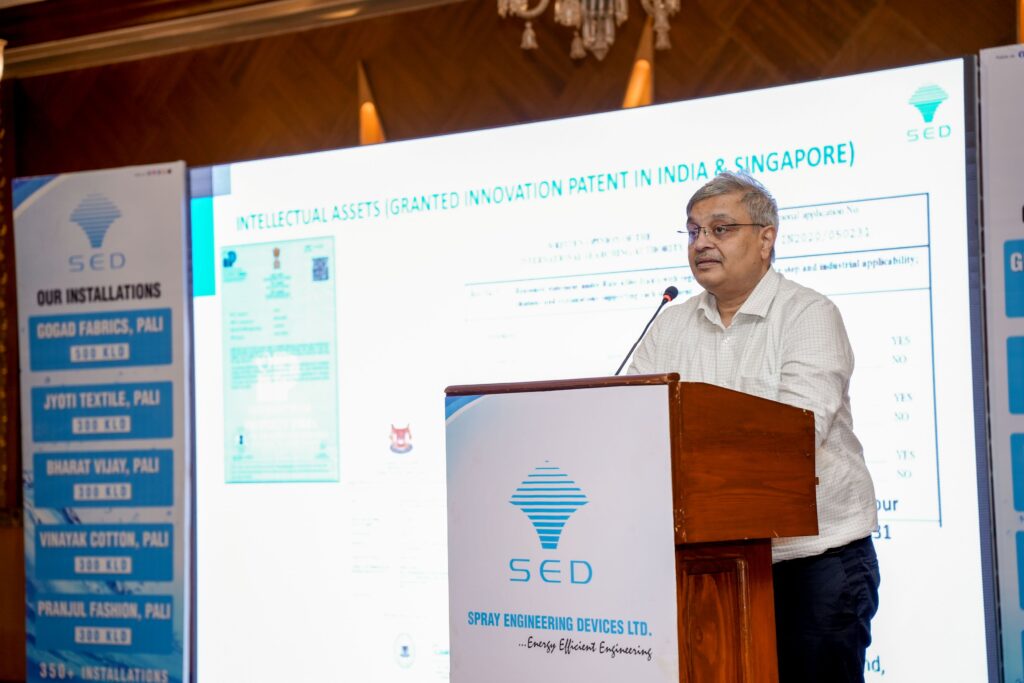
Questions were actively taken from the floor, with steel sector representatives also raising queries on acid recovery and acid concentration technologies, prompting Mr. Vimarsh Verma, Director, SED, to note that the company is actively developing solutions in this area. The session also saw a senior industry representative urge Mr. Verma to engage with the Rajasthan Government on behalf of local manufacturers, before concluding with focused one-on-one technical discussions on plant-specific wastewater challenges and implementation strategies.
Patented MVR-Based LTE® Technology at the Centre of the Conversation
At the centre of the discussion, Mr. Vimarsh Verma, Director, SED, delivered a sharp overview of the company’s patented Low Temperature Evaporation (LTE®) technology. Built to cut steam consumption while delivering dependable Zero Liquid Discharge performance, LTE® represents SED’s approach to improving the efficiency of industrial evaporation systems.
Operating at lower temperatures, the system helps industries reduce energy use, limit thermal stress, and bring down operating costs. For water-intensive sectors such as textiles, where wastewater volumes and utility pressures remain high, LTE® offers a practical, scalable solution for recovery, concentration, and compliance.
Mr. Vimarsh Verma explained that the technology was developed not merely to solve an engineering challenge but to create a lasting environmental impact.
“Technology must solve real industrial challenges. LTE® was built to help industries recover water, cut energy use, and create manufacturing systems that strengthen business and society. When industries conserve resources, communities gain, and innovation delivers lasting value.”
The presentation generated considerable interest among attendees, with discussions extending into practical implementation strategies, project experiences, and the role of advanced evaporation technologies in helping industries comply with increasingly demanding environmental norms.
Engineering Approach and Practical Value of SED’s ZLD Solutions
Beyond the technology presentation, Mr. Vimarsh Verma, Director, SED, stressed that successful Zero Liquid Discharge depends on both the right evaporation technology and precise plant integration. He outlined SED’s end-to-end approach—from wastewater assessment and custom design to commissioning, automation, and lifecycle support—while highlighting the company’s patented MVR-based Low Temperature Evaporation (LTE®) technology, which cuts steam use and operating costs through Mechanical Vapor Recompression (MVR).
Offering a broader industry perspective, Mr. Vivek Verma, Managing Director, SED, said sustainable manufacturing is now a business imperative, not just a regulatory one.
“Industrial competitiveness and sustainability are no longer separate conversations. The organisations that will lead tomorrow are those investing today in technologies that improve efficiency, conserve resources, and create long-term business resilience. The discussions at this conclave reaffirm that industry is ready to embrace that transition through innovation.”
The session drew strong participation from manufacturers, consultants, and industry experts, with questions focused on retrofit integration, operating economics, scalability, maintenance, and long-term performance—underscoring demand for solutions that deliver both compliance and measurable value.
Looking Beyond the Conclave
The discussions at SED’s ZLD Jodhpur Conclave 2026 reflected a new industry reality: sustainability is no longer just an environmental obligation but a business strategy. For Rajasthan’s textile sector, smarter water management is emerging as a key driver of competitiveness and long-term growth.