


By. K. Gopalakrishnan
With India strengthening its position as a global hub for towels and bed linen, TEXPA is sharpening its focus on the market through advanced automation, AI-powered quality inspection and data-driven production. The German machinery specialist is expanding its local service and support network to help Indian manufacturers improve productivity, maintain consistent quality and address mounting labour challenges. At INDIA ITME 2026, TEXPA CEO Mr. Matthias Mantel will present two key developments—AI Quality Control and Machine Analysis—designed to make production lines more intelligent, transparent and efficient. The company is also leveraging its strategy of combining German engineering with cost-competitive manufacturing to extend the reach of its technology across global markets.
Textile Magazine: How would you assess TEXPA’s global business and the outlook for the home textiles market? Which regions and product segments do you see offering the strongest growth opportunities in the coming years?

Matthias Mantel: Home textiles remains a market with real substance. People will always need towels, bed linen, terry products – this is not a trend, it is daily life, and that gives us a very stable foundation to build on. Globally, we see the strongest momentum where labour is becoming scarce and expensive at the same time – in large parts of Asia, and increasingly in Latin America. Manufacturers there are not automating because it looks good on a brochure, they are automating because they can no longer find enough skilled operators to run their lines the traditional way. On the product side, we see the biggest growth in fully integrated lines – sewing, hemming, folding and now quality inspection combined into one process, rather than isolated machines that still need a lot of manual coordination in between.

TM: TEXPA has built a strong position in automated sewing and finishing for towels, bed linen and other home textile products. How is the company evolving its product portfolio, and what are the key innovations and technologies being introduced to meet changing customer requirements?
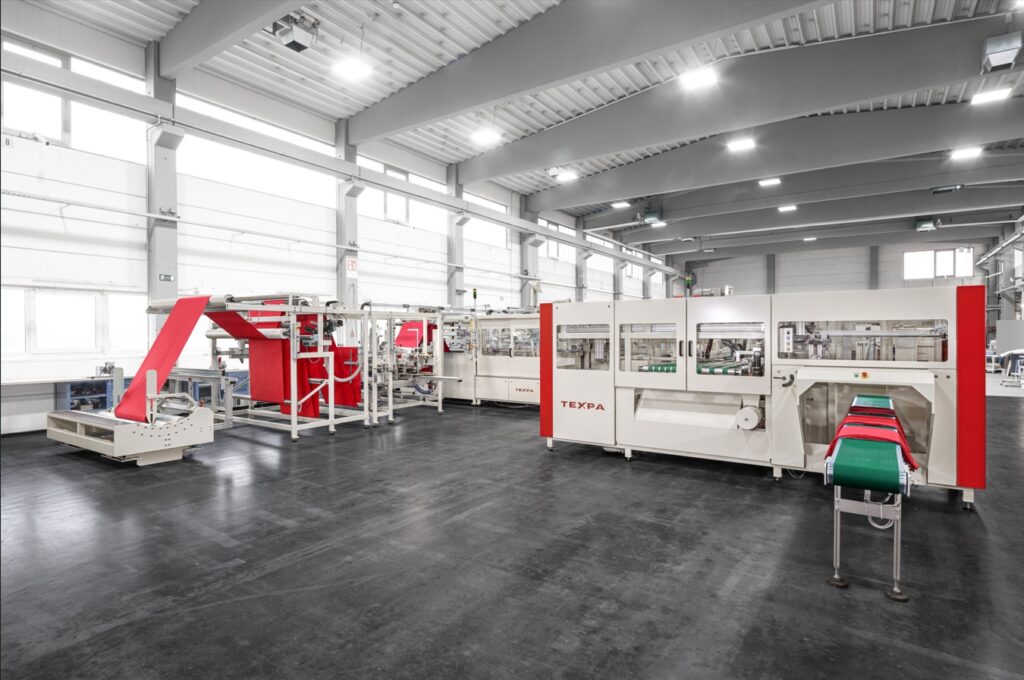
Our core has always been automated sewing and finishing, and it stays our core – we are not diversifying away from what we do best. What is changing is how intelligent that core becomes. We have made our hemming and folding systems faster and more flexible, with far less dependency on the operator’s experience. On top of that, we are now integrating artificial intelligence directly into the inspection step. Our new AI Quality Control system uses camera-based recognition to check seams, hems, labels and printed codes in production, on the real product, at line speed – not on a sample, not after the fact. It learns from your own articles, so the inspection reflects your own quality standard, not a generic one. That is a genuine step change from where we were even two years ago.
TM: Automation is becoming a strategic necessity for home textile manufacturers facing labour shortages and rising operating complexity. How is TEXPA moving towards more intelligent and integrated automation, including quality control, smart guidance, predictive maintenance and data-driven production?
MM: This is exactly where we are putting our development effort. Automation used to mean replacing a manual task with a machine. Today it has to mean something more – the machine has to think along, and it has to tell you what it knows. Our AI Quality Control is one part of the answer: one camera system, recognition and assessment in a single pass, checking appearance, measurement and code reading together, so mills don’t need a separate code reader on top. The other part is what we call Machine Analysis. Every TEXPA line already records an enormous amount of data – every message, every piece produced, every change to a setting. Until now, that data mostly sat unused. We now turn it into a clear report: how much the line really produces, where time is lost, which faults cost the most, which settings actually deliver the best output. No new sensors, no new hardware – the potential was already inside the line, we simply make it visible. That is predictive, data-driven production in a very practical, unglamorous sense: fewer surprises, more control.
TM: What are the key strengths and competitive advantages of TEXPA’s technology? How does the combination of German engineering, reliability and precision differentiate TEXPA in the global home textile machinery market?
MM: German engineering is not a marketing word for us, it is an operating principle. It means a seam that is measured, not guessed – our hem inspection reports height inside a fixed window on every single part, on smooth fabric and on terry alike, and rejects the moment it leaves the learned tolerance. It means a machine that runs the same way in shift three as it does in shift one. Customers buy TEXPA because they know what they get, and they know it will still be running reliably in ten years. That reliability, combined now with AI-based inspection and data-driven analysis, is what sets us apart – we are not chasing the newest buzzword, we are applying intelligence where it actually reduces variation and downtime on the shop floor.
TM: Your new strategy of combining German engineering with manufacturing in China has delivered encouraging results. How does this model change TEXPA’s value proposition in terms of technology, quality, cost competitiveness and its ability to serve global markets?
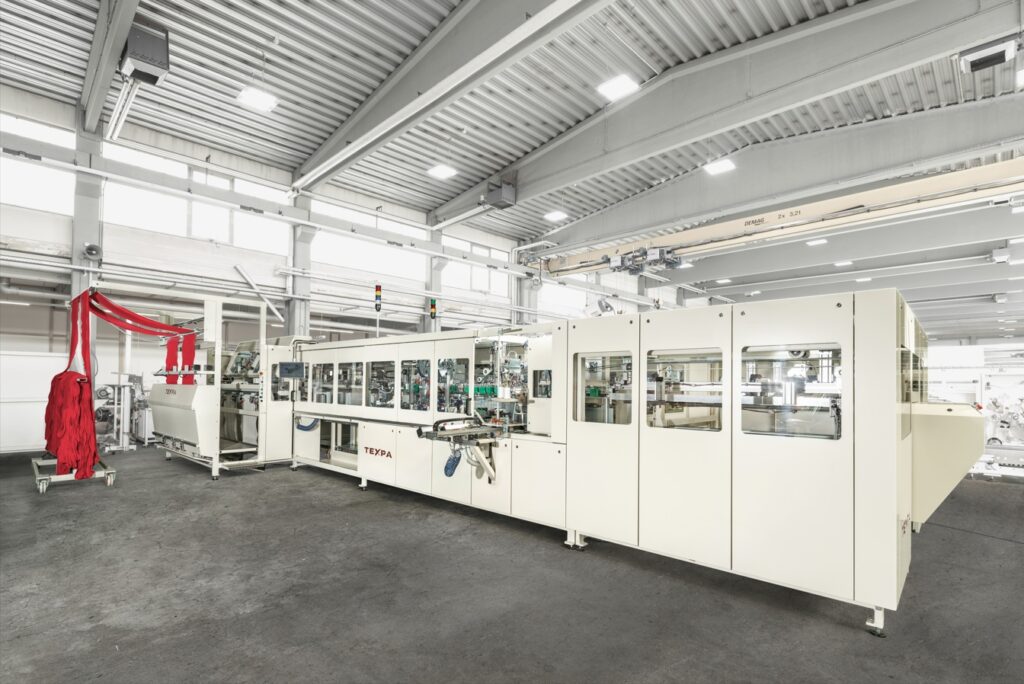
MM: This has been one of the most important strategic moves we have made. Together with our partner Atexco, we have re-established our position in China over the last three years, manufacturing German-engineered bed linen machinery at a cost level that opens up markets that were previously out of reach for our technology. The important point is what did not change: the engineering, the quality standards, the precision – all of that stays German. What changed is the price point at which we can offer it. ITMA Asia in Singapore was the first time we showed this enhanced approach globally, and the response confirmed what we hoped: mills want German quality, they just also want it at a cost that lets them scale. We now intend to extend this model beyond China to serve international markets.
TM: India is one of the world’s leading home textile manufacturing and export hubs, particularly for towels and bed linen. How important is India to TEXPA’s global strategy, and what opportunities do you see as Indian manufacturers increasingly invest in automation?
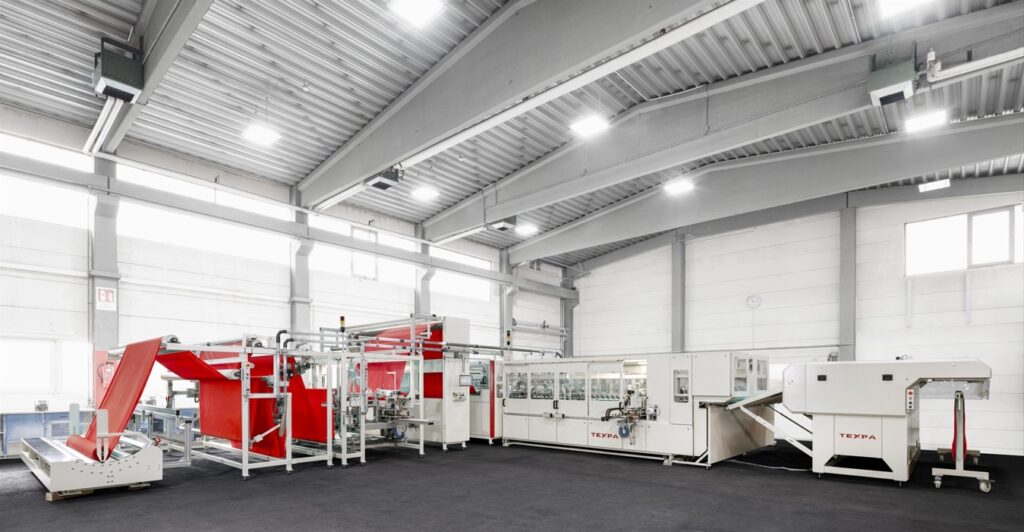
MM: India is one of our most important and strategic markets, full stop. Indian mills are among the most demanding in the world when it comes to output and quality, and that pushes us to keep improving. As Indian manufacturers scale up and face the same labour pressures we see elsewhere, we expect strong demand for exactly the kind of integrated automation we are building – automated sewing and finishing combined with AI-based quality control and data-driven line analysis. We are continuing to expand our local service and support network in India, because a machine is only as good as the support behind it, and we want that support close to our customers.
TM: What are TEXPA’s plans for its participation at INDIA ITME? Which technologies and solutions will you showcase, and how do you see the exhibition contributing to TEXPA’s engagement with Indian customers and the broader Asian market?
MM: India ITME is a key event for us, and we are looking forward to being there in December. We will be using the platform to properly introduce our two newest developments to the Indian market: AI Quality Control, our camera-based inline inspection system, and Machine Analysis, our new service that turns a line’s own production data into a clear report on output, downtime and fault causes. We will present both in detail at our stand and talk our customers through exactly how they work and what they change on the shop floor. For us, India ITME is above all a chance to have real conversations with Indian mills about where they want to take their automation next – and these two innovations give us a lot to talk about.
TM: Looking ahead, what will be the key drivers of TEXPA’s future growth globally and in India? How do you see automation, the expansion of the home textile market, your China manufacturing strategy and continued innovation shaping TEXPA’s growth over the next three to five years?
MM: Four things will carry us forward. First, the underlying market – home textiles will keep growing, and that gives us a solid base. Second, automation itself: labour shortages are not a temporary problem, they are structural, and that keeps demand for intelligent automation strong. Third, our China manufacturing strategy, which lets us bring German-engineered technology to price-sensitive markets without compromising on quality – we plan to extend this well beyond China in the coming years. And fourth, continued innovation in intelligence – AI Quality Control and Machine Analysis are only the beginning of making our lines smarter and more transparent for the customer. Put together, I am confident that in three to five years TEXPA will be known not just for building reliable machines, but for building machines that actively help our customers run a better factory.