


Interview with Mr. Edwin Franklin, Corporate Regional Head – South India, Thermax Limited
As the textile industry navigates increasing cost pressures, sustainability mandates, and evolving global expectations, energy efficiency and environmental compliance have emerged as critical pillars of competitiveness. In this context, utilities such as steam, water, and energy are no longer mere support functions—they are central to profitability and long-term sustainability.
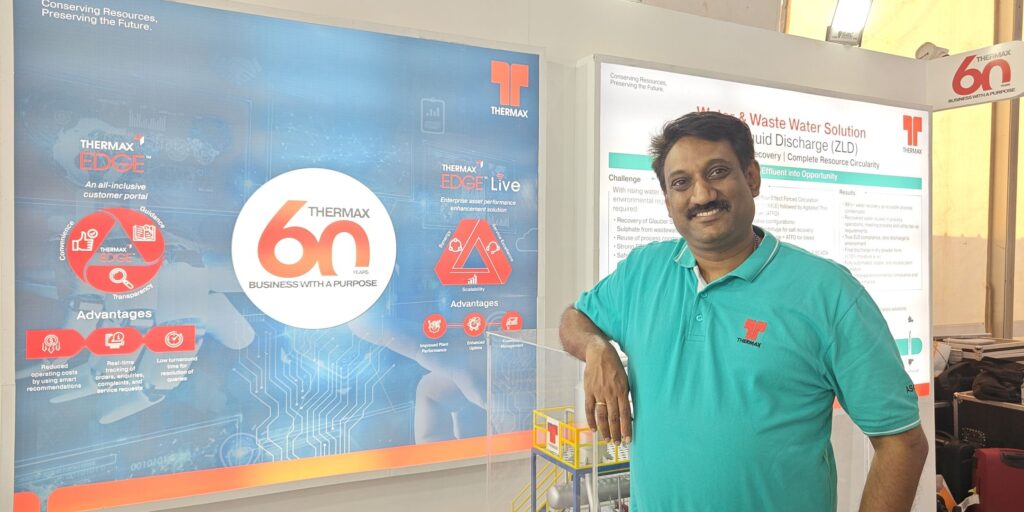
From Boiler Company to Integrated Solutions Provider
While Thermax has long been recognised for its leadership in boiler technology, the company has significantly expanded its scope to become a holistic process solutions provider. Its approach now encompasses the entire energy lifecycle within a textile plant—from generation and distribution to utilisation and recovery—spanning process heating, cooling, water and wastewater treatment, air pollution control, and chemical applications.
The focus is not merely on supplying equipment, but on optimising the complete process, ensuring that every stage operates with maximum efficiency and minimal energy loss. This integrated approach is particularly relevant for textile manufacturing, where energy consumption spans multiple stages such as sizing, dyeing, processing, finishing, and effluent management.
Energy Efficiency: The New Profit Driver
“Every unit of energy saved directly contributes to the bottom line. Whether it is steam, electricity, or water, efficient utilisation of resources is critical for sustaining margins in a cost-sensitive industry.”
— Edwin Franklin, Corporate Regional Head – South India, Thermax Limited
In today’s highly competitive textile environment, controlling energy costs has become a key determinant of profitability. Thermax acts as a partner in this journey, helping customers identify areas where energy can be saved, processes optimised, and waste minimised. This extends to both new installations and retrofitting existing systems to improve performance and capacity.
Transitioning to Green Energy Solutions
A major shift underway in the textile sector is the move towards cleaner and greener energy sources, driven by both regulatory pressures and brand expectations. Traditional fuels such as coal are increasingly being phased out, creating a need for alternative solutions. In response, Thermax is offering biomass-based boiler systems equipped with advanced reciprocating grate technology. These systems are designed to handle a wide range of non-fouling biomass fuels, providing flexibility and sustainability.
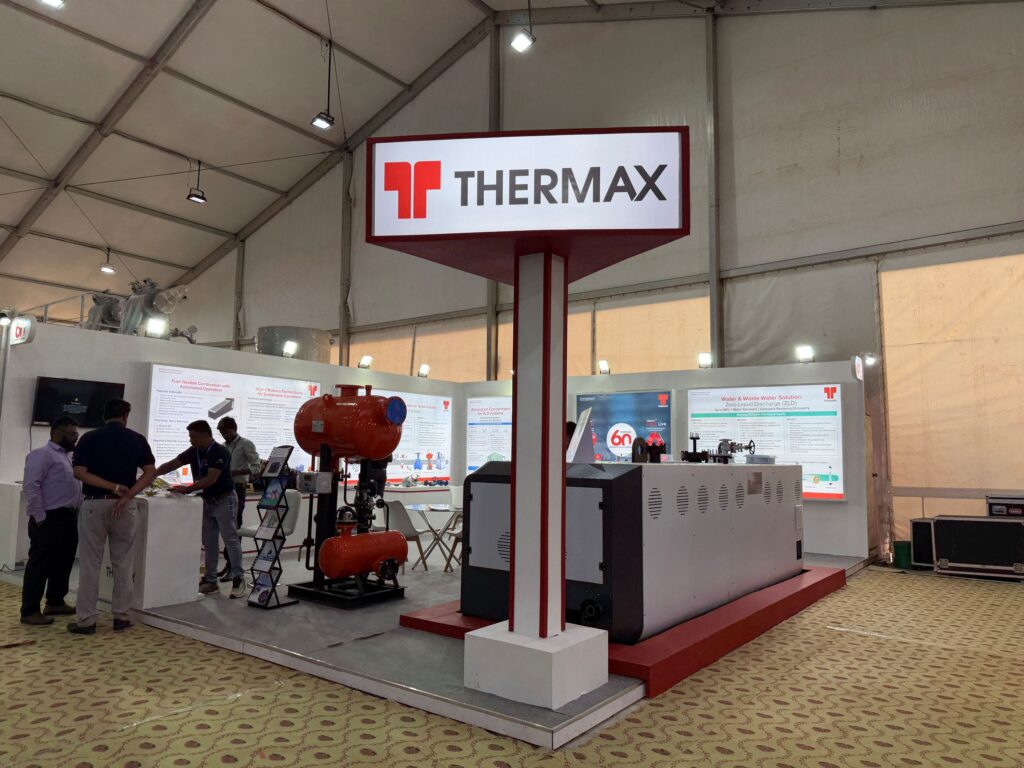
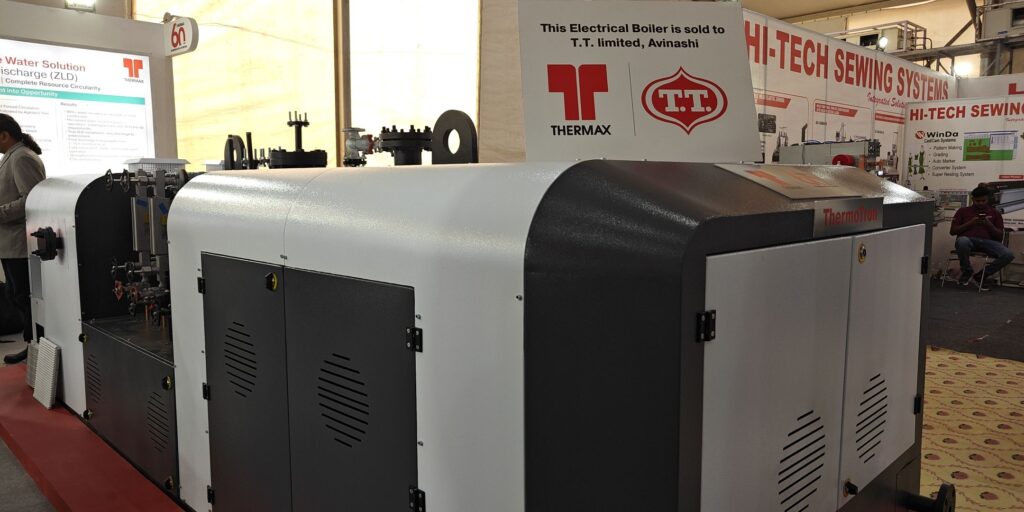
In addition to biomass, the company is also promoting electric boilers, which represent another step towards decarbonisation, particularly in applications where renewable electricity can be leveraged. Adoption of these solutions is being driven by a combination of factors, including rising fuel costs, limited availability of conventional fuels, and increasing pressure from global brands on suppliers to reduce their carbon footprint.
Water Management System, Groundwater Treatment and ZLD: A Critical Imperative
Water is among the most critical and most scrutinised resources in textile processing. From boiler feedwater to dyeing operations and effluent management, consumption across the plant is substantial. While liquor ratios have improved significantly over the years, the overall water footprint remains large, making recovery and reuse essential rather than optional.
Thermax addresses this through comprehensive Zero Liquid Discharge (ZLD) solutions built around Multiple Effect Evaporators (MEE) and Mechanical Vapour Recompression (MVR) technologies. These systems enable manufacturers to treat and recycle water effectively while staying compliant with environmental regulations. The company’s advanced MEE technology goes a step further — reducing steam consumption by as much as 30–35%, delivering simultaneous gains in operating cost and carbon emissions.
An often-overlooked dimension of effluent management is the thermal energy locked within wastewater itself. Textile effluent, particularly from dyeing and processing, leaves the plant at significantly elevated temperatures. Without intervention, that heat is lost entirely. Thermax’s heat pump solutions intercept this energy before the effluent enters the ZLD or ETP system, recover it, and redirect it back into the process — for pre-heating dye baths, maintaining process temperatures, or other thermal applications. The result is twofold: a reduced load on the treatment system and a meaningful cut in the steam or fuel needed for process heating, effectively turning a waste stream into a recoverable energy asset.
In markets like Tirupur, which supplies fabric to some of the most demanding global brands, environmental compliance is not a checkbox but a business imperative. The industry has reached a point where a single instance of untreated effluent discharge can jeopardise export relationships and invite regulatory action, making robust, reliable water treatment systems non-negotiable.
Maximising Efficiency Through Heat Recovery and Steam Management
Beyond energy generation, Thermax places strong emphasis on energy distribution and recovery, which are often overlooked but equally critical. Through its steam engineering solutions, the company offers a complete range of systems for condensate management, heat recovery, and efficient steam distribution. These solutions ensure that energy generated is fully utilised, minimising losses and improving overall system efficiency.
Additionally, Thermax provides retrofit solutions that allow existing plants to upgrade their performance without major capital investment. In some cases, this can even lead to enhanced capacity from existing infrastructure, offering significant value to customers.
Digitalisation: Enabling Smart Plant Operations
A key differentiator in Thermax’s offering is its focus on digital solutions built around its Industrial IoT (IIoT) platform for asset performance enhancement, called EDGE Live.
Installed directly at the customer’s plant, EDGE Live processes data locally at the source before pushing it to the cloud, ensuring faster response times and continued functionality even during connectivity interruptions. This data feeds into Thermax’s IIoT platform, which provides a unified view across all plant utilities — boilers, steam, cooling, water treatment, and pollution control – on a single dashboard.
What makes the platform particularly effective is its shared visibility model. Both the customer’s operations team and Thermax’s service engineers access the same real-time dashboard. When any parameter drifts out of range, automated alerts are triggered instantly, and Thermax engineers can conduct remote diagnostics without needing to be on-site.
Competing on More Than Price
In the textile utilities market, Thermax competes against a wide spectrum, from local and unorganised players to established Indian companies and international entrants. Yet the competitive dynamic, according to Mr. Franklin, is rarely about price alone.
“Many players in this space supply equipment and walk away. What textile manufacturers increasingly need is a partner who stays accountable—through commissioning, through ramp-up, and through the operational life of the plant,” he notes.
Several factors distinguish Thermax in contested accounts:
Thermax offers a complete hierarchy for environmental solutions with the portfolio including boilers, cooling systems, water treatment, pollution control, and digital monitoring, all engineered to work together. This means a textile plant has a single accountable partner across its entire utility infrastructure, rather than managing multiple vendors with overlapping responsibilities.
A growing area of engagement is Retrofit & Revamp (R&R), particularly as textile manufacturers face mounting pressure to move towards biomass solutions. Rather than replacing entire systems, Thermax works with customers to convert existing coal-fired setups to biomass, preserving capital investment while enabling the transition to cleaner fuel.
With a pan-India presence and dedicated service teams, Thermax is able to respond quickly when plants need support. Annual Maintenance Contracts (AMCs) and Operations & Maintenance (O&M) are structured to ensure proactive upkeep rather than reactive repair, with EDGE Live, the IIoT platform, enabling Thermax’s teams to identify and flag issues before they escalate.
Textile Industry: A Strategic Focus Area
Textiles remain one of the most important sectors for Thermax, ranking among the top industries served by the company, alongside sectors such as pharmaceuticals, automotive, and food processing. As the textile industry continues to expand, driven by global demand, trade agreements, and evolving consumer needs, the demand for efficient and sustainable utility solutions is expected to grow in parallel.
Thermax is actively engaging with customers at the project conceptualisation stage, helping them design plants that are not only cost-effective but also future-ready in terms of sustainability and efficiency. The company’s approach is highly customised, recognising that no single solution fits all applications, and that each textile process requires tailored engineering solutions.
As the textile industry moves towards a more sustainable and competitive future, the role of energy and environmental solutions providers is becoming increasingly critical. Through its integrated portfolio of technologies, Thermax is enabling textile manufacturers to optimise energy usage, reduce environmental impact, and improve operational efficiency. By combining engineering expertise with digital innovation and a strong focus on sustainability, the company is helping the industry transition towards greener, smarter, and more resilient manufacturing practices.
As Mr. Edwin Franklin aptly highlights, in a sector where margins are tight and expectations are high, efficiency is no longer optional—it is the foundation of profitability and long-term success.