


By K. Gopalakrishnan
Sixty-five years is a remarkable milestone in any industry, but in the ever-evolving world of textiles, it is a
testament to resilience, adaptability and visionary leadership. Over the decades, RSWM has transformed
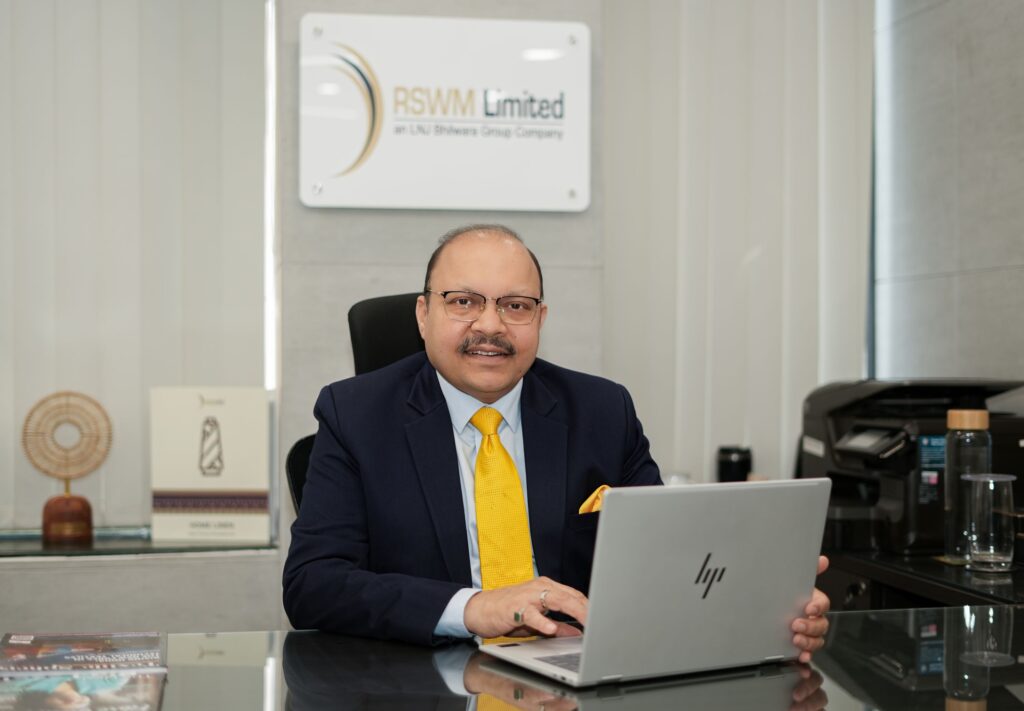
itself from a regional spinning mill into a globally recognized textile powerhouse with a diversified portfolio and a strong commitment to sustainable manufacturing. As the company enters a new chapter driven by innovation, circularity and global expansion, Mr. Rajeev Gupta, Joint Managing Director, RSWM Ltd., shares insights into the company’s transformative journey, the philosophy behind RSWM 2.0, and the
roadmap that will guide the organization through the next decade.
Legacy and Milestones
RSWM is celebrating 65 years of its journey this year. Looking back, what would you consider the most defining milestones that have shaped the company from a spinning mill in Rajasthan into one of India’s largest textile manufacturers and exporters?
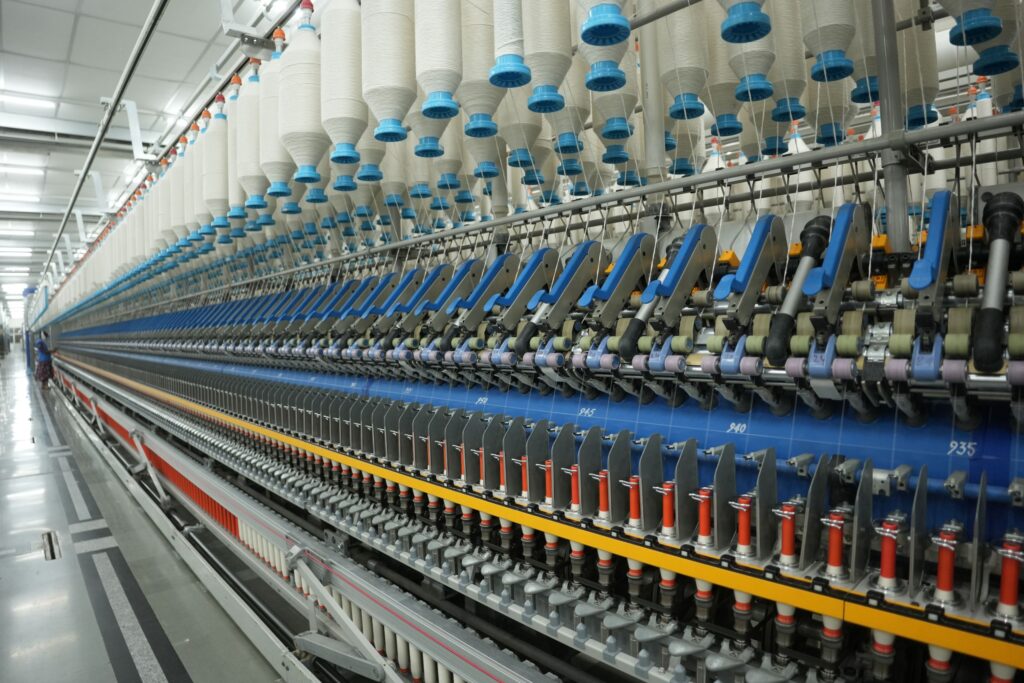
As we complete 65 years, the biggest milestone is not any single expansion or investment. It is our ability to keep evolving with the industry while staying relevant to our customers. Over the decades, RSWM has transformed from a spinning mill in Rajasthan into a fully integrated textile company serving customers across India and global markets. We expanded into yarns, denim, knitted fabrics and recycled polyester fibers, but more importantly, we built the capabilities needed to adapt to changing market realities.
In recent years, sustainability has become a defining part of that journey. Our investments in renewable energy, circularity and sustainable products show how the company continues to prepare for the future. The launch of RSWM 2.0 is another important step in that direction. When we look back, what stands out the most is our ability to reinvent ourselves across generations while retaining the trust of customers, partners and employees.
Over six and a half decades, RSWM has continuously evolved through expansions, acquisitions, diversification and technology upgrades. What have been the key factors behind the company’s longevity and sustained leadership in the textile industry?
One of the biggest reasons behind RSWM’s longevity has been its willingness to invest in the future. Over the years, the company has consistently strengthened its capabilities, expanded its market presence and built long term relationships with customers across geographies. Today, RSWM serves markets in around 70 countries, reflecting decades of trust and consistency.
Another important factor has been the ability to embrace change at the right time. In recent years, this has included a strong focus on sustainability. In our operations, renewable energy now accounts for 70% of the company’s energy mix, well above National’s clean energy mix of 31%, while initiatives in recycled polyester and circular manufacturing are helping to align the business with the future of textiles. The combination of long term thinking, operational discipline and a willingness to keep reinventing itself has helped RSWM remain relevant and competitive for 65 years.
The launch of the RSWM 2.0 transformation initiative under the vision of ‘Reflect, Restore and Reshape’ marks an important chapter in the company’s history. What were the key objectives behind this initiative and how has it influenced the company’s performance and strategic direction?
RSWM 2.0 transformational initiative was not created because something was broken. It was created because the expectations from businesses today are very different from what they were even a decade ago.
Customer expectations are evolving rapidly. Sustainability has become a business imperative rather than a choice, and technology is reshaping the way organisations operate. In such a dynamic environment, relying solely on past successes is no longer sufficient. RSWM 2.0 was conceived with the objective of re-examining the organisation through a fresh lens and challenging ourselves with some fundamental questions about the future.
Where do we need to become faster? Where do we need to become more efficient? How do we build a business that remains competitive not just today, but five or ten years from now? That thinking led to a sharper focus on process excellence, capability building, sustainability and future growth areas. It has also encouraged the organisation to challenge old ways of working and embrace continuous improvement through its key pillars, Reflect, Restore, and Reshape.
At its very core, RSWM 2.0 is about ensuring that a company with a strong legacy remains equally prepared for the future.
Business, Products and Market Leadership
Today, RSWM has a diversified presence across synthetic yarns, cotton yarns, mélange yarns, compact yarns, denim, knitted fabrics and recycled fibres. How has this diversified business model helped the company navigate changing market dynamics and customer requirements?
The textile market rarely moves in one direction. There are periods when cotton performs better, phases when man-made fibres gain momentum and times when customers are looking for more sustainable solutions. Having a diversified portfolio allows the company to respond to these shifts without reinventing itself every few years.
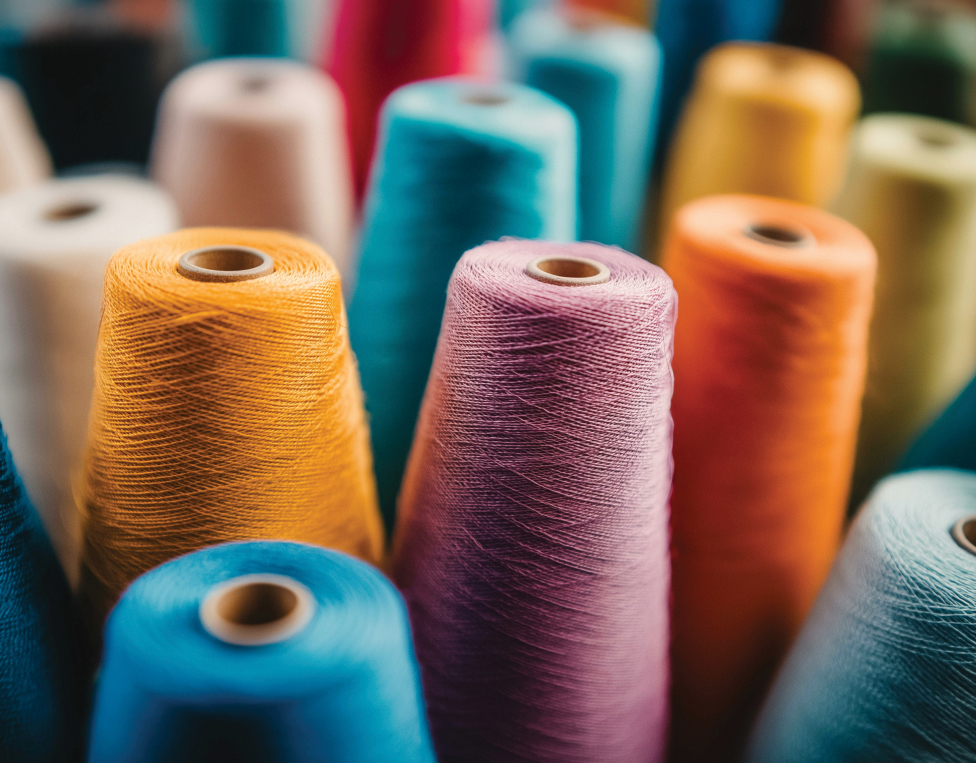
For RSWM, diversification has never been about chasing every opportunity. It has been about creating the right balance. That is evident in our 2026 growth outlook, where new product development is expected to contribute around 10-12% of overall growth, while the majority of growth will continue to come from our core products. This balance allows us to innovate while continuing to build on the strengths that have supported the business over the years.
In many ways, diversification has given RSWM something very valuable in a changing market: the ability to adapt while staying grounded.
RSWM has built a strong reputation for value-added and specialty products through brands such as Melantra and Kapaas. How important is product innovation in your growth strategy and what are some of the key trends shaping product development across your business segments?
Product innovation has become central to RSWM’s growth approach since its inception. Today, demand is increasingly shaped by performance, sustainability and differentiated functionality. At RSWM, innovation is reflected in the way new products and solutions are developed across segments rather than as isolated launches. This includes a strong focus on sustainable and speciality fibres such as Organic Cotton, Recycled Polyester, Hemp, Sea-cell, Bamboo, Modal, Tencel and Linen, which are aligned with the growing shift toward responsible sourcing. Alongside this, there is increasing emphasis on performance-led and value-added solutions, supported by technologies such as Coolmax®, 37.5® Technology, Ionic+® and Smartcel®. These show the industry’s move toward fabrics that offer comfort, functionality and enhanced end-use performance.
Overall, product innovation is not treated as a separate initiative. It is a continuous response to changing market needs which ensures that the portfolio remains relevant, differentiated and future-ready.
With manufacturing facilities spanning yarns, denim, knitted fabrics and recycled fibres, could you provide an overview of RSWM’s current manufacturing infrastructure and how it supports the company’s ambitions in domestic and international markets?
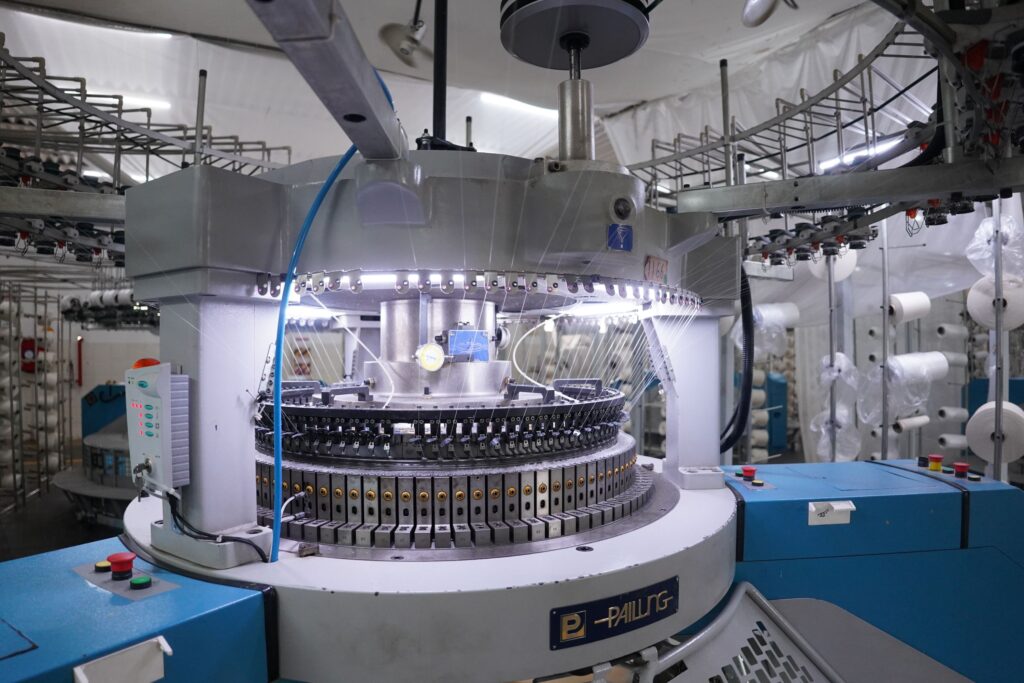
Manufacturing in textiles is about how well a company can handle different types of demand at the same time. At RSWM, the strength of our manufacturing system lies in the diverse capabilities we have built over time, rather than relying on a single setup or product line. Each business segment—yarn, denim, knitted fabrics, and recycled fibres—operates with distinct requirements, and our manufacturing ecosystem has continuously evolved to support this diversity. This integrated yet specialized approach enables us to respond effectively to varied market demands while maintaining operational excellence across businesses.
This approach has been further reinforced through strategic capacity and business expansions. Knitting capacity has increased from 750 MT to 900 MT per month, while a new knit printing facility is being established to cater to the growing demand for printed knitted fabrics. Once operational, the facility will further enhance the company’s product offerings and market responsiveness. Denim capacity has expanded from 28 million to 32 million metres annually, while recycled polyester fibre capacity has increased from 120 MT to 135 MT per month, strengthening the company’s position in sustainable manufacturing.
These shifts may look incremental, but together they make a real difference in how quickly the company can respond when demand moves between categories or markets. At its core, the system is designed to stay balanced. It is not about pushing one part of the business harder than the other, but about making sure the entire setup can adjust without disruption.
Global Markets and Exports
Exports contribute significantly to RSWM’s business, with the company serving customers in more than 70 countries. How have your export markets evolved over the years and which regions do you see offering the strongest growth opportunities in the future?
Exports have evolved from being purely volume driven to becoming far more value, compliance and capability driven over time. What global customers look for today is not just capacity, but consistency in quality, sustainability standards and long term reliability.
For RSWM, this shift has aligned well with its growing focus on value added and sustainable product categories. The expansion of recycled polyester usage, which stood at 49,128 MT in FY26, has strengthened the company’s positioning with ESG conscious global buyers. Large scale circular practices also strengthen this position. Around 6.5 million PET bottles are recycled daily. There is also zero fibre waste going to landfill, zero liquid discharge systems are in place and 70% use of renewable energy across operations. These practices matter in markets where traceability and responsible sourcing are becoming non-negotiable.
Looking ahead, export growth is expected to benefit from improving trade visibility. New Free Trade Agreements are also likely to support competitiveness once tariff related uncertainties reduce. Overall, export demand is clearly shifting. Quality and sustainability are becoming central and that is where the strongest long term opportunity sits.
Global textile markets are undergoing significant shifts due to sustainability requirements, supply chain realignment and evolving trade agreements. How is RSWM positioning itself to capitalize on these emerging opportunities and strengthen its global competitiveness?
Sustainability is no longer a differentiator in exports. It is becoming a baseline requirement. That is why practices like 126.7 MN MW of green energy use and large scale PET bottle recycling matter. They are not internal metrics anymore. They are part of how buyers evaluate suppliers.
At the same time, material preference is shifting. Recycled polyester and speciality fibres are seeing more pull in global sourcing conversations. That is where a lot of future demand is building.
Trade dynamics will decide timing, not direction. Free Trade Agreements and policy easing will only make that shift easier to participate in. So, the real positioning is not about reacting to these changes. It is about already being aligned with them.
New Growth Initiatives
The recent investment in expanding the knitting business and the acquisition of additional knitting capabilities reflect your confidence in this segment. What role do knitted fabrics play in RSWM’s future growth strategy and how do you envision this business evolving over the next few years?
Knits are growing because apparel itself is changing. Comfort has become a daily expectation and not a trend. So, the investment in knitting is really about being ready for that shift. Capacity moving to 900 MT per month and a 150 ton per month printing setup is not just an expansion. It is about having both fabric creation and value addition in one flow, so the response time improves.
What also matters is flexibility. Knits allow faster style changes, smaller runs and quicker adaptation to market demand. That is increasingly important in both domestic retail and export markets. Over time, this business will keep moving toward more value added and design driven offerings. Printed knits, functional fabrics and quicker market response will define the next phase.
A recent RSWM entry into the recycled PET bottle business (Bottle to Bottle chips manufacturing facility) through LNJ GreenPET represents a significant diversification initiative.
Technology, Automation and Digital Transformation
The textile industry is increasingly embracing automation, artificial intelligence and digital manufacturing technologies. How is RSWM leveraging automation, digitalization and data-driven decision-making to improve productivity, quality and operational efficiency across its manufacturing facilities?
Automation and digital tools are becoming more important as operations scale and product complexity increases. At RSWM, the focus is on making manufacturing more controlled and consistent across yarns, denim, knitted fabrics and recycled fibres.
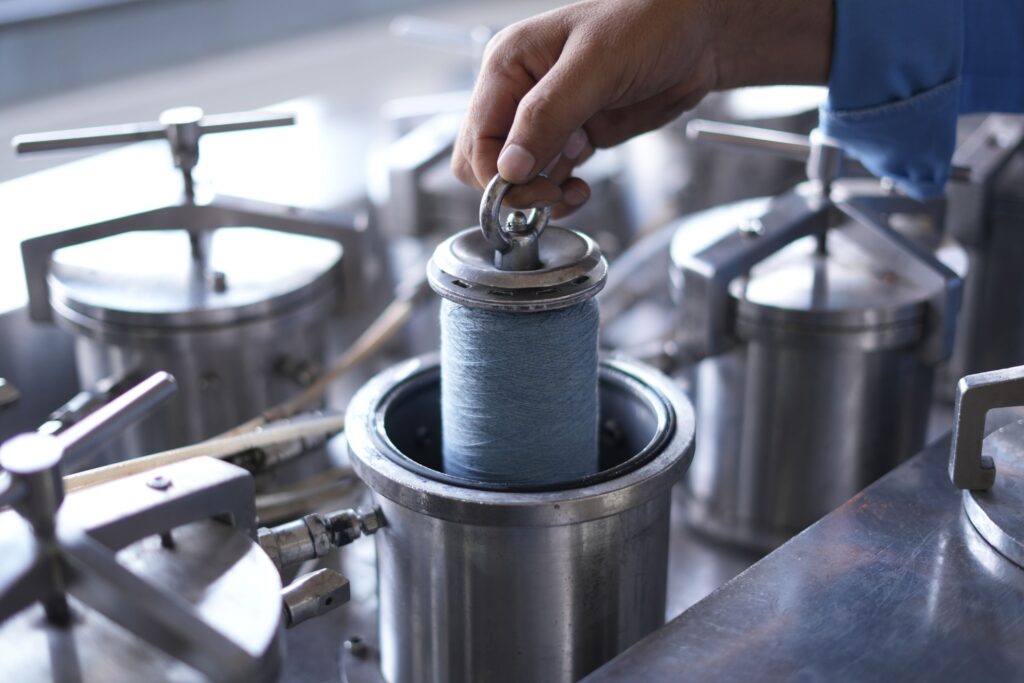
Digital technologies are improving operational efficiency, forecasting accuracy, and supply chain responsiveness across businesses. In spinning, platforms such as My Mill (TRÜTZSCHLER), Premier Ultimo, Senses (Saurer), Kalki, Marzoli-SF, and Uster Quantum Expert enable real-time monitoring of production, utilities, efficiency, and quality. In denim, Industrial App, Data Log, and FIDAS 4.0 support real-time monitoring of dyeing, weaving, finishing, and fabric inspection processes. The adoption of Compact and SIRO Compact technologies is further enhancing productivity, process efficiency, and yarn quality.
Capacity enhancements like knitting at 900 MT per month, denim at 32 million meters and recycled polyester fibre at 135 tons per month require tighter process monitoring. This also requires better coordination across stages to maintain quality at scale. Digitalisation is supporting this by improving visibility across operations and reducing variability in production outcomes. The aim is not technology for its own sake, but smoother execution, fewer inefficiencies and faster response to operational issues. Data from production and quality processes is also being used more actively to guide decisions instead of relying only on reactive fixes. Overall, the direction is toward more controlled, efficient and predictable manufacturing where scale and consistency move together.
Having invested continuously in modernization and advanced manufacturing technologies over the years, what are the company’s priorities when it comes to future technology investments and Industry 4.0 adoption?
Future technology investment is not being treated as a separate modernization agenda. It is being treated as a business tool to fix very specific priorities. First is cost. Every new investment has to reduce friction in the system and improve cost efficiency. Utilization is another. Before adding new capacity, the focus is on how well existing capacity is being used across businesses like knitting, denim and yarn. Technology here is expected to improve control and not just scale.
With plans like printed knits and a stronger domestic business development push, the business needs faster movement between demand, production and delivery. That is where systems and connectivity matter more than machinery.
Even sustainability-linked changes like converting boilers to agro-based systems fit into this same thinking. They are evaluated on operational impact. The ₹92 crore investment through Birla Advanced Knits is another example of the same direction. It is about aligning capability with downstream demand rather than building capacity in isolation. So, Industry 4.0 is not being seen as a technology shift. It is being seen as a way to make the business faster, leaner and more responsive to market reality.
Sustainability and Responsible Manufacturing
Sustainability has become a core pillar of RSWM’s business strategy. Could you elaborate on the company’s progress in renewable energy, water recycling, PET bottle recycling, waste management and circular manufacturing practices and how these initiatives are creating long-term value for customers and stakeholders?
Sustainability at RSWM is no longer an add-on; it is built into how the business actually runs day to day. The shift shows up most clearly in scale. Around 126.7 MN MW of green energy is now part of operations, which directly reduces dependence on conventional power and stabilises long term costs. Water use is treated with the same seriousness, with 2,051,024 KL of recycled water being reused through zero liquid discharge systems, making large scale manufacturing far less resource intensive than it used to be.
On the circularity side, 6.5 million PET bottles are recycled every day and converted into polyester, while fibre waste is fully redirected away from landfill, creating a closed loop system that feeds back into production. Even energy transition at the fuel level is underway, with about 26,573 MT of biofuel replacing coal based usage. What stands out is not any single initiative, but the fact that these systems are working together inside the manufacturing flow itself. That is what is creating long term value, because it reduces risk, improves efficiency and makes the supply chain more acceptable.
RSWM has made substantial investments in renewable energy, recycled fibres and resource conservation. How do you see sustainability evolving from a compliance requirement to a competitive advantage for the company in global markets?
We do not look at sustainability as something separate from manufacturing anymore. It is part of how the system works every day. A big shift for us has been circularity at scale. Around 6.5 million PET bottles are recycled daily and brought back into polyester production. In FY26, recycled polyester usage was about 49,128 MT. This is not an experiment or a side stream. It is part of regular input planning now.
Energy is another area where the change is very visible. We are working with about 126.7 MN MW of green energy in our operations. On the ground, this is what helps reduce exposure to fuel volatility and keeps operations more stable. Water and waste follow the same thinking. Around 2,051,024 KL of water is recycled through zero liquid discharge systems. Fibre waste is not pushed out as landfill waste. It is brought back into the system wherever possible.
What matters most is how this is being seen outside. Buyers are not asking only about price or capacity anymore. They are asking how the product is made and what the footprint looks like. That is where we feel the real shift. Sustainability is not an added layer now. It is becoming part of what defines competitiveness in global markets.
Vision for the Future
As RSWM enters its next chapter after 65 years of growth and transformation, what is your vision for the company over the next decade and what role do innovation, sustainability, global expansion and value-added products play in achieving that vision?
Over the next decade, RSWM’s direction is clearly moving toward becoming a more globally present, design-led textile organisation rather than only a large scale manufacturer. A big part of that shift is already visible in how collections and product storytelling are evolving. Collections such as Panchtatva, Protective Wear for technical textiles, In-DIG’o Alchemy for A/W 27 in denim, Symphony of Colors for S/S 2027 in melange, and Arctic Comfort AW/27-28 in knits reflect a deliberate shift towards fashion-led, theme-driven product development. These launches demonstrate a stronger focus on trend relevance, creative storytelling, and market-oriented innovation across business segments.
RSWM 2.0 (Reflect, Restore & Reshape) is also bringing more structure internally. The focus on People, Process, Planet and Profit is aligning decisions instead of treating change in silos. On the social and governance side, CSR programmes have reached around 2.5 lakh beneficiaries. The company has also been recognised on platforms like MATEXIL, IRIM (Manufacturing Excellence), Sustainable NXT and FE Green Sarathi for sustainability and export performance. Overall, the direction is toward deeper global integration and a stronger product identity. The real focus now is on building an organisation that does not just scale with the market but stays ahead of it.