


S. Sundaravadivel, President – Operations, Pallavaa Group, has spent four decades in the textile industry, including 27 years with Pallavaa, building his career around technology, manufacturing and the discipline of the shop floor. But beyond machines and manufacturing, there is a more personal side to his journey — a love for trekking and the mountains, a fascination with weather and monsoon patterns, and a deep interest in farming and agricultural value addition. His journey offers a glimpse of a professional whose curiosity extends well beyond textiles, shaped by discipline, continuous learning and a desire to explore new horizons.
For most textile professionals who have known S. Sundaravadivel over the years, he is likely to be remembered first as the technology-driven operations professional at the heart of Pallavaa Group’s manufacturing journey. His career has been shaped by machines, shop floors, maintenance, spinning technology, productivity, quality and the relentless pursuit of manufacturing consistency.
But there is another Sundaravadivel.
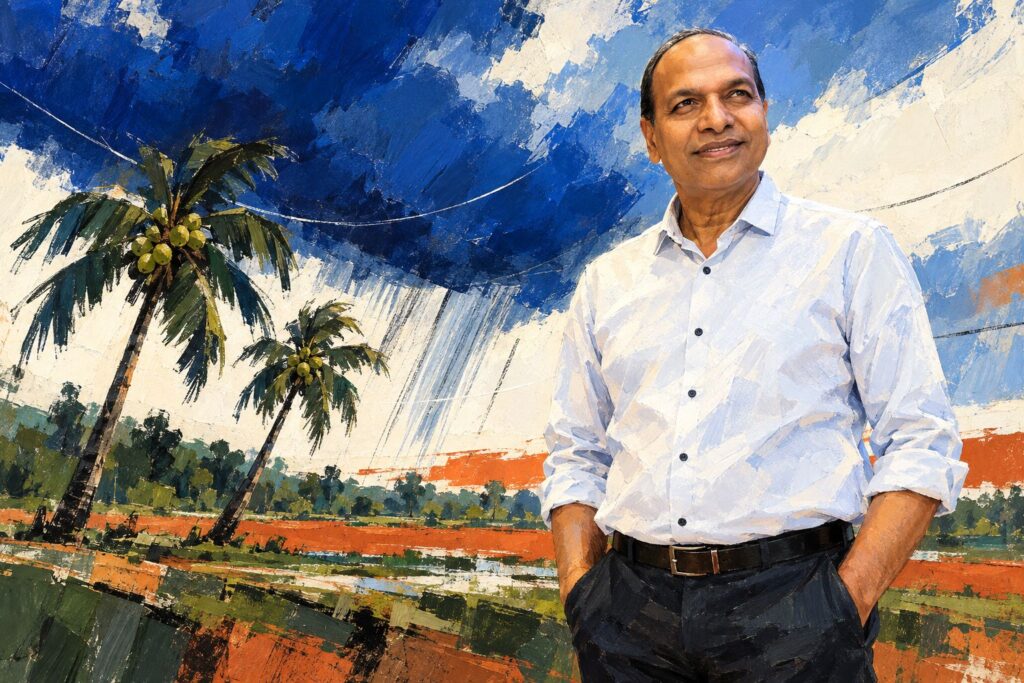
Away from the factory, he has an unusual fascination with weather and climate patterns, follows ocean temperatures and monsoon movements, maintains a farm with around 700–750 coconut trees, takes a keen interest in value addition in agriculture and places considerable emphasis on fitness and disciplined living. After four decades in textiles, he has developed an approach to life that is remarkably similar to his approach to manufacturing: observe carefully, understand the variables, maintain discipline and keep improving.
That combination makes his story particularly interesting.
From the shop floor to leadership
Sundaravadivel’s professional journey has been deeply rooted in the technical side of textile manufacturing. He describes himself essentially as a shop-floor person, with an early fascination for machinery, engineering and maintenance. His experience has encompassed not only textile processes but also the mechanical systems behind them — gearboxes, gears, bearings and the engineering principles that keep machinery operating reliably.
Maintenance, in particular, has remained an important part of his professional thinking. Preventive, predictive and periodic maintenance are not simply maintenance terminologies for him; they represent a philosophy of avoiding problems before they become breakdowns. His emphasis has consistently been on daily machine care, engineering discipline and maintaining equipment at optimum performance.
That shop-floor orientation has stayed with him even as his responsibilities have expanded.
He has now accumulated around 40 years of industry experience, of which 27 years have been with Pallavaa Group. He joined the organisation as a factory manager and subsequently became part of its broader operations leadership.
The progression also reflects an important characteristic of his professional personality: he appears to have remained closely connected with the actual manufacturing process rather than moving completely away from the shop floor as his career progressed.
Technology is not about buying machines
For Sundaravadivel, technology investment is not simply about acquiring the latest machine. He looks at a combination of factors — quality, fibre consistency, trained manpower, machine capability, productivity and manufacturing cost.
His view is particularly relevant at a time when textile manufacturers are under pressure to simultaneously improve quality and reduce costs. Advanced machinery can provide higher productivity, but technology alone cannot compensate for poor raw material or inadequate skills. The interaction between people, fibre and machinery ultimately determines manufacturing performance.

This philosophy has been visible in Pallavaa’s adoption of advanced spinning technologies. The company was an early adopter of Vortex technology, at a time when the technology was still relatively new in India. Sundaravadivel recalls how the technology gradually gained acceptance as manufacturers and customers recognised its potential for producing yarns with distinctive characteristics and enabling new product possibilities.
Today, digitalisation has become an equally important part of his operational philosophy. Pallavaa’s manufacturing systems integrate production, machine and quality data, supported by ERP and monitoring systems. For Sundaravadivel, however, collecting data is only the beginning. The real value lies in interpreting the data and converting it into better decisions.
That is perhaps the clearest link between the engineer he was and the operations leader he has become.
A Passion for the Mountains
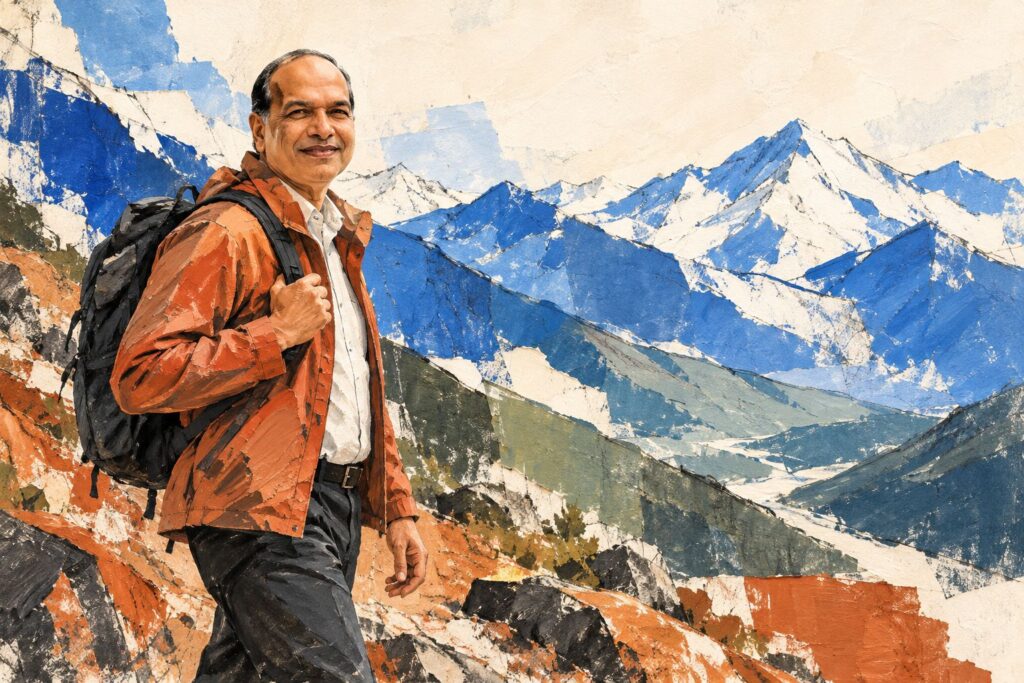
His interests extend well beyond the factory, and trekking and mountain journeys are another important part of his personal life. He has undertaken challenging journeys, including a trek to Kailash–Mansarovar, reflecting his interest in physical activity, the outdoors and the mountains. For someone who has spent four decades in a demanding manufacturing environment, these journeys appear to offer a different kind of experience — one that combines physical endurance, discipline and an opportunity to disconnect from the intensity of professional life.
His interest in trekking also fits naturally with his emphasis on fitness. Physical activity is part of his regular routine, and he continues to maintain an active lifestyle. What is particularly interesting is that his curiosity does not stop with the physical challenge of a trek. Much like his fascination with weather patterns and climate, he seems to have an interest in understanding the natural environment around him.
From the textile shop floor to high-altitude mountain trails, Sundaravadivel’s interests reveal a personality driven by curiosity, discipline and a willingness to explore.
Reading the Skies
The most unexpected side of Sundaravadivel emerges when the conversation moves away from textiles.
He has a genuine fascination with weather.
This is not simply an interest in checking the daily forecast. He follows temperature patterns, international weather information, sea-surface temperatures in the Pacific Ocean and the behaviour of the northeast monsoon. He is interested in understanding how different climatic systems interact and how weather patterns evolve.
For someone who has spent decades analysing machines and manufacturing systems, perhaps this is not such a surprising hobby after all.
Weather, like manufacturing, is a system of multiple variables. Small changes in one parameter can influence the outcome elsewhere. The ability to observe patterns, understand cause and effect and anticipate what may happen next is valuable both to an operations professional and a weather enthusiast.
It is a fascinating contrast: while most people in the textile industry may look at weather primarily in terms of its impact on cotton, production or markets, Sundaravadivel appears to look at it almost as an engineer would — as a complex system worthy of observation and study.
The farmer within
His connection with agriculture is even more personal.
Sundaravadivel has around 700–750 coconut trees on his farm and is exploring opportunities for value addition to coconuts, including drying, processing and developing products for potential export markets.
There is an interesting parallel between this interest and his textile career.
In textiles, value addition has always been central to competitiveness — moving from commodity products to differentiated yarns, fabrics and specialised applications. His interest in coconut processing reflects a similar thought process: rather than simply producing an agricultural commodity, why not explore how processing, branding and value addition can create something more valuable?
It is perhaps the textile professional’s mindset following him into agriculture.
Discipline beyond the factory
Fitness and personal discipline also occupy an important place in his life. He speaks about maintaining physical activity and following a disciplined routine. His approach to food, exercise and daily habits appears to be guided by the same consistency that characterises his professional philosophy.
And when asked about age, his response captures something of his personality: “Age is only a number.”
The statement is delivered almost casually, but it fits the larger picture that emerges from the conversation. For a professional with 40 years of industry experience, there is little sense of slowing down. Technology continues to interest him, manufacturing continues to engage him, weather continues to intrigue him, farming offers another avenue for experimentation and fitness remains part of his routine.
Preparing the next generation
There is also a strong emphasis in his thinking on the future of the textile industry and its people. He sees significant opportunities for young professionals in textiles, particularly as India moves towards greater integration, scale, exports and technological development.
His own career perhaps offers the best illustration of that opportunity.
He began close to the machines and shop floor, developed deep technical expertise, expanded into operations and management, and ultimately became responsible for large-scale manufacturing. The journey demonstrates that textile manufacturing is not merely about operating factories; it offers a pathway combining engineering, technology, management, innovation and leadership.
More than a textile professional
There is a temptation to define senior industry professionals by their designation, the size of their company or the investments they oversee. Sundaravadivel’s story suggests that there is much more to discover.
There is the engineer who understands a gearbox.
The operations professional who studies machine data.
The technologist who embraced Vortex when it was still emerging.
The weather enthusiast who follows Pacific Ocean temperatures and monsoon patterns.
The farmer who tends to hundreds of coconut trees.
The fitness-conscious individual who believes age should not become a limitation.
And perhaps that is precisely what makes people like him interesting.
After four decades in an industry that is constantly changing, Sundaravadivel continues to look at the world with the curiosity of an engineer — whether the subject is a spinning machine, a production dashboard, a monsoon system or a coconut tree.
The professional may have spent 40 years in textiles. But the person behind the professional clearly has many more interests waiting to be explored.