


By K.Gopalakrishnan
India Emerges as a Strategic Manufacturing Hub for Decathlon
As global supply chains continue to evolve, India is rapidly strengthening its position as a strategic sourcing and manufacturing destination for international brands. Among the companies significantly expanding their India engagement is Decathlon, the global leader in affordable, high-performance sporting goods. With over three decades of sourcing experience in the country, Decathlon is now moving beyond conventional procurement to build a deeper ecosystem focused on technical innovation, localisation, sustainability, and long-term partnerships.

Speaking about India’s growing importance within Decathlon’s global manufacturing strategy, Mr. Deepak Dsouza, South West Asia Production Director, Decathlon International, emphasized that India has consistently played a strategic role in the company’s sourcing network across segments such as leather, textiles, gloves, bicycle components, backpacks, and outdoor equipment.
“India continues to be a very strategic sourcing destination given the price positioning, lead time, quality and service,” he noted, while highlighting the country’s expanding relevance for both domestic consumption and exports to Europe and other international markets.
Strengthening Localisation and Manufacturing Capabilities
Decathlon’s India strategy is increasingly aligned with localisation and “Make in India” initiatives. While the company recently announced a €100 million investment plan for India, much of this investment is focused on strengthening retail expansion and improving customer accessibility across the country.
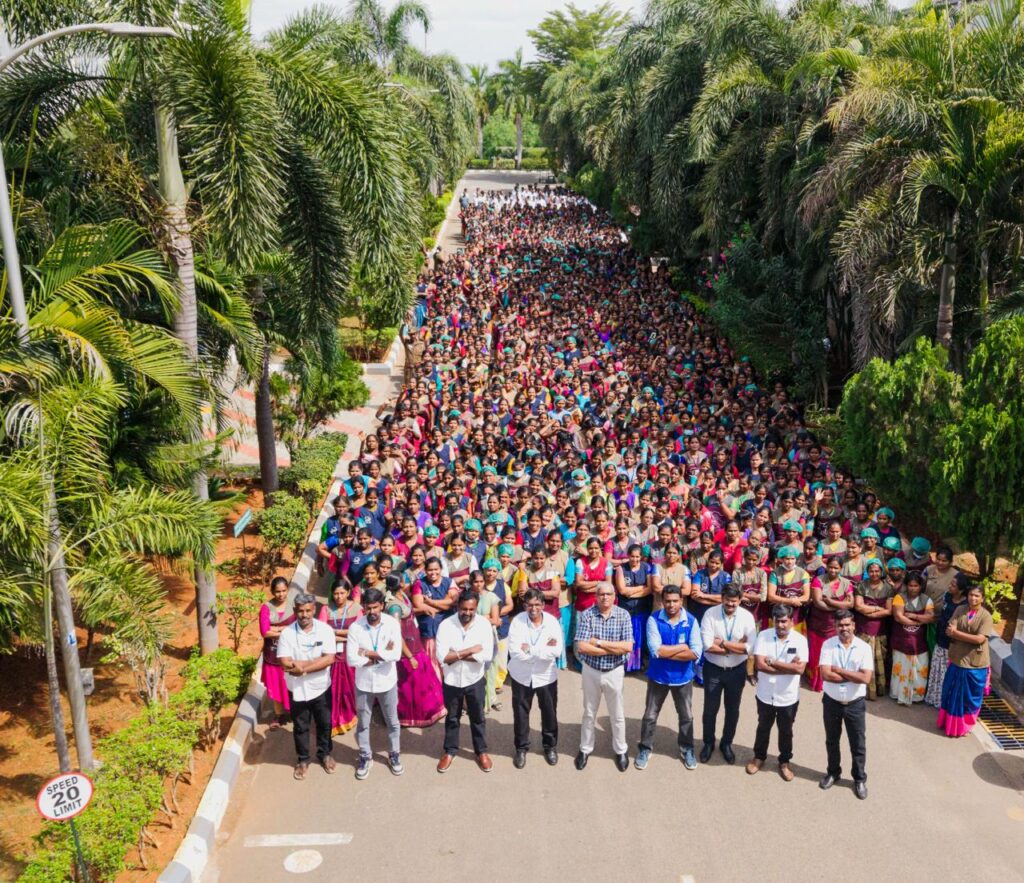
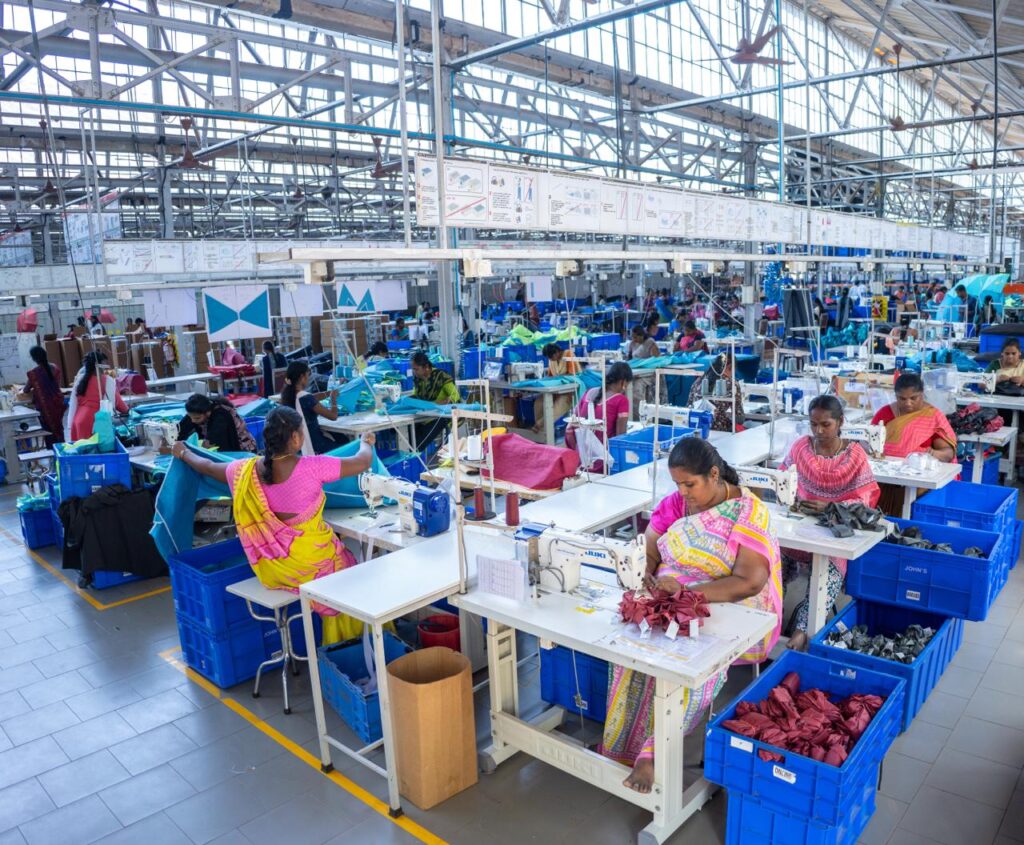
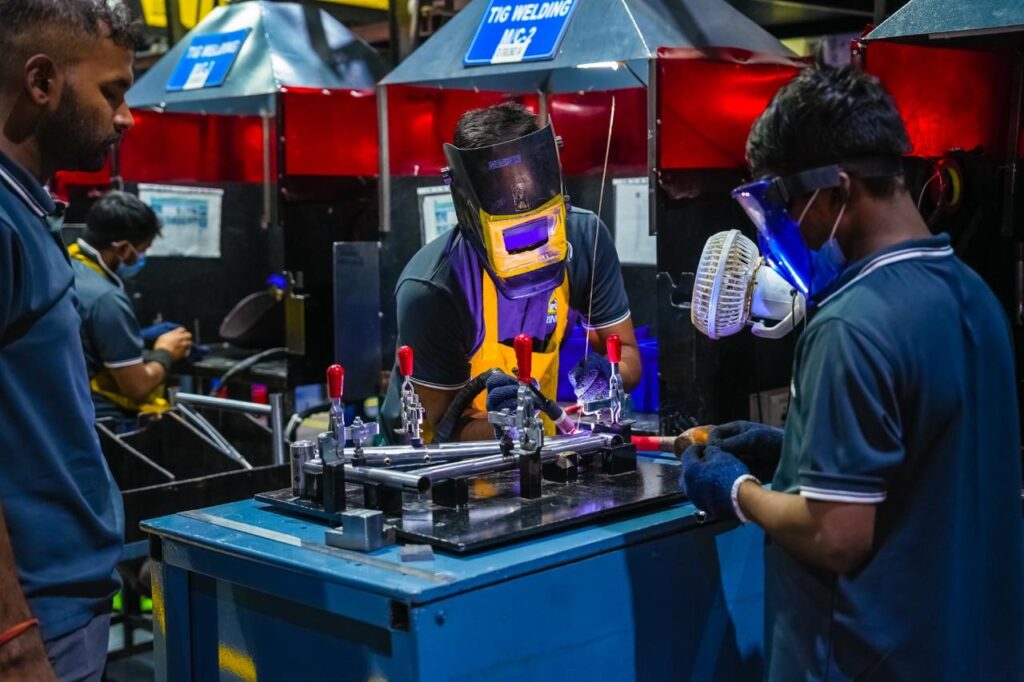
At the manufacturing level, however, Decathlon is simultaneously accelerating investments in new factories and product categories. The company is actively expanding local manufacturing capabilities across footwear, technical textiles, tents, metal bottles, scooters, and select electronic products.
This reflects a broader strategic shift, from India being primarily a sourcing destination for mass-produced products to becoming a manufacturing and innovation hub capable of delivering technically advanced sporting solutions.
The company’s sourcing footprint today spans major manufacturing clusters including Coimbatore, Madurai, Surat, Ludhiana, Mohali, and Mumbai. To strengthen collaboration and operational efficiency, Decathlon has also expanded its physical presence through new sourcing and technical offices across these regions.
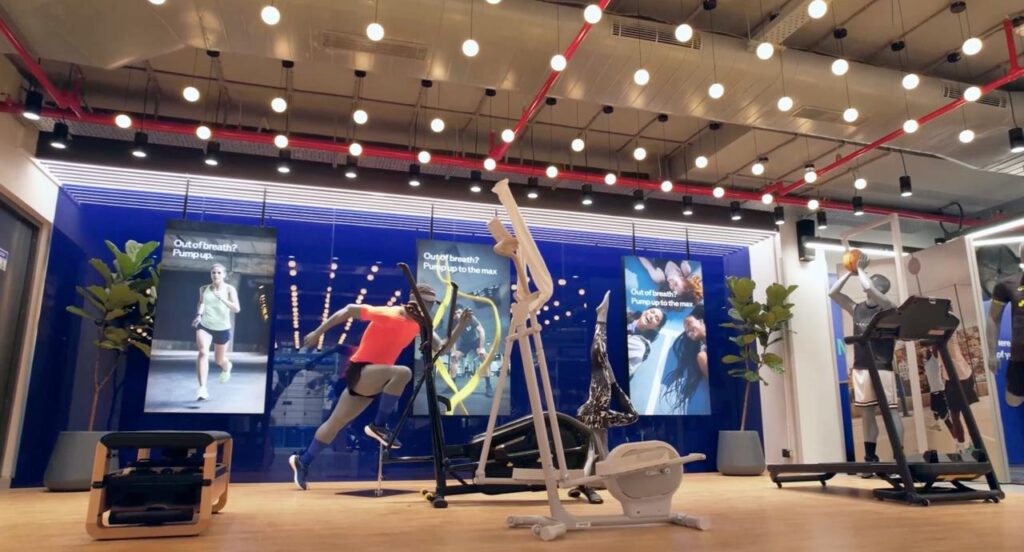
The newly established Madurai and Mumbai offices, along with the expanded Coimbatore facility and the Technical Development Centre in Mohali, are enabling Decathlon teams to work more closely with suppliers, accelerate product development, and improve supply chain responsiveness.
“We strongly believe in being closer to the playing field,” Mr. Dsouza explained. “Having dedicated offices near key sourcing hubs enables stronger collaboration, better communication, and more effective partnerships with suppliers.”
Technical Textiles and High-Performance Products Drive Future Growth
One of the most significant opportunities identified by Decathlon in India lies in technical textiles and performance-driven products. According to Mr. Dsouza, the company sees strong future growth in coated synthetic fabrics, nylon, engineering meshes for footwear, woven components for tents and backpacks, as well as advanced textile accessories.
The company is also looking for innovative fabrics, recycled yarns, and textile-to-textile recycling solutions to align with its global sustainability goals.
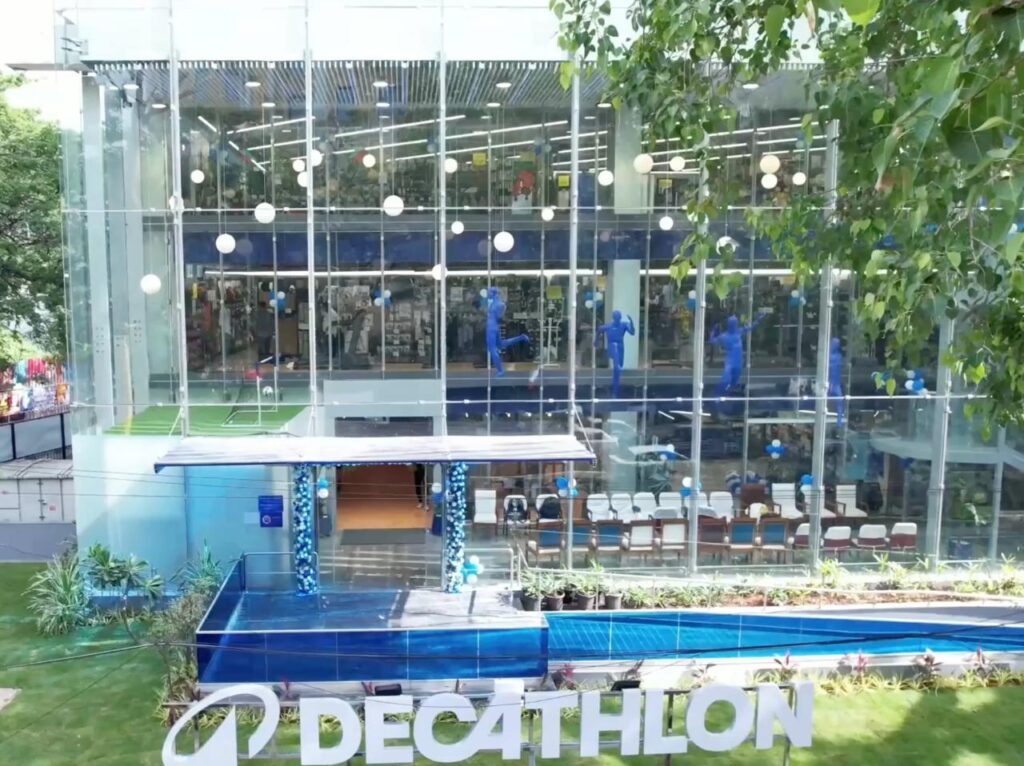
Finished product categories expected to witness substantial growth include outdoor products, fitness, running, swimwear, cycling, technical gloves, socks, headwear, camping products, and sports footwear.
Importantly, Decathlon is increasingly encouraging Indian manufacturers to move beyond basic product manufacturing toward higher-value technical and functional products.
“We need to scale up significantly from producing basic products to more technical products, especially across outdoor, running, swimwear, cycling and other growing segments,” Mr. Dsouza observed.
Building Innovation and Development Capabilities in India
As India’s domestic sports market expands, Decathlon is also localising product development capabilities to respond faster to regional consumer preferences.
The company has established local development centres focused on categories such as yoga, fitness, cricket, and regular textile products. These centres enable product adaptations based on local requirements involving design, colours, fit, and fabric specifications.
This transition is particularly significant because it signals Decathlon’s intent to transform India from a duplication-based sourcing country into a development and innovation-driven ecosystem.
“We also need to shift from being a duplication country to becoming a development and innovation hub country that can provide more solutions,” Mr. Dsouza emphasized.
To support this vision, the company expects suppliers to strengthen capabilities in sampling, fitting, technical pack development, material innovation, and product engineering.
Sustainability at the Core of Future Sourcing
Sustainability has become a central pillar in Decathlon’s global sourcing strategy, and the company is increasingly integrating environmental performance into supplier evaluation and sourcing decisions.
Mr. Dsouza highlighted Decathlon’s strong focus on reducing carbon emissions through product design, increasing recycled material usage, accelerating adoption of renewable energy, eliminating coal usage in manufacturing, and promoting zero liquid discharge in textile processing.
The company is particularly encouraged by the growing commitment shown by Indian suppliers toward recycled materials and carbon reduction initiatives.
“Sustainability is central to all our projects,” he stated, while also acknowledging the positive transformation visible across India’s manufacturing ecosystem.
FTA Opportunities and India’s Competitive Position
Decathlon also views the proposed India–EU Free Trade Agreement as a major opportunity for Indian manufacturing.
According to Mr. Dsouza, the FTA could significantly improve India’s competitiveness against sourcing destinations such as Vietnam and Bangladesh, particularly in the European market where duty structures play a crucial role in sourcing decisions.
The agreement is expected to strengthen India’s price competitiveness while further accelerating investments into value-added manufacturing and technical product development.
From Sourcing Destination to Global Innovation Hub
With India possessing a strong end-to-end value chain across cotton, polyester, rubber, metals, wood, and technical components, Decathlon sees enormous long-term potential for the country within its global operations.
The company’s strategy clearly reflects a long-term commitment, not only toward expanding manufacturing scale but also toward building innovation capability, sustainable production systems, and collaborative supplier ecosystems.
As global sourcing models increasingly prioritise resilience, sustainability, and speed-to-market, India is emerging as one of Decathlon’s most important strategic growth destinations.
For Indian manufacturers, this presents a significant opportunity. The next phase of growth will not be driven by scale alone, but by the ability to deliver innovation, technical expertise, sustainability, and globally competitive manufacturing standards.
And as Decathlon deepens its engagement with India, the country is steadily evolving from a sourcing base into a critical pillar of the company’s global manufacturing and product development strategy.