


What if the real value in textile recycling isn’t just in the fibre you recover, but also in the wastewater that can be turned into a valuable resource?
Textile recycling is becoming an increasingly important part of the circular fashion conversation. Old garments are being turned into new yarn. Production waste is becoming feedstock. Fibres are getting another life. But there is an uncomfortable question the industry must ask: what happens to the water used to make that circularity possible?
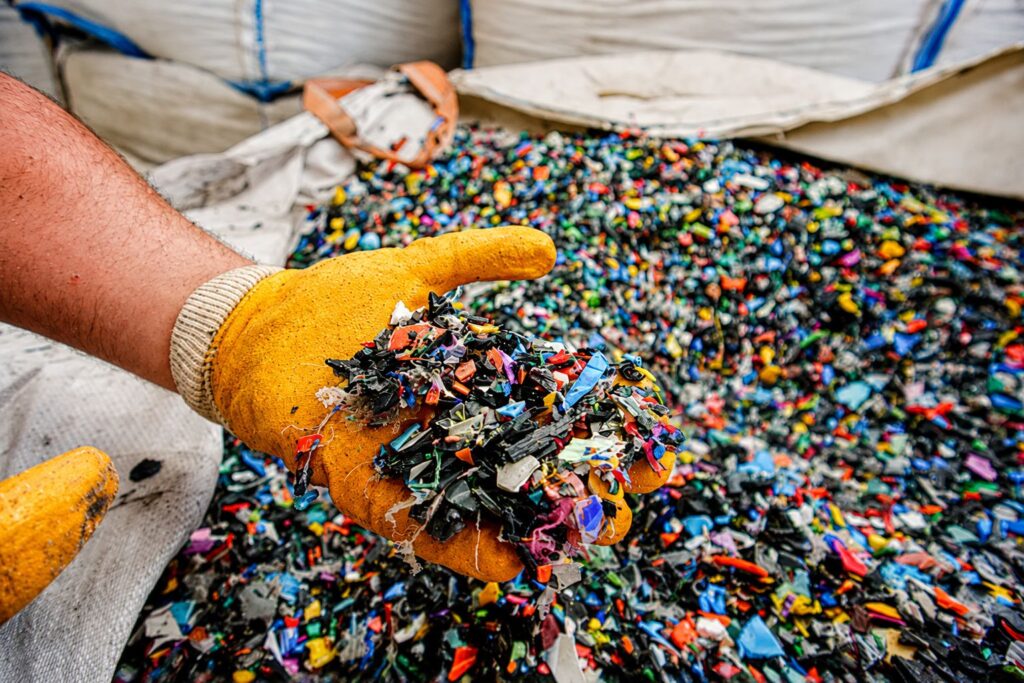
If recycling recovers fibre but leaves behind wastewater loaded with dyes, salts, chemicals and dissolved contaminants, the loop is not truly closed. It simply shifts waste from solid to liquid form. This is the blind spot the industry can no longer ignore.
The Global Sustainability Benchmark Is Moving
For textile manufacturers targeting international brands, sustainability is no longer a choice; it is a make-or-break factor. It decides who enters global supply chains and who is left behind.
The Global Recycled Standard (GRS) requires 20% recycled content for certification and 50% for consumer claims, while also assessing chemical use, environmental systems, chain of custody, and social compliance. However, recycled content alone is insufficient, as broader expectations include water and resource management. Sustainability is now a baseline, not an add-on, defining long-term global competitiveness.
The Hidden Water Economy Powering Circularity
Textile recycling generates complex wastewater with high TDS, COD, salts, colour, hardness and chlorides. Conventional treatment focuses on safe discharge, but circular manufacturing asks: what value remains in this wastewater? Beyond water, effluents can contain recoverable salts, heat energy and reusable process components, making waste a resource opportunity. SED’s patented MVR-based Low Temperature Evaporation (LTE®) technology enables this shift, recovering reusable water, concentrating dissolved materials for potential recovery, and internally recirculating vapour energy to reduce external energy demand.
“Circularity does not end at fibre recovery. It begins when water, energy, and dissolved materials in every effluent stream are treated as recoverable resources, not disposal problems.” ~ Mr Vimarsh Verma, Director, SED
SED Converting Textile Wastewater Into a Circular Resource Stream
This concept is no longer theoretical; it is already being implemented at industrial scale, demonstrating practical viability and measurable impact across real-world wastewater treatment and resource recovery systems.
At Arthanari Loom Center (ALC), Salem, SED implemented its LTE® system to treat high-load textile effluent. The system recovers 75% clean water for reuse in processing, extracts 7,000–9,000 kg of salts per day, and reuses around 5 million kilocalories of heat energy daily, while achieving Zero Liquid Discharge (ZLD) at approximately 20–22 kWh/m³.
Here, wastewater is no longer waste. Water becomes input, salts become resources, and heat becomes energy. ZLD becomes an outcome of recovery, not just compliance.
Sustainability as a Market Requirement
As brands prioritise traceability, recycled content and environmental performance, manufacturers must look beyond fibre recovery alone. A recycled product is not enough if the production system behind it is inefficient or unsustainable. Global buyers increasingly prefer suppliers who can demonstrate measurable environmental performance.
This means manufacturers who fail to align with evolving sustainability expectations risk reduced access to global supply chains. Water recovery, energy efficiency and resource optimisation are therefore becoming strategic manufacturing priorities; not just compliance measures.
The Next Step for Textile Recycling
Textile manufacturers must evaluate recycling systems holistically:
- Water reuse potential
- Recoverable materials in effluent
- Energy recovery opportunities
- Salt and heat recovery
- Pathways to ZLD and circularity
This shifts wastewater management from a cost centre to a resource strategy.
Technologies like SED’s LTE® can support this shift where evaporation-based recovery is suitable, using mechanical vapour recompression to improve energy efficiency and water recovery. But solutions must always be tailored to effluent characteristics and plant economics.
Closing the Loop
A recycled fibre with a hidden wastewater burden is not circularity; it is displacement. True circularity starts when fibre, water, energy and materials are recovered as one system. As standards like GRS raise expectations on recycled content and responsible processing, the real edge will go to manufacturers who redesign production, not just products.
Recycling fibre closes a loop. Recovering water, energy and materials closes the system. The future of textile circularity will be defined not by what we recycle, but by what we refuse to waste.