


By K. Gopalakrishnan
₹1,000 crore plus investment aims to establish India’s first large-scale textile-to-textile chemical recycling facility, positioning the country at the forefront of the global circular economy
The global textile industry has long grappled with one of its biggest sustainability challenges, what to do with the millions of tonnes of polyester textile waste generated every year. While PET bottle recycling has evolved into a mature industry, recycling post-consumer polyester textiles, especially coloured fabrics and blended materials, has remained a complex technological hurdle. Conventional recycling technologies have struggled to process real-world textile waste efficiently, leaving a significant gap in achieving true circularity. Ester Industries Ltd. believes it has found the solution.

Through its ₹1,000 crore joint venture with Canada’s Loop Industries, the company is preparing to establish what is expected to be one of the world’s first large-scale commercial facilities capable of converting real-world polyester textile waste into virgin-quality polyester. More importantly, the technology promises true infinite recyclability, enabling polyester to be recycled repeatedly without degradation in quality.
Speaking to The Textile Magazine, Mr. Vaibhav Jha, CEO, Ester Industries Ltd., explains how this ambitious venture could reshape the future of polyester recycling while placing India firmly on the global sustainability map.
Four Decades of Polyester Expertise
Established in 1985, Ester Industries has been one of India’s pioneers in polyester technology. Founded by Mr. Arvind Singhania, who continues to serve as Chairman, the company introduced polyester film manufacturing to India and has steadily diversified its operations over the past four decades.
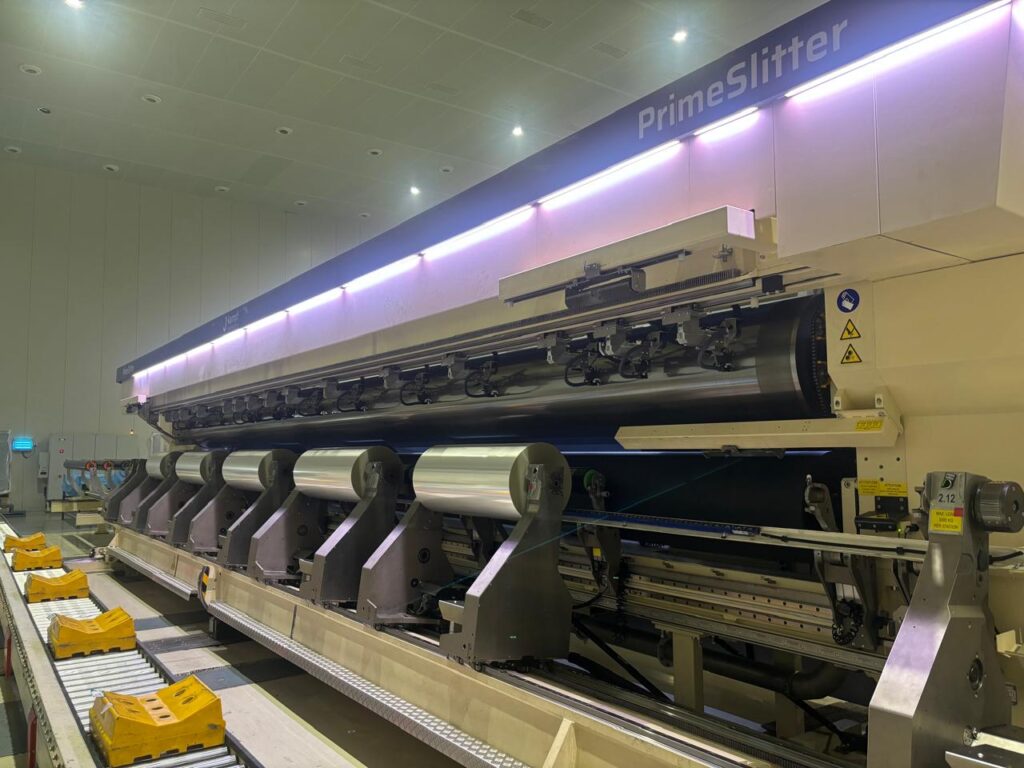
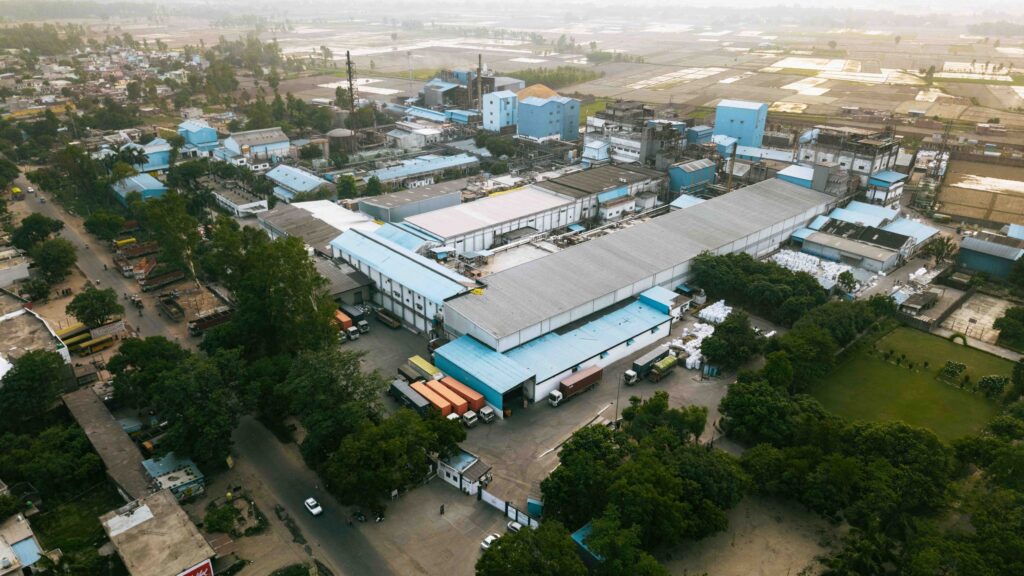
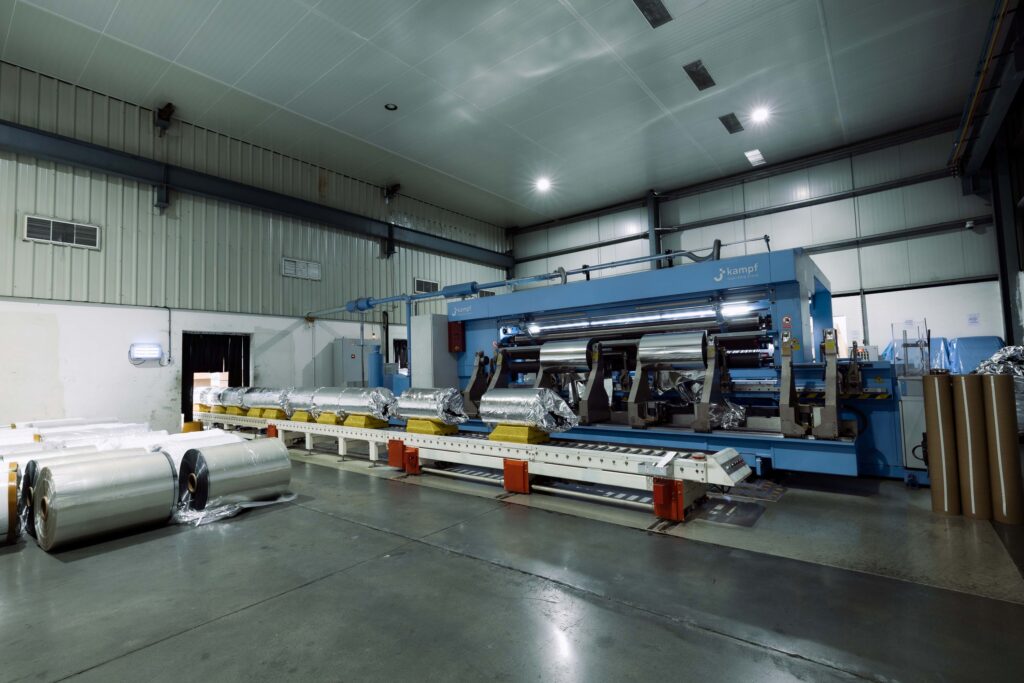
Today, Ester operates manufacturing facilities in Uttarakhand and Hyderabad across three core business verticals, polyester packaging films, recycled polyester, and specialty polyesters. While packaging films remain the company’s largest business, sustainability has increasingly become the cornerstone of its long-term growth strategy.
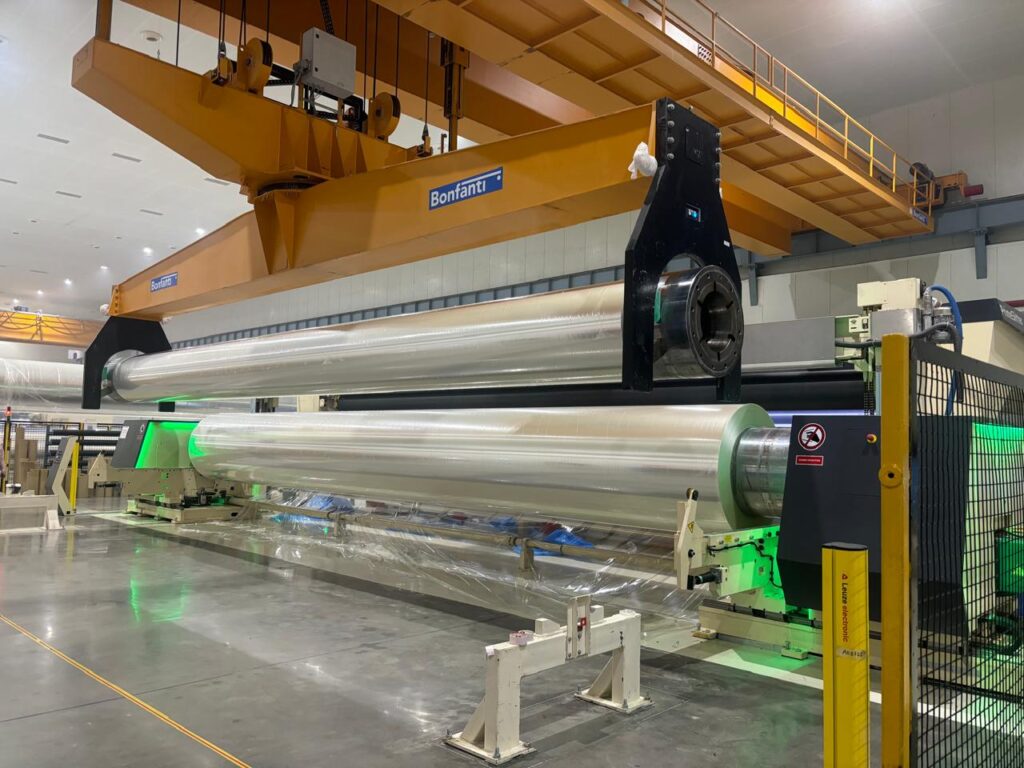
“Our tagline is Innovating Sustainable Solutions. We strongly believe sustainability is the future, and we want to innovate solutions that address real-world environmental challenges,” says Mr. Jha.
Apart from its packaging films business, Ester has already established a strong presence in mechanically recycled PET (rPET) and specialty polyester solutions, supplying high-performance materials for diverse applications including textiles, packaging and industrial products.
Moving Beyond Bottle Recycling
Mechanical recycling has been remarkably successful in creating value from discarded PET bottles. India today recycles nearly 95 percent of its PET bottles through a well-established collection ecosystem, making it one of the global leaders in plastic recycling. However, textile waste presents an entirely different challenge.
Unlike bottles, polyester textile waste contains dyes, pigments, chemical finishes and blended fibres such as cotton or spandex. These contaminants make conventional recycling extremely difficult. Existing chemical recycling technologies also require nearly pure polyester feedstock, limiting their ability to process actual post-consumer textile waste.
“The key operative word is practical textile waste. Real-world textile waste contains colours, dyes and polyester blends. Most existing technologies cannot process such materials commercially. Our technology can,” explains Mr. Jha.
ELiTe: Building India’s Textile-to-Textile Recycling Ecosystem
To address this challenge, Ester Industries and Loop Industries have formed Ester Loop Infinite Technologies (ELiTe), a 50:50 joint venture that combines Loop’s proprietary depolymerisation technology with Ester’s polymer manufacturing expertise and deep understanding of the Indian textile industry. The upcoming facility, being established in Gujarat with an investment exceeding ₹1,000 crore, is expected to commence commercial production in 2028 with an initial capacity of 70,000 tonnes per annum. Construction is expected to begin shortly after completion of land acquisition, with the project progressing through detailed engineering by ToyoEngineering after front-end engineering was completed by Tata Consulting Engineers.
The venture derives its name from “Infinite” because, unlike conventional recycling processes, the polyester produced through this technology can be recycled indefinitely without losing its original properties.
“In mechanical recycling, the polymer degrades every time it is recycled. After a few cycles, it is no longer usable. Our process restores the polymer back to virgin quality, allowing it to be recycled again and again,” explains Mr. Jha.
Technology Designed for Real-World Waste
What differentiates ELiTe from existing recycling technologies is its ability to process practical polyester waste rather than laboratory-grade feedstock.
The technology can accept coloured polyester fabrics, polyester-cotton blends, packaging laminates and several other polyester-rich waste streams that currently have limited recycling options. During processing, the polyester component is recovered while non-polyester materials are separated responsibly.
The final output is high-quality polyester chips that can be converted into fibres, bottles, packaging films or other polyester products.
Although the initial focus will be textile-to-textile recycling, the technology offers flexibility across multiple polyester applications.
“Our focus is textiles because this is where the biggest gap exists globally. But technically, the recycled polyester can also be used for bottles and packaging films,” says Mr. Jha.
Equally significant is the process itself. Unlike many chemical recycling technologies that operate under extreme temperatures and pressures, Loop’s technology functions under relatively mild operating conditions, improving commercial viability by reducing operating costs.
Global Demand Already Taking Shape
Perhaps the strongest validation for the project comes from the market itself. Even before construction begins, global brands have shown strong interest in securing future supplies of recycled polyester. According to Mr. Jha, companies such as Nike have already entered into arrangements to source material from the facility once commercial production begins. This demand is being driven by tightening sustainability regulations worldwide.
Europe’s Ecodesign for Sustainable Products Regulation (ESPR) is expected to mandate minimum recycled textile content in products sold within the European Union. Similar legislation is emerging in the United States, while several leading apparel brands have announced ambitious targets for incorporating recycled textile content into their products.
Importantly, these regulations increasingly specify that recycled content must originate from textile waste rather than recycled PET bottles, a distinction that significantly strengthens the business case for textile-to-textile recycling technologies.
“We believe the timing is absolutely right. Regulatory developments across Europe and the US are creating strong demand for genuine textile-derived recycled polyester,” Mr. Jha notes.
India Holds a Natural Competitive Advantage
While advanced recycling technologies have largely emerged in Europe and North America, Ester believes India offers unique advantages for commercial-scale deployment.
The country generates approximately 7.2 million tonnes of textile waste annually, including an estimated 700,000 to 800,000 tonnes of polyester-rich waste. This provides abundant feedstock for future expansion.
Equally important are India’s manufacturing capabilities. Around 90 percent of the plant’s equipment will be sourced domestically, significantly lowering capital costs while leveraging the country’s strong engineering ecosystem.
Combined with lower operating costs and growing expertise in sustainability technologies, these advantages position India as an ideal location for large-scale textile recycling.
“This is a true demonstration of how India can become a global leader in sustainability. Recycling is already embedded in our culture—we have always believed in extracting maximum value from every resource,” says Mr. Jha.
Innovation Extends Beyond Recycling
While the ELiTe joint venture is currently Ester’s largest strategic priority, innovation continues across the company’s specialty polyester portfolio.
Among its notable developments are proprietary polyester additives that enhance stain resistance in nylon carpets and polyester-based adhesive systems that enable mono-material polyester carpets, making them easier to recycle at the end of their life.
Several of these technologies have been patented and are already being adopted by global customers, reinforcing Ester’s position as an innovation-driven specialty polymer company.
Other than these Ester’s portfolio include many other polyester based products like flame retardant, polyester chips (either virgin or recycled) with wide range of IVs and end groups etc. “We consider ourselves a custom polyester shop in our Specialty Polyester business. Our focus has always been solving customer problems through polymer innovation. Sustainability has simply become the next and perhaps the biggest opportunity for innovation,” Mr. Jha observes.
Towards a Truly Circular Textile Industry
The partnership between Ester Industries and Loop Industries represents far more than another investment announcement. It addresses one of the textile industry’s most pressing environmental challenges while creating an entirely new value chain around post-consumer polyester waste. If successfully executed, the project could establish India among the global pioneers of commercial textile-to-textile recycling and provide brands with a scalable source of virgin-quality recycled polyester that meets emerging regulatory requirements.
For Ester Industries, the ELiTe project also marks a strategic evolution—from being a polyester manufacturer to becoming an enabler of circularity.
As global demand for sustainable materials accelerates and regulatory frameworks continue to tighten, the company’s investment reflects confidence not only in its technology but also in India’s ability to emerge as the world’s next major recycling hub.
“Our objective is much larger than building one plant,” concludes Mr. Jha. “India already leads the world in many forms of recycling. With the right technologies, supportive policies and industry collaboration, we have the opportunity to become the global capital for circular manufacturing, reducing our dependence on imported raw materials while creating sustainable value from our own waste.”