


By K. Gopalakrishnan & MK Prabhakar
From pioneering India’s Overhead Travelling Cleaner more than five decades ago to developing intelligent automation systems for modern spinning mills, ELGI Electric is now making automation the next major chapter in its engineering journey.
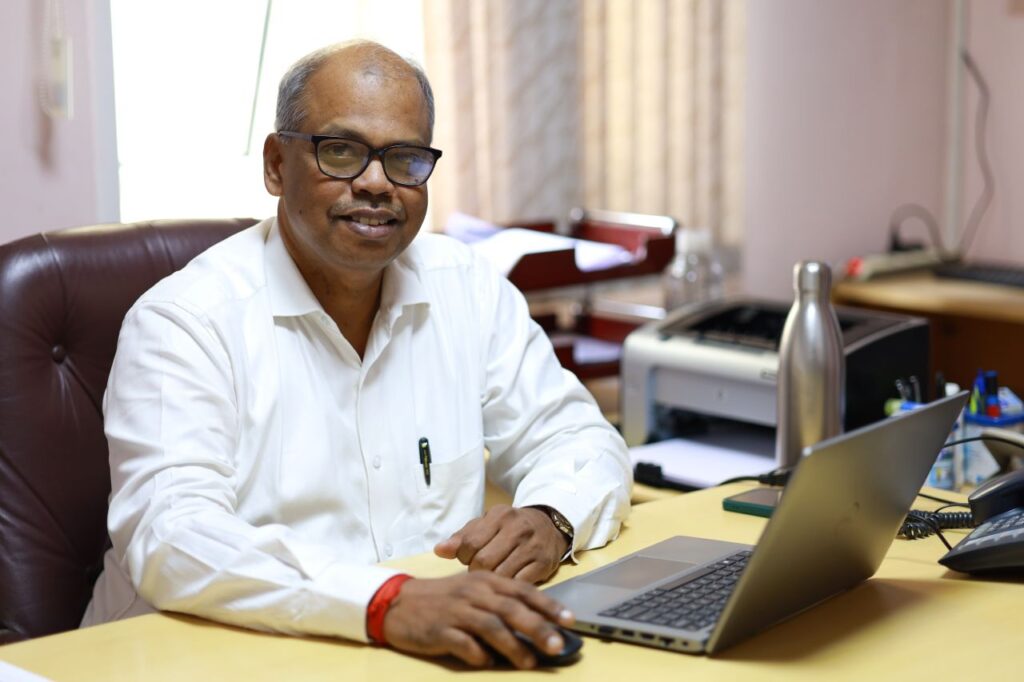
“Whenever we introduced a new product, we never compromised on technology. We first identified the best technology available anywhere in the world and then worked towards making it even better for Indian customers. That philosophy has remained unchanged throughout our journey.”
This philosophy perhaps best explains both the longevity of ELGI Electric Industries Ltd. and the direction in which the Coimbatore-based engineering company is now heading.
For more than six decades, ELGI Electric has built its reputation by identifying emerging technologies, adapting them to Indian textile manufacturing and continuously refining them in close collaboration with customers. Its pioneering introduction of the Overhead Travelling Cleaner (OHTC) to India established the company’s position in textile machinery. Subsequent developments in yarn conditioning, fire and metal detection and Bobbin Transportation Systems expanded that engineering base.
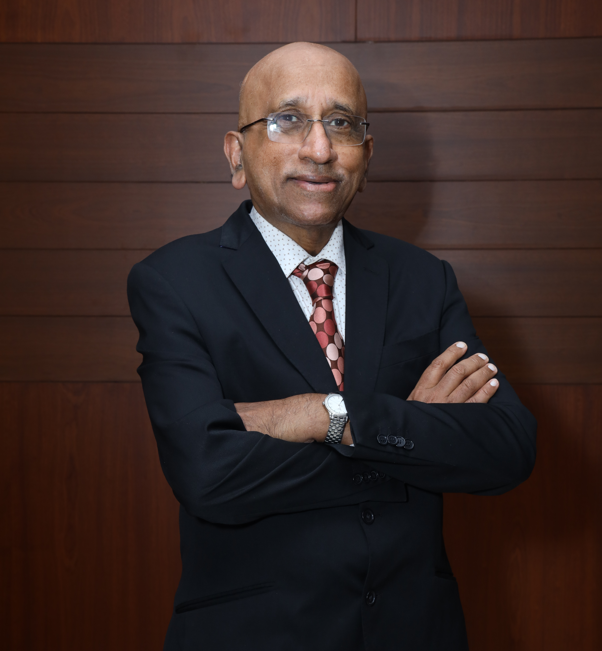
Today, however, the opportunity is considerably larger.
As textile manufacturing becomes increasingly automated, connected and data-driven, ELGI Electric is moving beyond individual machines towards integrated automation solutions that connect processes, reduce manual intervention and improve productivity.
The shift is being driven by a fundamental change in the industry’s requirements. Labour availability has emerged as a major challenge, while spinning mills are simultaneously seeking greater consistency, traceability, energy efficiency and control over increasingly complex production environments.
“Five years ago, we were predominantly supplying allied machinery. Today, labour availability has become one of the industry’s biggest challenges. That is why we decided three years ago to aggressively move into automation,” says V.S. Balasubramanian, President-Operations.

This strategic transition is being pursued under the continuing stewardship of Sumanth Ramamurthi, Chairman and Managing Director, and Nikhil Ramamurthi, Director, representing the family’s leadership of the business, together with the professional management team led operationally by Balasubramanian.
The objective is clear: to leverage ELGI Electric’s established engineering capabilities to build a stronger presence in the next generation of textile manufacturing.
From Identifying Opportunities to Creating Markets
ELGI Electric’s history provides a useful perspective on its present transformation.
The ELGI Group, which dates back to the 1930s, has built businesses across several engineering segments, including automotive service equipment, electric motors, industrial air compressors and heavy industrial machinery. Its entry into textiles followed the same entrepreneurial instinct – identify an emerging requirement and develop the engineering capability to address it.
The opportunity came from the group’s own spinning mill.
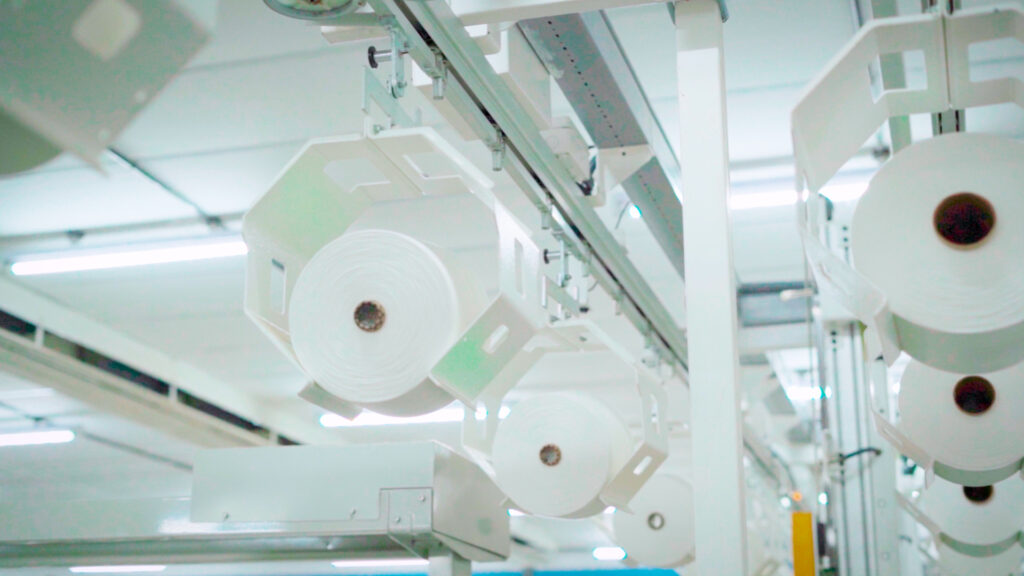
While studying international textile manufacturing practices, the company observed the productivity, cleanliness and quality benefits being delivered by Overhead Travelling Cleaners. At the time, Indian spinning mills had virtually no indigenous access to the technology.
“Since we already had a textile mill, we identified the opportunity and decided to manufacture overhead cleaners in India,” recalls Sumanth Ramamurthi.
The initial challenge was not simply manufacturing the equipment but creating awareness about its benefits. Mills had to be convinced that automated cleaning could contribute to improved yarn quality, lower end breaks and better housekeeping.
Once the technology demonstrated its value, adoption followed.
That experience established a pattern that continues to define ELGI Electric: technology is valuable only when it solves a genuine manufacturing problem.
The company’s subsequent development has followed the same principle. Rather than entering mature, commoditised product categories, ELGI Electric has sought opportunities where engineering could deliver a measurable operational advantage.
Automation is the latest and potentially the most significant expression of that philosophy.
Automation Moves to Centre Stage
The textile industry’s automation requirements are evolving rapidly.
Earlier generations of automation often focused on individual machines or isolated tasks. The emerging requirement is for material and information to move seamlessly across processes.
For ELGI Electric, this has created an opportunity to use its experience across several textile applications to build integrated systems.
The company’s automation initiatives focus particularly on areas where repetitive manual material handling remains significant. Instead of attempting to automate an entire mill indiscriminately, the company identifies critical bottlenecks and develops targeted solutions around them.
“We identified certain critical areas in the value chain and decided to address them,” explains Balasubramanian.
This is an important distinction in ELGI Electric’s strategy. Automation is not being pursued as an end in itself. The objective is to improve the economics and efficiency of the manufacturing process.
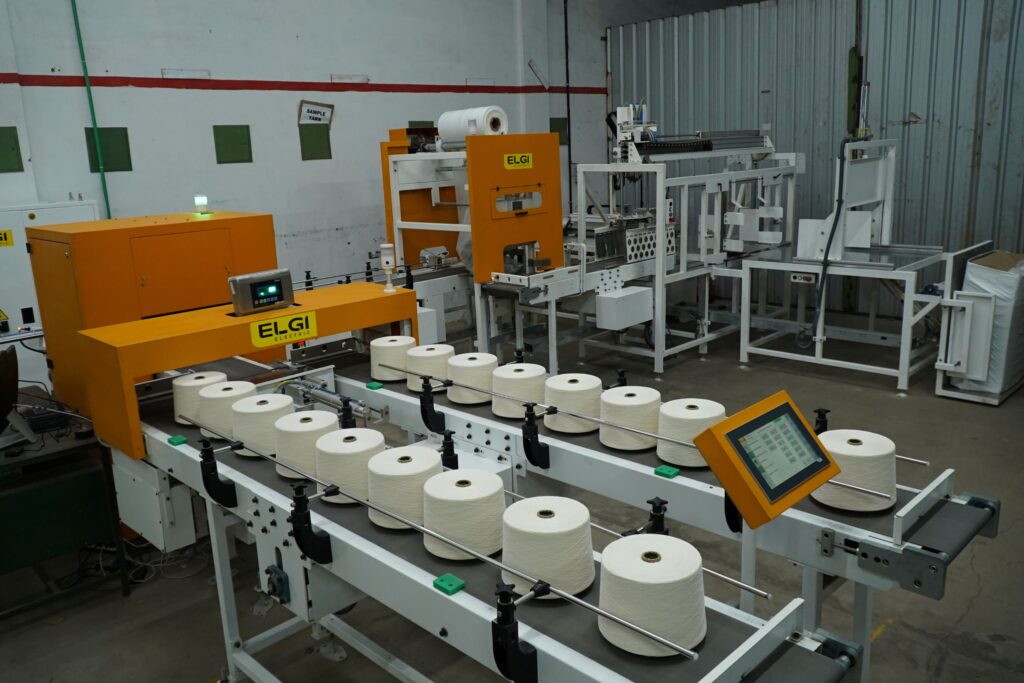
One example is the material flow following winding.
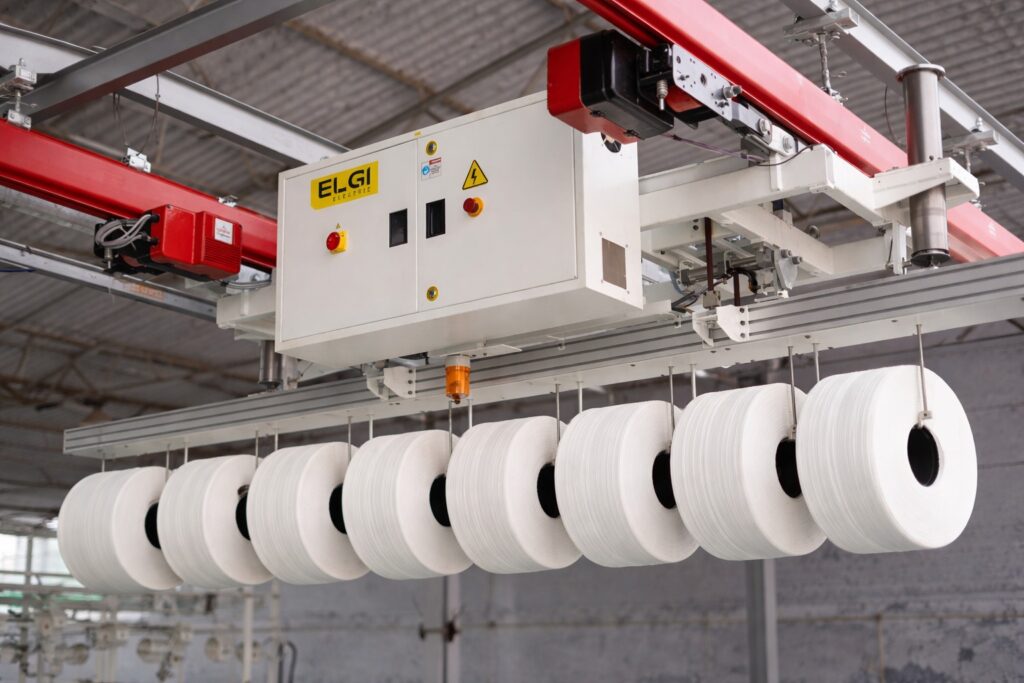
Cones can be automatically transported, inspected and sorted according to count, palletised and moved to yarn conditioning systems. They can subsequently be depalletised and taken towards packing, with minimal manual handling.
What appears to be a sequence of relatively simple operations becomes strategically important when integrated into a single workflow.
Automated movement can reduce repetitive labour, minimise handling errors, improve consistency and provide greater traceability. More importantly, it enables the mill to manage material flow as a coordinated process rather than as a series of disconnected activities.
Elgi is also ready with Lap Transport System, Vertical Storage system as a part of this extension.
This is the direction in which ELGI Electric sees the next phase of textile automation evolving – from automation of machines to automation of processes.
Modular Automation for Indian Mills
The company is also taking a pragmatic approach to implementation.
India’s textile industry comprises mills with very different scales, layouts, production configurations and investment capabilities. A complete automation programme may not be practical or commercially justified for every customer at one time.
ELGI Electric’s modular approach allows mills to automate selected operations and expand the automation footprint progressively.
This could involve automating a particular material-handling process initially, followed by integration with inspection, conditioning, palletisation or packing.
Such flexibility is important because the business case for automation is often strongest where a specific bottleneck can be identified and quantified.
It also enables mills to move towards intelligent manufacturing without having to undertake a wholesale transformation of their existing infrastructure.
The company’s long-standing relationships with spinning mills provide an important advantage in this process.
ELGI Electric’s engineers have extensive exposure to actual mill conditions and understand the practical constraints that influence technology adoption. That knowledge allows the company to approach automation from the process outward rather than from the machine inward.
The question is not simply, “What can be automated?”
It is, more importantly, “Where will automation create the greatest operational value?”
Engineering Intelligence into the Factory
Automation is also changing what customers expect from machinery.
A machine that simply performs a task automatically is no longer enough. Increasingly, customers want equipment that can communicate operating conditions, monitor performance, identify abnormalities and support faster intervention.
ELGI Electric is incorporating this intelligence into its newer equipment.
Digital connectivity and remote diagnostics allow machine telemetry to be accessed from the company’s factory, enabling engineers to diagnose problems and guide customers without necessarily travelling to the site.
“All our new machines are designed so that we can diagnose issues remotely and guide customers without necessarily visiting the site,” says Balasubramanian.
This has particular significance as automation expands.
In a conventional machine environment, a failure may affect a single operation. In an interconnected system, a failure in one component can potentially disrupt downstream processes. Faster diagnosis therefore becomes an essential part of automation performance.
Digital monitoring can also shift maintenance from a reactive to a more predictive model.
Operating parameters can be monitored continuously, deviations identified early and corrective action initiated before a minor issue becomes a major production interruption.
The same principle applies to energy management. Increasingly, mills want visibility into the power consumption of individual machines and systems rather than looking only at overall plant consumption.
Automation, therefore, is becoming intertwined with data, energy management, diagnostics and service.
OHTC: A Legacy That Continues to Evolve
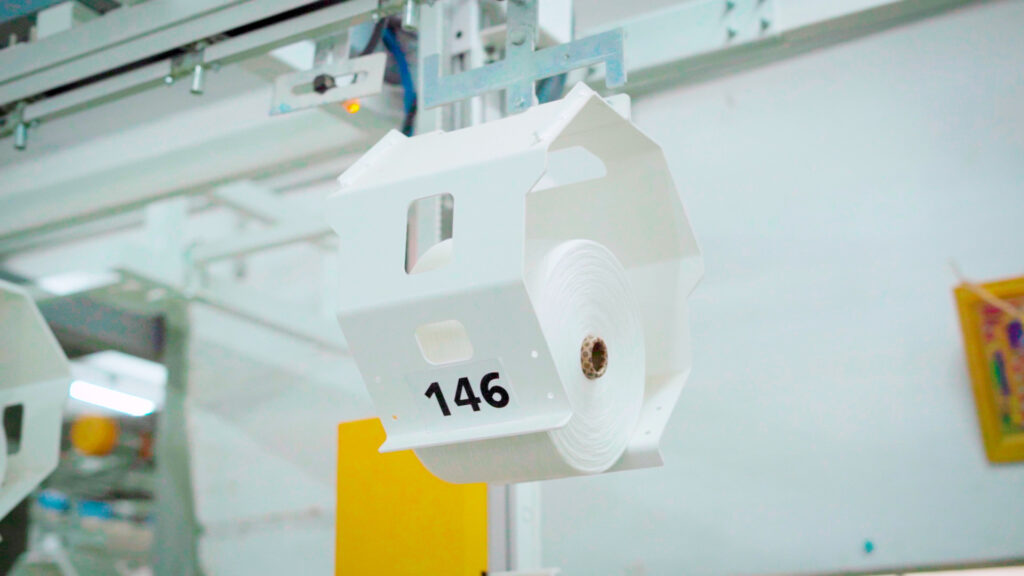
While automation represents ELGI Electric’s principal new growth opportunity, the Overhead Travelling Cleaner remains central to its engineering heritage.
Introduced in India more than five decades ago, the OHTC helped establish the company as a technology pioneer in textile machinery. Yet the company has consistently resisted treating it as a mature product requiring only incremental changes.
Modern spinning mills are very different from those of the past. Ring frames have become significantly longer, spindle counts have increased and mills increasingly switch between different yarn counts and production conditions. Energy efficiency and real-time diagnostics have also become more important.
ELGI Electric has responded by making the OHTC progressively more intelligent.
Its Smart Clean platform replaces conventional fixed operating parameters with variable control. Variable Frequency Drives allow both traverse and suction speeds to be adjusted according to production requirements, enabling the machine to optimise its operation according to the material being processed.
Pressure monitoring is another important development. On longer ring frames, maintaining consistent suction throughout the machine can be challenging. Pressure transducers help monitor suction conditions and maintain cleaning performance across the full travel distance.
Energy monitoring and centralised data visibility further extend the capabilities of the machine.
The Super Smart OHTC builds on this platform with improvements to waste removal, blowing and suction systems, obstacle detection and connectivity.
The significance of these developments goes beyond the OHTC itself. They demonstrate how ELGI Electric is applying the principles of intelligent automation even to established product categories.
The company’s objective is not merely to preserve its OHTC leadership but to ensure that the product remains relevant as the spinning mill evolves.
The Motors Business: An Important Engineering Foundation
ELGI Electric’s Motors business represents another established pillar of its engineering capabilities. Motor manufacturing dates back to 1967 and complements the company’s textile machinery activities by providing expertise in a technology fundamental to industrial equipment. Electric motors are integral to applications ranging from textile machinery and material handling to compressors, pumps, fans and blowers. ELGI is a big player in Railways segment where they supply Point machines meant for track changing and special motors. They have a exclusive tie-up with Siemens for supplying Point machines to the global market. As ELGI Electric expands its automation portfolio, this capability assumes additional significance because motors sit at the heart of machine movement and process control. The ability to engineer and manufacture motors as part of its broader industrial technology portfolio strengthens the company’s engineering depth and supports its ambition to develop reliable, application-oriented automation solutions.
Engineering Around the Customer
Technology leadership, however, is only one part of ELGI Electric’s proposition.
The company has built much of its reputation through close customer engagement.
According to Balasubramanian, innovation comes not only from management and engineers but also from customers. Several improvements incorporated into recent products have originated from suggestions received from leading spinning companies.
This collaborative approach becomes even more valuable in automation because the problems being addressed are often specific to individual manufacturing environments.
A successful automation solution must take into account the mill’s layout, machine configuration, production mix, material flow and operational practices.
ELGI Electric therefore approaches product development by asking what is limiting the customer’s process rather than simply what new equipment can be sold.
This has also shaped the company’s positioning.
“We don’t want to de-feature products simply to reduce cost. We want to offer feature-rich, quality products that solve customer problems,” says Balasubramanian.
For automation, this philosophy is particularly relevant.
The economics of automation extend well beyond the initial capital investment. Reliability, uptime, integration, maintenance requirements, energy consumption and lifecycle performance all influence the eventual return on investment.
A robust system that operates consistently can create considerably greater value than a lower-cost solution that requires frequent intervention.
Manufacturing and Service as Competitive Advantages
ELGI Electric’s manufacturing capabilities provide another foundation for its evolution.
The company has established in-house capabilities across key engineering processes and components, enabling greater control over quality and product development.
This becomes increasingly relevant as the business moves towards customised automation solutions, where standardised products may not always address the requirements of individual mills.
The company’s service organisation is equally important.
With a dedicated team of specialised engineers supporting customers across the country, ELGI Electric has built a service infrastructure around its installed base.
As equipment becomes more intelligent, the service model is evolving as well.
Remote diagnostics and machine telemetry can reduce response times and allow engineers to understand problems before arriving at the customer site. This can minimise downtime and improve the effectiveness of field intervention.
The result is a broader definition of the product itself.
For ELGI Electric, the offering increasingly encompasses the machine, its controls, connectivity, service and the engineering knowledge required to keep the system performing over its lifecycle.
Building the Intelligent Textile Factory
The convergence of these capabilities points towards a larger opportunity.
The textile factory of the future will increasingly be defined not by individual automated machines but by the way those machines communicate and work together.
Material will need to move automatically between processes. Inspection and sorting will increasingly be integrated into production flows. Machines will generate operating data. Energy consumption will be monitored more closely. Maintenance will become increasingly predictive. And the role of manual intervention will progressively shift from repetitive handling towards higher-value activities.
ELGI Electric is positioning itself for precisely this environment.
Its engineering heritage provides the foundation. Its OHTC business demonstrates its ability to continuously reinvent established technologies. Its Motors business strengthens its industrial engineering capabilities. Its customer relationships provide insight into real-world manufacturing challenges. Its digital technologies create connectivity, while its service organisation provides the support necessary for increasingly sophisticated equipment.
Automation brings these capabilities together.
The company’s long-term ambition is therefore not simply to automate one more textile process. It is to become a stronger technology partner in the transition towards connected, intelligent and increasingly autonomous textile manufacturing.
The Next Chapter
ELGI Electric’s six-decade journey has been characterised by a willingness to anticipate where the industry is heading.
It saw the opportunity for overhead cleaning when the technology was still unfamiliar to Indian mills. It developed products around changing operational requirements and continuously incorporated customer feedback into successive generations.
Today, the industry is confronting a different set of challenges.
Labour availability, productivity, energy efficiency, traceability and the need for greater consistency are converging to create a compelling case for automation.
ELGI Electric sees this not merely as a market opportunity but as the next logical extension of its engineering philosophy.
The company is moving from machines to systems, from mechanical automation to intelligent automation, and from individual process solutions to connected workflows.
That transition will not happen overnight. Nor will every textile mill follow the same path.
But the direction is unmistakable.
For ELGI Electric, the objective is to ensure that its six decades of engineering experience remain relevant to the next generation of textile manufacturing – not by standing still, but by continuously reinventing what its technology can do.
The company’s journey began by bringing a new technology to Indian spinning mills.
Its next chapter is about bringing intelligence into the entire manufacturing process.
And in that transformation, automation is emerging as the defining growth engine of ELGI Electric’s future.