


By K. Gopalakrishnan
As textile processing enters a new era shaped by sustainability, efficiency, and digitalization, automation is no longer a competitive advantage — it has become a necessity. Dyehouses today are expected to deliver consistent quality, minimize chemical consumption, and comply with increasingly strict global environmental standards. This transformation is redefining how textile factories operate.
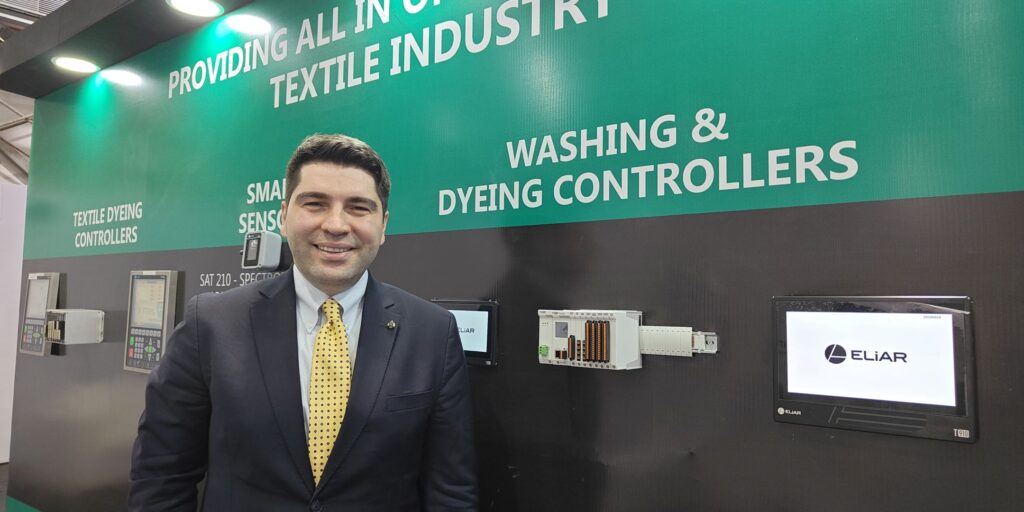
ELİAR Elektronik, a technology-driven company specializing in textile automation, is positioning itself at the center of this transformation. With a strong R&D heritage dating back to 1984, ELİAR delivers an integrated ecosystem of controllers, smart sensors, automated dosing systems, and digital factory software — making it one of the few companies globally capable of offering a truly “one-roof” solution for textile wet processing.
Speaking during the KNIT TECH exhibition in Tirupur, Mr. Ata Turgutalp, International Sales and Marketing Leader at ELİAR Elektronik, shared insights into the company’s journey in India and its vision for the future of textile automation.
India: A Strategic Growth Engine
India has long been a strategic market for ELİAR, with more than two decades of continuous engagement in the region. The country’s scale, manufacturing strength, and growing role in global supply chains make it one of the most important markets for the future of textile automation.
Within India, Tirupur represents a critical hub for knitwear and export-oriented production. ELİAR has focused intensively on this region, working closely with dyehouses to understand real operational challenges on-site. This proximity to the field allows the company to develop solutions that go beyond standard automation — addressing real production inefficiencies and variability at their root.
From Automation to Integrated Intelligence
ELİAR’s approach goes beyond conventional automation. While its advanced batch controllers ensure precise and repeatable dyeing processes, the company’s true strength lies in integrating multiple layers of factory intelligence.
Its automated dosing systems — a cornerstone of ELİAR’s business — deliver highly precise handling of liquid chemicals, powder dyes, and auxiliaries, significantly reducing human error and chemical waste. These systems are widely recognized for their scalability and measurable impact on operational efficiency.
At the same time, ELİAR’s smart sensor technologies enable real-time monitoring of critical process parameters, providing a continuous flow of reliable data directly from the production floor.
TELESKOP: From MES to Decision-Support Platform
Beyond hardware, ELİAR is redefining the role of software in textile manufacturing. Its TELESKOP platform, traditionally positioned as a Manufacturing Execution System (MES), is evolving into a data-driven decision-support system. By combining real-time machine data with advanced analytics and machine learning algorithms, TELESKOP enables factories to move from reactive operations to proactive decision-making.
Instead of relying solely on operator experience, ELİAR systems translate complex process data into actionable insights — identifying inefficiencies, predicting potential issues, and recommending corrective actions. This shift significantly enhances operational consistency and management visibility across the dyehouse.
The Digital Factory Vision
One of ELİAR’s most forward-looking developments is its Digital Factory concept, which extends beyond wet processing to encompass the entire textile production chain.
From raw material intake to finishing, packaging, and shipment, the platform creates full traceability across the production lifecycle. It also enables accurate calculation of environmental impact, including carbon footprint, using real production data.
This capability is particularly relevant in the context of upcoming regulations such as the European Union’s Digital Product Passport, where transparency and data integrity will become critical for global competitiveness.
Strengthening R&D Through Europe
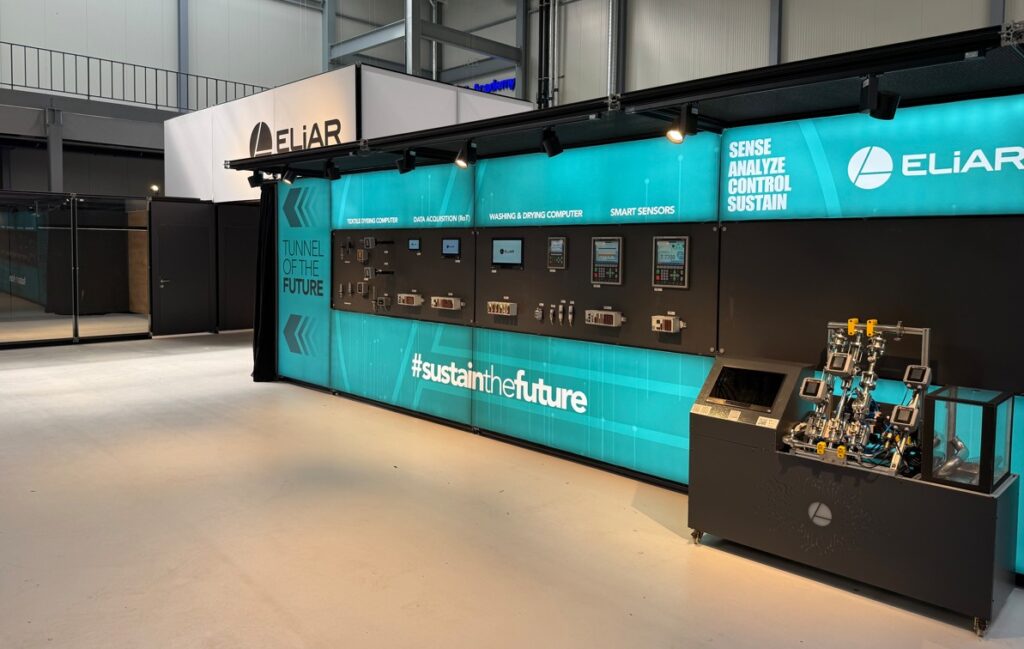
R&D has always been at the core of ELİAR’s identity. To further strengthen its innovation capabilities, the company has established a presence in the Netherlands at the Brainport Industries Campus in Eindhoven — one of Europe’s leading high-tech ecosystems.
This facility serves not only as an R&D hub, but also as an experience center where customers can interact with ELİAR’s technologies in a live industrial environment. It also enables closer collaboration with European research institutions and participation in EU-funded innovation programs.
Expanding Beyond Dyeing
With the introduction of its new T-series controllers, ELİAR is expanding beyond traditional dyeing applications into broader textile processing areas such as stenters, dryers, and finishing machines.
This expansion reflects the company’s ambition to become a comprehensive automation partner across the entire textile manufacturing process, rather than being limited to a single production stage.
Data, AI, and the Future of Textile Processing
ELİAR has been working with process data long before artificial intelligence became a mainstream topic. Today, this accumulated data forms the foundation for advanced analytics and machine learning applications.
By embedding AI into its systems, ELİAR enables textile manufacturers to move from data collection to data-driven decision-making. The result is a more intelligent factory environment where processes are continuously optimized and human intervention is minimized.
Building Long-Term Partnerships
Automation in textile processing is not a one-time investment — it is a long-term integration into the factory’s operational DNA. For this reason, ELİAR places strong emphasis on building lasting partnerships with its customers.
By combining advanced technology with local technical support and close customer engagement, the company ensures that its solutions continue to deliver value over time.
Leading the Next Phase of Transformation
Looking ahead, ELİAR sees India as one of the key drivers of global textile industry growth. As manufacturers continue to scale and modernize their operations, the demand for integrated, intelligent automation solutions will increase significantly.
“The future of textile processing will be shaped by data, intelligence, and integration,” says Ata Turgutalp. “At ELİAR, our ambition is not only to follow this transformation, but to lead it.”