


By Ram Murugesan, Managing Director, Paramount Textile Mills
India’s Textile Landscape will change by 2040- Redefined Strategies, Re-aligning Product Portfolios & Operational Finesse – Need of the hour.
The Changing Loom: India’s Textile Industry at the Crossroads
For centuries, textiles have been woven into the identity of India. From handlooms in ancient villages to modern spinning mills and power looms, the industry has long been one of the largest sources of employment and economic activity in the country. For over five decades, India’s textile story was built on a simple formula: abundant labor, raw material availability, and a large base of spinning and weaving units producing yarn and fabrics for the world. But the winds of change are now beginning to move through the looms of India.
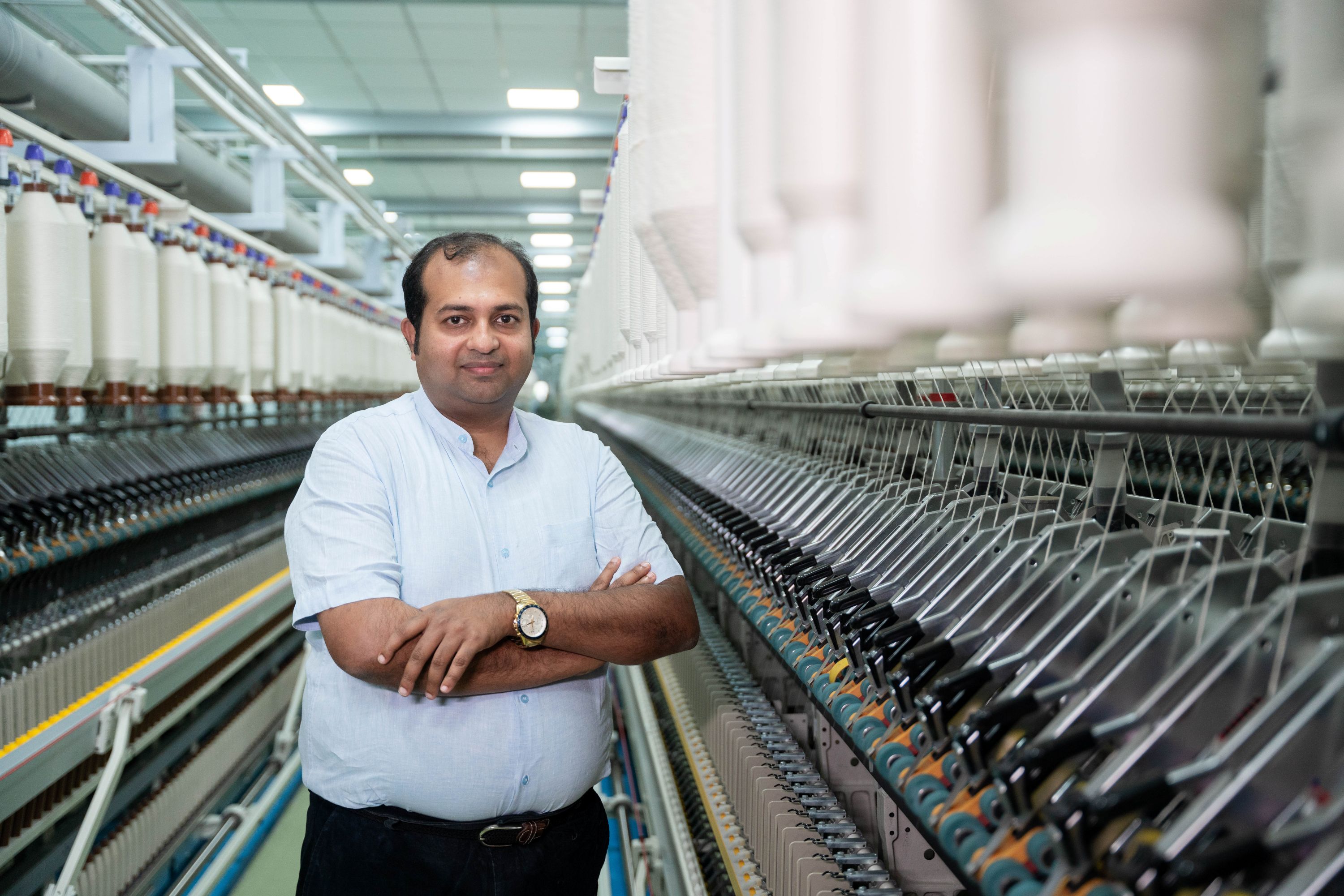
The coming decades will reshape the textile landscape in ways that few industries have experienced before. Rising labor costs, demographic shifts, technological advancements, and global competition are all converging to create a new industrial reality. India stands today at the cusp of a transformation.
The Era That Built the Industry
The modern textile boom in India accelerated after the economic reforms of the 1990s. Spinning mills spread rapidly across states such as Tamil Nadu, Gujarat, and Maharashtra. Export clusters emerged in Tiruppur, Surat, and Ludhiana. Millions of workers found employment in spinning, weaving, dyeing, and garment manufacturing.
For decades, the competitive advantage of India was clear—abundant and affordable labor. Factories were designed around manpower-intensive processes. Productivity improvements came slowly. In many cases, business success depended more on scale of production rather than operational finesse. Meanwhile, other nations were moving in a different direction. Countries such as China invested aggressively in automation, large-scale manufacturing clusters, and highly efficient supply chains. Massive integrated textile parks allowed Chinese companies to operate with unmatched economies of scale. Later, countries like Vietnam emerged with lean manufacturing models, high export efficiency, and strong trade agreements with Western markets. By comparison, India’s textile sector remained fragmented. Thousands of mills operated independently, often lacking integrated production systems and advanced manufacturing practices. Yet for many years, the availability of labor masked these structural weaknesses.

The Emerging Labor Crisis
The next great shift in India’s textile industry will come from an unexpected source—the shrinking labor pool. Over the past decade, several trends have begun to reshape the workforce:
- Younger generations increasingly prefer education and service-sector jobs.
- Rural migration patterns are changing.
- Urban aspirations are shifting toward technology, logistics, and professional careers.
- Factory work is becoming less attractive to the modern workforce.
By 2040, India is likely to face a dramatically different labor scenario. Labor will no longer be abundant. It will be scarce and expensive. This change alone will force textile manufacturers to rethink the very foundation of their business models. Industries that once relied on thousands of workers will need to operate with far fewer people. Machines will increasingly replace repetitive labor. Processes will become automated, data-driven, and precision-based.

The Limits of Conventional Manufacturing
For decades, spinning and weaving formed the backbone of India’s textile economy. Yarn exports, commodity fabrics, and large-scale garment manufacturing dominated the industry. But conventional spinning and loom-based production faces growing limitations:
- Thin profit margins
- Rising power and raw material costs
- Labor-intensive operations
- Increasing competition from highly efficient global producers
Even today, manufacturers in China operate with significantly higher productivity per worker than many Indian units. Similarly, Vietnam’s textile ecosystem benefits from strong logistics, policy support, and globally integrated supply chains. The result is clear: efficiency and scale in these countries are extremely high. India cannot compete indefinitely on the old model. The next phase will demand a deeper transformation.

The Move Toward Value Addition
The future of India’s textile industry lies not in producing more yarn or basic fabrics—but in creating greater value. Value addition will become the defining theme of the coming decades. This includes:
- High-end fabrics
- Specialty yarns
- Performance textiles
- Engineered textile materials
- Advanced finishing technologies
Manufacturers will increasingly shift toward products that require knowledge, research, and innovation rather than sheer manpower. This transition represents a philosophical shift in manufacturing. For decades, textiles depended on raw labor. The future will depend on intellectual capability. In other words, textiles will gradually move from hand-driven processes to brain-driven industries.
The Rise of Technical and Advanced Textiles
One of the most promising directions for the industry is technical textiles. Technical textiles are materials engineered for specific functional uses rather than traditional clothing or home furnishings. These include textiles used in:
- medical applications
- construction
- transportation
- aerospace
- agriculture
- protective equipment
- filtration systems
As global industries evolve, the demand for such materials is rising rapidly. India is still in the early stages of developing this sector, but the potential is enormous. Technical textiles require:
- advanced fiber technology
- specialized machinery
- precision manufacturing
- strong research and development
Unlike traditional textiles, these industries depend less on labor and more on technology and scientific expertise.
Automation and the Smart Factory
Another major transformation will come from automation. The factories of the future will look very different from those of the past. Instead of thousands of workers operating machines manually, modern plants will rely on:
- automated spinning systems
- robotic material handling
- AI-based quality control
- predictive maintenance systems
- digital production monitoring
Factories will increasingly resemble technology-driven production ecosystems. The role of workers will evolve as well. Rather than performing repetitive tasks, employees will focus on:
- machine supervision
- process optimization
- data analysis
- product development
The textile worker of tomorrow will require new skills.
The Challenge of Lean Manufacturing
One of the key lessons India must learn from countries like China and Vietnam is the importance of lean manufacturing. Lean manufacturing emphasizes:
- minimal waste
- optimized workflows
- faster production cycles
- higher efficiency per worker
Historically, many Indian textile operations grew around availability of labor rather than process excellence. But the future will demand a sharper focus on:
- precision management
- digital systems
- integrated supply chains
Manufacturers who fail to adapt may struggle to remain competitive.
The Long Transition Ahead
The transformation of India’s textile industry will not happen overnight. Spinning mills and loom sheds will not disappear suddenly. But over time, the relative importance of conventional manufacturing will slowly decline. New sectors will begin to grow alongside them. Advanced materials, smart textiles, technical fabrics, and high-performance fibers will increasingly shape the future. In this evolving landscape, the number of traditional mills may reduce while the technological intensity of surviving factories will increase. The industry will become smaller in manpower—but far more sophisticated in capability.
The Textile Industry of 2040
By the year 2040, the Indian textile industry may look dramatically different from what the world has known for over half a century. India will likely no longer be seen as merely a supplier of commodity yarn and fabrics. Instead, the country could emerge as a center for:
- high-value textiles
- specialized materials
- innovation-driven manufacturing
- advanced fiber engineering
Factories will be smarter. Processes will be leaner. Labor will be fewer but highly skilled. The transformation may be challenging, but it will also open the door to a more sustainable and globally competitive future.
Standing at the Edge of Change
Every great industrial nation has experienced such moments of transition. The textile industries of China, Japan, and South Korea all evolved through similar phases—moving from labor-intensive production toward high-technology manufacturing. India is now approaching that same turning point. The coming decades will demand courage, investment, and strategic vision from entrepreneurs and policymakers alike. The old textile model built an industry that employed millions. The new model must build an industry that competes with the world. The looms of India will continue to run—but the threads they weave will increasingly be made not just of cotton and fiber, but of innovation, intelligence, and technology. And by 2040, the world may see a very different textile story emerging from India—one defined not by quantity alone, but by quality, sophistication, and advanced manufacturing.