


The Next Competitive Advantage in Textile Manufacturing
For decades, the textile industry’s success has been measured by scale. Production capacity, spindle counts, machine speeds, and output volumes have traditionally defined competitiveness. However, as global supply chains become increasingly demanding and buyers seek greater transparency, a new differentiator is emerging—precision.

According to Mr. Vivek Verma, Managing Director of Square Corporation, the global textile industry is witnessing a significant shift in priorities. During his recent visit to a machinery exhibition in China, one trend stood out across virtually every technology provider’s booth: the growing focus on defect detection, machine vision, and artificial intelligence-driven inspection systems.
The message was clear. While scale remains important, visibility and quality assurance are rapidly becoming the foundations of future competitiveness.
The Hidden Cost of Defects
Quality-related losses continue to represent one of the industry’s biggest challenges. Defects, rework, rejected shipments, and production inefficiencies collectively cost the global textile and apparel sector an estimated US$45-50 billion annually.
Beyond the direct financial impact, quality failures create ripple effects throughout the supply chain. A defect discovered after production can result in delayed deliveries, expedited freight expenses, rejected consignments, strained buyer relationships, and damaged brand reputation.
The issue becomes even more significant when viewed through the lens of sustainability. Research from the Ellen MacArthur Foundation suggests that the broader economic impact of waste, underutilization, and quality-related inefficiencies exceeds US$500 billion every year.
These figures highlight a growing realization within the industry: quality is no longer merely a production concern; it is a business-critical factor that directly influences profitability, sustainability, and customer retention.
The Limits of Manual Inspection
As textile manufacturing volumes continue to rise, traditional inspection methods are increasingly being stretched beyond their practical limits.
Bangladesh, currently the world’s second-largest garment exporter with exports approaching US$39 billion, provides a compelling example. Despite its impressive manufacturing scale, many facilities continue to rely heavily on manual fabric inspection processes.
Industry studies indicate that manual inspection accuracy can often fall to between 60 and 70 percent under real operating conditions. Depending on production complexity and operator fatigue, an estimated 10 to 40 percent of fabric defects may remain undetected.
Such limitations create significant risks for manufacturers serving global brands that demand consistent quality standards and increasingly stringent compliance requirements.
AI and Machine Vision: Redefining Quality Assurance
The latest generation of AI-powered inspection systems is changing the economics of quality control.
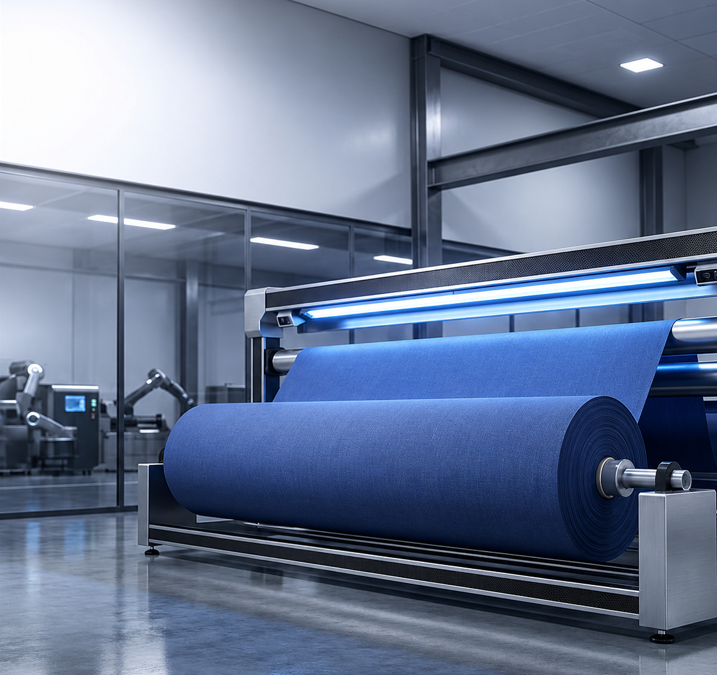
Modern machine vision solutions are capable of inspecting fabrics at speeds of up to 120 yards per minute while achieving defect detection rates approaching 99 percent. These systems can identify inconsistencies that may be difficult or impossible for the human eye to detect, ensuring a far higher level of consistency and reliability.
Beyond accuracy, the business benefits are substantial. Manufacturers implementing AI-driven inspection technologies are reporting labour savings exceeding 50 percent while reducing material waste by more than 30 percent. Such improvements directly contribute to both operational efficiency and sustainability objectives.
The combination of higher productivity, reduced waste, and enhanced quality assurance is making AI inspection systems an increasingly attractive investment for textile manufacturers worldwide.
When Buyers Start Asking Different Questions
Perhaps the most telling insight from Mr. Verma’s observations was not related to technology itself, but to changing buyer expectations.
During his visit to Nantong, a prominent textile manufacturing hub in China, a factory owner shared a remark that captures the industry’s evolving priorities: buyers are increasingly asking for defect traceability data before discussing price.
This shift reflects a fundamental change in how sourcing decisions are being made. Global brands are no longer evaluating suppliers solely on cost and capacity. They are seeking partners capable of delivering transparency, consistency, and measurable quality performance.
In such an environment, the ability to provide detailed quality data and traceability records becomes a powerful competitive advantage.
Quality as a Strategic Differentiator
The textile industry’s growth story has historically been built on scale, efficiency, and production capacity. Yet as digital technologies transform manufacturing, quality is emerging as a key source of differentiation.
Manufacturers that embrace AI-powered inspection and data-driven quality management systems are positioning themselves to meet the demands of a more sophisticated and transparent global marketplace. Those that continue to rely solely on traditional inspection methods risk falling behind as buyer expectations continue to evolve.
The Future Belongs to Precision
The next phase of textile manufacturing may not be defined by who produces the most, but by who produces the best with the least waste, highest consistency, and greatest visibility.
As artificial intelligence, machine vision, and advanced analytics become increasingly integrated into textile production, precision is set to become the industry’s next frontier. The future competitive edge may indeed come from a simple yet transformative capability—the ability to see what humans cannot.