


Building on its extensive screen and hybrid printing expertise, SNQS International is advancing from Kornit Atlas MAX PLUS to India’s first Kornit Apollo, supported by a flexible business model designed for scalable digital growth.
Since its founding in 1990, SNQS International has been part of Tiruppur’s textile and apparel manufacturing ecosystem for more than three decades. Established by V. Elangovan, a textile engineer and industry visionary, SNQS has grown into an end-to-end apparel supply chain partner serving international retail and brand customers.
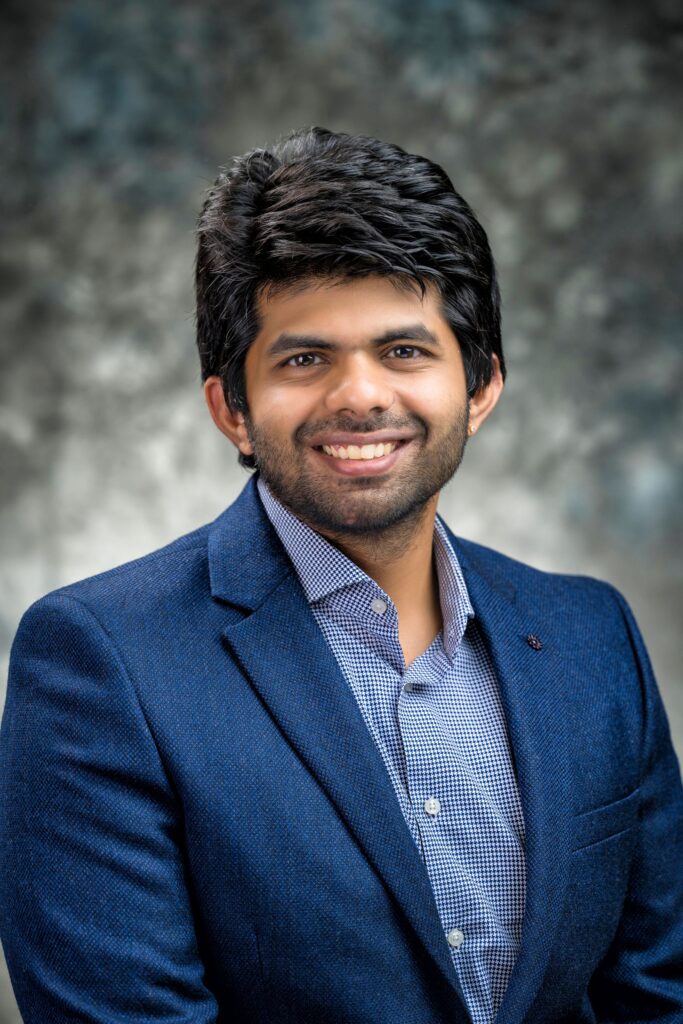
As founder and Managing Director of SNQS International, Elangovan continues to guide the company’s development and long-term vision. He also serves as Vice President of the Tiruppur Exporters’ Association, reflecting his contribution to the wider advancement of Tiruppur’s export industry. Under his leadership, SNQS has developed extensive manufacturing capabilities, including more than two decades of experience in conventional screen and hybrid printing.
Responding to Changing Brand Expectations
While conventional screen printing remains effective for long, repeatable production runs, global fashion and apparel requirements are evolving.
Brands increasingly expect shorter product-development cycles, faster sampling, flexible order quantities, rapid replenishment, and greater design variety. They also need manufacturing partners that can respond more precisely to actual consumer demand while reducing inventory exposure, overproduction, and waste.
For established manufacturers such as SNQS, addressing these requirements involves more than simply adding production capacity. It requires a model that combines proven manufacturing expertise with greater agility, flexibility, and responsiveness.
For SNQS, responding to this shift meant adding digital agility without abandoning the conventional production knowledge developed over decades.
Building Digital Confidence with Atlas MAX PLUS
In 2025, SNQS took an important step in its digital transformation by introducing the Kornit Atlas MAX PLUS into its production environment.
Rather than viewing digital technology as a replacement for screen printing, SNQS began exploring how both production methods could complement one another.
Atlas MAX PLUS provided a platform for applications that benefit from digital flexibility, including rapid sampling, shorter production runs, reorders, replenishment programs, complex designs, and faster responses to changing customer requirements.
Longer and more repeatable production runs could remain with screen printing, while shorter, more variable, and design-intensive work could be directed to digital. This hybrid approach allowed SNQS to match each job with the production method best suited to its quantity, complexity, delivery requirements, and production economics.
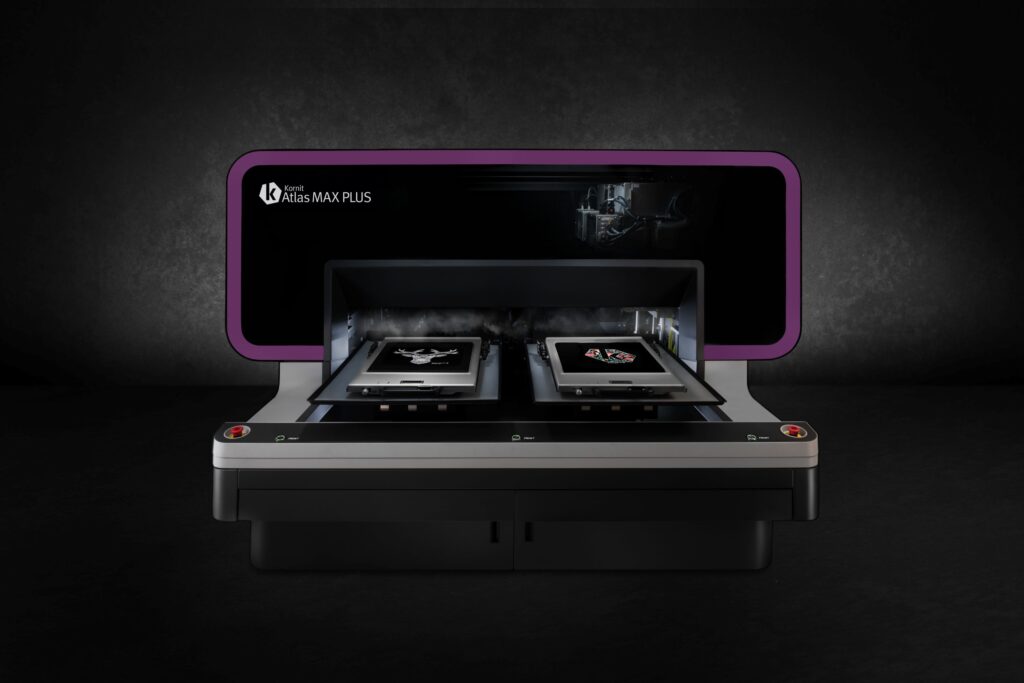
The experience also gave the SNQS team practical knowledge of integrating industrial digital printing into an established manufacturing operation.
“Our experience with the Kornit Atlas MAX PLUS has strengthened our confidence in digital production and its role in the future of apparel manufacturing,” said Krishna Elangovan, Director at SNQS International. “It has helped us understand how digital can complement our established production capabilities, support greater responsiveness, and create new possibilities for our customers. This experience has given us the confidence to explore digital production at a much greater scale.”
Moving Toward India’s First Kornit Apollo
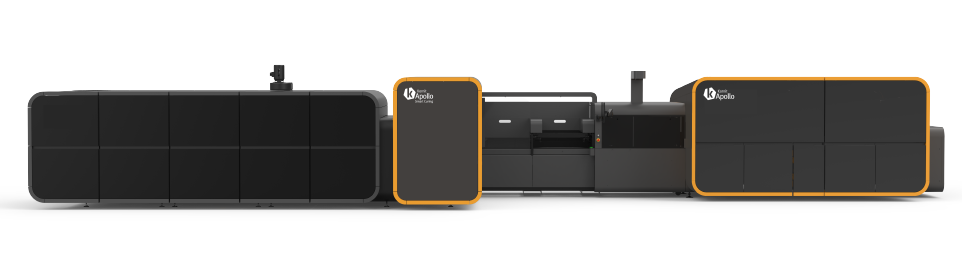
Building on its Atlas MAX PLUS experience, SNQS is preparing for the next stage of its transformation with the planned installation of India’s first Kornit Apollo.
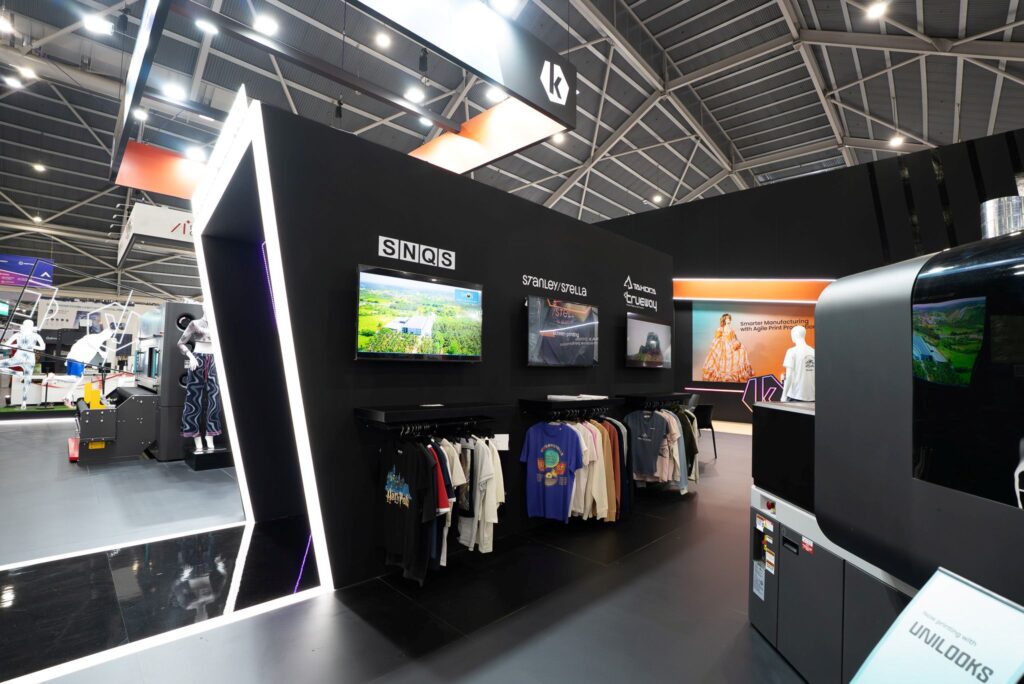
While Atlas MAX PLUS supports sampling, shorter runs, replenishment, and diverse applications, Apollo is designed to extend digital production into higher-volume programs. Together, the two platforms are expected to give SNQS greater flexibility in allocating production according to order quantity, design complexity, application, delivery expectations, and production economics.
The planned Apollo installation represents an important progression for SNQS. Digital is no longer being evaluated only as a solution for sampling and short-run applications. It is emerging as a strategic production capability that can support a larger share of the company’s apparel programs.
For SNQS’s brand customers, this expanded capability is intended to support faster product development, flexible production quantities, rapid replenishment, complex designs without conventional screen setup, and a more scalable approach to on-demand manufacturing.
It also represents a milestone for India, demonstrating how an established apparel manufacturer can progressively develop the operational knowledge, experience, and infrastructure needed to take digital production to higher volumes.
SNQS’s progression from Atlas MAX PLUS toward India’s first Apollo also reflects a broader shift taking place across the apparel manufacturing industry, where scale alone is no longer enough. Manufacturers are increasingly expected to combine production expertise with agility, digital capability, and more demand-responsive business models.
“The future of apparel manufacturing will be defined not only by scale, but by the ability to respond more precisely to demand, adapt faster to market changes, and serve global brands with greater agility and responsibility,” said Tomer Artzi, President, Kornit Digital Asia Pacific. “Across Asia Pacific, manufacturers are rethinking how technology, production models, and supply chains can work together to meet the changing expectations of global brands. Those that successfully combine manufacturing expertise with digital innovation will be best positioned to lead the industry’s next chapter.”
AIC as the Commercial Enabler
Technology, however, is only one part of SNQS’s digital transformation. The commercial model supporting its adoption is equally important.
Kornit’s All-Inclusive Click, or AIC, model provides access to industrial digital production through a predictable pay-as-you-produce structure.
The model incorporates the printing system, ink, service and maintenance, software, and updates in an integrated cost-per-print structure. This helps align production expenses with actual output while reducing the upfront financial barriers and operational uncertainty frequently associated with industrial digital adoption.
For established screen printers, AIC can provide a practical route to hybrid production. Shorter and more complex jobs can move to digital, freeing screen-printing capacity for longer, repeatable runs. Digital capacity can then scale as customer demand develops.
“For established screen printers, the challenge is often not whether digital production can add value, but how to adopt it without creating unnecessary financial and operational risk,” said Karthik Ravindranath, Senior Regional Sales Manager, South Asia, Kornit Digital. “Kornit’s All-Inclusive Click model provides a practical path forward by combining the printing system, ink, service, software, and updates within a predictable pay-as-you-produce structure. It allows manufacturers such as SNQS to introduce digital production with greater confidence, align costs with actual output, and scale as customer demand grows.”
By combining industrial technology with a more flexible commercial model, AIC allows manufacturers to focus on production, customer requirements, and growth rather than approaching digital transformation solely as a major capital-equipment decision.
A Model for India and Asia Pacific
India has one of the world’s most established textile and apparel manufacturing ecosystems, supported by deep expertise in garment production, sourcing, exports, and conventional printing.
SNQS’s journey illustrates how this manufacturing heritage can be combined with industrial digital technology to create a more responsive production strategy. It also demonstrates that screen and digital printing do not need to compete for the same work. When integrated strategically, each can focus on the applications and production volumes it handles most effectively.
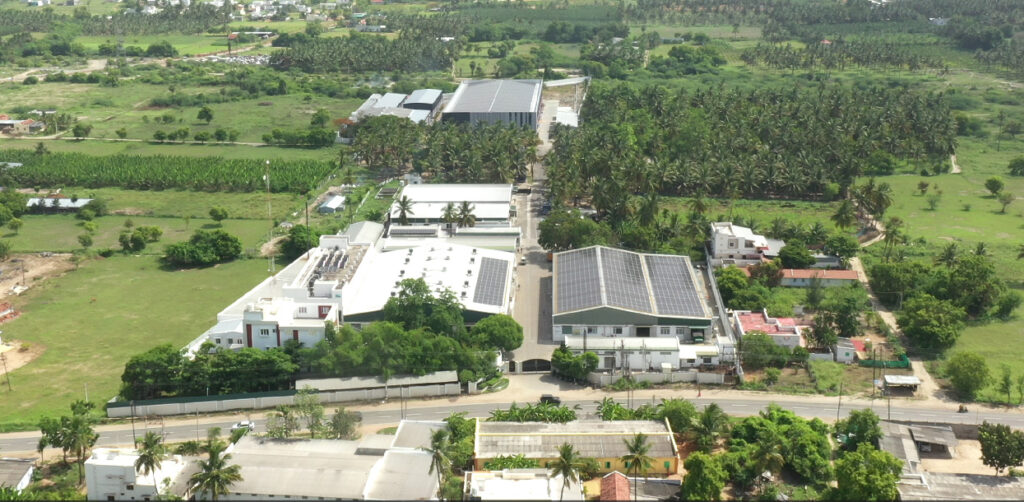
SNQS’s progression from Atlas MAX PLUS toward India’s first Apollo brings this potential into focus. By combining established manufacturing knowledge, scalable digital technology, and a flexible commercial model, the company is preparing for a future defined by greater agility, demand-driven production, and closer alignment with the changing expectations of global brands.
Its journey could provide an important reference for other manufacturers across India and Asia Pacific as they consider how industrial digital production can complement and extend their proven manufacturing capabilities.