


In an exclusive interview at TITAS 2026, Justin Huang, President of the Taiwan Textile Federation (TTF), discusses the material innovations and commercial decisions behind Taiwan’s drive to recover more value from textile waste.
By Nithin Kumar
A performance fabric earns its reputation through what it does for the wearer. For Justin Huang, its value increasingly extends to what happens after use: whether its materials can be recovered and made useful again.
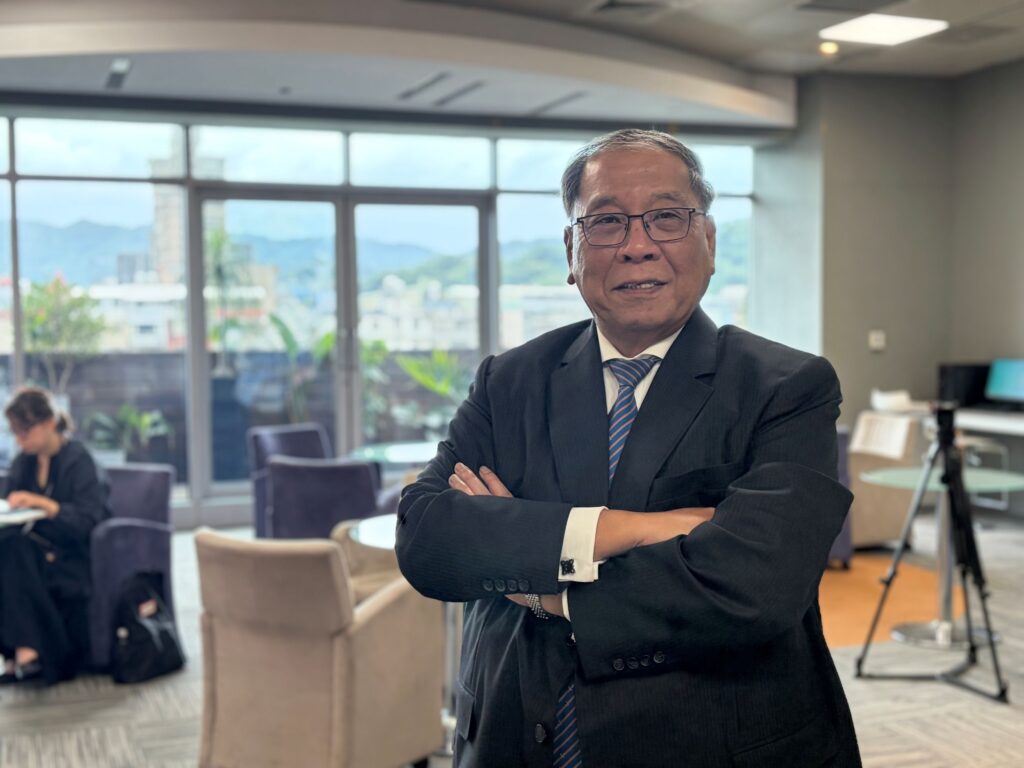
Speaking exclusively to The Textile Magazine at the 30th Taipei Innovative Textile Application Show, TITAS 2026, Huang argues that material recovery can strengthen Taiwan’s position with global brands. With relatively high labour and energy costs, he says, Taiwanese suppliers must give international customers compelling reasons to choose them.
He points to years of investment in materials and manufacturing processes intended to reduce environmental impact. In his account, taking responsibility for textile waste is becoming part of the value Taiwan offers its customers.
Giving textiles another life
A central priority is the move beyond PET-bottle recycling towards textile-to-textile recycling. Bringing discarded fabrics and garments back into fibre production would allow the industry to recover more of the materials contained in its own products.
The difficulty begins with composition. Garments commonly combine different fibres, complicating the recovery process. Materials must be identified and sorted, while dyes and other unwanted substances may need to be removed. Factory waste offers a practical starting point because manufacturers generally know what they are producing and can separate waste streams more reliably.
Taiwanese producers are pursuing several routes. Far Eastern New Century’s ChemCycle development work targets polyester-rich textile waste, while Nan Ya reports investment in sorting, decolourisation and both mechanical and chemical recycling technologies.
Huang also recognises the complications. Recycling consumes energy, and recovering waste does not automatically settle every environmental question. For him, reducing discarded material remains a worthwhile objective as processes improve. Beyond garment waste, he points to discarded nylon fishing nets as a recyclable resource, arguing that paying for these materials can give fishing operators an incentive to return them for recovery.
Better recycling starts with design
Some of the most consequential decisions come before a fabric is made. Many sportswear applications need stretch and recovery, but adding elastane to polyester or nylon can make recycling more difficult. Huang highlights elastic polyester as one route towards retaining stretch while simplifying material combinations.
Nan Ya markets its Nyudex thermoplastic polyester elastomer yarn as an alternative to conventional elastane in polyester-based stretch fabrics. The aim is to make recovery easier through material choices. However, belonging to the polyester family does not guarantee that every component will suit the same recycling process; the finished product still needs a compatible recovery route and an effective collection system.
TTF’s own TexBonder® Waterproof Fashion Overcoat brings the design argument into focus. A 2026 iF Gold Award winner, it combines polyester fabric with a thermoplastic polyester elastomer membrane in a bonded, three-layer construction. The project explores how protective performance and design for recycling can be developed together.
For Huang, the award’s industrial significance lies in the possibilities it demonstrates to manufacturers and their customers. Commercial demand will determine how widely such ideas travel. “We do whatever our clients ask for,” he says of Taiwanese mills’ priorities. The task is to turn technical achievement into products that brands want to buy.
Making circularity commercially possible
Huang is optimistic about demand for recycled materials, while remaining cautious about the pace of change. Brands must consider costs and consumer acceptance as they introduce new materials into their collections. He expects adoption to develop gradually, “step by step”.
“We still have to be realistic,” he says. His assessment of Europe captures that pragmatism: introducing circular-economy legislation does not, by itself, create the capacity to collect, sort and recycle garments at the required scale.
The EU’s revised Waste Framework Directive, which entered into force in October 2025, requires member states to establish textile and footwear extended producer responsibility schemes. These will make producers contribute to the cost of managing products after use. Implementation takes time, and Huang sees an opportunity for Taiwanese suppliers to help brands address the material and design challenges involved.
That places a premium on practical collaboration. Manufacturers need demand for the materials they develop, while brands need solutions that meet performance expectations and remain commercially viable. Progress will depend on those requirements being worked through together.
A practical role for AI
Huang applies the same practical thinking to artificial intelligence. One immediate opportunity, he explains, is AI-assisted design: exploring product ideas digitally before committing to repeated physical samples. Suppliers can present alternatives online, discuss changes with buyers and revise designs more quickly.
He sees potential to reduce some of the time, labour and material involved in early development. For smaller businesses, however, adoption needs to be manageable. Huang describes TTF’s engagement with the Ministry of Economic Affairs on incentives to help companies invest progressively. The most persuasive reason to continue investing, he believes, will be seeing the tools work in their own operations.
An opening for India
India features in Huang’s thinking both as a consumer market and as a manufacturing partner, although he stresses that the US, EU and Japan remain Taiwanese suppliers’ principal markets. Recalling discussions with Indian activewear brand TechnoSport, he sees scope for Indian consumers to benefit from the advanced fabrics Taiwanese mills supply to international brands.
He also encourages Taiwanese and Indian manufacturers to explore joint opportunities with global customers. Taiwan’s experience in performance materials, combined with Indian partners’ manufacturing capabilities, offers a basis for closer cooperation. His emphasis is on developing business together around the needs of the brands they hope to serve.
Asked what Taiwan’s textile industry should be known for by 2030, Huang returns to those customers. Many mills, he observes, attach greater value to recognition among leading brands than to widespread public visibility. The federation’s role is to ensure that buyers understand what Taiwanese suppliers can contribute.
Helping a brand recover materials, simplify a garment’s construction or reduce unnecessary sampling can strengthen a commercial relationship while addressing a shared environmental problem. Taiwan’s opportunity is to earn that trust through high-performance textiles with a credible plan for what happens next.