


By K. Gopalakrishnan
Three decades after entering India, LAPP has made the country its second-largest market globally and its biggest investment base in Asia. With India emerging as a major manufacturing hub, the company is expanding local production, developing application-specific solutions and investing in technology, sustainability and talent to drive its next phase of growth.
When LAPP established its presence in India 30 years ago, many European companies were looking primarily towards China and other Asian markets. LAPP, however, chose to make a long-term bet on India. Three decades later, that decision has paid off handsomely.
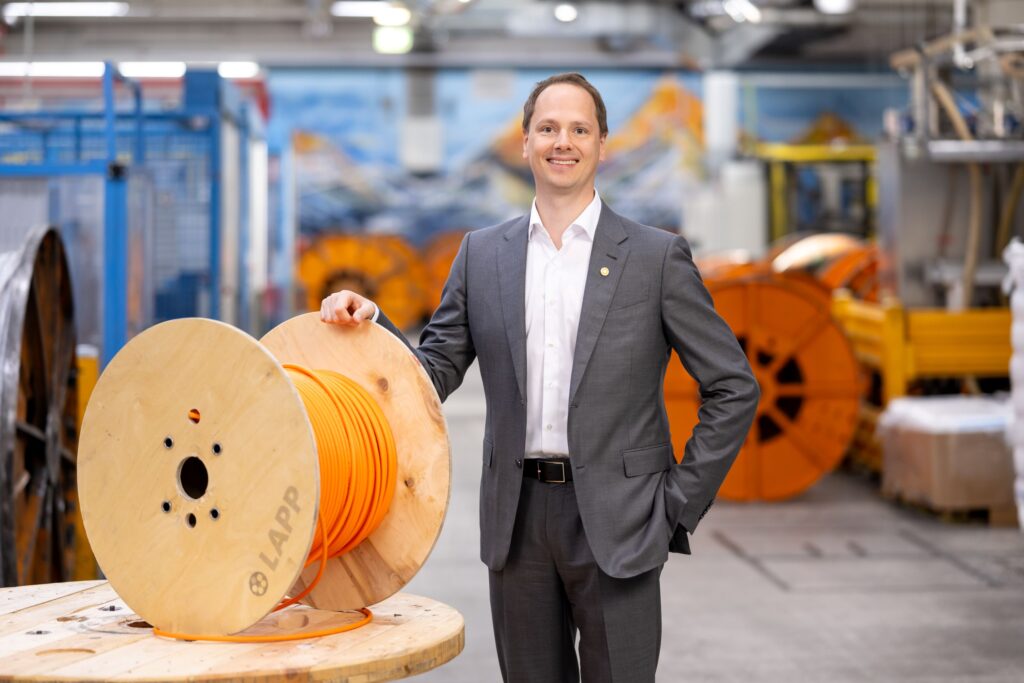
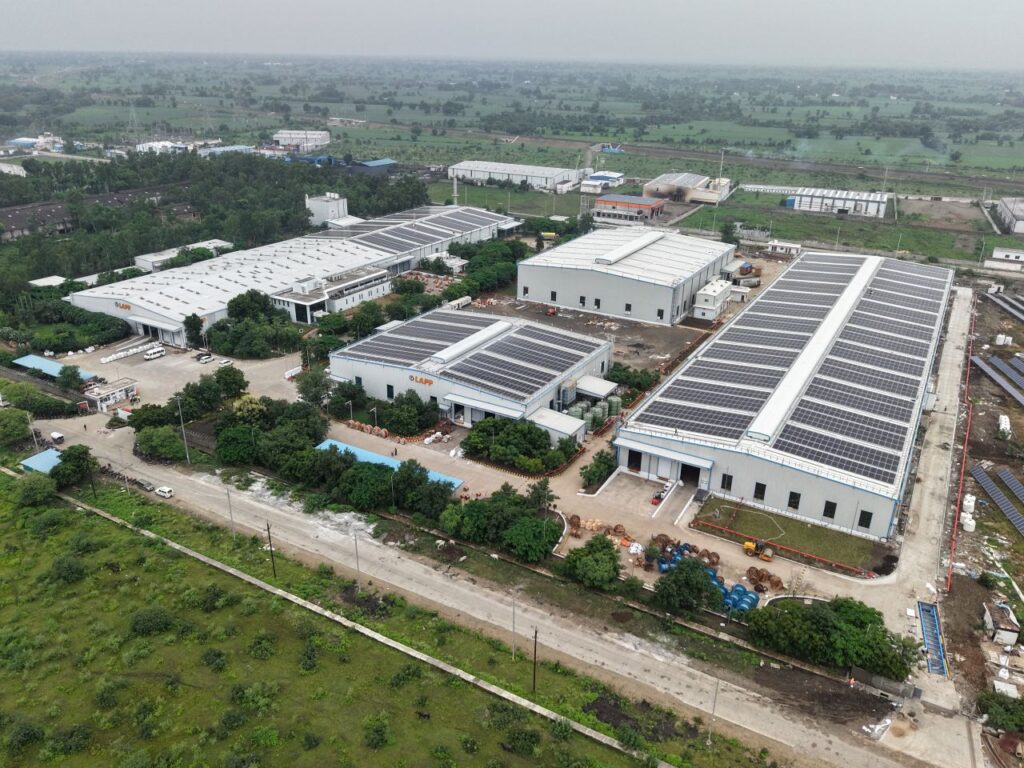
India is now LAPP’s second-largest market globally, after Germany, and its largest investment destination in Asia. The company’s growing commitment is reflected in the expansion of its Bhopal manufacturing facility, which is set to become LAPP’s largest factory globally.
For Matthias Lapp, CEO, LAPP Group, India’s importance goes beyond its size as a market. The country has become an important manufacturing, engineering and talent hub within the global LAPP network.
“Celebrating 30 years is awesome. It feels great,” says Lapp. “India is our number one invested country from an Asia perspective.” He describes the country increasingly as a second home for LAPP.
A Long-Term Bet on India
LAPP’s decision to invest in India was driven by the opportunity to participate in a market where the industrial landscape was still developing.
“There were opportunities, not everything was yet distributed and set in stone, so we could really participate in the growth, in the future growth,” Lapp recalls.
The company has progressively built manufacturing and engineering capabilities in the country rather than treating India simply as a sales market. Its Bhopal operation includes in-house compounding capabilities, a capability LAPP currently has only in India.
The quality of India’s engineering talent and its ability to learn, adapt and develop quickly have reinforced the company’s confidence in expanding its footprint.
“We see that the capabilities, the skill set, the willingness of the people, the learning culture from failures, how to develop fast… is such that we say this is the right place to invest,” says Lapp.
India: Aiming for Global Scale
India’s position as LAPP’s second-largest market is significant, but the company sees considerable headroom for further growth. Lapp believes India can eventually achieve a standing comparable to Germany, LAPP’s historic home market.
The strategy is therefore not simply to maintain its current position but to grow faster than the market and increase market share.
“Our strategy definitely says we will continue to grow and invest more,” he says.
That ambition is being pursued despite a volatile global industrial environment marked by the pandemic, geopolitical tensions, trade disruptions and changing tariff regimes. Lapp believes companies cannot control these external conditions but can determine how effectively they adapt.
LAPP’s diversified presence across industrial sectors provides a degree of resilience, while emerging areas such as electrification, renewable energy, energy storage, semiconductors and data infrastructure are opening new opportunities.
From Cables to Complete Connectivity Solutions
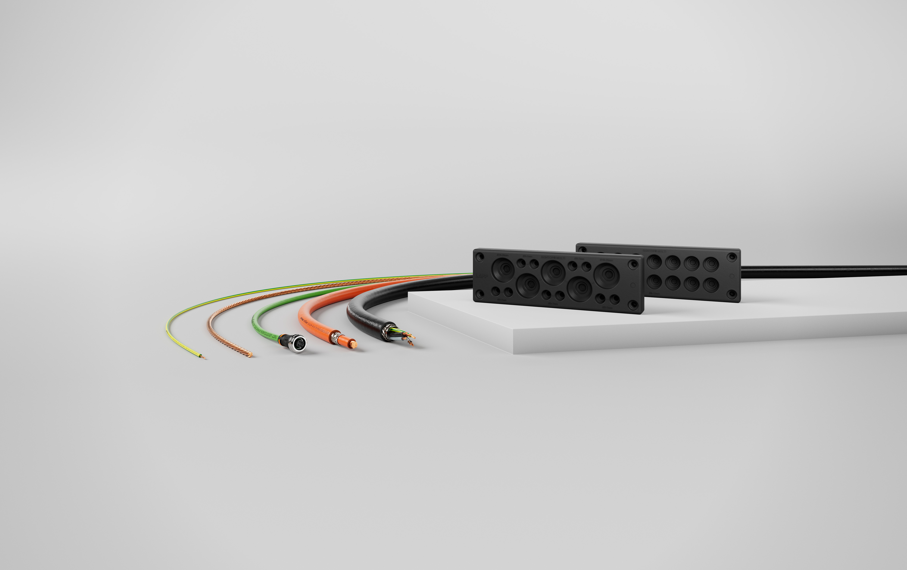
LAPP’s portfolio has evolved considerably from its traditional cable business. Today, the company offers solutions spanning cables, connectors, harnessing and connection systems, covering power, data and control applications.
The company’s EFLEx cables and EPIC connectors, for example, address requirements across machine building, energy, solar and wind power, semiconductor manufacturing and energy storage.
Electrification is creating another important opportunity. As industrial systems move increasingly towards DC power and renewable energy, LAPP has expanded its portfolio with DC-specific cables and connectors.
The broader strategy is to move beyond supplying individual components and increasingly address the complete connection requirements of customers.
“Anything in between there, be it power, data, control, to make a connection from A to B, this is where LAPP feels well,” Lapp explains.
Textiles Remain Central to LAPP India
Despite the emergence of new industrial sectors, textile machinery remains LAPP India’s largest industry segment by sales.

This reflects the importance of India’s textile manufacturing base and its position as a major producer of textile machinery.
LAPP intends to continue investing in this segment, both through people and through a portfolio tailored to the evolving requirements of textile machinery manufacturers.
For Indian textile machinery companies increasingly looking at exports, LAPP’s global network also provides an important advantage. A customer can work with LAPP’s Indian operation for local development and supply and access the company’s support infrastructure when its machines or manufacturing operations expand into international markets.
This combination of local expertise and global reach is particularly relevant as Indian machinery manufacturers increasingly integrate into global supply chains.
Local for Local
One of the strongest elements of LAPP’s India strategy is its local-for-local manufacturing model.
Approximately 80–90% of LAPP India’s products are made and designed in India, primarily for the Indian market, while only a smaller proportion consists of standard products imported from LAPP’s global portfolio.
The company currently operates three factories, with a fourth facility under development, further increasing its local manufacturing capacity.
For Lapp, localisation is not simply about reducing imports. It enables faster response, greater flexibility and closer alignment with customers’ requirements.
“Speed is very important and the flexibility,” he says. “That is why… it will continue to be the number one industry for us, the textile industry.”
The strategy also enables LAPP to combine the advantages of an international technology company with the responsiveness expected from a local supplier.
Sustainability as a Technology Opportunity
Sustainability is increasingly becoming part of LAPP’s product-development agenda.
Among its developments is a cable outer-sheath compound based on corn, developed with BASF. The material offers specifications comparable to conventional alternatives, although its current cost remains higher.
Lapp acknowledges that sustainable products must ultimately compete with conventional solutions on both performance and economics. However, he believes customer expectations and environmental priorities will increasingly influence purchasing decisions.
For industries such as textiles, where sustainability is becoming a central requirement throughout the supply chain, connectivity solutions can contribute to more efficient equipment, electrification and lower environmental impact.
The company’s sustainability strategy is therefore closely linked to its broader innovation agenda rather than being treated as a standalone initiative.
Value Rather Than Lowest Cost
LAPP does not seek to compete primarily on price.
“We will never be the cheapest,” says Lapp. “We are a value-for-money company, and we strive to be easy to be dealing with.”
That proposition combines product quality, technical expertise, local availability and service. LAPP has five regional sales offices in India, enabling its teams to remain close to customers across major industrial centres.
Local presence is particularly important in a diverse market such as India, where industrial clusters and customer requirements can vary considerably between regions.
Globally, LAPP’s network of more than 25 factories and international sales operations allows it to extend this customer support beyond India.
Investing in People and the Future
For LAPP, India’s strategic importance extends beyond manufacturing and market opportunity. The country’s talent pool is becoming an increasingly valuable component of its global organisation.
Lapp highlights India’s young population, engineering capabilities, educational base and English-language proficiency. Indian employees are already contributing to LAPP operations in other countries, and the company sees scope to leverage this talent even more extensively.
“There are so many Indians employed in other countries than India, and we make use of all the talent here,” he says.
This creates a two-way opportunity: LAPP can continue building India as a major market and manufacturing base while using Indian engineering and managerial talent to support its global operations.
The Next 30 Years
Thirty years after entering India, LAPP has moved from being a European company with an Indian presence to becoming an increasingly integrated global organisation with India at its core.
The company’s next phase will be shaped by continued localisation, higher manufacturing capacity, technology, electrification, sustainability and talent development.
India’s growing manufacturing ambitions—across textiles, machinery, energy, electronics and other industrial sectors—fit closely with LAPP’s capabilities in power, data and control connectivity.
The expansion of Bhopal into LAPP’s largest factory globally is a strong indication of the company’s confidence in that opportunity.
For LAPP, the India story is therefore far from complete. The decision made 30 years ago to invest in the country has created a strong platform; the next challenge is to use that platform to capture India’s accelerating industrial growth while connecting it more deeply with LAPP’s global network.
From a long-term bet on India to a position among LAPP’s most important markets worldwide, the first 30 years have established the foundation. The next chapter is about scale, innovation and building an even stronger India within the LAPP global story.