


Major investment at PM-MITRA Park, Virudhunagar, to strengthen integrated capabilities in spinning, weaving, knitting and processing
Pallavaa Group, one of India’s established manufacturers of man-made fibre (MMF) yarns and fabrics, is embarking on a major expansion programme with an investment commitment of ₹1,000 crore in a new manufacturing facility at the PM-MITRA Textile Park in Virudhunagar, Tamil Nadu. The investment marks a significant step in the group’s growth strategy and is expected to substantially expand its presence across the man-made fibre value chain.
The proposed facility will integrate multiple stages of textile manufacturing, including spinning, weaving, knitting and processing, enabling Pallavaa to build additional scale while strengthening its vertically integrated production capabilities. The project comes at a time when global textile markets are witnessing increasing demand for viscose, modal and blended products, particularly from brands seeking sustainable alternatives and reliable supply chains.
The Virudhunagar PM-MITRA Park, spread across more than 1,000 acres, offers integrated infrastructure including plug-and-play facilities, uninterrupted power, zero-liquid-discharge water treatment systems and worker housing. Such infrastructure is expected to enable Pallavaa to accelerate the development of its new manufacturing operations while maintaining its focus on efficient and sustainable production.
Building on five decades of MMF expertise
The new investment builds on Pallavaa’s long-standing focus on man-made fibres. The group began its journey as a weaving enterprise in 1977 and established its first spinning unit in 1991. Over the decades, it has progressively invested in modernisation and backward integration, evolving into a significant producer of MMF yarns and fabrics.
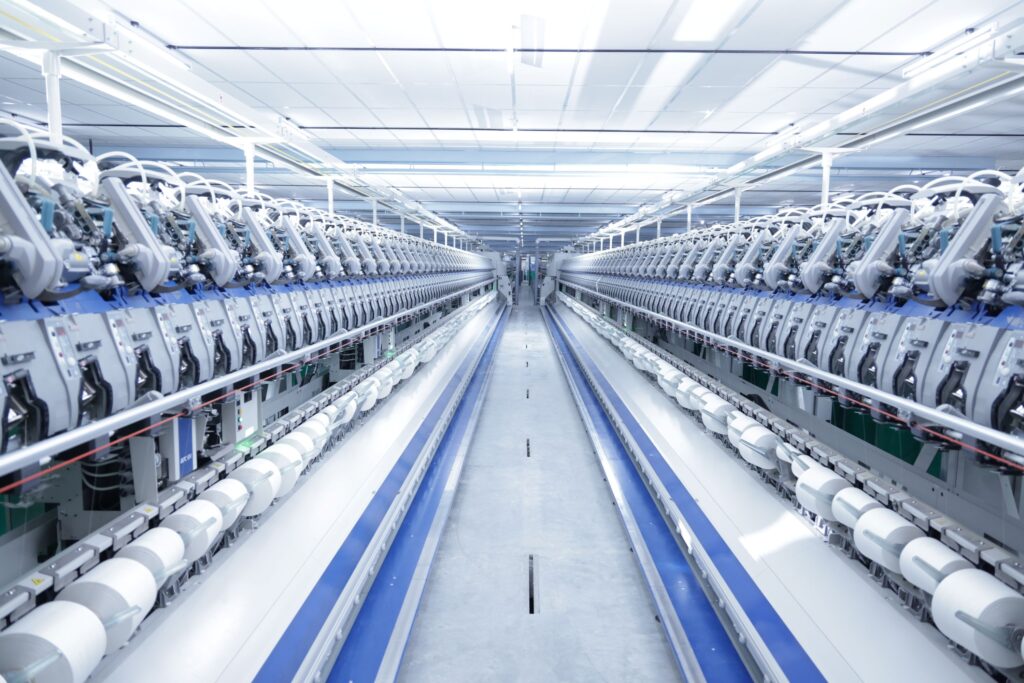
Unlike many textile companies in South India that traditionally focused on cotton, Pallavaa made an early strategic commitment to viscose and other MMF products. This focus on spinning and backward integration played a critical role in improving yarn and fabric quality and subsequently opening international markets.
The group today operates eight manufacturing units in the Pallipalayam cluster and supplies sustainable yarns and fabrics to customers in more than 40 countries. Its product portfolio spans viscose, modal, lyocell, bamboo and various blends, including combinations with cotton and recycled polyester.
Strengthening an integrated manufacturing model
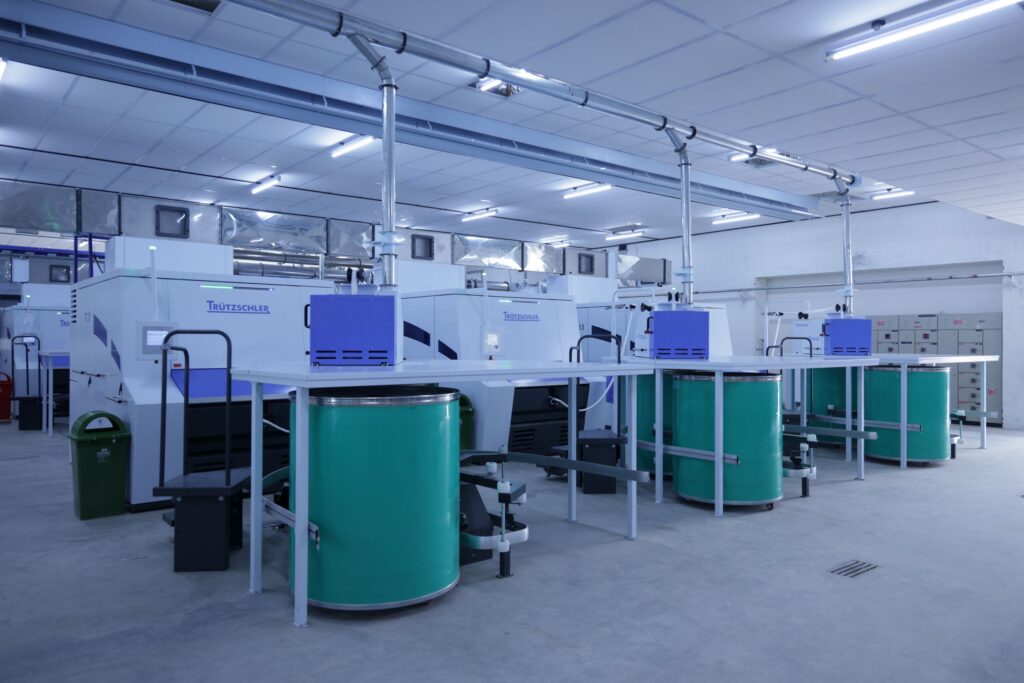
Pallavaa’s existing manufacturing scale provides a strong foundation for the new investment. The group currently produces approximately 330 tonnes of yarn per day, with production divided between ring-frame and vortex spinning. Its weaving operations produce around 600,000 metres of fabric per day, while knitting capacity is in the range of 20–25 tonnes daily. With close to 200 vortex machines, Pallavaa is also among the world’s largest vortex yarn producers outside China.
The ₹1,000-crore Virudhunagar project is therefore not simply a capacity addition but an extension of the group’s established integrated approach. By combining spinning with downstream weaving, knitting and processing, Pallavaa will be better positioned to respond to changing customer requirements and develop products across a broader section of the value chain.
Technology and sustainability at the core
Technology adoption has been a defining feature of Pallavaa’s growth. The company has consistently modernised its manufacturing base and invested in automation, including auto-doffing, automated material handling and other systems aimed at improving productivity and consistency. Its approach to product development also involves extensive experimentation with yarn blends, structures and finishes.
Sustainability is another important dimension of the group’s strategy. Pallavaa has stated its ambition to become carbon-neutral by 2035 and already sources nearly 90% of its energy from green sources. The group also highlights the sustainability advantages of vortex spinning, along with its continuing focus on waste reduction, process optimisation and energy efficiency.
The new investment is consequently aligned with a broader strategy of combining scale, technology and sustainability. With global brands increasingly demanding traceability, consistency and environmentally responsible production, Pallavaa’s integrated manufacturing model provides a strong platform for future growth.
Preparing for the next phase of global growth
The ₹1,000-crore investment represents a significant acceleration of Pallavaa’s expansion plans. Having traditionally invested around ₹200 crore annually in modernisation and capacity enhancement, the new project signals a much larger commitment to building manufacturing capabilities for the next phase of the company’s growth.
With its established expertise in MMF, strong export orientation, integrated manufacturing capabilities and focus on sustainable products, Pallavaa is positioning the Virudhunagar project to address both Indian and international market opportunities.
The investment also reinforces the group’s long-term vision of becoming a reliable partner to the global textile value chain through innovation, sustainable products, technological excellence and customer-centricity.