


In an industry increasingly defined by integration, customization, and sustainability, Sagar Manufacturers Integrated Textile Industry (SMPL) has taken a decisive step forward by expanding its capabilities into dyeing and printing. This strategic move not only completes its textile value chain, from spinning and knitting to finished fabrics, but also reinforces its positioning as a comprehensive, solutions-driven textile manufacturer.

With the commissioning of its state-of-the-art dyeing and printing facility at Tamot in Raisen district, Madhya Pradesh, SMPL is transitioning into a fully integrated textile powerhouse, capable of delivering end-to-end solutions to global customers while embedding sustainability and technological excellence at the core of its operations.
Completing the Textile Value Chain
SMPL’s expansion into dyeing and printing marks a significant milestone in its journey towards full integration. Having already established strong capabilities in spinning and knitting, the addition of processing enables the company to exercise greater control over quality, lead times, and product customization.
This integration allows SMPL to offer customers a seamless experience—from yarn to finished fabric—under one roof. As Managing Director Siddharth Sudhir Agrawal explains, “With the integration of spinning, knitting and now dyeing and printing, we will be able to serve our customers with colors of customization under one umbrella.”
The new facility adds an annual capacity of 8,000 metric tonnes of dyed and printed fabrics, significantly enhancing SMPL’s ability to cater to diverse and evolving market demands.
Technology-Led Processing for Superior Quality
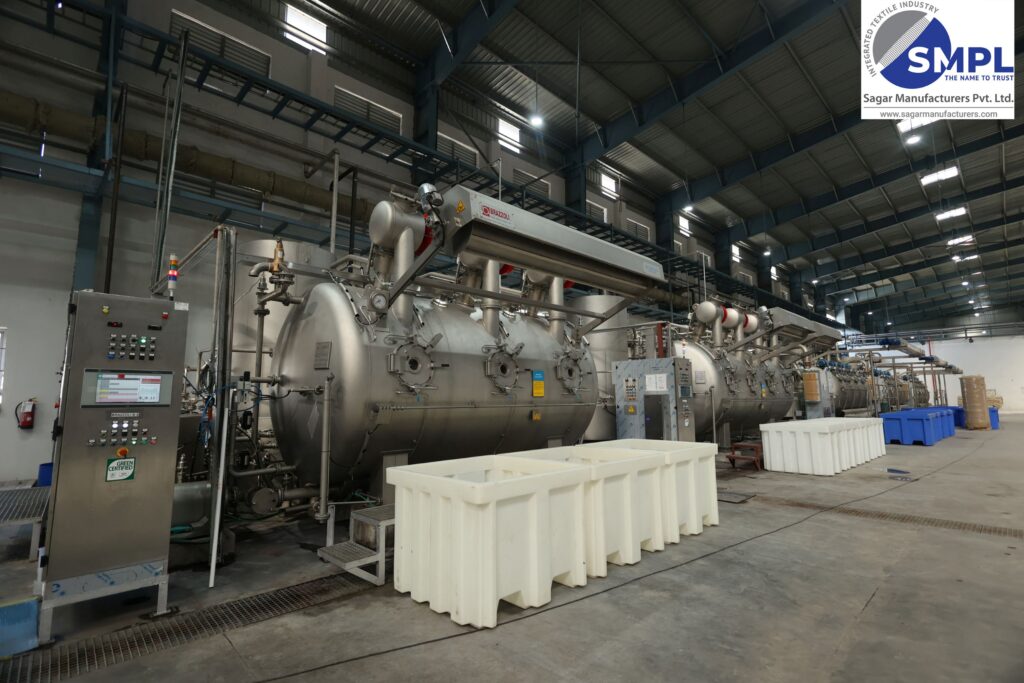
At the heart of SMPL’s new dyeing and printing unit lies a strong emphasis on advanced technology and automation. The facility is equipped with globally benchmarked machinery sourced from leading international manufacturers, ensuring precision, consistency, and efficiency across processes.
The dyeing section features soft flow machines from THIES (Germany), known for their sustainable and precision dyeing capabilities, while stenters from Bruckner (Germany) and relax dryers from Santex (Switzerland) ensure optimal fabric finishing. The integration of automated bulk dye and chemical dispensing systems from Eliar (Turkey), along with process control systems from SEDO (Germany), further enhances operational accuracy and repeatability.
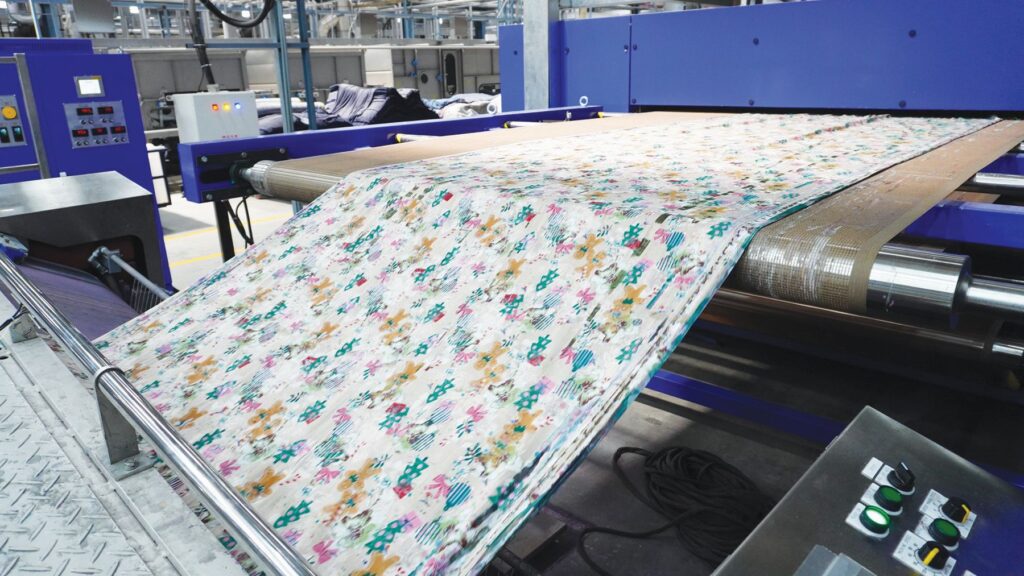
In printing, the installation of a 12-head rotary printing machine from Ichinose (Japan) enables high-quality, high-speed production across a wide range of designs and finishes. Complementing these are advanced finishing technologies such as brushing, sueding, and shearing from Mario Crosta (Italy), delivering superior fabric aesthetics and performance.
This technology-driven approach ensures that SMPL’s fabrics meet the stringent quality standards expected by global brands.
Expanding Product and Application Capabilities
The addition of dyeing and printing significantly broadens SMPL’s product portfolio, enabling it to offer a wide range of knitted fabrics tailored to multiple applications.
From single jersey and pique to fleece, interlock, rib, and double knits, the company now delivers fabrics across varied GSM ranges, catering to segments such as fashion apparel, sportswear, and functional textiles. The availability of diverse printing techniques—including pigment, reactive, discharge, disperse, foil, and burnout—further enhances design flexibility.
More importantly, the facility enables the application of functional finishes such as anti-bacterial, anti-odor, UV protection, moisture management, and stain release, aligning products with the growing demand for performance and technical textiles.
As CEO Kapil Kumar Agarwal notes, “Our new solutions on dyeing and printing of fabric are an extension of our name of trust. We are now coloring lives with over million patterns and designs, offering dazzling choices to our customers.”
Sustainability at the Core of Operations
A defining feature of SMPL’s new facility is its strong commitment to sustainability. The company has established the district’s first Zero Liquid Discharge (ZLD) plant, ensuring that water used in processing is treated and recycled, minimizing environmental impact.
This initiative is complemented by SMPL’s existing investment in a 28 MW solar power plant, one of the largest rooftop installations in Madhya Pradesh. The renewable energy integration significantly reduces the carbon footprint of its operations, aligning with global sustainability benchmarks.
The company’s efforts contribute to reducing approximately 6.5 lakh tonnes of carbon emissions, reinforcing its commitment to responsible manufacturing and environmental stewardship.
Quality Assurance Through Advanced Testing Infrastructure
To support its expanded processing capabilities, SMPL has also established a state-of-the-art testing laboratory equipped with advanced instruments for both physical and chemical testing.
Parameters such as shrinkage, GSM, pH, bursting strength, and pilling are rigorously evaluated, alongside comprehensive color fastness testing for washing, perspiration, crocking, and light exposure. The inclusion of spectrophotometer-based color analysis and automated lab dispensing systems ensures precise shade matching and consistency across production batches.
This robust testing infrastructure underlines SMPL’s commitment to delivering high-quality, reliable products to its global clientele.
Driving Employment and Social Impact
Beyond industrial growth, SMPL’s expansion is contributing significantly to regional socio-economic development. The new dyeing and printing unit is expected to generate over 500 additional jobs, adding to the company’s existing workforce of more than 6,000 employees.
With women comprising approximately 60% of its workforce, SMPL continues to play a vital role in empowering local communities and supporting inclusive growth.
A Global Textile Partner
SMPL’s integrated operations, combined with its focus on quality, sustainability, and innovation, have earned it recognition as a Star Export House by the Government of India. The company exports to over 35 countries and serves more than 200 global brands, reflecting its strong presence in international markets.
SMPL has an installed capacity of 250000 spindles with 60000MT of Yarn capacity annually with a robust and customized product range. The integrated textile industry also has 18000 MT capacity of Greige Knitted Fabric with its 107 knitting machines .
The expansion into dyeing and printing marks a transformative phase for Sagar Manufacturers Integrated Textile Industry. By integrating advanced processing capabilities with its existing strengths in spinning and knitting, SMPL is redefining its role from a manufacturer to a comprehensive textile solutions provider.
Backed by cutting-edge technology, a strong sustainability framework, and a commitment to quality and innovation, the company is well-positioned to meet the evolving demands of global textile markets.
As it continues to “spin relationships, knit partnerships, and color lives,” SMPL stands as a compelling example of how integration and innovation can drive the future of textile manufacturing in India.
Ferraro Powers Sagar’s Finishing Excellence with Advanced Compaction Technology
Among the key technology partners contributing to Sagar’s transformation is Ferraro S.p.A., a global leader in textile finishing solutions. Ferraro’s participation in Sagar’s integrated dyeing, finishing, and printing facility underscores the importance of precision engineering in achieving superior fabric performance and operational efficiency.
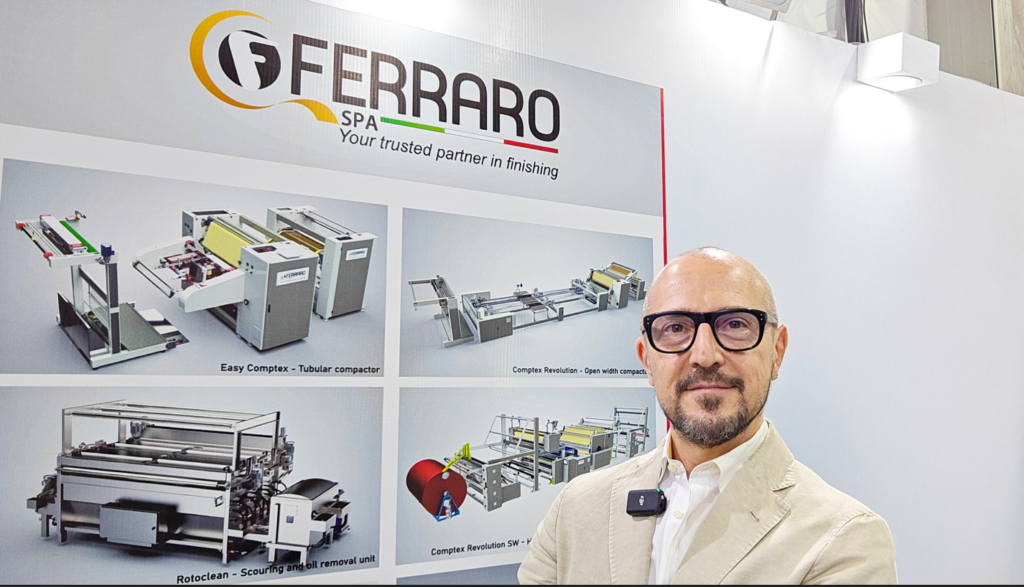
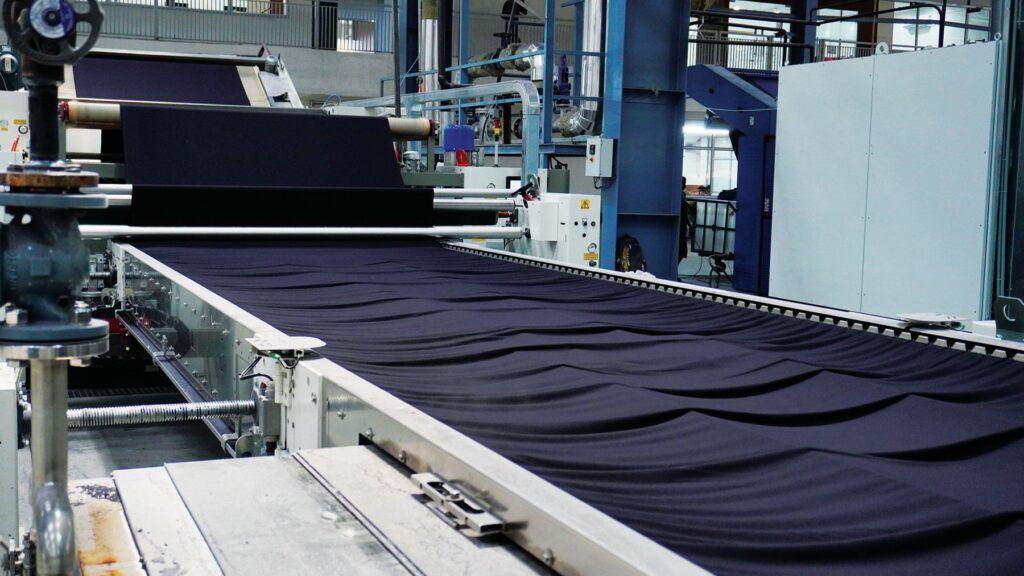
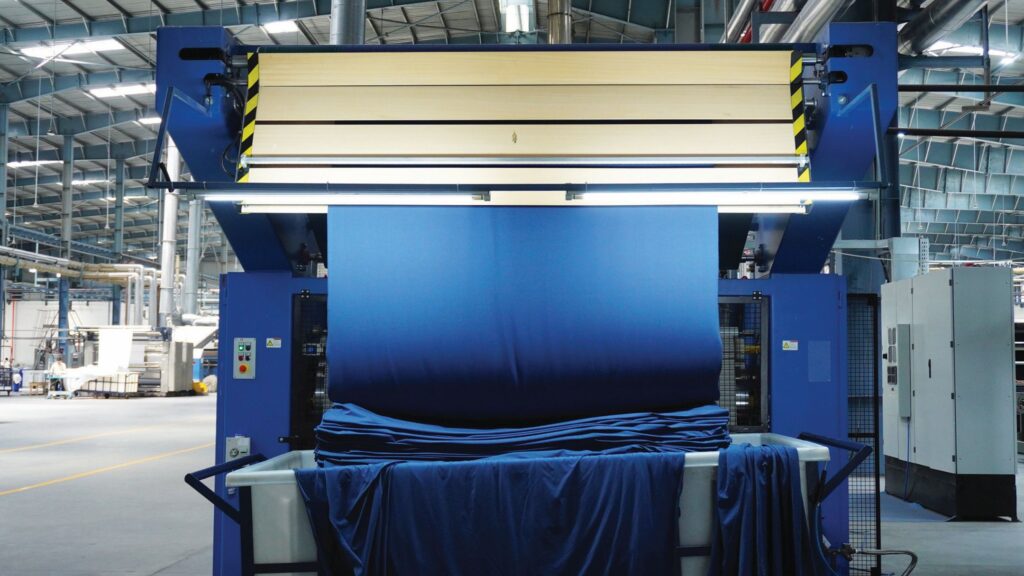
At the core of Ferraro’s contribution are two advanced finishing systems: a high-performance compactor for tubular knitted fabrics and a precision compactor for open-width fabrics. These machines play a pivotal role in the textile value chain by ensuring dimensional stability, controlled residual shrinkage, and a uniform fabric hand, parameters that are essential for meeting the stringent quality expectations of global brands.
As Mr. Leo Petruzio highlights, Sagar’s approach to technology selection sets it apart. Rather than focusing on short-term cost considerations, the company has strategically invested in best-in-class solutions to achieve long-term operational excellence. This philosophy aligns seamlessly with Ferraro’s technology, which is engineered for reliability, repeatability, and consistent output across high-volume production environments.
One of the defining features of the installed systems is their ability to deliver superior control over compaction parameters, resulting in consistent fabric quality over extended production runs. This significantly reduces rework and material wastage, enhancing both efficiency and cost-effectiveness. Moreover, the machines are fully integrated with Sagar’s ERP system, enabling real-time monitoring, data collection, and traceability. This level of digital connectivity transforms finishing from a conventional mechanical process into a data-driven, optimized operation aligned with Industry 4.0 principles.
Sustainability is another critical dimension of Ferraro’s technology. The compactors operate with zero water consumption and are equipped with energy-efficient motors, contributing to reduced environmental impact without compromising productivity. Within Sagar’s broader sustainability framework, including its Zero Liquid Discharge system, these machines play a key role in enabling responsible manufacturing.
The collaboration between Ferraro and Sagar was marked by close engineering coordination and seamless integration across processes. By working in alignment with Sagar’s automation and production teams, Ferraro ensured that its systems were fully synchronized with upstream dyeing and downstream finishing operations. This integrated approach enables smooth production flows, minimizes bottlenecks, and enhances overall plant efficiency.
From a global perspective, Sagar’s new facility stands out for its engineering coherence, combining advanced machinery, digital control, and sustainability-driven design. Ferraro’s compacting solutions contribute significantly to this ecosystem by delivering repeatable quality and operational stability at scale.
Looking ahead, the deployment of such advanced technologies positions Sagar as a premium, future-ready textile manufacturer. The ability to offer consistent quality, high productivity, and full process transparency provides a strong competitive advantage in an increasingly demanding global market.
As Mr. Petruzio aptly concludes, long-term success in textiles is built on the right technological partnerships, and Ferraro is proud to support Sagar in shaping a new standard for integrated textile manufacturing.