


By K. Gopalakrishnan

With over 25 years of leadership in India, Salmoiraghi continues to redefine automated handling for man-made fibres and fabric logistics, reinforcing its commitment to the Indian textile industry through cutting-edge innovations to be showcased at INDIA ITME 2026.
As textile manufacturers worldwide accelerate investments in automation, the movement of materials within a factory has become just as critical as the production process itself. Increasing production speeds, larger plant capacities, higher quality expectations and growing labour challenges have transformed automated material handling from a supporting function into a strategic necessity.
For more than five decades, Salmoiraghi S.p.A. has remained at the forefront of this transformation, developing intelligent automation systems that seamlessly connect production, storage, inspection, warehousing and dispatch. Today, the Italian company is recognized globally as one of the leading specialists in automated handling systems for synthetic fibre bobbins and fabric rolls, helping textile manufacturers improve efficiency, traceability and operational excellence.
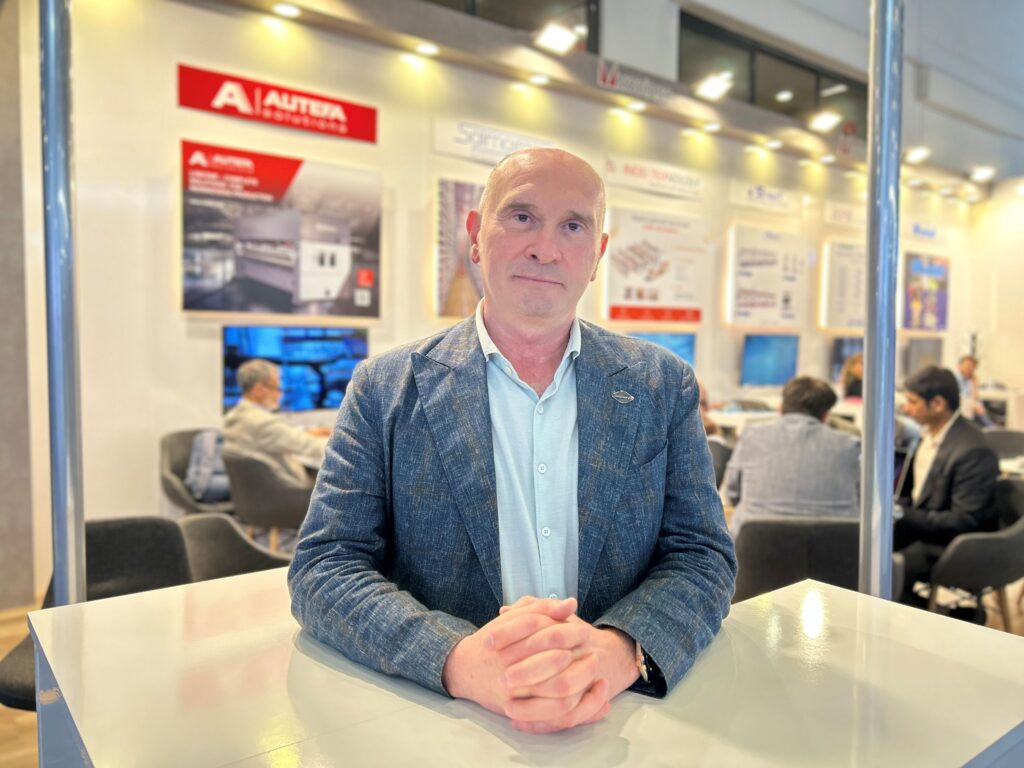
Among all the markets it serves worldwide, India occupies a uniquely strategic position, not only because of its scale but also because of the company’s long-standing partnerships with some of the country’s largest textile manufacturers.
“India is our key market. We started here more than 25 years ago with one of our first major projects, and today our systems are installed at almost every major synthetic fibre producer in the country. India continues to be one of the most important pillars of our global business,” says Mr. Giorgio Salmoiraghi, CEO, Salmoiraghi S.p.A.
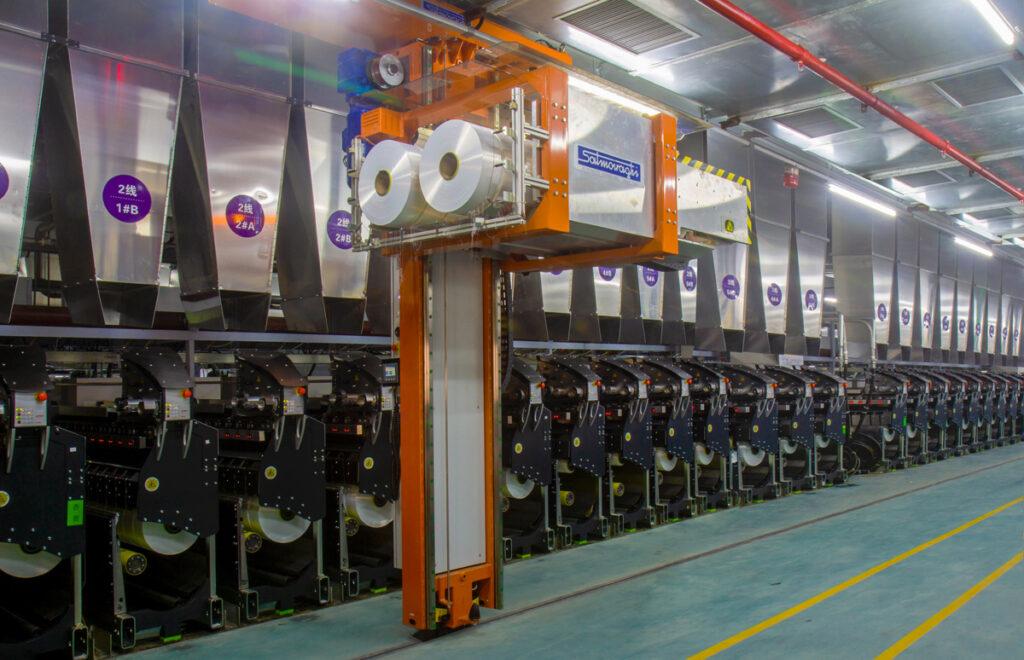
With its participation at INDIA ITME 2026, the company is preparing to showcase its latest automation technologies that are helping textile manufacturers move closer to fully autonomous production environments.
A Pioneer in End-to-End Textile Automation
Salmoiraghi has built its global reputation by focusing on one of the most complex areas of textile manufacturing—fully automated material handling.
Unlike conventional automation suppliers that concentrate on individual production machines, Salmoiraghi develops integrated automation ecosystems that connect every stage of internal material movement, from production to packaging and dispatch.
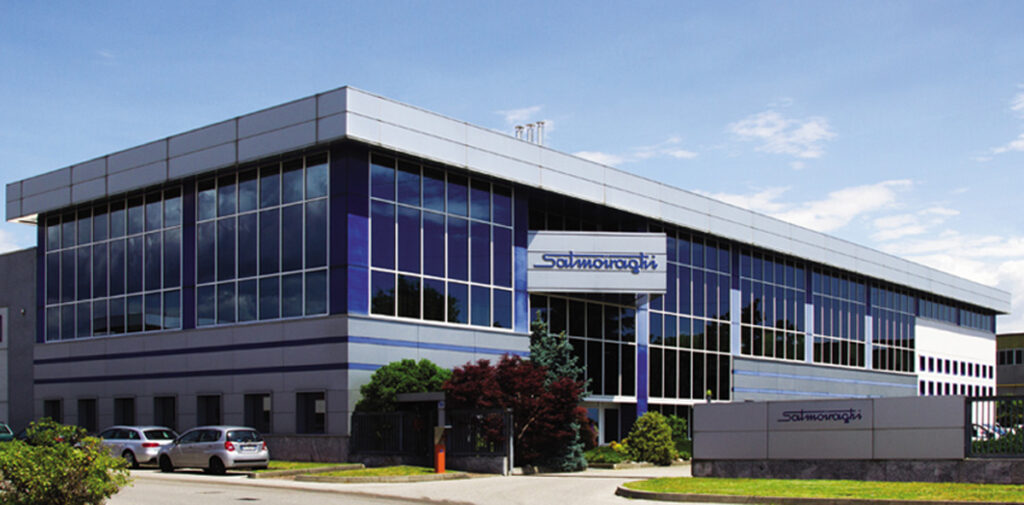
Over the past two decades, the company has successfully implemented complete automation systems for leading producers of POY, FDY and DTY yarns, delivering comprehensive handling solutions that significantly improve productivity while minimizing manual intervention.
Its customer portfolio in India includes several of the country’s leading man-made fibre manufacturers, where fully automated handling systems have become an integral part of modern production facilities.
The company is also commissioning one of its largest integrated automation projects for Sanathan, covering the complete production chain from POY and FDY through DTY and finished bobbin handling.
Beyond India, Salmoiraghi’s technologies are deployed across Asia and other major textile manufacturing regions, reinforcing its position as a global leader in textile logistics automation.
Complete Automation from “Chuck to Truck”
At the heart of Salmoiraghi’s technological leadership lies its philosophy of delivering complete automation throughout the production journey.
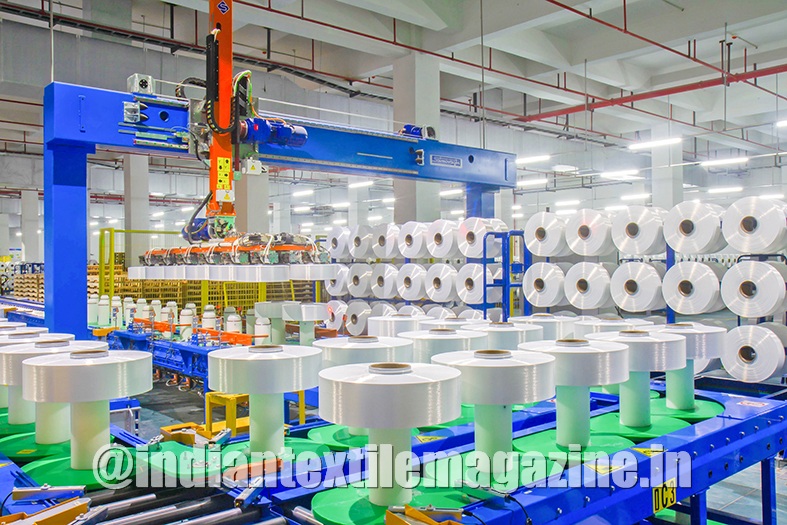
The company describes this concept as “Chuck to Truck”—an integrated approach that begins the moment a yarn package is doffed from the spinning position and continues until the finished product is loaded for shipment.
“Our automation starts from the doffing stage,” explains Mr. Salmoiraghi. “We transport the bobbins through every processing stage, temporarily store them, track every individual package, move them to packaging, palletize them and finally transport them automatically to the warehouse and dispatch area.”
Depending on customer requirements, the company offers overhead conveyor systems, AGV-based transportation, temporary storage systems, automated packaging lines, pallet handling solutions and intelligent warehouse management systems.
One of Salmoiraghi’s key strengths is its ability to customize packaging configurations to suit customer preferences. Whether manufacturers require conventional carton packaging, jumbo boxes or a combination of both, the company’s automation systems can seamlessly manage multiple packaging formats within a single production environment.
For integrated POY-DTY facilities, the company also provides fully automated transfer of POY bobbins directly from spinning to texturizing, eliminating manual handling while improving process efficiency and traceability.
Beyond Yarn: Advanced Automation for Fabric Roll Warehousing
While synthetic fibre handling remains Salmoiraghi’s core expertise, the company has significantly expanded its portfolio into automated warehousing solutions for fabric rolls.
Its patented warehouse technology enables the handling and storage of individual fabric rolls while providing complete inventory traceability and flexible retrieval.
Unlike conventional pallet-based warehouses, Salmoiraghi’s solution allows manufacturers to retrieve individual rolls for further processing, inspection, cutting or shipment without disturbing the remaining inventory.
“We developed a patented system that manages every individual fabric roll inside the warehouse,” explains Mr. Salmoiraghi. “Whether the customer is a distributor handling multiple orders or a manufacturer requiring rolls for further processing, our system retrieves exactly the required roll and returns it to storage whenever necessary.”
The solution is equally suited for distribution centres, integrated textile manufacturing facilities and large-scale fabric processing plants where efficient roll management has become increasingly important.
Eliminating the Last Manual Operation
Automation within synthetic fibre production has advanced rapidly over the past decade, yet one critical operation has traditionally continued to rely on human intervention—visual inspection.
Salmoiraghi is now addressing this final challenge through advanced AI-enabled visual inspection systems.
According to Mr. Salmoiraghi, the company has successfully developed technologies capable of automating this last remaining manual process, moving textile manufacturers closer to completely autonomous production.
“Visual inspection has been the final stage where operators were still required,” he explains. “Today, we have developed solutions that allow this operation to become fully automatic.”
Building upon its long-standing expertise in mechanical engineering, electronics and software integration, the company has incorporated advanced vision technologies and artificial intelligence into its automation platforms, enabling highly accurate inspection while improving consistency, productivity and product quality.
India: The Cornerstone of Future Growth
Few international companies can claim a relationship with India’s synthetic fibre industry as longstanding as Salmoiraghi.
For more than twenty-five years, the company has worked alongside India’s leading manufacturers, many of whose original automation systems continue to operate successfully today.
“What makes us proud is that systems we installed 25 years ago are still running efficiently,” says Mr. Salmoiraghi. “We continue to provide spare parts, technical assistance and long-term support to those customers.”
He believes India’s future as a global textile manufacturing powerhouse is exceptionally bright.
“In my opinion, India has tremendous potential. The country has the knowledge, the language, the industrial culture and the competitive spirit required to become one of the world’s leading textile manufacturing centres. We want Salmoiraghi to be an integral part of this growth journey.”
This optimism is reflected in the company’s continued investments in strengthening its local presence, expanding collaboration with Indian partners and supporting customers with advanced automation technologies aligned to global manufacturing standards.
Showcasing Innovation at INDIA ITME 2026
Recognizing India’s growing influence within the global textile industry, Salmoiraghi views INDIA ITME 2026 as one of the most important opportunities to engage with customers from across the region.
The company will present its latest developments in automatic handling systems for synthetic fibre bobbins, automated fabric roll logistics and intelligent warehouse management, while also highlighting its newest innovations in AI-driven visual inspection technologies.
“We are honoured to welcome all our customers from India and around the world to our booth,” says Mr. Salmoiraghi. “We look forward to presenting the latest Salmoiraghi solutions and our newest innovations in automatic handling systems for POY, DTY and fabric rolls.”
Visitors can expect to gain first-hand insights into how integrated automation is helping textile manufacturers improve material flow, reduce operating costs, strengthen traceability and prepare their factories for the next generation of intelligent manufacturing.
Engineering the Future of Textile Logistics
As production capacities continue to increase and manufacturing becomes increasingly data-driven, automation beyond the production machine will play a decisive role in determining competitiveness.
Salmoiraghi has consistently anticipated this evolution by developing comprehensive automation platforms that integrate transportation, warehousing, inspection, packaging and logistics into one seamless ecosystem.
With more than two decades of successful installations in India, a strong portfolio of patented technologies and a relentless focus on innovation, the company remains one of the industry’s foremost specialists in intelligent material handling.
As India continues its transformation into a global manufacturing hub for synthetic fibres and technical textiles, Salmoiraghi is well positioned to support this journey. Through its advanced automation technologies and long-standing commitment to Indian customers, the company is not only helping manufacturers optimize today’s operations but also laying the foundation for the fully autonomous textile factories of tomorrow.