


₹344-crore spinning expansion completed, weaving capacity to rise to 65 million metres; company sharpens focus on asset utilisation, circularity, seamless garments and capital efficiency
Sangam (India) Limited is entering a new phase of its growth journey. After several years of investment and capacity creation, the integrated textile manufacturer is now shifting its focus from project execution to operational excellence, with the objective of extracting higher returns from the assets already deployed.
The company’s consolidated revenue from operations rose 13.22% to ₹3,234.53 crore in FY2025-26, from ₹2,856.95 crore in the previous year. This performance comes as Sangam completes or advances a series of strategic investments spanning spinning, weaving, recycled polyester and downstream textile and apparel businesses.
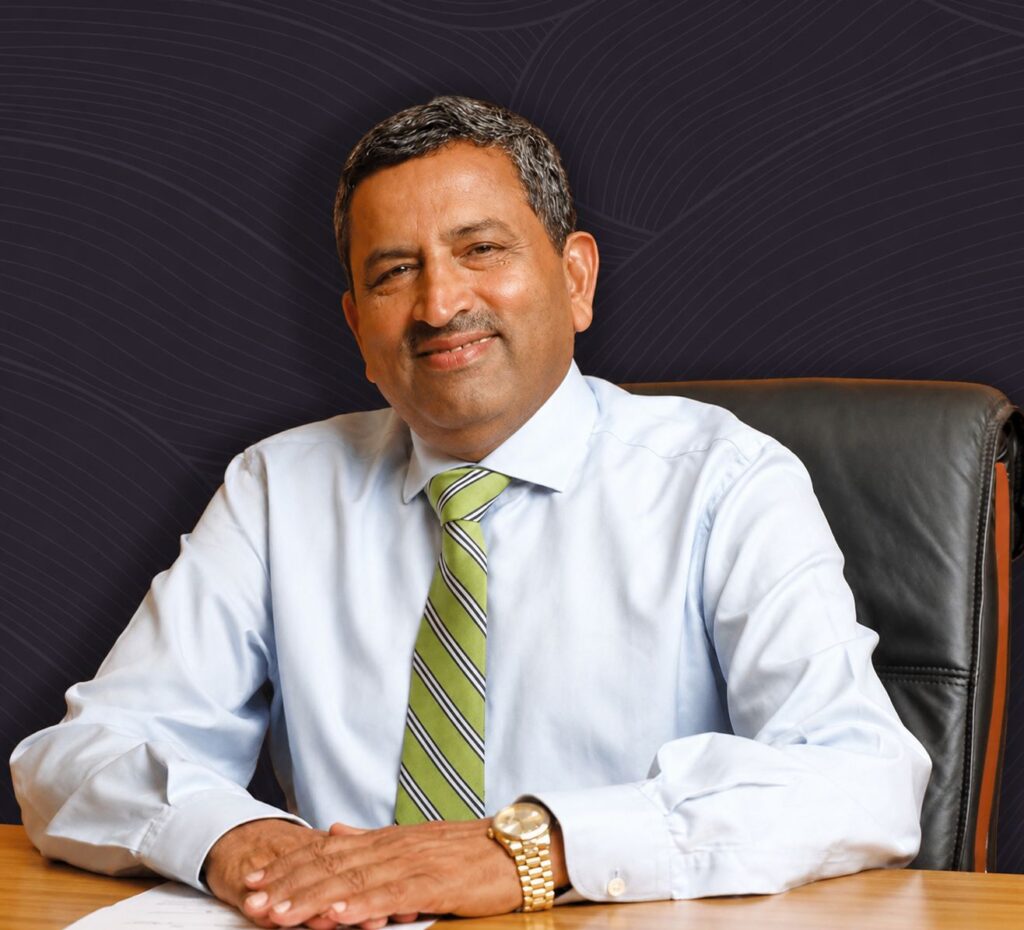
Chairman R. P. Soni describes the transition as more than a change in operational priorities. Having moved from a phase of adding capacity to one focused on making every spindle and loom contribute to the bottom line, Sangam is now seeking to build a self-sustaining model of high-yield growth.
The strategy is centred on three broad priorities: improving utilisation of existing assets, increasing value addition and strengthening financial efficiency.
Building scale across the textile value chain
Sangam has developed an integrated textile platform extending from fibre and yarn manufacturing to weaving, processing, denim and garments. The company’s portfolio includes grey yarn, cotton blends, PV dyed yarn, denim, knitted fabrics, woven and processed fabrics and garments.
Its manufacturing infrastructure includes six facilities covering the various stages of the textile value chain. The integration begins with recycled PET bottles being converted into recycled polyester fibre and extends through spinning, weaving, processing and garmenting. According to the company, this integrated structure enables it to combine manufacturing scale with flexibility, allowing it to respond to changing fashion trends, specialised applications and export demand.
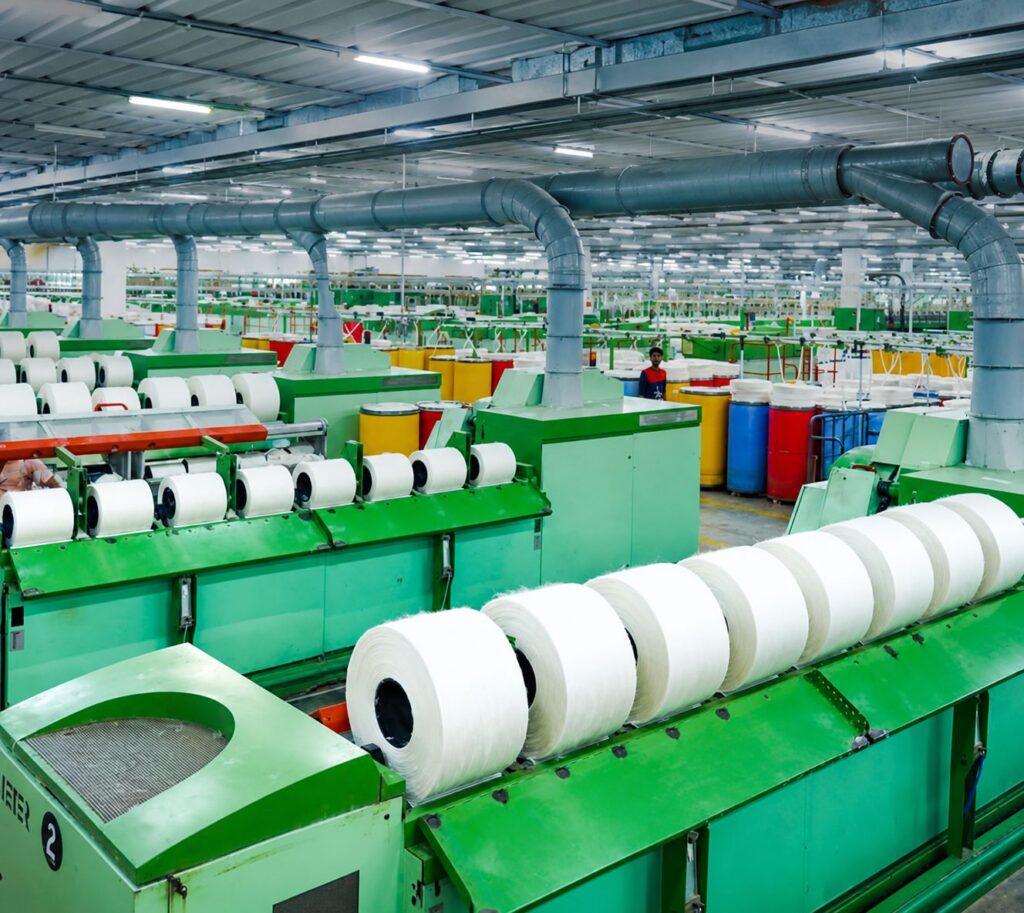
The company’s denim business has an annual capacity of around 60 million metres, supported by 298 weaving machines, one rope-dyeing facility and five indigo processing lines. Its synthetic-fabric operations are supported by 304 weaving machines, with weaving capacity of 54 million metres per annum and processing capacity of 76 million metres. The garment business has 114 seamless knitting machines and manufacturing capacity of approximately 254 crore seconds per annum, covering athleisure, activewear, intimate wear and casualwear.
It is this manufacturing base that Sangam is now seeking to sweat more effectively.
₹344 crore investment strengthens spinning integration
One of the important investments completed during FY2025-26 was the ₹344-crore expansion of the spinning division at Sareri, Bhilwara.
The project strengthens Sangam’s backward integration and is intended to support the company’s denim and fabric businesses while improving its overall product mix. With the addition of new spindles, rotors and knitting machines, spinning capacity has increased to more than 3,06,864 spindles and 4,584 rotors.
The investment is important not only because of the additional capacity but also because it gives Sangam greater control over a critical input for its downstream businesses. Higher levels of backward integration can provide greater consistency in quality and supply while allowing the company to optimise its product mix according to market requirements.
Sangam believes the expanded spinning platform will improve production efficiency, quality consistency and its ability to serve global customers with greater reliability.
Weaving capacity to rise to 65 million metres
The company’s next significant capacity enhancement is in weaving.
Sangam’s Atun, Bhilwara weaving facility is nearing completion of a major expansion and modernisation programme involving a capital outlay of approximately ₹160 crore. The project will increase weaving capacity from 48 million metres per annum to 65 million metres per annum.
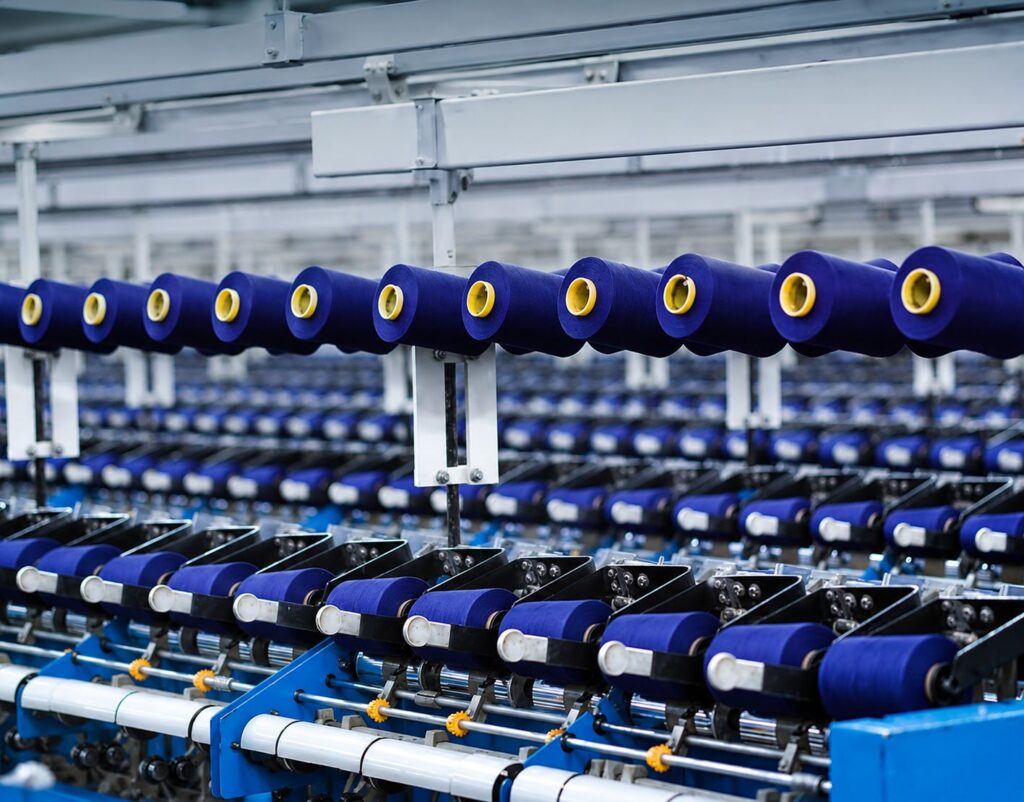
The investment is being funded through a combination of term loans and internal accruals and includes state-of-the-art air-jet looms and upgraded processing infrastructure.
The objective again is not merely to increase metres produced. The expanded facility will enable Sangam to manufacture design-rich and higher-value fabrics for both domestic and international markets.
The additional 17 million metres of annual capacity should therefore provide the company with greater flexibility to participate in value-added fabric segments while improving the utilisation of its integrated spinning and downstream infrastructure.
Circularity as an economic strategy
Sustainability is another important component of Sangam’s strategy, but the company views it explicitly through an economic lens.
Sangam has recycled 38,400 tonnes of plastic waste into captive polyester fibre. Nearly 50% of its daily polyester requirements are now met through its internal circularity infrastructure.
According to Soni, this creates two important advantages. First, it reduces the company’s exposure to fluctuations in global crude-oil prices by reducing dependence on virgin polyester. Second, it strengthens Sangam’s proposition to global brands that are pursuing measurable sustainability targets.
The company already works with global brands including Walmart, Primark and Decathlon, and sees its tangible circularity model as an increasingly important differentiator in international markets.
The company has also undertaken the acquisition of a Recycled Polyester Staple Fiber (RPSF) manufacturing unit at Lambia Kalan, Bhilwara, Rajasthan. The acquisition is aligned with its strategy of reducing dependence on virgin polyester and strengthening its circular-economy capabilities.
For Sangam, therefore, circularity is increasingly part of its manufacturing and cost architecture rather than simply an ESG initiative.
Moving from yarn to branded apparel
A particularly important element of Sangam’s long-term strategy is its move downstream into consumer-facing apparel.
The company sees India’s young population and rising disposable incomes driving a transition from need-based textile consumption towards lifestyle-oriented fashion. This is creating opportunities in segments such as activewear and athleisure, where Sangam is seeking to leverage its seamless-garment capabilities.
Its flagship C9 Air Wear brand represents the company’s effort to move from a traditional business model based on selling textile products by weight towards a higher-value, branded apparel model based on individual products.
The strategy combines seamless knitting technology, sourced from leading Italian technology providers, with an expanding retail and digital presence. Sangam says C9 Air Wear has expanded to more than 2,000 retail touchpoints, while its digital D2C channels have recorded triple-digit growth.
This forward integration could become an increasingly important source of value creation, allowing Sangam to capture a larger portion of the value generated between fibre and the final consumer.
₹207 crore PV yarn expansion underway
While the company is increasingly moving downstream, it continues to strengthen its core yarn operations.
Sangam has initiated an expansion-cum-modernisation programme for its PV yarn manufacturing facilities at Bhilwara and Chittorgarh in Rajasthan. The project involves the installation of advanced machinery, technological upgrades and infrastructure enhancements.
The total project cost is ₹207 crore, with the tentative date of commencement of commercial operations scheduled for 1 April 2028.
The project is expected to increase production capacity, improve product quality and strengthen Sangam’s competitiveness in domestic and international markets.
The investment is significant because it demonstrates that Sangam’s strategy is not about abandoning its traditional strengths in yarn and fabric. Instead, the company is attempting to improve the productivity and competitiveness of its core businesses while simultaneously building higher-value downstream opportunities.
From capital expenditure to asset productivity
The defining change in Sangam’s strategy is perhaps best reflected in its approach to capital allocation.
With its major expansion phase now commissioned and operational, the company says its financial priorities have shifted towards asset turnover and deleveraging. Rather than relying on external capital for another major growth cycle, Sangam intends to generate greater returns from the assets already created.
The company is closely tracking utilisation of its 3 lakh-plus spindles and 65 million metres of weaving capacity. Higher utilisation should translate into lower unit costs and better returns on capital. The free cash flows generated through higher asset utilisation are expected to be directed towards strengthening the balance sheet and improving leverage.
This marks an important evolution in the company’s growth model. The emphasis is shifting from “how much more capacity can we build?” to “how much more value can we generate from the capacity we have?”
Creating more value from every metre
Looking ahead to FY2026-27 and beyond, Sangam sees India becoming increasingly central to global textile supply chains. Its strategy is consequently focused on sustainable profitability rather than expansion for its own sake.
The company intends to increase value per metre, deepen its presence in high-growth categories such as seamless activewear and maintain tight control over costs through renewable energy and circularity initiatives.
This strategy brings together several elements of Sangam’s current transformation: greater backward integration through spinning, expanded weaving and processing capabilities, recycled polyester, downstream garment manufacturing, branded apparel and stronger international market positioning.
The 13.22% growth in consolidated revenue during FY2025-26 provides an encouraging starting point for this next phase. But the more significant story is the change in the quality and intended utilisation of the company’s asset base.
Sangam has spent the past phase building capacity. The next phase will be about sweating those assets, improving product mix, increasing value addition and converting investments into stronger cash flows and returns.
With more than 3 lakh spindles, expanding weaving capacity, a significant denim and synthetic-fabric platform, an integrated recycled-polyester ecosystem and a growing seamless-garment and consumer brand business, Sangam is positioning itself to participate across multiple points of the textile value chain.
The company’s future growth, therefore, is unlikely to be defined simply by additional capacity. Instead, it will increasingly depend on its ability to extract more value from every spindle, every loom, every metre of fabric and ultimately every garment sold. That shift—from project execution to operational excellence—could prove central to Sangam’s next phase of sustainable and profitable growth.