


By Nithin Kumar
As Arvind completes 95 years, its story stands as one of Indian industry’s most enduring examples of purpose-led enterprise, manufacturing excellence and continuous reinvention. To mark this milestone, Punit Lalbhai and Kulin Lalbhai, the next generation of leadership at Arvind, reflect on the institution’s founding vision, the values that have sustained it, the transformations that have defined it, and the responsibility of building on a legacy that now looks ahead to its next hundred years.
From the spirit of Swadeshi to global-scale textile, apparel, advanced materials and sustainability-led innovation, Arvind’s 95-year journey remains one of Indian industry’s most enduring stories of purpose, resilience and reinvention.
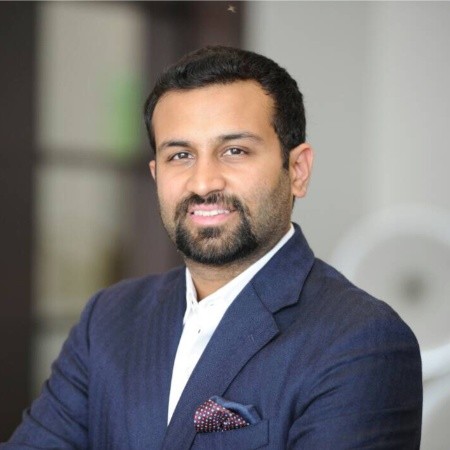
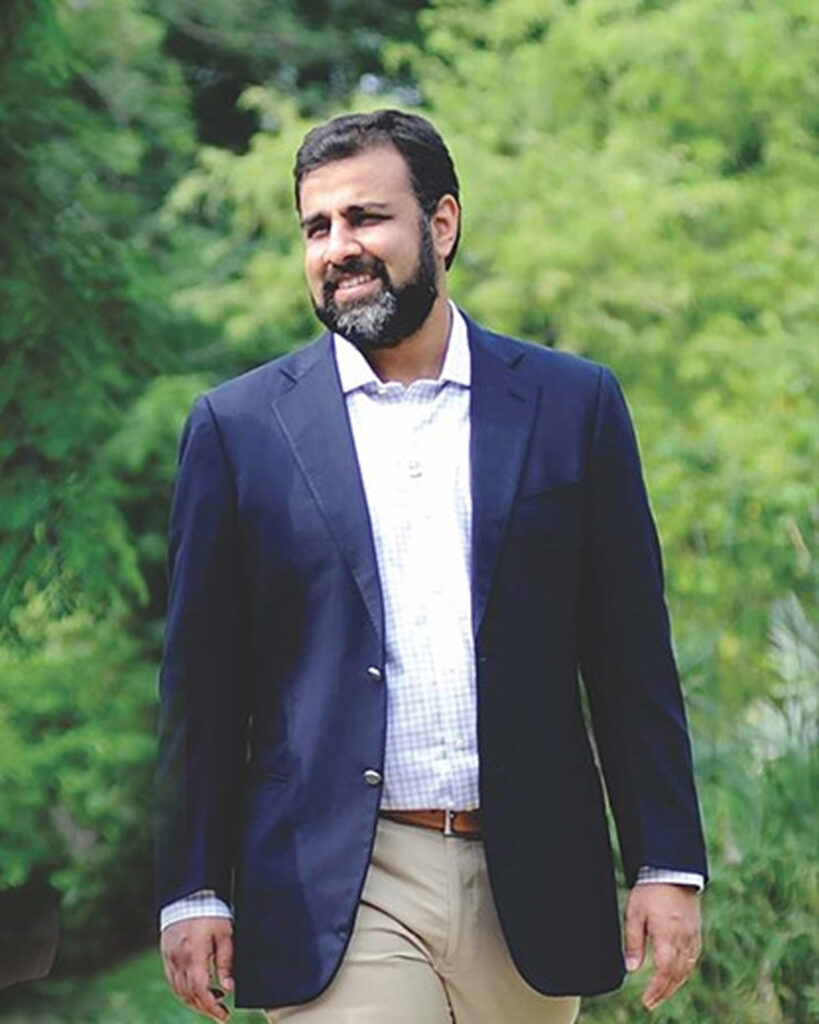
On June 1, 2026, Arvind marked 95 years of its foundation — a milestone that goes far beyond a corporate anniversary. It is the celebration of an institution that began in the charged atmosphere of India’s freedom movement and went on to become one of the country’s most respected names in textiles, apparel, advanced materials and responsible manufacturing.
Founded in 1931 by Shri Kasturbhai Lalbhai and the Lalbhai family, Arvind Mills was born out of the Swadeshi spirit. At a time when premium fabrics were largely imported and India’s textile infrastructure was still developing; Arvind was created with a bold conviction: India could manufacture fabrics that would stand shoulder to shoulder with the finest in the world.
It was not merely the beginning of a mill. It was the beginning of an idea — that Indian enterprise could be globally competitive, socially responsible and deeply aligned with nation-building.
As Kulin Lalbhai, Vice Chairman, Arvind Ltd., reflects, the foundation of Arvind rested on a larger philosophy of enterprise.
“Our founder, Shri Kasturbhai Lalbhai, had a very different vision for capitalism. He looked at capitalism as a force for societal good.”
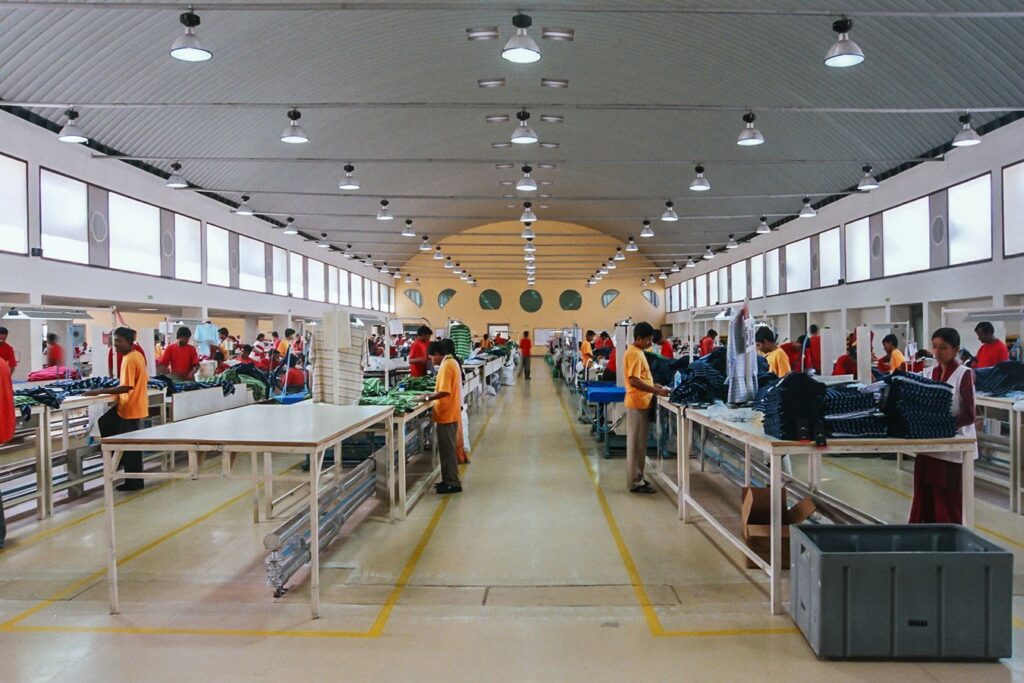
That thought has remained central to Arvind’s identity for nearly a century. The company was created not only to produce textiles, but to build capability, confidence and self-reliance. In Kulin Lalbhai’s words, Kasturbhai Lalbhai believed that earning shareholder value alone was not enough; an institution had to work towards the betterment of the country.
For Punit Lalbhai, Vice Chairman, Arvind Ltd., this purpose-led foundation is the most important thread running through Arvind’s journey.
“Business must be a vehicle that creates social welfare and social good.”
That belief has shaped Arvind across generations — from Kasturbhai Lalbhai to Sanjay Lalbhai and now to the next generation of leadership. Through changing markets, technologies and business models, Arvind’s larger purpose has remained intact.
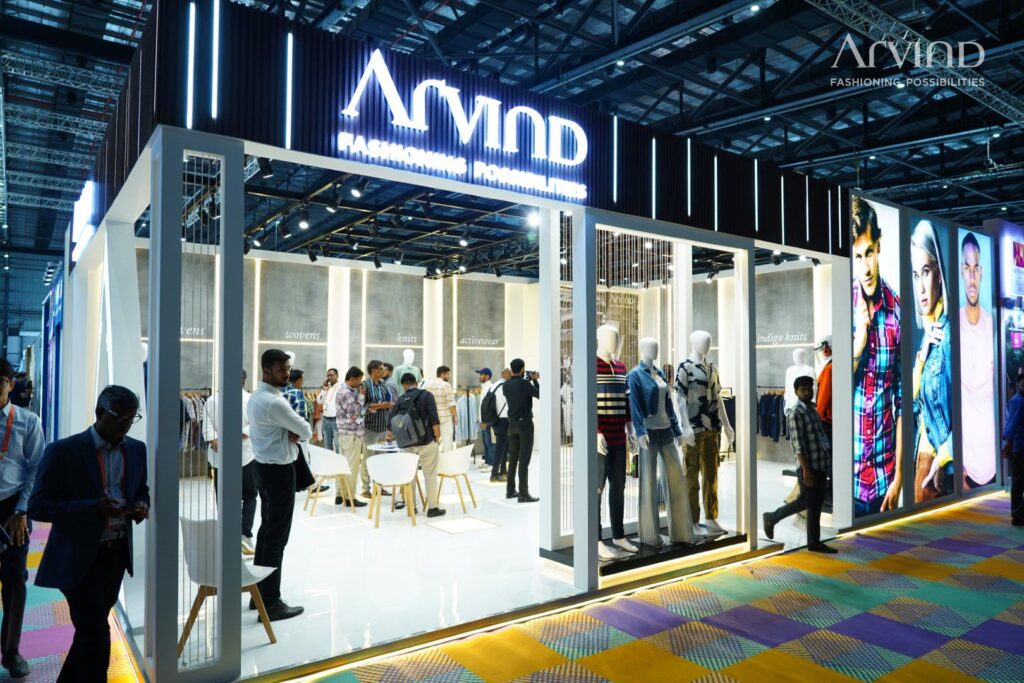
A Swadeshi vision with global ambition
Arvind’s founding ambition was national, but never narrow. It was born in India, for India, but with an eye on global standards. By the mid-1930s, Arvind’s fine “butta voiles” had begun finding acceptance in international markets including Switzerland and the United Kingdom — an early sign that Indian textiles could win recognition beyond domestic boundaries.
That balance between national purpose and global aspiration became one of Arvind’s defining strengths. Swadeshi, for Arvind, was not a defensive idea. It was a confident one. It meant building in India with the quality, consistency and ambition to compete with the best.
This spirit also extended beyond textiles. Kasturbhai Lalbhai played an influential role in Indian industrial thought and was associated with the Bombay Plan, which helped articulate a vision for modern Indian economic development. He also set up Atul Products, a pioneering enterprise in dyes and chemicals, reducing India’s dependence on imported inputs and strengthening the broader textile value chain.
For Arvind, manufacturing was never only about production. It was about building national capability.
The values beneath the fabric
The longevity of Arvind cannot be explained by scale alone. Institutions that survive for nearly a century require a deeper foundation: values, culture and people.
Kulin Lalbhai points to integrity, respect for the individual, doing what is right rather than what is easy, and being a force for good as values that continue to guide the organisation. These are not decorative statements. They are part of the institutional discipline that has helped Arvind endure disruption and reinvent itself repeatedly.
Equally important was the group’s early professionalisation. Kasturbhai Lalbhai professionalised the institution at a time when professionally managed Indian businesses were still uncommon. Across decades, Arvind was built through a partnership between promoters, professional managers and long-serving leaders — many of whom spent 10, 15 or 20 years shaping the company brick by brick.
This people-centred culture has been one of Arvind’s greatest assets. It has helped the company absorb shocks, stay relevant and renew itself in every era.
Reinvention as an institutional habit
Every long-standing enterprise faces moments when its original strengths are no longer enough. Arvind’s distinction lies in how often it has converted such moments into fresh platforms for growth.
Punit Lalbhai describes this as one of Arvind’s strongest common threads: resilience and reinvention. The company evolved from traditional fabrics and sarees to modern textiles; from there to denim; then to wovens, knits, garments, brands, retail, advanced materials, environmental solutions and digital capabilities.
Arvind did not merely diversify. It repeatedly moved into adjacencies where its core strengths — textile knowledge, manufacturing discipline, customer relationships, innovation and execution — could be redeployed at a higher level.
The most iconic example remains denim.
In 1980, Arvind launched Flying Machine, India’s first denim apparel brand, marking its entry into branded apparel and giving Indian youth a new fashion language. In 1985, the company introduced its “Renovision” strategy, shifting its focus towards international opportunities. In 1986, Arvind commissioned India’s first denim manufacturing plant in Ahmedabad. Within a few years, it emerged as one of the world’s leading denim producers and helped place India firmly on the global denim map.
The importance of this transformation cannot be overstated. Arvind did not simply manufacture denim. It helped create a denim culture in India and demonstrated that Indian textile manufacturing could operate at global scale, quality and relevance.
From fabrics to fashion — and further
Arvind’s next major evolution was vertical integration. The company moved deeper into garments, apparel solutions, brands and consumer-facing businesses. Global brand partnerships and retail formats reflected its ability to understand not only manufacturing, but also markets, design, consumer aspirations and brand ecosystems.
The 2008 transition from Arvind Mills Ltd. to Arvind Ltd. captured this broader identity. It marked the evolution of the company from a mill-led textile manufacturer to a diversified textile-to-retail, innovation-led enterprise.
But the story did not end with fashion.
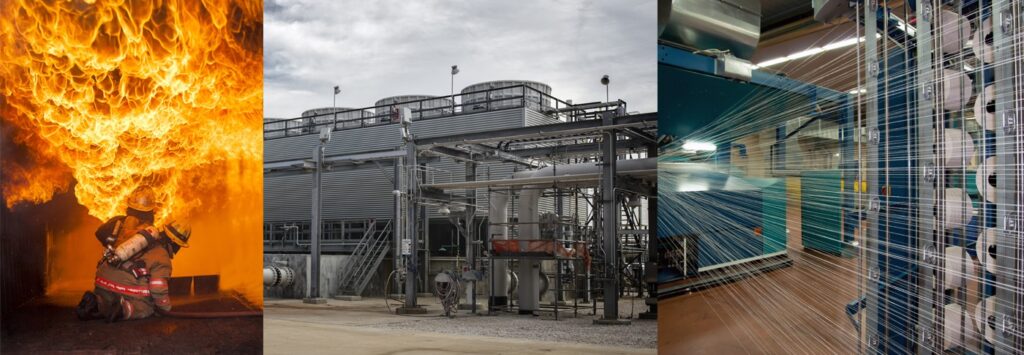
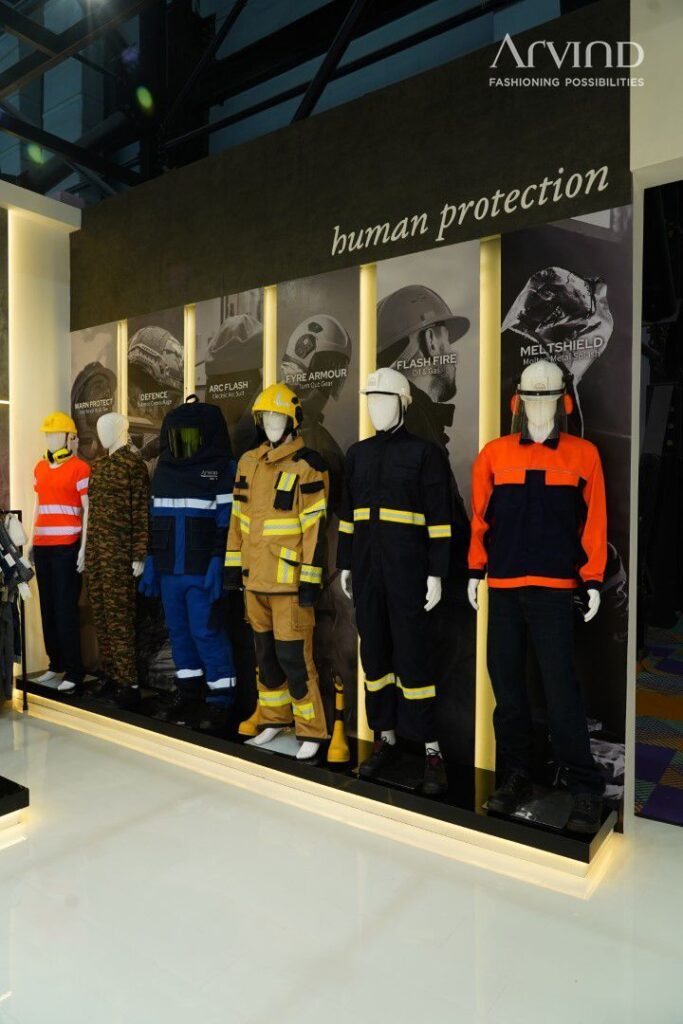
One of Arvind’s most significant modern growth platforms is Advanced Materials. What began as a move into technical textiles has grown into a high-potential business serving mission-critical applications across human protection, industrial products and composites. The portfolio includes protective workwear, flame-retardant fabrics, filtration solutions, coated fabrics, reinforcement materials and composite applications.
This marks a powerful new chapter in the Arvind story. The company that once helped prove India could produce world-class fabrics is now demonstrating India’s ability to participate in specialised, technology-led and application-driven textile solutions for global markets.
Sustainability as capability, not compliance
Arvind’s sustainability journey is another example of how the company turns internal challenges into institutional capability.
Its work in water, circularity and responsible manufacturing has gone beyond symbolic initiatives. Arvind Envisol, the company’s environmental solutions platform, emerged from the need to address industrial water conservation and wastewater treatment challenges. Over time, this capability became a business in itself, serving industries beyond textiles.
The company has also made important progress across responsible raw material sourcing, water stewardship and circularity. Its milestones include the production of India’s first Better Cotton Initiative bale through its farm project in Akola, the introduction of Khadi Denim, large-scale water-saving initiatives, circular textile partnerships and innovation-led environmental solutions.
In an industry increasingly shaped by sustainability expectations, traceability requirements and resource efficiency, Arvind’s approach stands out because it connects sustainability with technology, process discipline and commercial viability.
A 95-year-old company in growth mode
The 95-year milestone comes at a time when Arvind continues to demonstrate strong business momentum.
For FY26, Arvind Ltd. reported consolidated revenue of ₹9,303 crore, EBITDA of ₹1,061 crore and PAT of ₹444 crore. Denim fabric volumes stood at 59.5 million metres, woven fabric volumes reached an all-time high of 135.8 million metres, and garmenting volumes touched a record 41.6 million pieces. The Advanced Materials business reported its highest-ever yearly revenue of ₹1,839 crore, further strengthening the company’s diversification story.
At the wider group level, Kulin Lalbhai points to an institution now approaching ₹20,000 crore in revenue across eight lines of business. Yet the more important message is not size alone. It is the fact that the institution continues to build new engines of growth even as it approaches its centenary.
“At 95 years old, we are just getting started.”
That sentence captures the spirit of Arvind today: proud of its roots, but not captive to them.
Entering the next frontier
In May 2026, Arvind Advanced Materials Limited announced the acquisition of a nearly 61% controlling stake in U.S.-based Dalco-GFT, a specialised needle-punched nonwoven technical textiles company. The transaction marked Arvind Advanced Materials’ entry into the United States, described by the company as the world’s largest technical textile market.
Dalco-GFT brings a strong platform in nonwoven specialty fabrics, with applications across sectors such as mobility, industrial, construction, geotextiles, flooring and furniture. For Arvind, the acquisition is more than an overseas expansion. It is a strategic step towards building a globally diversified advanced materials platform.
The move also reflects the next stage of Arvind’s reinvention: from Indian textile leadership to global technology-led materials leadership.
The responsibility of legacy
A 95-year legacy can easily become a burden if it is treated only as memory. At Arvind, legacy appears to be treated as responsibility.
Kulin Lalbhai and Punit Lalbhai see themselves not merely as inheritors, but as trustees of an institution built over generations. Their role is to carry forward the values of the past while preparing the organisation for a very different future.
“We have to lay the foundation for the next 100.”
That future will not be simple. The global business environment remains uncertain. Geopolitical tensions, wars, raw material volatility, supply chain shifts, price escalations and demand fluctuations continue to test manufacturers across the world.
Punit Lalbhai acknowledges this complexity, but his message is one of confidence rooted in people and teamwork.
“The road is long, the dreams are big. If we all work together, nothing is impossible.”
It is a fitting message for an institution whose history has been shaped by resilience. Arvind has lived through political, economic, technological and market transitions. Each time, it has emerged with sharper focus and renewed ambition.
A story still being written
Arvind’s 95-year journey deserves to be preserved because it is not only the story of a textile company. It is the story of Indian industrial confidence. It is the story of how purpose can coexist with profit, how values can survive scale, and how reinvention can become a culture rather than a crisis response.
From the Swadeshi spirit of 1931 to the global advanced materials ambitions of 2026, Arvind has continued to move forward without losing sight of where it began.
At 95, Arvind is not simply looking back with pride. It is looking ahead with intent.
The looms have changed. The markets have changed. The materials have changed. But the deeper thread remains the same — to build, to serve, to reinvent, and to create something that outlasts every generation that carries it forward.