


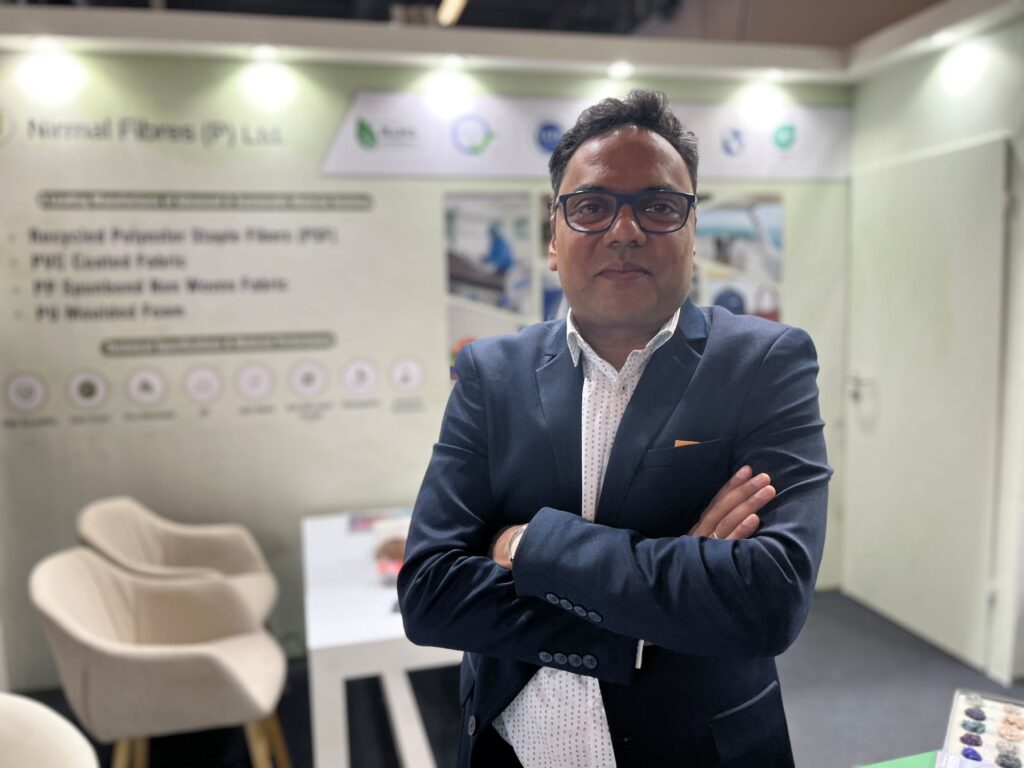
Based on an exclusive interaction with Mr. Abhishek Jain, Director, Nirmal Fibres Pvt. Ltd., at Techtextil 2026.
With recycled polyester staple fibre as its core strength, and a wider platform spanning PP spunbond nonwovens, coated materials and moulded PU foam for railways and automotive applications, Nirmal Fibres is positioning itself as a solution-oriented Indian manufacturer for a more performance-driven global market.
A clear message from India
At a time when global buyers are looking at India with renewed seriousness, Nirmal Fibres Pvt. Ltd. is using its technical textile portfolio to make a larger statement: India is no longer only a sourcing destination for commodity products. It is increasingly becoming a market capable of delivering quality-led, application-focused and globally relevant solutions.
That was the central message shared by Mr. Abhishek Jain, Director, Nirmal Fibres Pvt. Ltd., during an exclusive interaction at Techtextil 2026. For a company with its roots in recycled polyester staple fibre, the conversation reflected a broader ambition: to build on its fibre manufacturing strength and offer customers a more complete, performance-oriented materials platform.
“India is not just about commodity. We can also deliver quality solutions.”
From recycled fibre strength to application focus
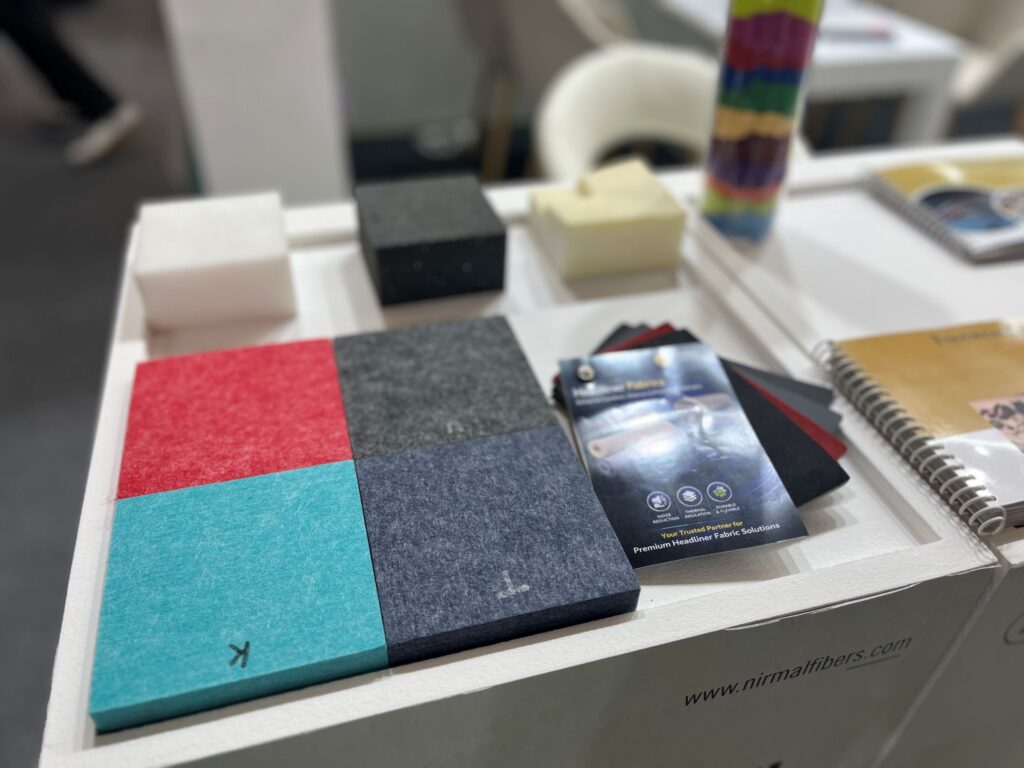
Nirmal Fibres began its journey in 1997 and has built a strong manufacturing foundation in recycled polyester staple fibre. This remains the company’s central strength and one of its most important growth anchors. The relevance of this base has only increased as technical textile customers place greater emphasis on sustainability, consistency and dependable material performance.
The company’s recycled polyester staple fibre is produced from polyester/PET waste and is used across a wide range of applications, including nonwoven carpets, wadding, cushions, pillows, quilts, automotive felts, filtration media, geotextiles and acoustic applications. This gives Nirmal Fibres a practical link with several important technical textile segments, where cost efficiency, availability and performance must work together.
According to Mr. Jain, polyester continues to be one of the most widely used staple fibres in technical textiles because of its availability and affordability. For Nirmal Fibres, the next step is not merely to produce more fibre, but to keep improving the fibre through features such as colour development, UV stability, flame-retardant performance and application-specific customisation.
Diversification with discipline
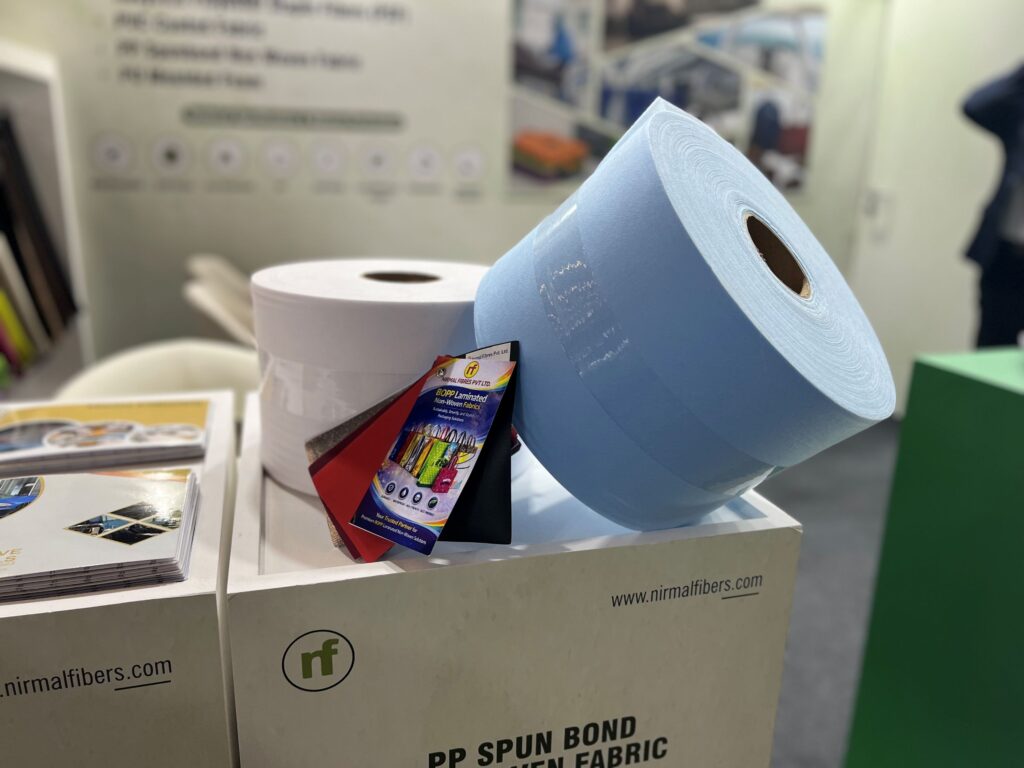
Nirmal Fibres’ expansion has been shaped by a simple logic: the materials it offers must remain connected to the needs of the industries it serves. The company’s portfolio today extends beyond recycled polyester staple fibre into PP spunbond nonwovens, PVC/PU coated synthetic leather and moulded PU foam. Polypropylene staple fibre is also part of the portfolio, though it represents a smaller and more specialised business, mainly catering to the carpet industry.
This distinction is important. Nirmal Fibres is not presenting diversification as a race to add unrelated products. Instead, it is building adjacent capabilities that strengthen its ability to respond to customers across technical textile applications. Each vertical contributes a different layer: fibres bring material depth, nonwovens add fabric-forming capability, coated materials provide durable surface solutions, and PU foam opens opportunities in seating, comfort and mobility-related applications.
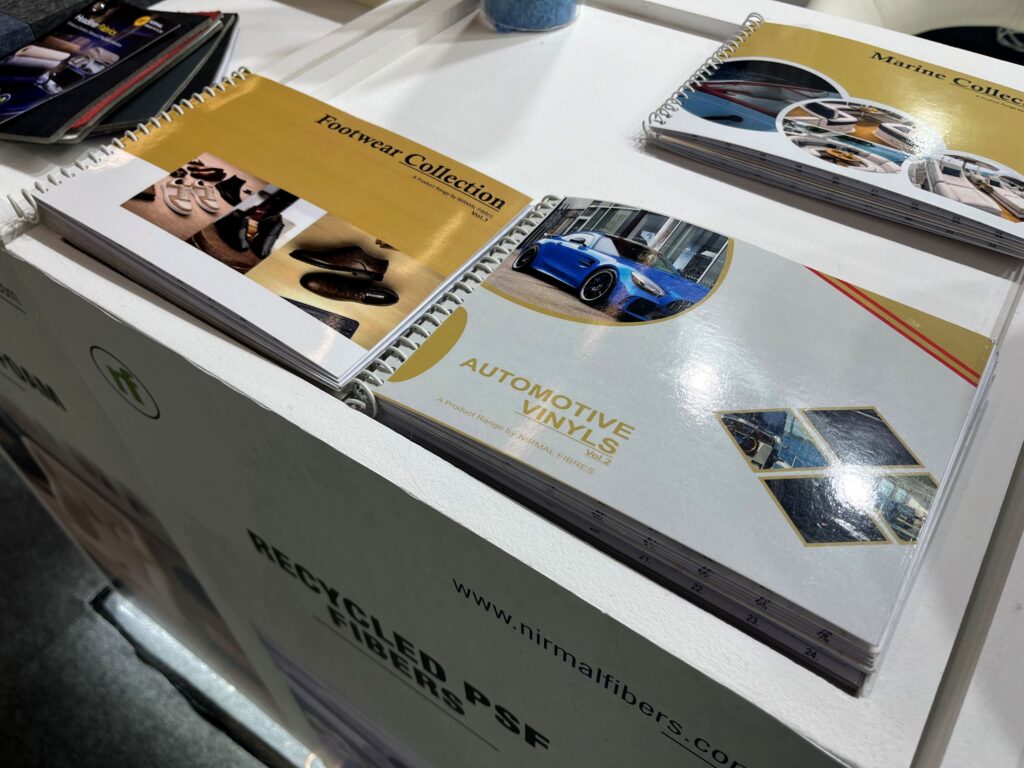
Mr. Jain described this approach as the ability to offer a solution under one roof. In an industry where customers increasingly prefer fewer, stronger and more informed partners, that integrated capability can become a meaningful advantage.
Moulded PU foam: A growing performance-led vertical
One of the important areas in Nirmal Fibres’ portfolio is moulded PU foam, particularly for railways and automotive applications. This capability deserves greater attention because it extends the company’s story from fibres and fabrics into engineered comfort, safety and durability solutions.
In railway seating and berth applications, PU foam plays a critical role in passenger comfort, resilience and long-term performance. Materials used in such environments must withstand repeated use while meeting strict expectations for safety, durability and consistency. Nirmal Fibres’ work in PU foam gives the company a direct connection to this performance-led segment, where material quality has a visible impact on the end-user experience.
The same capability also supports automotive requirements, where seating and interior-related materials must balance comfort, weight, recovery, durability and repeatable quality. For a company already serving automotive-linked applications through fibre and textile materials, moulded foam strengthens its ability to participate in a wider mobility materials ecosystem.
Consistency is the real test of sustainability
Sustainability has become a central requirement across the textile value chain, but the technical textiles market has made one point very clear: sustainability alone is not enough. Buyers want responsible materials, but they also expect consistency, performance and application confidence.
Mr. Jain’s response to this shift was direct. Nirmal Fibres, he said, continues to update itself by visiting industry exhibitions, speaking closely with customers and understanding what the market truly requires. The company’s objective is not simply to sell a product, but to understand the problem behind the customer’s requirement and offer a relevant solution.
This approach is particularly important in technical textiles, where the final application often decides the value of the material. A fibre, fabric, coating or foam is not selected only for what it is, but for what it enables: filtration efficiency, cushioning, flame resistance, UV stability, surface durability, acoustic performance, dimensional stability or cost-effective functionality.
The power of joining the dots
One of the most compelling insights from the conversation was Mr. Jain’s emphasis on knowledge. Technical textiles, in his view, is an information-led industry. That is an important distinction. Unlike conventional textile markets, where price and volume often dominate, technical textiles demand a deeper understanding of end-use behaviour, compliance requirements, processing conditions and customer expectations.
“If you understand the customer the right way, and if you know the industry well enough to join the dots, then it is not just a business relationship. It becomes a bonding which is very difficult to break.” That statement reveals Nirmal Fibres’ strongest editorial story. The company is not merely adding products to its catalogue. It is trying to build a knowledge advantage. It wants to be the partner that understands how one material decision can affect the next stage of performance, processing or customer satisfaction.
In a volatile global market, this ability to connect the dots may matter as much as capacity. Customers want suppliers who can help them reduce uncertainty. They want partners who can provide consistent material quality, understand the application, respond quickly, and remain aligned with changing industry expectations. Nirmal Fibres’ customer-led approach is designed around precisely that need.
India, INDEX and the global opportunity
The timing of this message is significant. India’s technical textiles sector is receiving focused attention, and global buyers are increasingly evaluating India as a reliable sourcing and manufacturing destination. Against this backdrop, Nirmal Fibres’ participation in international platforms such as Techtextil and INDEX becomes more than a marketing exercise. It becomes a statement of readiness.
For visitors at INDEX 2026 in Geneva, Mr. Jain’s message is clear: India is the next big opportunity for technical textile solutions. He believes there is a visible change in intent, both among Indian manufacturers and from the broader policy environment, to ensure that Indian companies do not remain strong only in their domestic market but build a credible global presence.
For Nirmal Fibres, this global opportunity is built on practical manufacturing capability. The company already serves customers in India and exports to international markets, while continuing to develop its product and application base across recycled polyester staple fibre, PP spunbond nonwovens, coated materials and PU foam solutions.
Built for the next phase
Nirmal Fibres’ journey reflects a larger shift taking place across Indian technical textiles. The industry is moving from basic capacity creation to capability building. The next phase will belong to companies that can combine sustainability with performance, product range with application knowledge, and manufacturing depth with customer intimacy.
With recycled polyester staple fibre as its foundation, a focused and complementary polypropylene staple fibre business for carpet-related applications, PP spunbond nonwovens, PVC/PU coated materials and moulded PU foam for railways and automotive, Nirmal Fibres is building a business that is broader, but also more purposeful.
At Techtextil 2026, the company’s message was simple but powerful: India can deliver quality solutions, and Nirmal Fibres intends to be part of that shift. For an industry that increasingly values consistency, sustainability, performance and intelligent partnership, that is a proposition with real substance.