


By Nithin Kumar
At Techtextil 2026, Director Pawan Kumar Kaushik makes a strong case for Nylon 6 filament yarn as a material built for comfort, strength, stretch and next-generation textile applications.
As textile markets move steadily towards performance, comfort, durability and application-specific functionality, Nylon 6 is finding renewed relevance. Long valued for its strength, elasticity, smooth feel and lightweight character, nylon is once again being recognised as more than a conventional synthetic fibre. It is emerging as a strong material choice for performance apparel, activewear, seamless knitting, hosiery and technical textile applications.
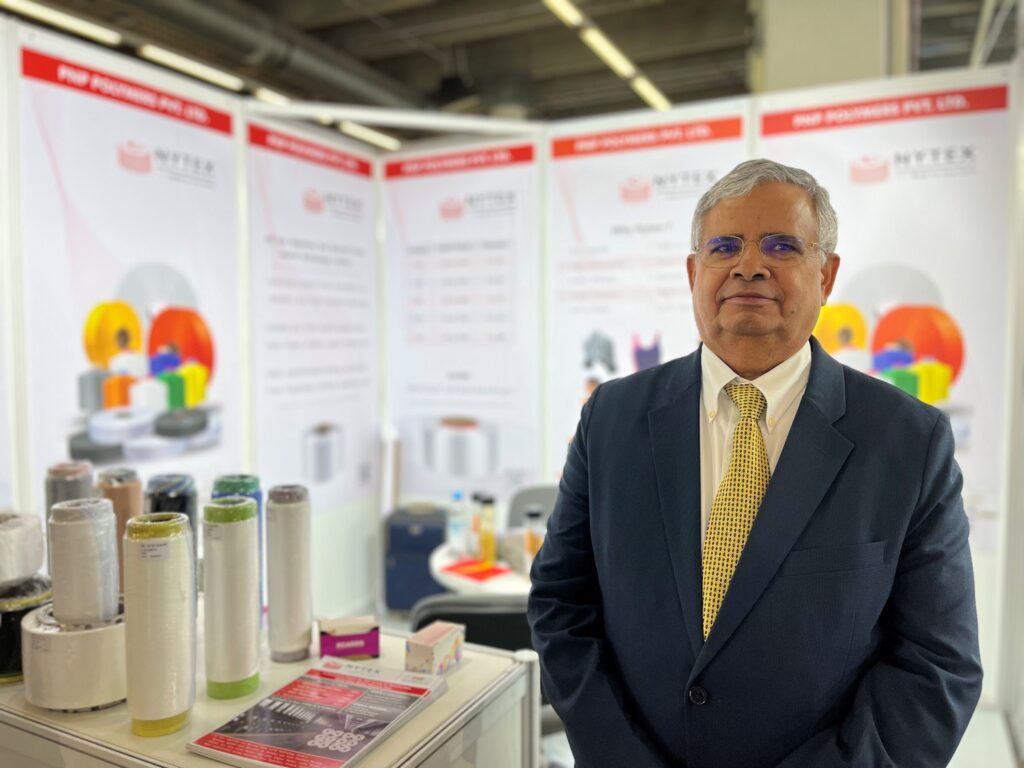
For PNP Polymers Pvt. Ltd., this opportunity sits at the heart of its growth strategy.
At Techtextil 2026, Mr. Pawan Kumar Kaushik, Director, PNP Polymers, presented the company’s Nylon 6 filament yarn proposition with clarity and conviction. His message was straightforward: nylon offers a combination of properties that modern textile users increasingly value — stretch, strength, wrinkle resistance, comfort, wicking performance and a softer feel against the skin.
“Why nylon?” Mr. Kaushik asks. “Because nylon has better stretchability, higher strength, better comfort and a more skin-friendly feel. It performs well, and it feels good in use.”
That belief defines PNP’s approach. In a market where polyester has long dominated due to cost and scale, the company sees Nylon 6 as a performance-led alternative for applications where quality, feel, recovery and strength-to-weight efficiency matter.
A Focused Nylon Platform
PNP Polymers has been associated with the filament yarn business for several years. According to Mr. Kaushik, the company started its own manufacturing plant in India in 2018 and expanded further in 2022. This manufacturing-led approach has allowed PNP to strengthen its position in Nylon 6 filament yarn and serve customers with greater control over quality, consistency and product range.
The company has built a broad nylon filament yarn platform covering multiple formats, including POY, HOY, FDY, DTY and related value-added yarns. It also offers a wide denier range, from fine counts to heavier yarns, along with raw white and dope-dyed options.
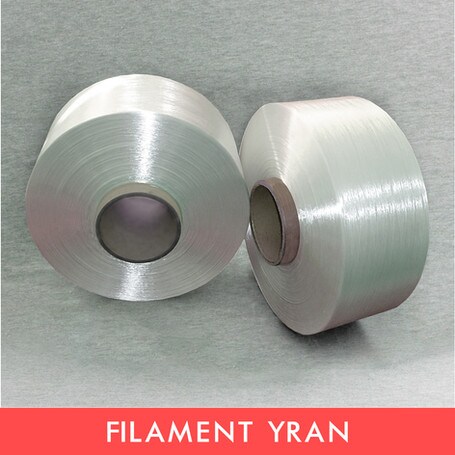
For Mr. Kaushik, this range is a major differentiator.
“If your department store is bigger, customers have more choice,” he says. “In the same way, we offer a wide range in nylon multifilament yarn. Customers can choose the denier, the format and the product they need. In nylon multifilament, we are a one-stop shop.”
This breadth is important because nylon applications are diverse. A fine-denier yarn for intimate apparel or seamless garments demands a very different performance profile from yarn used in sportswear, webbing, industrial textiles or technical applications. By offering multiple yarn formats and counts, PNP is able to support customers across a wider application spectrum.
Why Nylon Deserves Renewed Attention
One of the strongest points in Mr. Kaushik’s argument is that nylon’s market position has changed. Earlier, nylon was significantly more expensive than polyester, which limited its use in many applications. Polyester expanded aggressively because it was cheaper and available at massive scale.
But the price gap, he notes, has narrowed considerably.
“Nylon was very expensive earlier,” he explains. “When polyester was at one price level, nylon was many times higher. But now nylon has become much more affordable. With the growth of nylon raw material capacity, especially from China, the cost has reduced and usage has increased.”
This shift has reopened the conversation around nylon. When customers look beyond basic raw material cost and begin evaluating performance, durability, weight, feel and comfort, Nylon 6 becomes highly relevant.
Its lower density compared to polyester gives it a lightweight advantage. Its elasticity and recovery make it suitable for body-hugging garments, seamless knitting and activewear. Its strength and abrasion resistance support longer product life. Its smoother hand feel and comfort against the skin make it valuable in apparel categories where the user experience is critical.
In short, nylon is not competing with polyester only on price. It competes where performance matters.
Quality as the Real Competitive Edge
While PNP’s product range is broad, Mr. Kaushik is clear that the company’s real foundation is quality. In his view, competing only on price can damage both the supplier and the product category.
“You cannot win the market by reducing quality,” he says. “Someone else will reduce it further and sell cheaper. One day, the product itself will lose value. You can win the market only with quality.”
This is perhaps the most powerful business message from the conversation. PNP does not want to build its nylon business on compromise. It wants to build it on process control, technology, consistency and customer confidence.
To support this, the company has invested in advanced machinery and testing systems. Mr. Kaushik highlights the use of Oerlikon Barmag spinning technology, along with German testing equipment from Textechno and high-quality utilities from reputed global suppliers.
For him, quality is not created at the final inspection stage. It is built into the entire manufacturing environment — from machinery and process control to testing, people and workplace discipline.
“As a company, we need to give our people two things: the best product and the best working environment,” he says. “Only then can we expect them to deliver with confidence.”
This philosophy is especially relevant in filament yarn manufacturing. Even small variations in yarn uniformity, elongation, tensile strength, dye behaviour or tension can affect downstream processing. In knitting, weaving, texturising, dyeing and garmenting, consistency directly influences productivity and final product quality.
For technical and performance-led applications, this becomes even more critical. Customers are not merely buying yarn; they are buying reliability.
Seamless Knitting and Activewear Lead the Momentum
Among downstream segments, Mr. Kaushik identifies seamless knitting as one of the strongest opportunities for PNP.
This is a natural application area for Nylon 6. Seamless garments require yarns with excellent stretch, recovery, softness and consistency. The technology allows garments to be made with minimal stitching, improving comfort, fit and production efficiency.
“Seamless knitting is one of the best segments for us,” he says. “You can make the garment using our yarn without conventional stitching.”
Activewear is another important growth area. As consumers increasingly look for garments that support movement, comfort and durability, the demand for performance yarns is rising. Nylon’s elasticity, lightweight nature, strength and smooth feel make it well suited for this category.
Together, seamless knitting and activewear show how the market is evolving. Customers are no longer looking only for low-cost yarn. They are looking for materials that improve the finished product — how it fits, how it feels, how long it lasts and how well it performs.
This is where PNP sees a clear role for Nylon 6.
From Commodity Thinking to Performance Thinking
The broader opportunity for PNP lies in changing the way customers evaluate yarn.
For years, many synthetic textile decisions were driven primarily by cost. Polyester benefited from that environment because of its huge scale and affordability. But as brands, manufacturers and consumers become more demanding, the industry is moving towards a more balanced evaluation of materials.
Comfort, durability, recovery, weight, surface feel and end-use performance are becoming more important. In such a market, Nylon 6 has a stronger story to tell.
PNP’s proposition is built around this shift. The company is not trying to present nylon as a universal replacement for polyester. Instead, it is positioning Nylon 6 as the right material for applications where its performance advantages are meaningful and commercially valuable.
That is a more mature and credible argument. It allows PNP to address the market not through generic claims, but through application-specific relevance.
India’s Nylon Opportunity
Mr. Kaushik is optimistic about India’s potential in Nylon 6 filament yarn and technical textiles. He believes the country has the capability to compete globally, provided investment and policy support move in the right direction.
“In India, we are already a leader,” he says. “If policies are conducive to more investment, and if the government listens to the industry, we can compete with the world.”
This confidence reflects a larger industrial opportunity. India’s demand for performance yarns is expanding across apparel, hosiery, activewear, luggage, coated fabrics, industrial textiles and technical textile segments. As domestic manufacturing becomes more sophisticated, the need for reliable, high-quality synthetic yarn platforms will continue to grow.
For Nylon 6, the opportunity is particularly strong in categories where India wants to move up the value chain. Seamless garments, sportswear, intimatewear, swimwear, protective textile components, narrow fabrics and industrial textile applications all require yarns that can deliver more than basic functionality.
PNP’s role in this ecosystem is to offer a consistent, wide-ranging and quality-focused nylon filament yarn platform that can support this transition.
Building Trust Through Consistency
In any technical textile or performance apparel supply chain, trust is built through repeated consistency. Customers need confidence that every lot of yarn will behave predictably in processing and perform reliably in the finished product.
This is where PNP’s focus on machinery, testing and process discipline becomes strategically important. A broad product range may attract customers, but consistency retains them.
Mr. Kaushik’s emphasis on quality also reveals a deeper understanding of the market. In synthetic yarns, price competition is inevitable. But long-term value is created when customers associate a supplier with reliability, problem-solving and confidence.
PNP is working to build that identity.
A Clear Performance Proposition
At Techtextil 2026, PNP Polymers presented a focused and timely message. Nylon 6 is becoming increasingly relevant for a textile industry that wants comfort, strength, stretch, softness, durability and lightweight performance. As the material becomes more affordable and its application base expands, it has the potential to gain stronger traction in both mainstream and technical textile segments.
For PNP, the future lies in combining material advantage with manufacturing discipline. Its wide Nylon 6 filament yarn platform gives customers access to multiple formats, deniers and product possibilities. Its technology investments support consistency. Its quality-first philosophy gives the company a clear identity in a competitive market.
But the strongest part of PNP’s story is its conviction. Mr. Kaushik does not present nylon as just another yarn. He presents it as a material whose time has returned — especially for applications where performance, comfort and reliability cannot be compromised.
In a market moving steadily from commodity thinking to performance thinking, PNP Polymers is positioning Nylon 6 as a serious material for the next generation of textile applications. And with its focus on range, quality and customer confidence, the company is building a platform that can help nylon regain the attention it deserves.