


By Nithin Kumar
Abhijit Kulkarni Steps into a Broader Strategic Role as Director
In an exclusive conversation with The Textile Magazine, Mr. Kulkarni reflects on the experiences that shaped his leadership and why sustainable growth, technology, customer-centricity and future-ready people will define A.T.E.’s next phase.
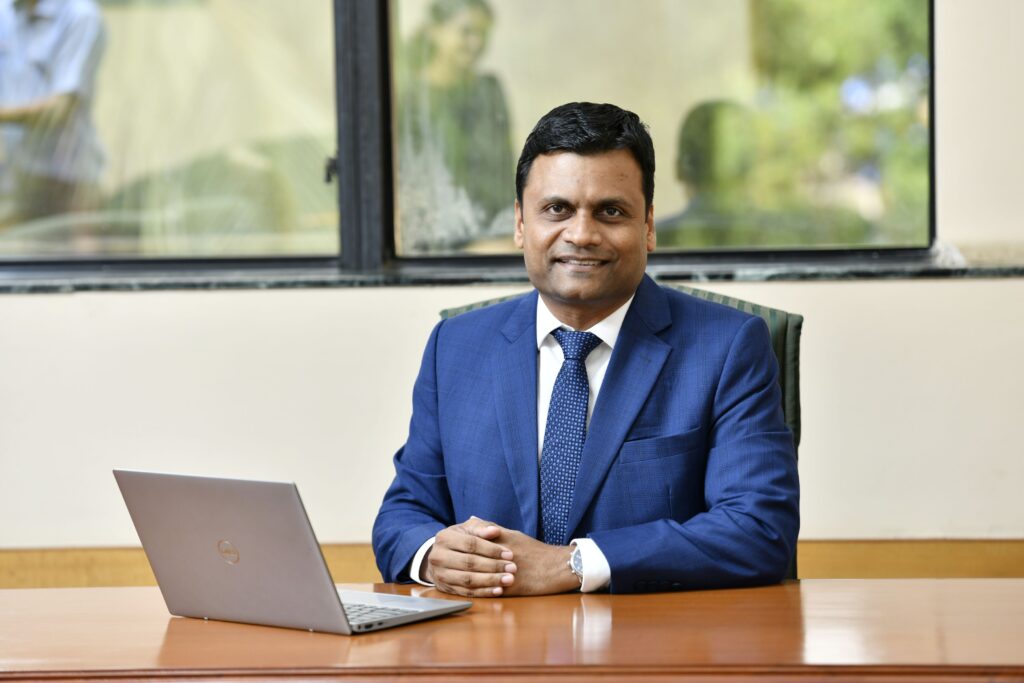
Mr. Abhijit Kulkarni now enters a wider strategic role at a defining moment for Indian textiles with his elevation to becoming Director at A.T.E. Enterprises. Personally for Mr. Kulkarni, this is less about designation and more about perspective. It expands his responsibility from leading businesses and delivering operational performance to helping shape the longer-term direction of an organisation closely associated with India’s textile industry since 1939.
Mr. Kulkarni joined A.T.E. in 2021 as President of the Textile Engineering Group, with his responsibilities later expanding across TeraSpin and HMX. As Director, his mandate extends further into strategy, sustainability, organisational capability and leadership development.
“It is important to steer the direction in which the A.T.E. Group will go, beyond meeting our operational parameters of growth, profitability and sustainability.”
A Foundation Built Across Industries
Before A.T.E., Mr. Kulkarni spent 24 years with SKF across manufacturing, engineering, supply chain, sales and business leadership, working with sectors including general engineering, defence, energy and textiles.
That breadth taught him to think in two timeframes: the long term—where an industry and its customers are heading—and the immediate need for operational excellence. Connecting the two is a principle central to his leadership philosophy: customer-centricity.
“You can have a huge organisation, processes and structures, but if they are not helping customer-centricity, they have no value at the end of the day.”
A.T.E. offered a deeper immersion in textiles. Its heritage, technology partnerships and emphasis on innovation, sustainability and long-term relationships appealed to him. Having seen automotive manufacturing embrace automation and digitalisation, he also recognised similar forces beginning to reshape textiles.
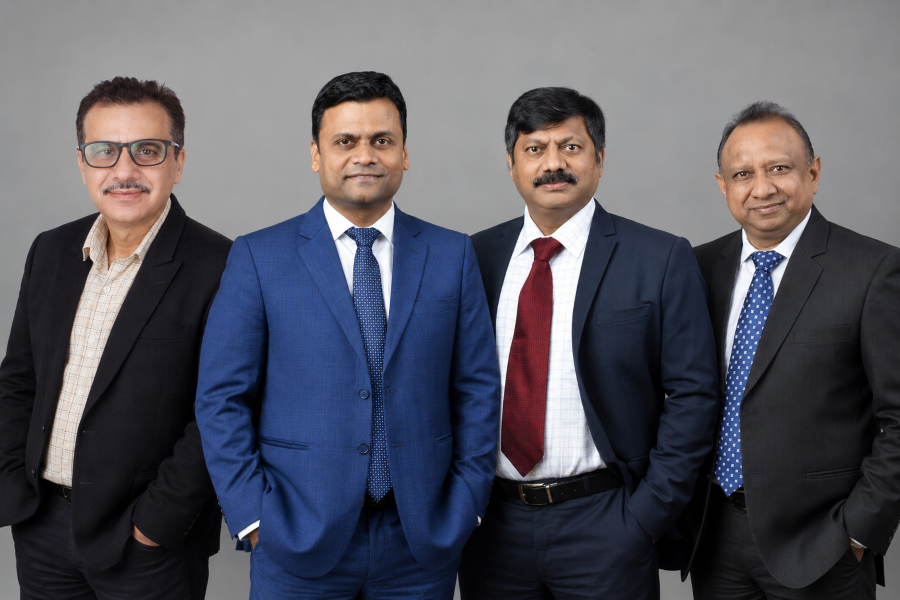
Group (TEG), TeraSpin and HMX, Kiran Hanchate – Senior Vice President – Spinning machinery and accessories (also Zonal Head –
South and East), Navin Agrawal – Senior Vice President – Fabric forming (also Zonal Head – North and West)
Strengthening the Core
Looking back at his five years as President, Mr. Kulkarni identifies sustainable and profitable growth for A.T.E. and its technology principals as a key priority, alongside embedding customer-centricity more deeply into decision-making, processes, services and engagement.
Equally important was preserving long-standing customer relationships and reinforcing A.T.E.’s position as a solutions partner rather than merely a supplier. Internally, he focused on leadership development, succession planning, competency building and empowering regional teams, believing capable decision-makers are most effective when closer to the customer.
He also sought to use the Group’s wider capabilities to help manufacturers improve productivity, energy efficiency, quality, water management and environmental performance. Together, these priorities reflect his broader definition of sustainable growth: progress shared by the company, its people, customers and technology partners.
A Wider Strategic Role
As Director, Mr. Kulkarni identifies three principal areas of contribution: long-term strategic direction, sustainability and organisational readiness.
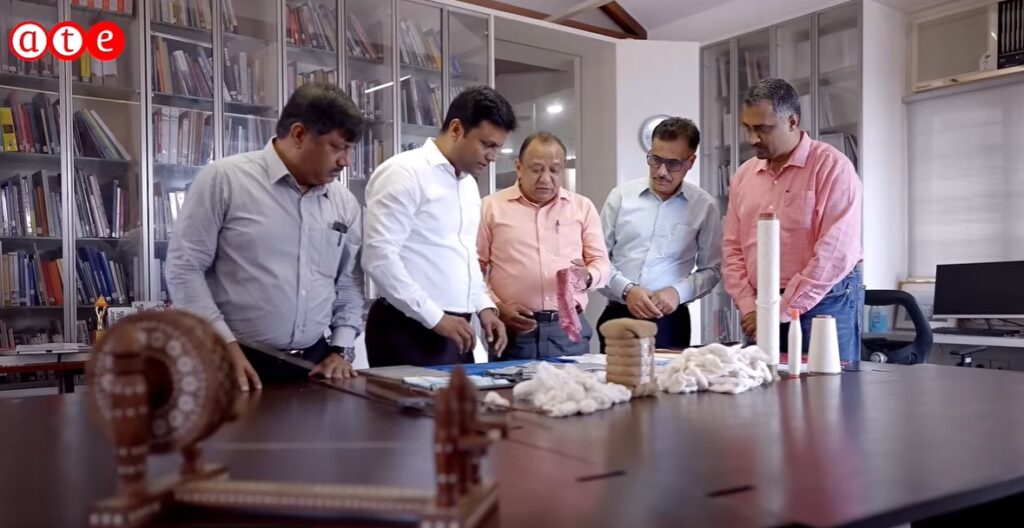
A.T.E.’s capabilities span textile engineering, precision spinning components, energy-efficient cooling, industrial static-control technologies and wastewater treatment and recycling, alongside technologies from international principals. The opportunity, he believes, is to bring these strengths together more cohesively to solve larger industrial problems.
Sustainability forms the second pillar.
“‘Partnering People & the Planet’ is not just a statement; it is the way we work.”
In practice, that means helping customers improve energy efficiency and productivity, reduce environmental impact, manage wastewater more effectively and create better working environments.
The third priority is preparing the organisation for what comes next through succession planning, talent development, competency building and empowerment. A future-ready organisation, in his view, can only be built with future-ready people.
A Strong Case for Indian Textiles
Mr. Kulkarni remains optimistic about Indian textiles. The sector directly employs more than 45 million people, while India’s roughly 4% share of global textile and apparel trade leaves considerable headroom for growth. Its manufacturing base, domestic demand and expanding access to global markets add to that opportunity.
He sees the next phase extending beyond traditional strengths. Man-made fibres, technical textiles and performance materials are opening opportunities across defence, healthcare, automotive, infrastructure, railways and construction, allowing Indian manufacturers to move further up the value chain.
Inside factories, automation, digitalisation and AI are increasingly shaping productivity, labour deployment, quality consistency and competitiveness. Sustainability expectations around energy, water and wastewater management are also moving from differentiators to business necessities.
A.T.E.’s portfolio intersects with these shifts: TeraSpin in precision spinning components; AxisValence in industrial static-control technologies; A.T.E. HUBER Envirotech in wastewater treatment, recycling and sludge management; and HMX in energy-efficient cooling, complemented by technologies from A.T.E.’s international principals.
For Mr. Kulkarni, however, the objective is not simply to supply machines or technologies, but to help customers become more productive, sustainable and globally competitive.
Defining Success
Looking five years ahead, Mr. Kulkarni returns to sustainable profitable growth, customer-centricity and sustainable solutions. He speaks of generating “delta growth”—value beyond the market’s organic expansion through stronger solutions, deeper customer engagement and the success of A.T.E.’s technology partners.
He also emphasises learning and unlearning: organisations must develop new competencies while letting go of assumptions and practices that no longer serve them.
Underlying it all is trust. Some of A.T.E.’s customer relationships span generations, a legacy he believes carries a responsibility to recommend the right solutions and stand by customers when challenges arise.
“The true measure of leadership is not what one achieves individually, but what one enables an organisation and its people to achieve long after.”
For an organisation with more than eight decades of history, that captures the balance: preserving the values behind its longevity while building the capabilities required for a very different industrial future.
If, five years from now, A.T.E. is stronger, more capable, more sustainable and better prepared for the future, Kulkarni says he would consider that success.
Quote from Anuj Bhagwati, Head – A.T.E. Group
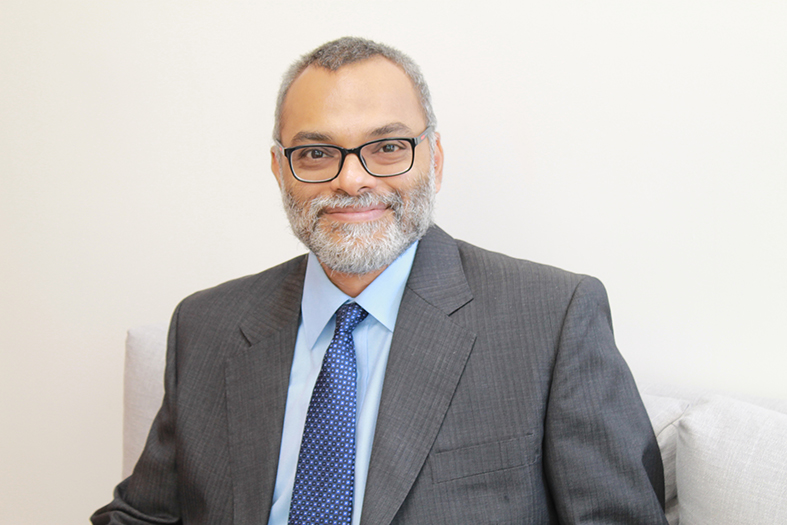
“My fellow directors and I are delighted to welcome Abhijit to the board of our company. He has demonstrated many excellent characteristics – drive, passion, leadership, organisation, empathy, and a learning mindset. Conversations with him invariably revolve around key issues of our customers and our principals, which is very much in keeping with our A.T.E. values. We look forward to working with him closely in the future.”