


By K. Gopalakrishnan
With resilient FY26 performance, new capacity coming on stream in India and Africa, deeper vertical integration and a sharper focus on higher-value apparel, Gokaldas Exports is positioning itself for the next phase of growth in the global apparel supply chain.

For Gokaldas Exports Ltd., FY26 was a year of navigating considerable external turbulence while continuing to build the capabilities required for longer-term growth. Geopolitical uncertainty, elevated US tariffs and volatile input costs created a challenging operating environment, yet the company continued to expand its manufacturing footprint, strengthen its customer portfolio and invest in new capabilities.
The Bengaluru-headquartered apparel manufacturer recorded consolidated total income of around ₹4,065 crore in FY26. The company’s performance reflects a strategy that is increasingly focused not simply on adding production volumes but on building a more diversified, integrated and flexible global manufacturing platform.
Investing Ahead of Demand
Capacity creation has been one of the most visible elements of Gokaldas Exports’ strategy.
The company deployed ₹228 crore of capital expenditure during FY26, of which ₹170 crore went towards new manufacturing facilities and ₹58 crore towards modernisation of existing operations. New capacity in Bhopal and Karnataka is now being progressively ramped up, with both expected to make a meaningful contribution as utilisation increases through FY27.
The second manufacturing unit in Madhya Pradesh is in the process of commissioning, with phased production already initiated, while operations at the Karnataka facility are also being scaled progressively. The company has guided for approximately ₹125 crore of capital expenditure in FY27, primarily towards modernisation and further capacity expansion as recently created capacity is absorbed.
The investments are aimed at giving Gokaldas greater flexibility to respond to changing sourcing requirements from international brands. Its manufacturing footprint already extends across more than 30 facilities in India, Kenya and Ethiopia, supported by more than 30,000 machines and annual production capacity of around 92 million pieces. The company serves customers in more than 50 countries and has built capabilities across design, product development, fabric processing, garmenting and finishing, alongside specialised operations such as printing, embroidery, laundry and polyfill manufacturing.
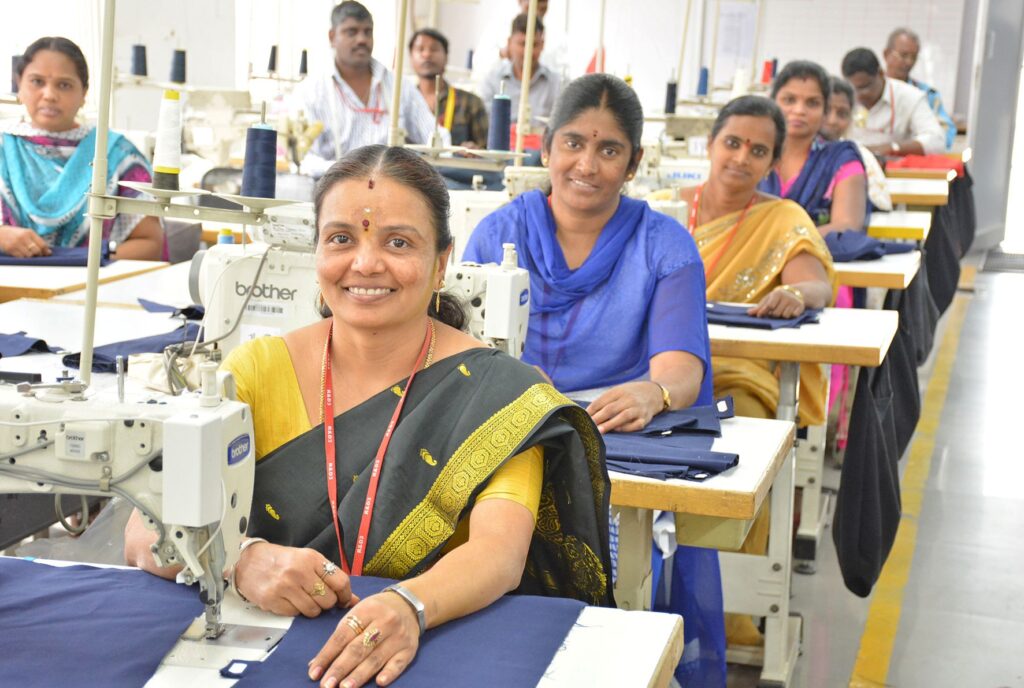
The scale is complemented by a workforce of more than 54,000, around three-quarters of whom are women.
A More Diversified Global Manufacturing Network
Gokaldas is also strengthening the geographic diversity of its manufacturing network.
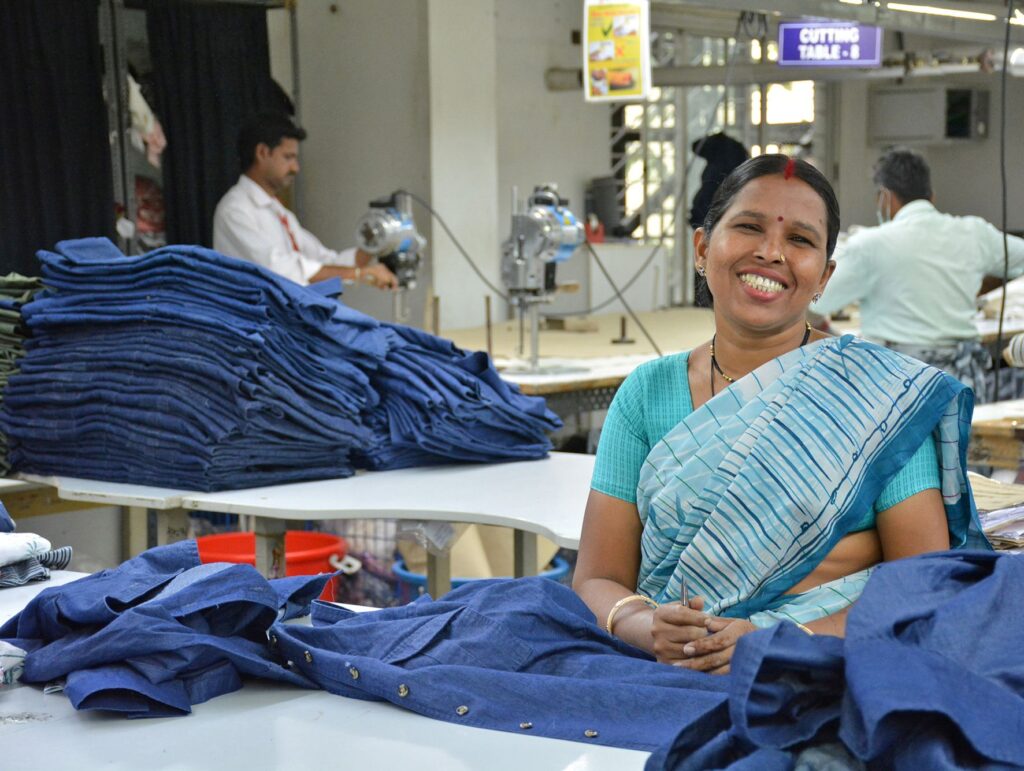
India remains the company’s principal operating base, but its African operations in Kenya and Ethiopia are becoming increasingly important components of the global sourcing strategy. During FY26, the company piloted second-shift operations at selected African facilities, creating additional capacity without requiring proportionate capital investment.
The approach provides Gokaldas with greater flexibility in responding to the sourcing preferences of global customers, while reducing dependence on any single production geography.
The company is also evaluating emerging sourcing locations as it assesses how global apparel manufacturing is likely to evolve. At the same time, it is deliberately broadening its customer base. Two new premium international customers—one from the US and one from Europe—were added for the India operations, with commercial execution scheduled to commence in FY27. Two additional global customers were also onboarded for the Africa operations.
This customer diversification is becoming strategically important as apparel sourcing patterns change. Rather than pursuing volume at any cost, Gokaldas is focusing on customers capable of delivering scalable, long-term business.
Moving Up the Value Chain
Another important element of the company’s growth strategy is vertical integration.
Gokaldas has been strengthening its fabric capabilities through its investment in BRFL Textiles Private Limited (BTPL). The move is expected to provide faster turnaround, greater control over a critical input and access to business opportunities that were previously outside the company’s addressable market. The merger process into Gokaldas Exports has been initiated, subject to regulatory and NCLT approvals, with full consolidation expected around the third quarter of FY27.
The strategic rationale goes beyond securing fabric supplies. Greater control over upstream manufacturing can improve responsiveness, strengthen quality management and enable Gokaldas to offer customers a more integrated sourcing proposition.
This is particularly relevant as global brands increasingly seek suppliers that can provide speed, transparency and greater control across the value chain.
Premiumisation and Changing Consumer Demand
Alongside capacity expansion, Gokaldas is reshaping its product portfolio towards higher-value categories.
The company has increased the share of outerwear to 29% of product-category sales, from 22% previously, while sportswear has risen to 15% from 13%. Products priced above ₹450 now account for around 80% of sales, compared with 73% in the previous year.
This premiumisation is aligned with broader changes in global apparel consumption and sourcing.
Demand is increasingly shifting towards man-made fibres and technically differentiated products. Man-made fibres account for nearly 70% of global fibre consumption and approximately 41% of the apparel fibre mix, broadly comparable with cotton. Affordability, durability and changing consumer preferences are driving this transition, while developed markets continue to move towards premium and value-added apparel.
For Gokaldas, this creates opportunities to leverage its design, development, testing and manufacturing capabilities in categories such as outerwear, sportswear and other complex apparel products.
Productivity as a Growth Lever
While new capacity will provide an important growth engine, Gokaldas is also focused on extracting greater productivity from its existing network.
During FY26, productivity improvements and disciplined cost management helped the company absorb the impact of higher US tariffs. With tariff levels becoming more comparable across sourcing nations and a strong order book extending into the first half of FY27, management expects revenue momentum to strengthen and margins to improve as the disruptions of FY26 recede.
This focus on productivity will remain important as labour costs, raw-material prices and compliance requirements continue to rise across the global apparel industry.
Gokaldas has simultaneously been investing in organisational capabilities. More than 32,000 employees received training during the year across technical, supervisory and life-skill programmes, while the company increased the representation of women in supervisory positions to 47%.
Sustainability and Long-Term Competitiveness
Sustainability is increasingly embedded within the company’s long-term competitiveness agenda.
Gokaldas increased renewable energy to 85% of its overall energy mix during the year and reduced greenhouse-gas emission intensity per garment by 73%. The company has also committed to achieving net-zero emissions by 2045.
These initiatives are becoming increasingly relevant as international brands intensify their environmental requirements and sourcing decisions increasingly incorporate carbon footprint, energy transition and supply-chain transparency.
For an apparel exporter serving major global brands, sustainability is therefore moving from being a compliance requirement to becoming an integral component of customer competitiveness.
A Stronger Outlook for FY27
The immediate outlook for Gokaldas Exports is supported by a combination of new capacity, a healthy order book, customer additions and geographic diversification.
The Bhopal and Karnataka facilities are expected to ramp towards full utilisation through FY27, adding meaningfully to revenue at steady state. Expanded African capacity is also expected to contribute to both growth and margin improvement. Meanwhile, the BTPL integration should strengthen the company’s vertical integration once the merger process is completed.
The company is also positioning itself to benefit from structural shifts in global sourcing. The China-plus-one strategy continues to favour India, while the activation of free trade agreements with the UK and the European Union could further enhance the competitiveness of Indian apparel exports.
There are, nevertheless, risks. Potential changes in US tariff policy, inflation in cotton and man-made fibres, higher packaging and freight costs, and pressure on consumer spending could affect the pace of recovery. Gokaldas therefore intends to maintain disciplined capital allocation and align future investments with market conditions.
Yet the company’s strategic direction is clear.
With an expanded manufacturing network, deeper vertical integration, a more diversified customer base, increasing exposure to premium and higher-value categories and a stronger presence across India and Africa, Gokaldas Exports is building a platform designed to capture the next wave of global apparel sourcing.
The company is not relying on capacity addition alone. Its growth strategy combines scale with specialisation, geographic diversification with supply-chain integration, and volume with premiumisation.
As global brands continue to diversify sourcing beyond traditional manufacturing hubs, Gokaldas believes India and other competitive production locations are positioned to gain a larger share of international apparel manufacturing.
For Gokaldas Exports, the investments being made today are therefore less about meeting the next order cycle and more about creating the manufacturing depth, flexibility and product capability required to compete for the next generation of global apparel business.