


A Defining Moment for India’s Industrial Evolution
India’s textile and apparel industry stands at a pivotal juncture—one where scale must align with sustainability, and growth must be reimagined through responsibility. In this context, Epic Group’s newly inaugurated Trimetro Manufacturing Campus in Khordha, Odisha emerges as a transformative milestone, not just for the company but for the global manufacturing ecosystem.

Backed by a US$100 million investment, the Trimetro campus represents a bold and forward-looking vision: a fully integrated garment manufacturing facility that achieves net-zero carbon emissions and net-zero water consumption. As India’s first facility of its kind, it sets a powerful precedent for how industrial infrastructure can be designed to meet the environmental and social challenges of the future.
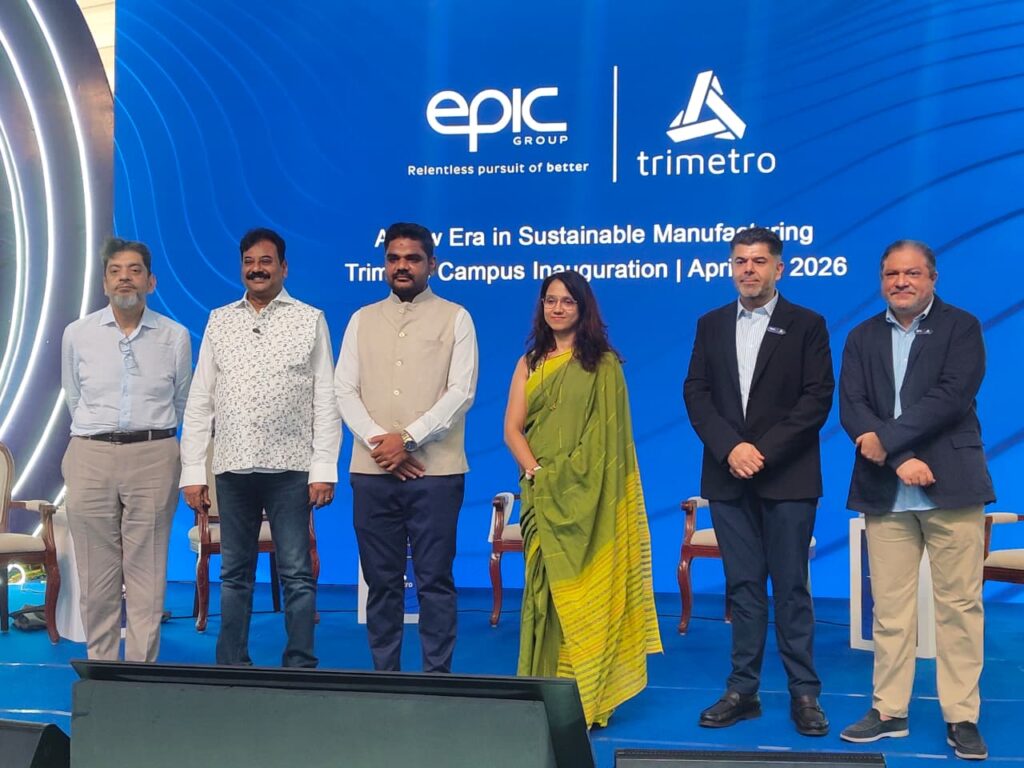
The campus was formally inaugurated by Shri Sampad Chandra Swain, Honourable Industries Minister of Odisha, alongside Mr. Ranjan Mahtani, Founder & Chairman of Epic Group, in the presence of key stakeholders—symbolizing a strong convergence of policy support and industrial ambition.
A Vision Beyond Manufacturing: Building a Future-Ready Ecosystem
Spread across 40 acres, the Trimetro campus is far more than a conventional manufacturing unit. Designed to produce 20 million garments annually, it reflects a sophisticated blend of advanced manufacturing, environmental stewardship, and inclusive economic development.
Epic Group has conceptualized Trimetro not merely as a production facility, but as a holistic industrial ecosystem—one that integrates sustainability, technology, and human-centric design into every aspect of its operations.
As Mr. Ranjan Mahtani aptly noted, “This is more than a factory; it is a blueprint for the future of global manufacturing—where industrial progress and environmental responsibility go hand in hand.”
Engineering Net-Zero Carbon at Industrial Scale
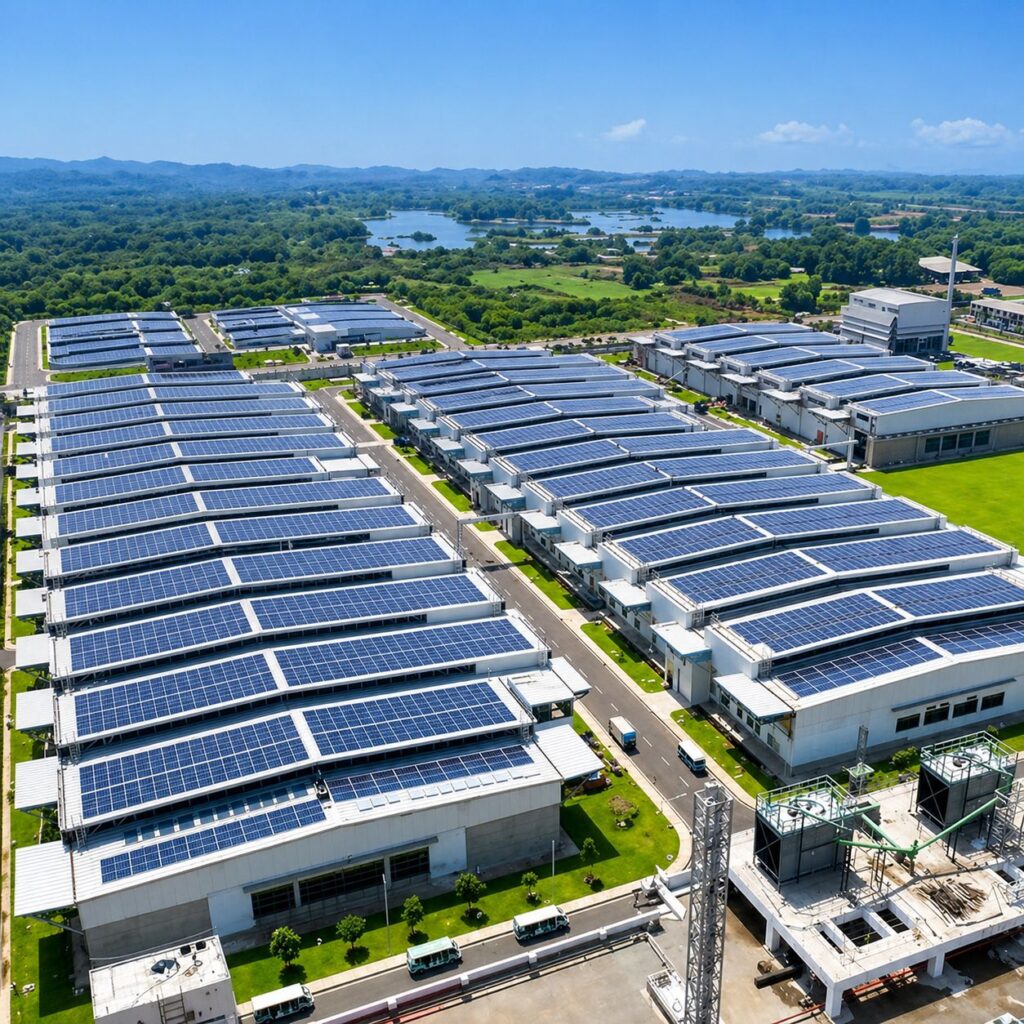
One of the most defining features of the Trimetro campus is its commitment to achieving net-zero carbon emissions—a goal that has been embedded into the facility’s design from inception.
The campus integrates a multi-layered energy strategy, combining:
- Onsite and offsite solar power generation
- Sustainable biomass energy solutions
- Battery storage systems for energy optimization
- Highly energy-efficient machinery and infrastructure
This comprehensive approach ensures that the facility operates with minimal reliance on fossil fuels, significantly reducing its carbon footprint while maintaining high production efficiency.
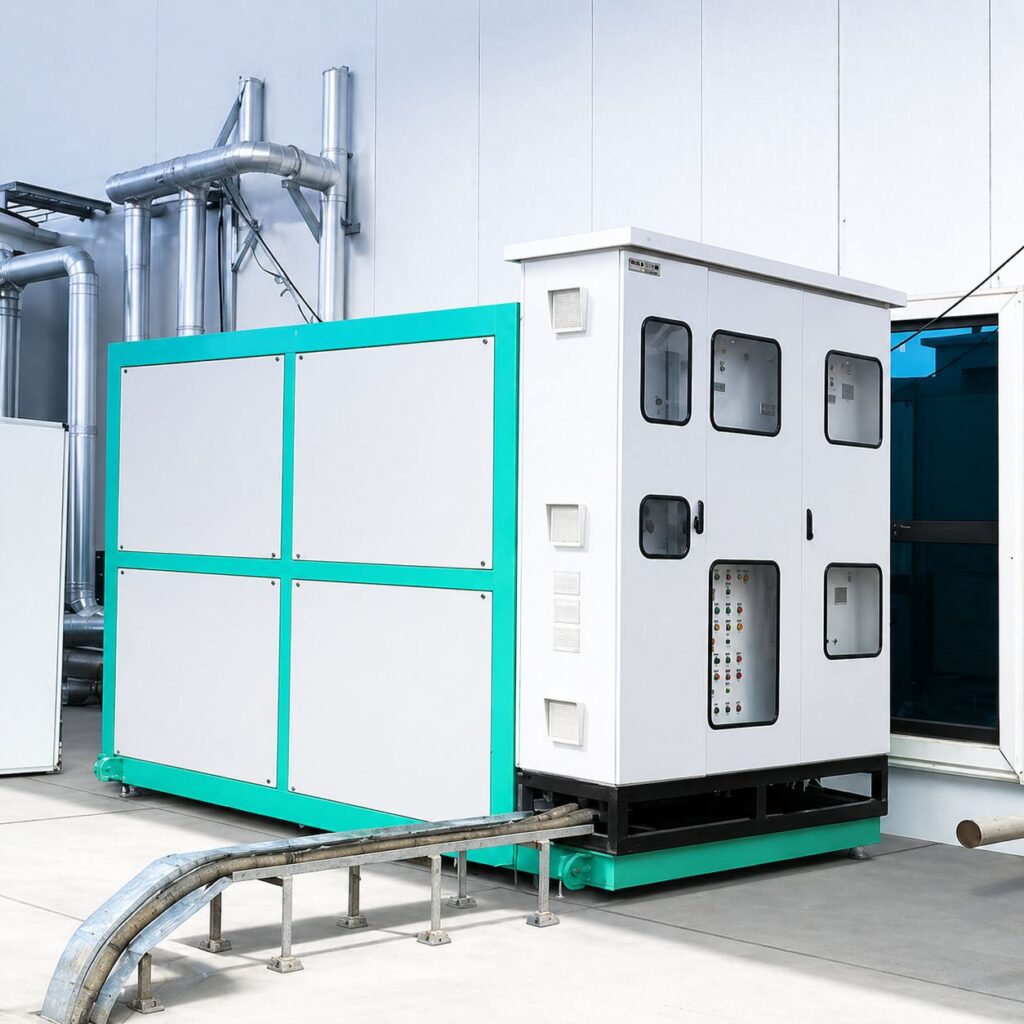
A standout innovation is the introduction of 135°C high-temperature heat pumps, a first for the garment manufacturing industry. These systems are approximately 40% more efficient than conventional electric boilers, delivering both hot water for garment processing and chilled water for air conditioning—thereby optimizing energy utilization across the facility.
By replacing traditional fossil-fuel-based systems, these heat pumps play a critical role in eliminating thousands of tonnes of emissions annually, reinforcing Trimetro’s position as a leader in sustainable manufacturing innovation.
Water Sustainability: Moving Beyond Conservation to Regeneration
While carbon neutrality is a major milestone, Trimetro’s achievement of a net-positive water balance is equally significant.
The campus adopts a comprehensive water management strategy that includes:
- 100% wastewater treatment and recycling systems
- Advanced water-saving technologies across processes
- Rainwater harvesting and natural reservoir creation
These systems ensure that the facility not only minimizes water consumption but also replenishes more water than it uses—transforming manufacturing into a contributor to environmental restoration.
In an industry traditionally associated with high water consumption, Trimetro sets a new benchmark by demonstrating how circular water systems can be effectively implemented at scale.
People-Centric Manufacturing: Empowering Communities
At the heart of the Trimetro campus lies a strong commitment to inclusive growth and workforce empowerment. The facility is expected to generate 10,000 jobs, with an impressive 80% of these roles being filled by women.
This focus on gender inclusion reflects a broader vision of creating equitable employment opportunities, particularly in emerging industrial regions like Odisha.
Beyond job creation, the campus has been designed to support employee well-being through:
- Onsite medical facilities
- Childcare centres
- Subsidized canteens
- Structured training and upskilling programs
These initiatives ensure that employees are not only productive but also supported in their personal and professional growth.
By prioritizing people alongside performance, Epic Group is redefining what responsible manufacturing looks like in practice.
Climate-Resilient Infrastructure for the Future
Recognizing the growing impact of climate change on industrial operations, the Trimetro campus has been built with resilience at its core.
Key features include:
- Super-insulated buildings that enhance thermal efficiency and reduce cooling requirements
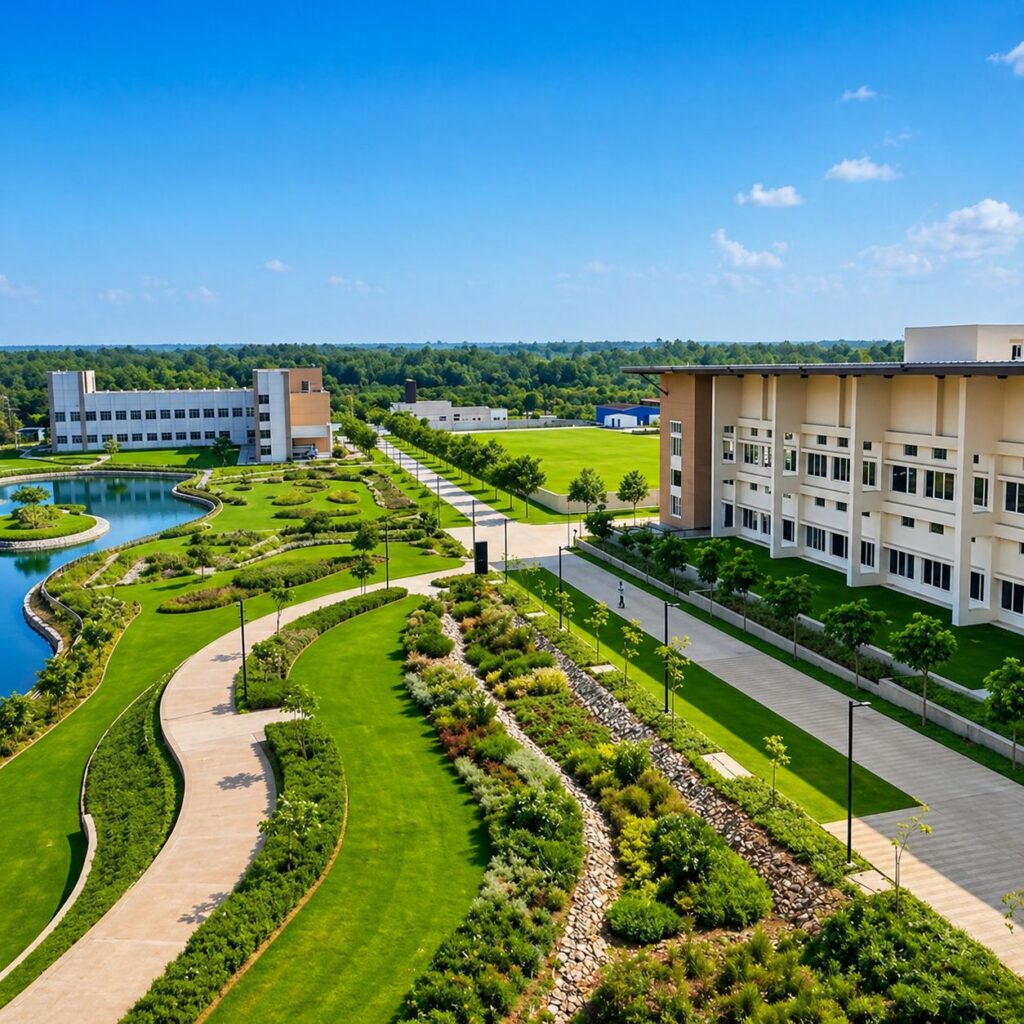
- Advanced stormwater management systems to mitigate flooding risks
- Landscaping with native vegetation to support biodiversity and reduce water usage
These elements ensure that the campus is not only environmentally sustainable but also operationally resilient—capable of adapting to changing climatic conditions.
Global Partnerships and Financial Backing
The scale and ambition of the Trimetro project have been supported by strong global partnerships. Notably, the International Finance Corporation (IFC) provided a $100 million debt financing package, including sustainability-linked and green loan components.
This backing highlights the project’s alignment with global ESG frameworks and reinforces its credibility as a scalable model for sustainable industrial development.
The IFC funding also supports Epic Group’s broader expansion initiatives, including operations in Bangladesh, further strengthening its global manufacturing network.
Epic Group: A Legacy of Innovation and Global Reach
Epic Group’s journey reflects a continuous evolution aligned with industry demands. From its origins as a textile trading house, the company has grown into a vertically integrated global manufacturing powerhouse, with operations spanning Asia, Africa, the UAE, the UK, Jordan, and the United States.
With a workforce of over 30,000 employees, the group has built a reputation for innovation, quality, and customer-centricity. Its focus on sustainability is deeply embedded across its value chain, influencing decisions from sourcing to production and partnerships.
The Trimetro campus represents the next phase of this evolution—where sustainability is not an add-on, but a foundational principle.
A Blueprint for the Future of Manufacturing
The inauguration of the Trimetro Manufacturing Campus marks a watershed moment for the global apparel industry. It demonstrates that large-scale industrial operations can be both economically viable and environmentally responsible, challenging long-standing assumptions about manufacturing.
By integrating renewable energy, circular water systems, advanced technologies, and inclusive workforce practices, Epic Group has created a facility that goes beyond compliance—it sets new standards.
As industries worldwide grapple with the dual challenge of growth and sustainability, Trimetro offers a compelling answer: a model where innovation, responsibility, and scalability coexist seamlessly.
In many ways, this is not just the launch of a manufacturing campus—it is the emergence of a new paradigm in industrial development. One where the factories of the future are defined not only by what they produce, but by how responsibly and sustainably they operate.
And in that vision, the Trimetro campus stands as a powerful symbol of what is possible when ambition aligns with purpose.